Experts from the Financial University under the Government of the Russian Federation stated that the development artificial intelligence requires a balanced approach. It is important to combine technological innovation with human capital support to avoid social risks.
The debate continues over whether engineers will be able to withstand the onslaught of AI. Technology is already changing the industry: algorithms not only automate routine, but also offer innovative solutions – for example, in generative design or predicting equipment wear. However, the key question is how the state can regulate this process so that technology does not displace people, but enhances their potential.
Modern AI systems are already capable of making decisions independently – from controlling unmanned vehicles to monitoring energy networks. This requires a rethink of training: engineers now need the skills to work with algorithms, analyze their decisions and creatively adapt the results.
Authorities play a decisive role in three ways:
– Stimulating innovation through financing and infrastructure.
– Protecting technological sovereignty, including critical industries.
– Social support, retraining of specialists and creation of new jobs.
World experience: different strategies:
– China is relying on mass automation.
– EU focuses on regulation (AI Act) due to employment risks.
– The US relies on market competition.
– Russia is developing the synergy of technology and human capital through national projects.
AI will not replace engineers, but it will change their role. For this process to be sustainable, the state must actively participate in regulation and support of specialists.
Source: geoinfo.ru
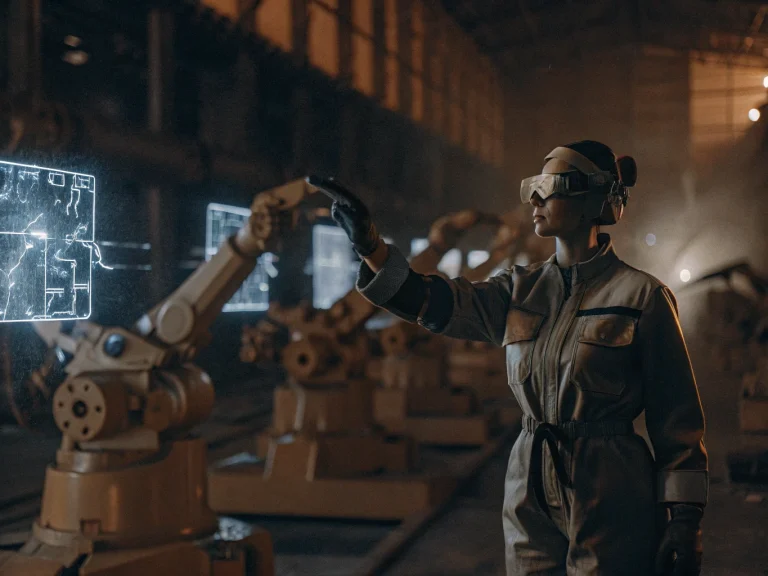
Image generated by a neural network