Scientists at Perm Polytechnic University have developed a technology that allows the use of sulfur-alkaline waste from oil production to create stable road soil. The new material has successfully passed frost resistance tests, which makes it suitable for use in the Russian climate.
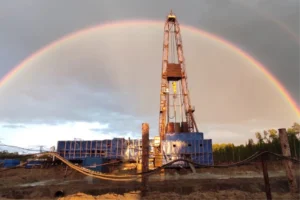
After oil refining, toxic sulfur-alkaline waste remains, which requires expensive disposal. Scientists from Perm Polytechnic University have proposed a solution to this problem: recycling waste into technogenic soil for road construction. This material is not only safe for the environment, but also highly resistant to winter conditions.
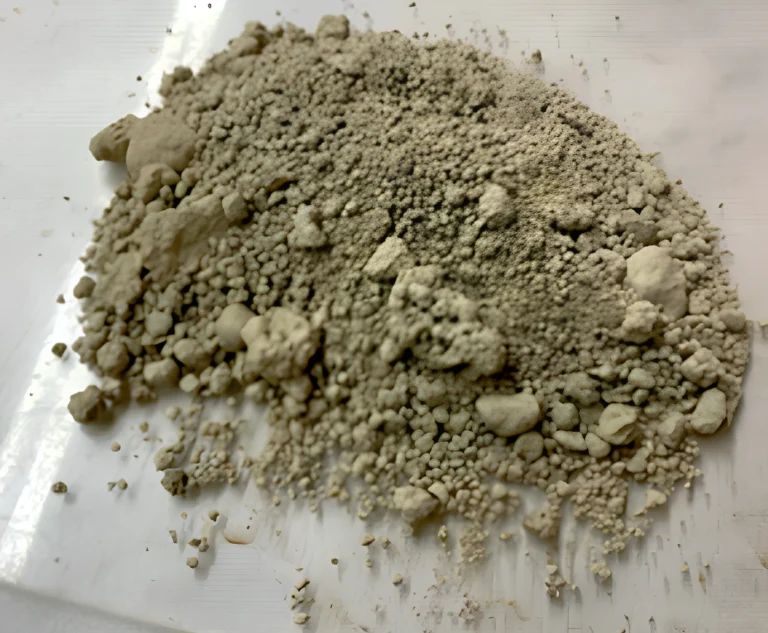
The researchers conducted a series of experiments to study how man-made soil behaves during freezing and thawing. To do this, they created samples from neutralized oil waste and amorphous tripoli, processed at a temperature of 700 ° C. The resulting material turned out to be safe for the environment and humans.
During testing, samples were subjected to repeated cycles of freezing (-20 °C) and thawing (+6 °C). After each cycle, scientists measured the strength and deformation properties of the soil. The results showed that the material retains its characteristics even after ten cycles, although its density is 30% lower than that of natural soil. This reduces the load on the base of the road surface and improves its drainage properties.
“Technogenic soil from sulfur-alkaline waste is highly hydrophilic, which allows you to quickly dry the lower layers of the road surface. This makes it ideal for use on weak, water-saturated foundations,” explains Alla Grishina, associate professor of the Department of Construction Production and Geotechnics at PNIPU.
The new technology not only solves the problem of toxic waste disposal, but also saves natural resources. Technogenic soil can be produced directly at oil production sites, which reduces transportation costs and reduces the burden on the environment. Research results published in the journal “News of Universities. Construction” and carried out within the framework of the “Priority 2030” program.
Source: naked-science.ru
Photo: Technogenic soil obtained from sulfur-alkaline waste / © Press service of PNIPU