
It seems that from every iron they shout: “AI can do this”, “AI can do that” – and now you already feel that you are late. Everyone around seems to have learned to work with neural networks, they are launching their own projects, automate everything that moves, and you only have time to wince in irritation. I would like to brush this off, to devalue it: they say, this is all for the lazy and soulless, the person is more important. And to refuse – not to understand, not to delve into, to pretend that nothing is happening. But no, the world is no longer the same. Our life will never be the same. You won’t be able to close your eyes.
I’m not going to teach you how to write prom or tell you about the top 10 neural networks. I want to talk about something else – about the principles of working with AI, by understanding which you can easily master this technology. About fears: that AI gives answers based on other people’s, unverified data, or that we will stop thinking for ourselves altogether. About how learning is changing, how we now work with information – and how to preserve ourselves in this new world. Because there are things in which AI will not replace us. Never.
You don’t like AI – you just don’t know how to cook it
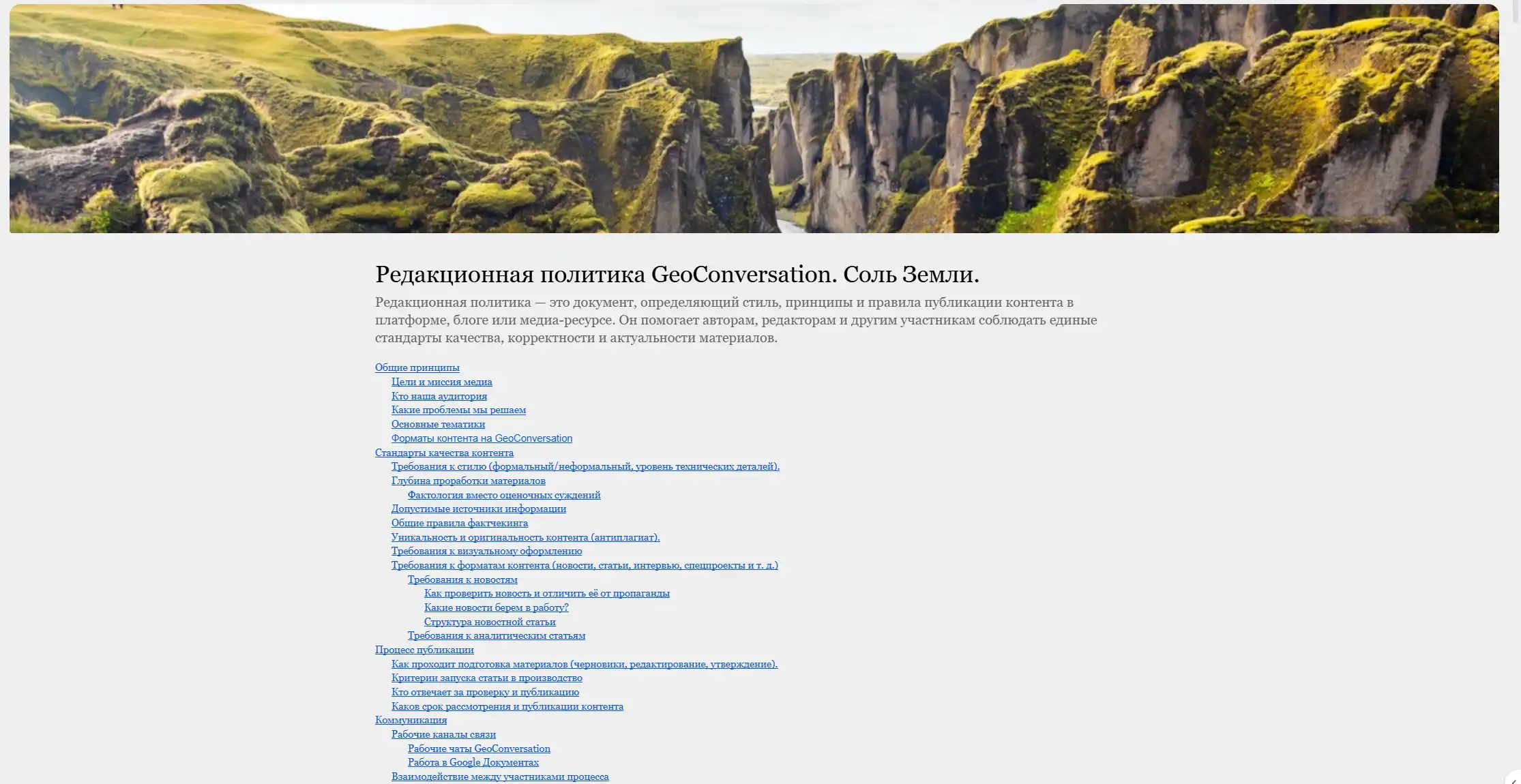
AI is often presented as a magic pill: open a chat, ask a question, and receive a brilliant answer. But if you go into it with those expectations, disappointment is almost guaranteed. You close the program with the thought: “This is all nonsense.” I recently developed an editorial policy for our media. And if she just said: “Give me an ed. politics,” the GPT chat would, of course, generate something. But will this text be at least somehow connected with our reality? Hardly.
Instead, I started the work this way: I asked the AI to help with the structure – to be honest, I myself didn’t fully understand what it should look like. I’m first and foremost geophysicist, not editor. And then the real collaboration began. I loaded everything that we already had into the chat: internal rules, messages from work chats, checklists, requirements for texts, examples of technical tasks. Context. Lots of context.
And here is the result: what would have taken weeks alone, we did with AI in a couple of weeks – we worked for an hour or two a day. The output is 50 pages of relevant document. Why did I succeed? Because I didn’t ask the AI to “just do it”, but fed him context. And he really started working with me – not according to an average template, but according to my tasks and data.
And here is the key: you need learn to unload knowledge from yourself. Not necessarily beautiful, not necessarily systematic. Just write it down. Notes, voice notes, screenshots, thoughts on the phone – everything that will help restore the chain of meaning in the future. Creating a personal knowledge base is not a fad, it is the basis of interaction with AI. Because without this, every next request starts from scratch again. And with context, AI becomes a true partner in thinking.
AI not only works with context, but also helps see more widely, look at the problem from a different angle. When I was preparing a presentation to apply for a grant for science popularizers, it seemed to me that everything was ready: structure, meaning, visuals – everything was in place. But I decided to show the ChatGPT presentation just in case and asked for a rating.
The AI highlighted the strengths, but most importantly, it drew attention to something I hadn’t even thought about: it would be nice to add information about the project’s partners and show site statistics. And it’s true – this immediately strengthened the argument. Without him, I would hardly have seen this gap.
In the same way, AI can be used when working on an article – ask it to find contradictions, suggest a metaphor, formulate a point of view “on behalf of” a hypothetical reader. All this helps add nuances to the material, look at it from different angles. Of course, the final decision and verification remain with the person, but The potential for collaboration is huge.
People are afraid of new things. And that’s okay
New things have always frightened humanity – and AI is no exception. But before we panic, let’s honestly ask ourselves: is it really that scary, or do we just not understand how to handle it? Fear is normal, especially in the beginning. The main thing is not to get stuck in it.
The ruler, ink and calculator were already there – now it’s AI’s turn
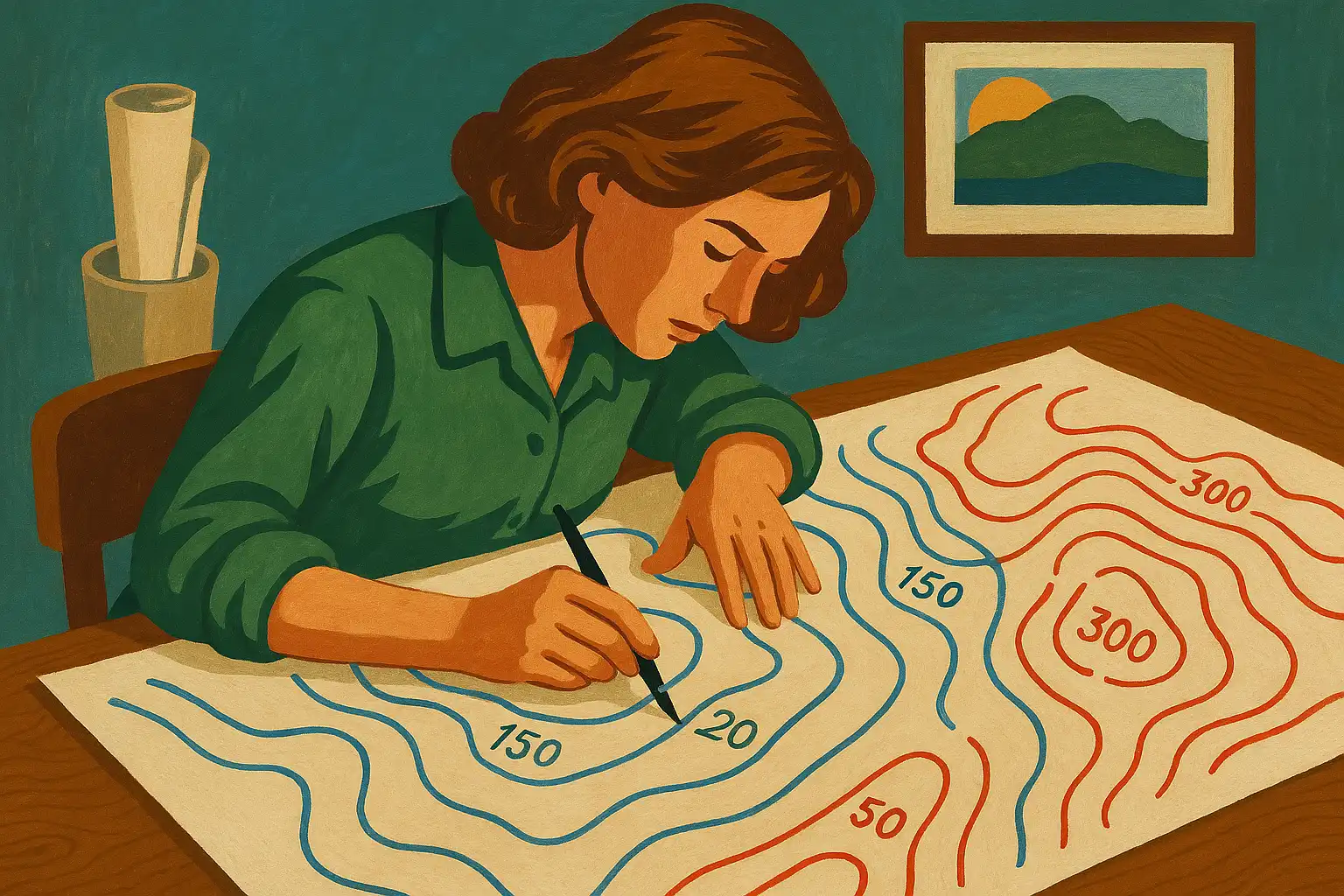
There is a fear that a person will begin to rely on neural networks and become completely stupid. The thought is frightening: “why think if you can just ask?” But this is not the first technological leap in history. Previously, people counted in columns, then calculators appeared. Geologists and geophysicists spent months drawing maps with ink and drawing isolines by hand – and now a soulless machine does it for us in five minutes. Have we really gone dumb? No. Just stop wasting time on routine and began to work on things where the brain is needed, and not a ruler and whatman paper.
It will be the same with AI. He will take away the mechanical part of the work from us – and that’s normal. But the excuse “I don’t have time to think” won’t work anymore. Vice versa, thoughts, strategic thinking, criticism, analysis – that’s what will become more important. AI can process data, sort, format – but conscious understanding of tasks, the ability to formulate goals and see consequences – this is still a person’s area of responsibility.
This is the main risk – not the AI itself, but passive attitude towards him. If you outsource everything to a machine, your brain stops training. If we completely shift the work to AI and stop using our heads, then we lose the role of an active participant in the process – we become passive users who simply watch what is happening. But if we use AI consciously, as a tool, and not as a replacement for ourselves, it can not weaken, but on the contrary, strengthen our abilities, make us smarter, and make our work deeper.
The pendulum will swing back: why human experience will become even more important
One of the most interesting – and perhaps most underestimated – worries: AI will start educate yourself. Already, generative models are largely based on data created by other generative models. Synthetics devour synthetics, and the further it goes, the more the AI loses touch with reality. It’s like learning life from books without going outside.
But this is not a reason to panic – on the contrary. Human experience, real data, personal notes, cases and experiments – all this will be valued many times more. Because only a person can bring something new, real, non-fictional into the world. This means that our task now is not just to “keep up with AI”, but to accumulate and comprehend our own experience.
This is the answer to fear: develop yourself, invest in knowledge, act. Learning through mistakes, through real practice. You can’t understand the world without touching it. And yes, don’t forget about the base. Everything that seems like a boring school routine – the multiplication table, Newton’s laws, basic skills in working with the world – actually shapes structure of thinking, onto which our experience is then superimposed. Without this foundation, it is impossible to think deeply, critically, or—especially important in the age of AI—understand when a machine is wrong.
AI can generate anything, but only man can live. And the more synthetics around, the more valuable becomes what is truly yours.
I don’t trust AI – and I’m doing it right
I myself don’t always trust AI. He can quickly collect information, highlight useful thoughts, but guarding quality – always a person. I think of myself at such moments as an internal quality control department. Everything the AI outputs goes through me.
Here are a couple of simple rules that will help don’t miss a mistake:
– Facts (dates, names, numbers) – I always check. If there are links, I go to the source.
– Opinions and interpretations — I perceive it as another point of view. It’s like I’m consulting with a smart colleague who isn’t always right.
– Recommendations (for example, “here’s your daily plan”) – I evaluate it in practice. Sometimes it fits, sometimes it doesn’t.
And one more life hack – always ask for clarification, why AI offers this particular solution. Firstly, he himself “thinks” better when he explains. Secondly, you begin to understand logic and test it. It also improves the skill of asking questions, and this, by the way, is a key competency of the 21st century.
AI doesn’t just help you work— it teaches reflection. When you don’t just read a text or watch a video, but ask yourself questions:
- Why am I reading this?
- How does this relate to my goals?
- Do I even need this?
This is where the real value of AI lies: it encourages us to think deeper, to ask questions. Because without comprehension, no data matters.
Studying is no longer about memorization. It’s about thinking
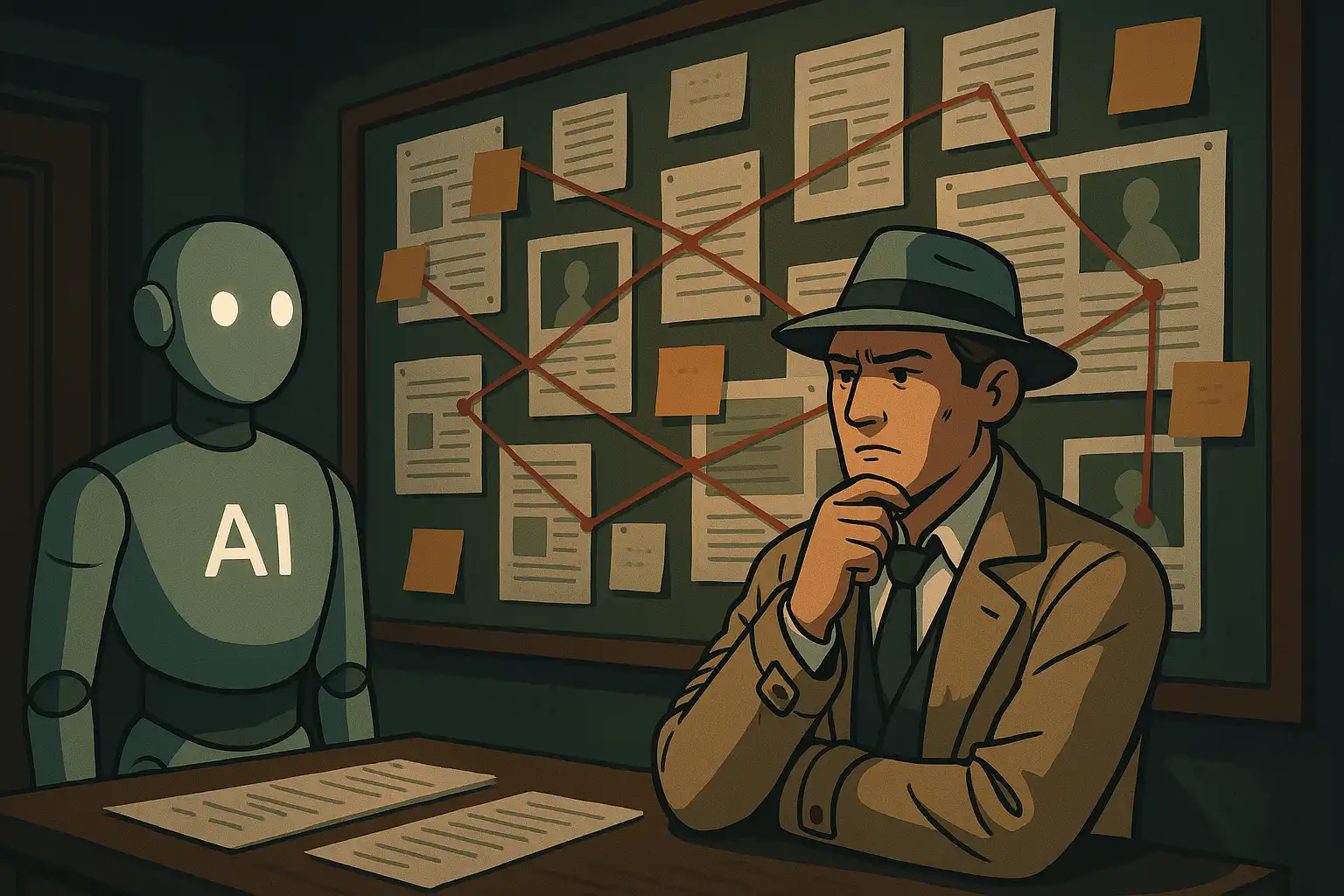
The world has changed. To find information, you no longer have to go to the library, request catalog cards, and spend hours copying paragraphs by hand. A couple of clicks and you are already reading a scientific article from the other side of the world. Information is no longer valuable in itself. The value lies in the ability to work with it: systematize, analyze, combine into new knowledge.
This means that the learning process itself is changing. Previously, it seemed like: if you learned the multiplication tables, well done. Now it is not only the result that is important, but also the skill of learning itself. Studying is not about “remember”, but about “figure it out”.
Here is a child asking: “Why learn the multiplication table?” And you can answer: “To count faster.” Or you can be more honest: “To train the brain, learn to cope with what at first seems difficult. And then – click! – and it works.” This moment – when you went through misunderstanding and suddenly understood – is real learning. Not because someone gave all the answers, but because you went through the process, faced difficulty and coped. This is exactly what studying gives: not a set of facts, but confidence that something new can be dealt with. Whatever it is – Python, accounting or life in general.
Academic knowledge is not a goal here, but a tool. They are needed not for their own sake, but to learn to think, see connections, and not be afraid of difficult tasks. And the main thing here is interest. He is the fuel of all learning. It cannot be stewed. On the contrary, if a person is fired up, you need to give him the opportunity to explore, try, make mistakes. Even if everything doesn’t work out the first time, it’s okay. It is now important for the teacher to leave the door to the world of knowledge is open and taught not to be afraid of the new.
Why depth of knowledge still matters (and is more important than ever)
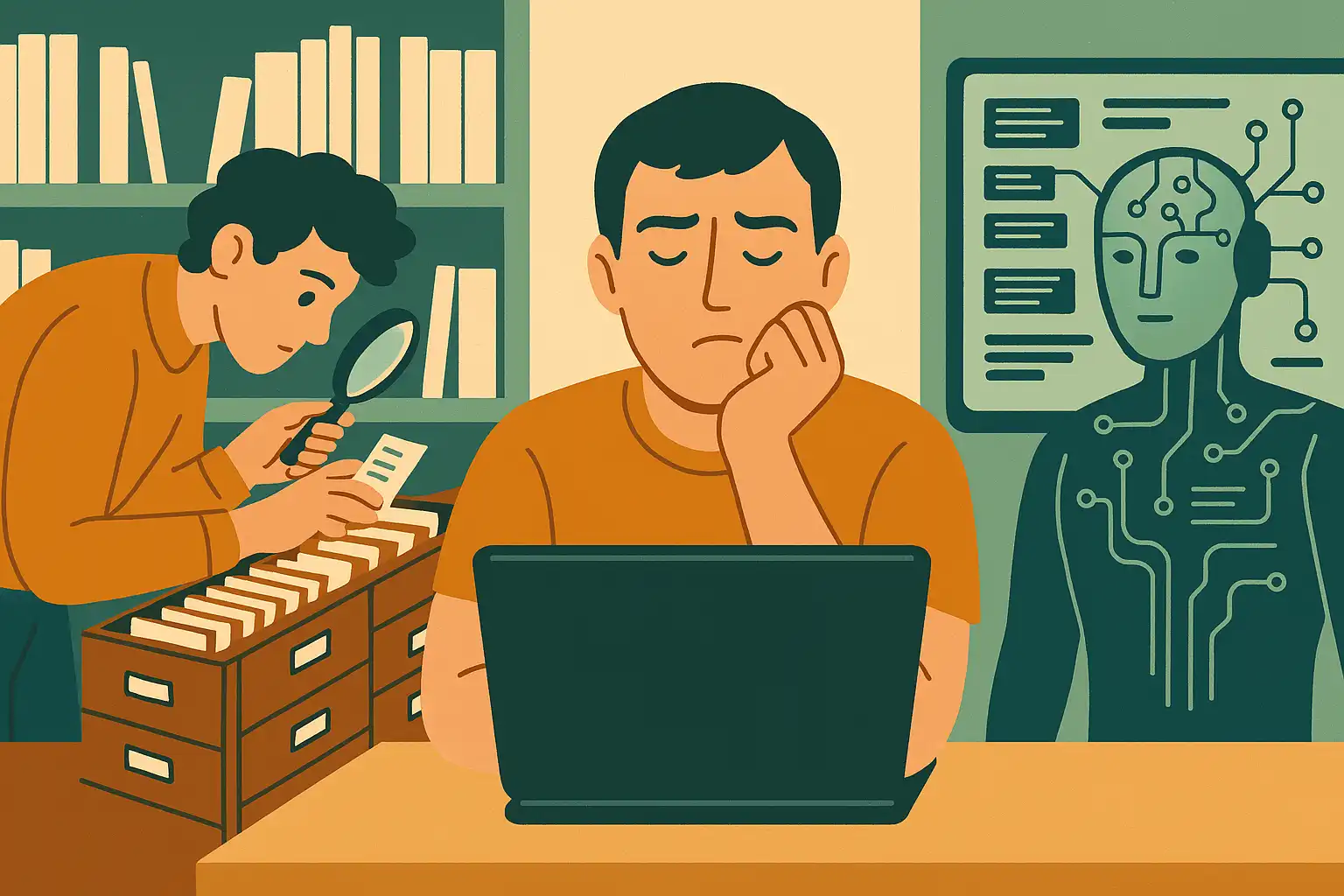
Today, AI can provide a summary of almost anything—from a book to an hour-long podcast. He will beautifully retell the content and highlight key ideas. And this is his strength. But there is also danger.
Because knowledge is not just a list of theses. For it to become yours, you need it live. Walk the path together with the author of the book, doubt, argue, agree or reject. And not just “read the summary.” Summary is like a sterile squeeze that doesn’t work without context. It leaves no trace because it does not involve thinking.
AI in this sense is like a parrot. You tell him: “Hello!” – he will answer: “Hello!” He does not know what this means, why it is said, and why people are happy. He simply produces a learned pattern for which he will be fed. AI acts in exactly the same way – it produces what it previously encountered in the data. Doesn’t comprehend. Doesn’t understand. He just repeats.
You can feed the AI context and it will actually perform better. But if you don’t have your own understanding, you won’t notice when he’s wrong. Don’t ask a clarifying question. There is no doubt about it. And you will accept beautifully formulated nonsense as truth.
That’s why depth of knowledge is protection.
– To catch errors AI.
– To ask the right questions.
– To Don’t lose your thinking skills while everything around you becomes more and more automatic.
In a good book, two key ideas can be spread out over 400 pages – and that’s a good thing. As you read, the idea slowly weaves itself into your thinking, creating lasting neural connections. It’s like slow cooking – the real flavor comes out. And summary is like instant soup: fast, convenient, but, by and large, empty.
What remains for a person?
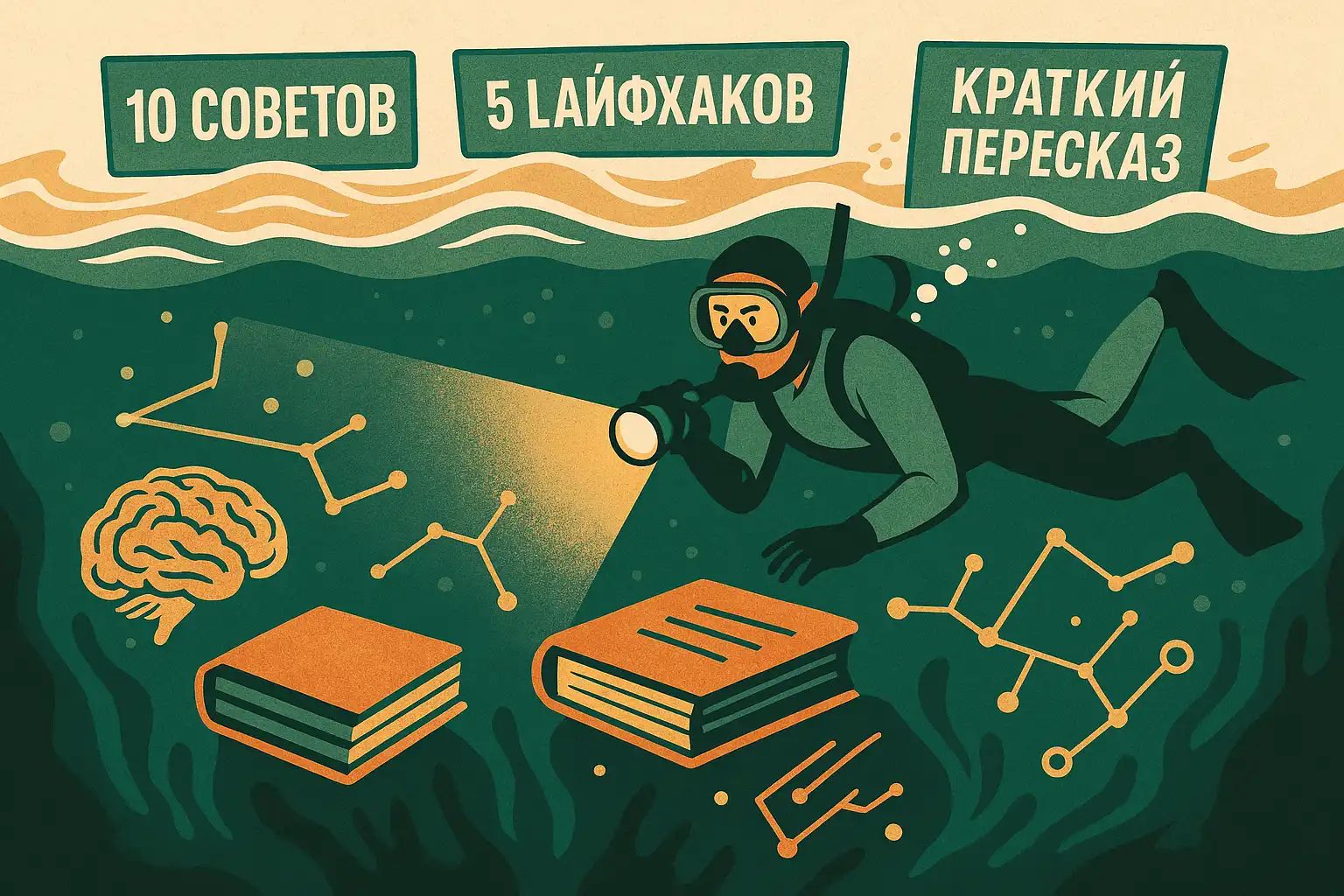
AI can do a lot. He will list, structure, select a metaphor, retell the contents of the book and even help you write a letter to the director or colleagues. But he doesn’t think the way we think. He has no critical thinking. He won’t say, “Wait, that sounds completely absurd.”
Ask him: “Name five reasons why it’s cool to drink a liter of vodka a day,” he will obediently name it. Sugar, warmth, cheerful communication… Anything – except the main thing: “This is harmful, and you seem to have asked the wrong thing.”. AI does not know how to doubt – even if the task is absurd, it will complete it without question. It will produce results because its job is to execute, not evaluate.
That’s why critical thinking remains our personal responsibility. The ability to ask the right question. Doubt. Understand when “logic” leads to a dead end. Ask yourself: “Why am I reading this, thinking, doing this?” AI can be a great help. But it will not replace common sense, reflection and ethics. And that is why – no matter how far technology has gone – the most important thing remains for a person: meaningfulness.
What do you think about AI? How has it changed your work, school or daily life? Share your experiences and thoughts in the comments – it will be interesting to discuss.