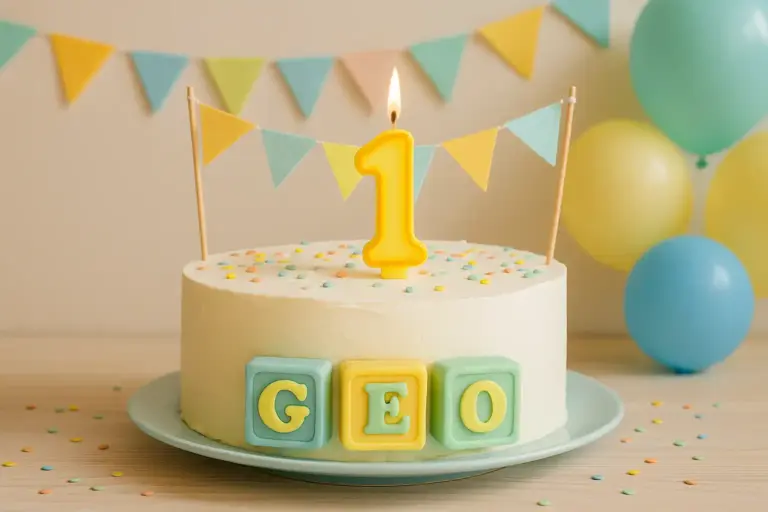

A year ago, on June 18, we published our first article on GeoConversation. From that moment on, the history of media about geology, people and technology began. Now is the time to sum up the first results. But this column is not only a personal reflection. It may be useful to others too.
Firstly, for those who are thinking about launching their own media, namely companies that want to invest in industry content. This article will help you understand how everything works from the inside: what resources are required, what goals should be set, what experience the team needs. Secondly, for those who just want to look behind the scenes – to find out how niche media is created in practice at the intersection of science, industry and live conversation. And finally, for myself, this is a way to record what we have accomplished in the first year of GeoConversation. Salt of the earth. What worked and what didn’t.. And why does all this even make sense.
Money is good, but not a guarantee of success
It is a very common opinion – and I myself share it – that to launch media you need money. Content is expensive: publishing one expert article can cost 15 to 50 thousand rubles, if we take into account the entire production. Therefore, yes – need money. But how much? It would be nice to have a lot, but… actually money is not the main factor of success. It’s difficult to start without minimal resources, but money itself doesn’t guarantee anything.
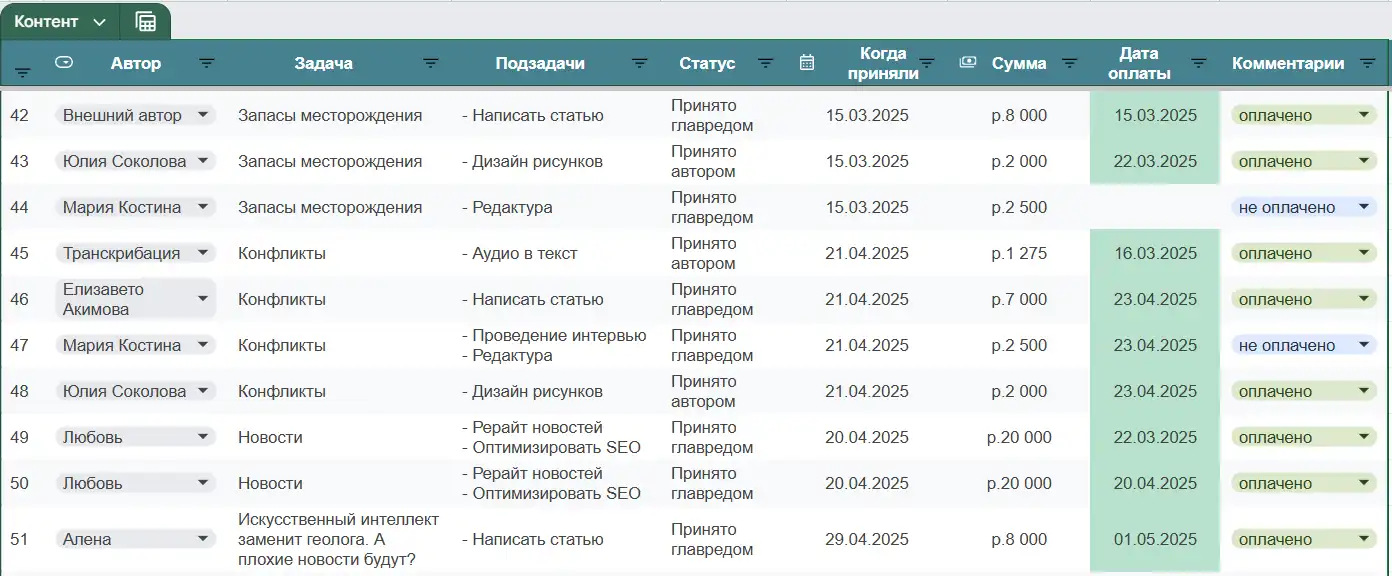
When I launched GeoConversation, I immediately allocated a budget for myself. To launch – about 150 thousand rubles: this included website development and launch, as well as preparation of the first materials. In the following months I spent 20–30 thousand rubles each – mostly on royalties to authors. I did most of the work myself, for free – I wrote and edited articles, was involved in promotion and strategy. Now that the media works on a regular basis, monthly expenses are already about 100 thousand rubles — taking into account publications, news, SEO and payment for services.
One might think: “If only there were several million at once, then everything would fly much faster.” But this is where the common mistake lies. A lot of money is not a guarantee of success. And not even in the sense that money can harm. Rather, you will simply merge them. You will start spending left and right, trying everything, without focus. Sometimes limited conditions This is precisely what helps – they keep you within limits, force you to choose, to be precise in your decisions. And when resources are limited, the main thing becomes especially clear: what really moves you forward.
At the heart of any project, especially media, should be people who are passionate about ideas. People who really interesting do what they do. Who have target. “Attract customers” is not a goal for media. Target – help people, promote knowledge, create a platform for dialogue. My idea is exactly this: I wanted to create a place where industry professionals can speak – and be heard. Where geologists, engineers, scientists not only read articles, but participate in a conversation about the future of the profession. You may have your own big goal. The main thing is that it exists. And money… it will help. But they don’t determine whether your project will live.
What resources do you really need to launch a media outlet?
It often seems that launching media is very simple: register a domain, gather a couple of authors, publish articles – and you’re done. But this is an illusion. Open media without experience, just by looking at others – won’t work. Someone must be able to do this manage. What was in my mind when we launched GeoConversation a year ago on June 18th?
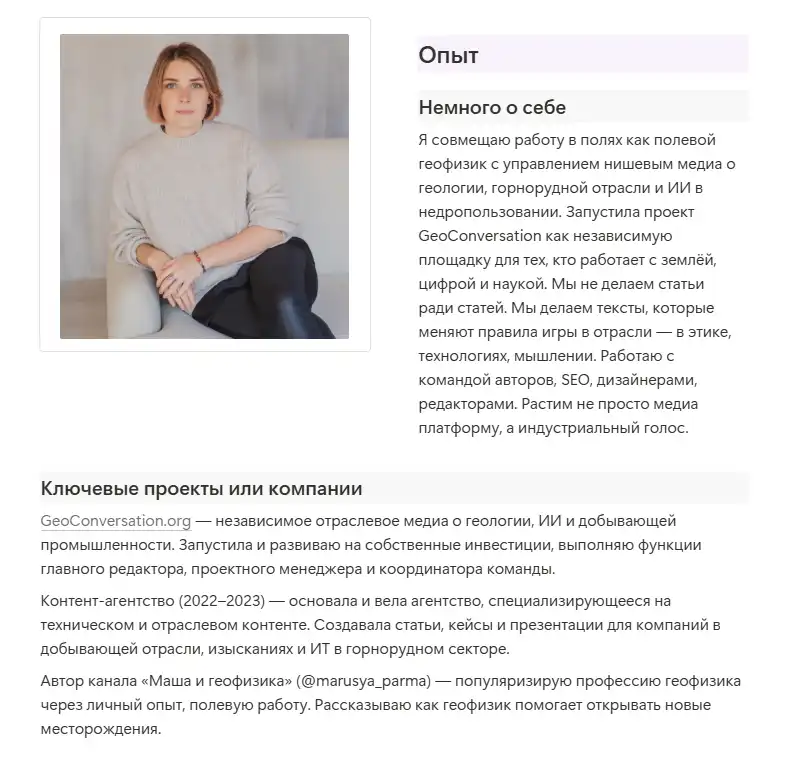
Firstly, I had experience in content: I ran an agency and wrote custom articles – specifically in our industry, at the intersection of geology, IT and mining. I understood what I was writing about and knew how to package the knowledge and experience of an expert into a readable text. Secondly, I had a well-functioning editorial process: I knew how to work with experts, write and edit complex materials, and select authors. All this was not theory, but practice.
Separately, experience working with clients. I’m used to taking into account requests, adapting materials to business objectives, and building communication. This helped me set up processes, but later played with me cruel joke. The habit of creating custom content became the cause of conflict—and deep internal transformation. Because media requires a different approach: not serving, but journalistic. But more on that later.
In addition to practice, I also had specialized training. I took courses in copywriting and content marketing – with a focus on how texts convey an idea, build trust, and influence the reader. And in parallel with the launch of the media, I took a course on editorial management, where there was a whole module about creating media projects. That is, I literally studied – and immediately applied the knowledge in practice.
📌 If you are a company and are seriously thinking about launching brand media, it is important to understand: Just hiring a trade journalist is not enough. Now texts are structured differently, content works differently. Why exactly the approach of content marketing, and not journalism, is a separate big conversation. If you want to dig deeper into this or are planning a media launch, write to me – I’m ready to advise.
In the meantime, let’s return to the chronology.
The first six months: not shaky, not shaky
The start was inspiring. We launched the website, published the first article – about a community of geologists united by spoken English, and in the first month four materials were issued at once. It seemed that it would continue to be like this: cheerfully and rhythmically. But pretty quickly we were faced with reality.
I worked in the fields and could not fully participate in the process. The supply of prepared texts ran out, and it became clear: the regularity of releases depends solely on internal resources – mine and the editors. And there weren’t enough of them. Neither time, nor people, nor, perhaps, my experience as a media executive. When there is no external deadline and no client to whom you are obliged to deliver the text, it is easy to relax. And I relaxed.
At that time, I didn’t even have the feeling that media was already business that requires management. We had no clear goals or strategy. We published one or two articles a month, and that was fine with me. It was hobby. Fascinating, useful – but still a hobby. Not a business. For now.
Everything changed at the end of December
By the end of last year there was a clear understanding: as a hobby it can no longer continue. I invest money in a project every month, and, like any entrepreneur, I have a logical question: will there be a return? This is not a volunteer project. I do cool things that I truly believe in. But if it doesn’t start generating income, then why do all this?
At this moment I enter Editors’ Club — a professional community of editors and media managers. I understand that despite my experience in geophysics, copywriting and agency content, I I can’t know everything, and help and feedback from outside are necessary. I start going to meetings, listening to lectures, participating in masterminds and coming there with a specific request: how to find sponsors, advertisers, how to monetize your media?
The answer was very honest:
“You can’t attract advertisers yet. You only have 500 visitors per month. This is very little. It’s impossible to sell such numbers.”
And then inside me clicked. We cannot work as before. I can’t afford to publish articles “according to my mood.” From that moment on, I focused on the first priority: traffic. If I want to invite partners, if I want to offer them visibility, an audience, influence, I must first do this create. Since January, I began to work systematically – to increase attendance, to ensure that Every month more and more unique readers came to the site.
How we started working with traffic
The first step was the proposal of my partner Alexey: need more content. Not one or two articles a month, but regular updates – so that the site “lives” and there is a reason to return to it. I began to publish short notes more often in the editorial column and share links on social networks. Traffic has increased slightly. But it quickly became clear: our resource is only enough for two longreads per month. So a solution emerged: start publishing news.
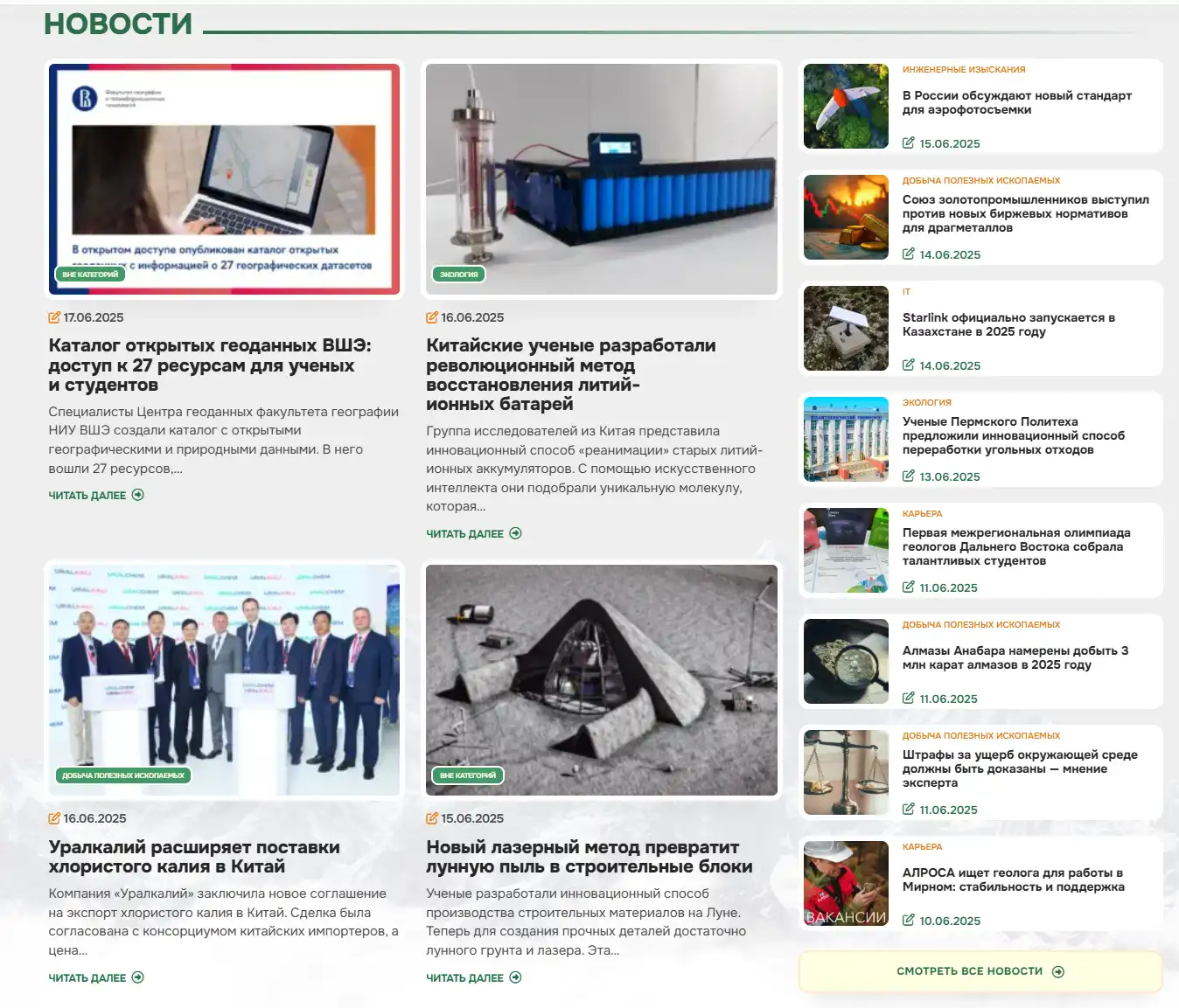
We have launched a news section, where three short articles are published every day. Now you can visit the site every day and always find something new. This solved several problems at once: it increased the frequency of updates, retained attention, and helped expand coverage. But here a new question arose: and what news to publish?
Initially, we thought that we were talking about a classic news flow: something happened right now – an accident, an incident, an event. But our first SEO consultant said something important:
“With your traffic volume, no one comes to you for breaking news. You need to do what is called green news.»
Green news – these are those that do not lose relevance for several months. Ideally, if you can Google them and find them six months later. This is primarily news about technology, changes in the industry, new solutions and trends. Such topics “live” longer, are searched for longer and work to increase traffic even after a while. We have rebuilt. And they began to publish long-lasting content: about technology, laws, industrial trends.
The result was not long in coming. Traffic increased already in January-February twice — from 500 to 1000 unique visitors per month. This was a noticeable shift. But… it still wasn’t enough.
How we came to SEO and started growing
At the end of January, I took a consultation with Ira Belova, the founder of the media MyGadget. I told her what stage the media is at now, and heard the main thing from her: Without SEO promotion we will not grow. And we don’t need someone who promotes online stores or landing pages, but content SEO specialist – a person who knows how to promote blogs and media, not product cards.
Until this moment, Alexey and I thought that we could handle it ourselves. We read something, watched guides, tried to figure it out. But in fact, we had neither system experience nor time to actually do SEO. Finding the right specialist was also not an easy task. It was necessary formulate a request, weed out candidates with commercial experience and find someone who understands how content projects work. And we succeeded – at the end of March and on April 1, we began full-fledged promotion work.
The results, of course, will not appear immediately. Typically, SEO begins to pay off within 3-4 months. But now we see steady growth – not sharp, but progressive. An SEO specialist warned that the jump usually occurs avalanche-like: at first everything goes slowly, and then there is a sharp rise. This is what we are waiting for by the end of summer.

What did the SEO specialist do? He transferred work from sensations to facts. Previously, I wrote articles on topics that seemed interesting to me. But they did not always coincide with what people were really looking for. Now we are preparing articles based on real search queries. Not blindly, but based on analysis.
But here it was fundamentally important for me: Don’t fall into the SEO trade. Each such article must remain full expert material, and not a set of keys and compilation from open sources. We talking to experts, we package the interview into a structured, useful text. This isn’t SEO for SEO’s sake, it’s… content that really helps and is easy to find through search engines.
Today we have already published two such articles, some are still in progress:
- «Gold mining»
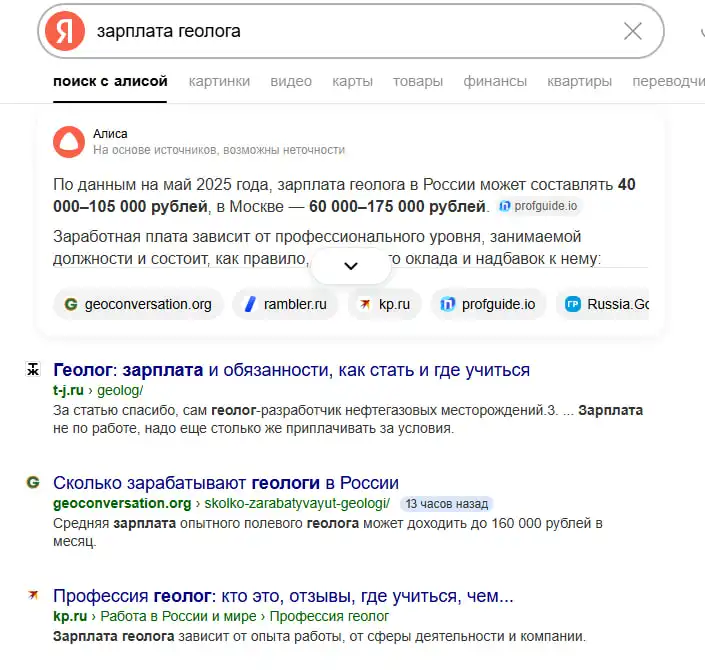
- «How much do geologists earn?»
And the second one – about salaries — on the first day got into the selection from artificial intelligence and came out to second place in search. This was the first tangible success. And I’m sure: further – only more.
How the financial model of media has changed
Initially, I went into the media with the usual model: write custom articles for companies, talk about their cases, publish them – and make money from it in order to support the project. This is how I worked before as a commercial author, and it seemed that everything would be the same here. But in February there was a conflict that completely changed my thinking. That’s when I realized:
I’m not the author, I’m the publisher.
I don’t just have a project, I have media.
We were preparing material – an interview with the head of the company. I interviewed and wrote the text. As usual, before publication I sent it to the hero – not for approval, and for fact checks. This is standard practice to avoid technical inaccuracies and maintain accuracy of wording. In our case, this is especially important, because all the articles are complex and contain a lot of terms and technical issues.
In response I received 150 edits, of which 99% is not about facts. This was a complete rewrite of the text – style, presentation. I just didn’t like the way it was written. At first I was scared. It seemed to me that if I did not accept all the edits, publication would be banned. When I carefully studied the corrections, it became clear: the text gets worse. He’s losing liveliness, precision, character. Instead of lively speech there are clichés. Instead of the sharp edges that were in the interview, there are smoothed formulations. The article was becoming bland.
I realized: if you publish it in this form, it will be no one is interested inexcept, probably, the hero of the article himself. And this contradicts the very essence of media. We write for the reader, rather than publishing a press release. And at that moment for the first time I sided with the editors. I said:
“We will correct factual errors. Everything else remains.”
A conflict began. I was threatened with a publication ban. I was stressed and turned to the Editors-in-Chief Club. They clearly explained to me:
you are a journalist.
the interview was voluntary.
You don’t owe anyone anything if you don’t distort the meaning.
At that moment it happened to me internal transformation. After all, even when creating media, thinking about the reader, I continued think like a custom author. It seemed to me that the hero’s opinion was more important than the editorial position. But in reality, I am only responsible in front of the reader. Then I grew up. I said: yes, we will correct the facts. But the material will come out Edited by GeoConversation. Because this is our job, and I am responsible for it. After this incident I formulated key rule for your media:
- We do not publish custom articles
- We do not publish PR
We only publish what really of interest to the reader. My client is not a company, but reader. And this is what determines my financial model. Now I I’m not looking for clients. I’m looking for partners — strategic or rubric partners.
- Strategic partner is the one who keeps the conversation going about the future of the industry, technology, and people. He becomes part of the face of the media.
- Partner of the section is a company that supports releases on a specific topic: career tracks, geological exploration, IT in the industry.
But the main thing: no partner influences the content. He does not define, what we write about and how we present it. And here is my strict rule: withstand pressure. Because there will always be someone who wants to influence. But my task is defend the interests of the reader. Because, no one is interested in reading PR propaganda.
Stronger together: support GeoConversation
The first year is over – and we are still small. Even for Google and Yandex, we are not yet a site that is unconditionally trusted.
But right now a new stage begins. We got grant from the Ministry of Education and Science – and this is a big step forward. It will ensure regular content release, sustainable editorial work and will allow for increased promotion. We will launch a blog, a channel under the GeoConversation brand, connect advertising in Yandex.Direct, and begin to distribute articles more widely – because the materials deserve it. Because people should know about us.
Speaking as an entrepreneur: the most painful thing is being unknown. And judging by our traffic, few people still know us. Yes, by June we reached 3,000 unique visitors per month. SEO is growing, paid promotion is being enabled, and the frequency of publications is increasing. But to move on, I need to say the main thing:
Become our partner. Support independent industry media. GeoConversation is not a stream of press releases. We talk about people, explain complex things in simple terms, change the perception of the profession, and make industry conversation lively and accessible. And it’s already working.
- If you are a company, you can become a column partner or a strategic partner.
- If you are an individual, support us with likes, comments, donations.
Any support from you helps us grow. Let’s make this media together. Because without you, this project would not exist. Without you, readers, there is no point in everything I do.