
When I was offered to become an information partner of the Geological Exploration Case Championship, at first I thought: “Cool. But obviously not for me. Students and teachers love such formats, but I’ve been working for a long time and don’t really understand how such championships work. But then I found out: you can win half a million and work with artificial intelligence. And as a gambling man, I decided to give it a try.
There were a lot of questions. Who can participate and who should the team consist of? Will it be difficult if you are not from the oil industry? And if you get confused in the interface, who will help you? To find out, I talked to Olga Fotiadi, an expert in seismic interpretation and project supervisor from Nedra Digital. This text contains her answers and my conclusions. Perhaps by the end of this article you will have decided to give it a try, too.
What is the championship and why do specialists need it
Nedra.Exploration CUP is a championship from Nedra Digital, created primarily for practicing geologists, geophysicists and engineers. Its idea was born out of a request: specialists are interested in trying new digital tools, including AI, but there is nowhere to do it. Software is bought centrally, and outside of work, there is no access or time. The championship gives a chance to try out technologies on real data, make a project and get feedback from industry experts.
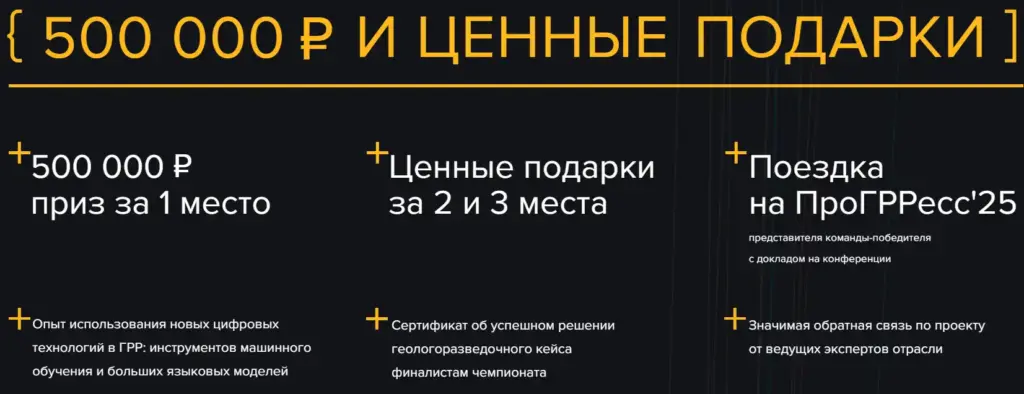
Participation is free of charge. As motivation – a prize of 500,000 ₽, certificates of finalists, useful gifts and a trip to the conference “ProGRess’25” with the opportunity to make a presentation. The works are evaluated by independent experts from different companies. Any citizen of the Russian Federation over 18 years of age – student or specialist – can take part. The main thing is interest in geological exploration, digital tools and readiness for teamwork. The championship will be especially useful for those who have long wanted to try AI but did not know where to start.
Only employees of Nedra Digital and affiliated companies are not allowed to participate – this is stated in the official contest regulations. But if you are in doubt, just apply, the organizers will give you a hint. Even if you don’t make it to the finals, this is a great opportunity to pump yourself up and try new things.
What is the challenge for the Nedra Exploration Cup participants?
The championship is based on real data from an active oil field. The real name is replaced by a fictitious one, but the geophysical data itself is taken from practice. This is not a training simulation or a made-up scenario – the case is based on a real project, just in a depersonalized form.
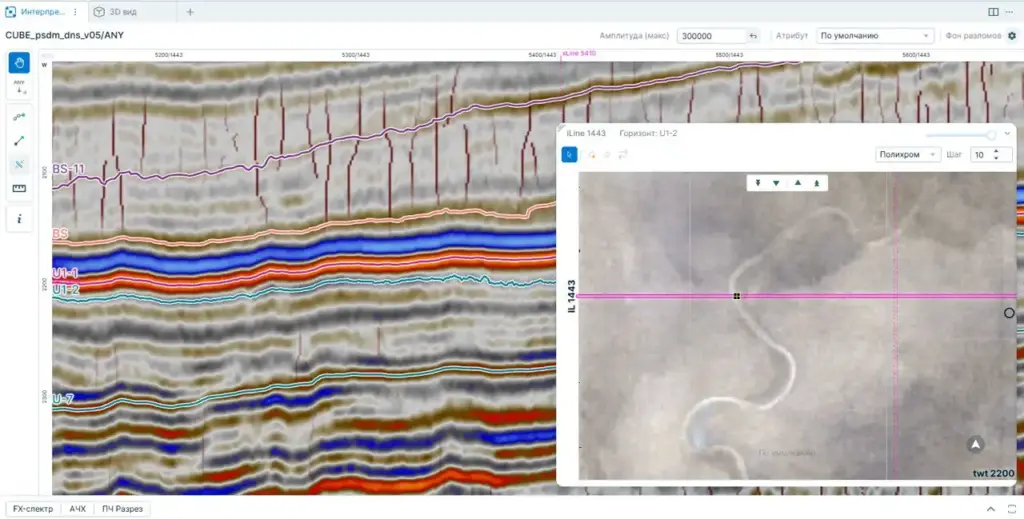
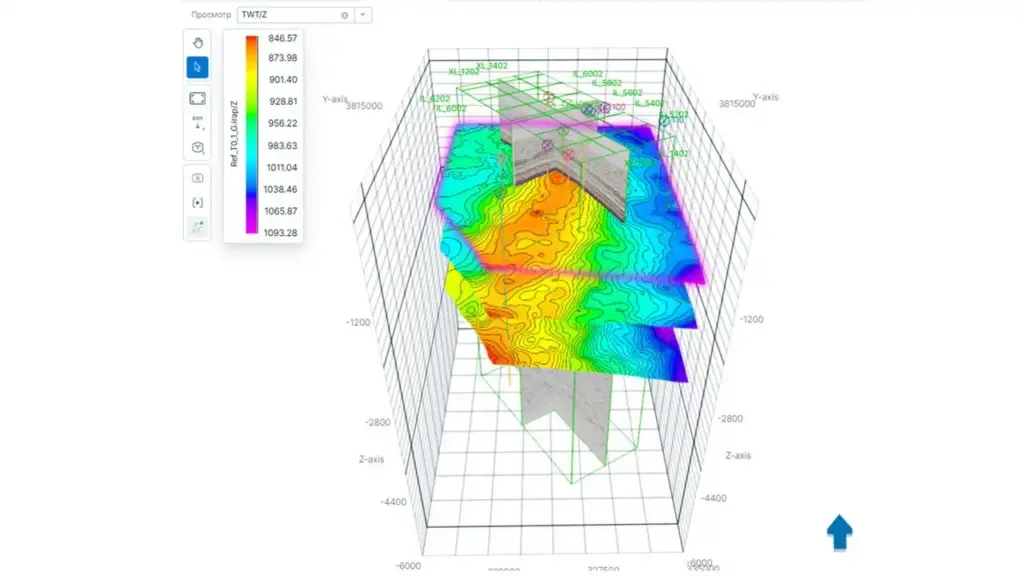
“We developed the case ourselves within the team. This is real geophysical data, and we have to work with it in a full-fledged web platform – through a browser, without installing any software. Each participant will have a personal account, and team members will be able to work together on one project,” explains Olga Fotiadi, the championship supervisor.
Participants will have access to a 3D seismic cube and will be able to start working after introductory meetings. Webinars with demonstrations of tools, procedures, and typical operations will be provided – all of them will be available and recorded.
“We will show how to work with reflective horizons: how to correlate, build a map, perform the necessary actions. The training videos can be reviewed at any stage,” Olga specifies.
Important: participants will not be processing, but rather interpreting seismic data.
“We stipulate this right away to avoid confusion: processing is not part of the task. This is not terabytes of data that you have to sit with for weeks. Everything is ready – you can start analyzing, building the seismic-geological model, and making decisions. It takes three weeks to complete. This is not a six-month production project, but a training sprint – it is important not to “lick” the result, but to go from analysis to hypotheses.
“We have included a limited but diverse number of prospects. It’s not the same case for everyone – teams will have a lot to choose from. That’s why the final presentations will be different: each team will present its own solution”.
The task is accompanied by explanatory text – what is given, what needs to be done, what criteria will be used for evaluation. Everything is organized transparently: participants receive an assignment, evaluation criteria, and training materials. But this is not a “geology from scratch” course: basic things like the basics of seismic interpretation or oil and gas geology are not taught separately. It is expected that the team already has a fundamental understanding of the subject.
What should be the result
The final result includes two key blocks:
- A project with an interpretation dataset– this may include structural maps, highlighted prospects and other materials.
- A presentation with the results of the work, designed according to a template. The organizers will give a structure in advance, indicating which sections are mandatory and what the jury will pay attention to.
“We don’t paint every line – it’s a competition. Someone will find more objects, someone will find less – and this is also part of the assessment. But we will definitely announce the basic set, especially for those who have not worked with oil projects before,” says Olga Fotiadi.
In geology, there is no single correct solution. Therefore, the logic and the number of objects worked out will be evaluated how well the materials are coordinated, how the course of reasoning is organized, how convincingly the solution is formalized.
Is artificial intelligence complicated? No
One of the tools built into the platform is artificial intelligence for interpreting seismic data. Many specialists are worried: “I haven’t worked with AI, can I handle it?” The answer is yes.
“We’ve made it as simple as possible. It is no more complicated than using Chat GPT. You don’t need to be a programmer, you don’t need to understand the architecture of neural networks – you just need to understand what you want to get as a result. Everything else is built into the platform, which is accessed through a browser,” explains Olga Fotiadi.
The training webinars will show participants how to use machine learning tools in interpretation tasks: where it helps, what can be automated, and where it is better to rely on expertise. “This is just one of the tools for interpretation, but it is important to realize that the last word should remain with the expert.”, says Olga.
Participants will also be given access to Nedra Digital’s pre-trained development language model, which will tell them how to use the platform and can answer questions about the geology and oil and gas content of the region and the properties of analogs.
Support and accompaniment: you will not be left alone
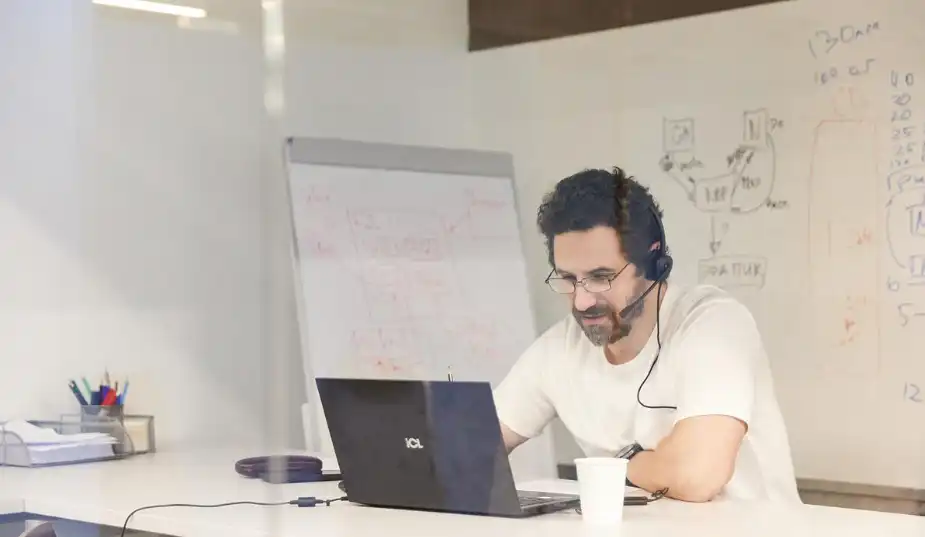
You will not be left alone with the interface and the task. From the first day, there will be a Telegram chat where you can ask any question: about the platform, stages, format of participation, technical details. Nedra Digital team supervisors will answer, and if the question has already been asked, you can always find a ready answer just above the chat.
Chat is not just tech support. It is a place where participants discuss their work, share ideas, help each other, and also ask questions. For example, where to look for a function you can’t find, or how to export a necessary layer. And such questions are the norm.
During working hours (from 9 to 18 Moscow time), the curators are in touch. If you are in a different time zone or don’t use Telegram, you can email them. All requests are dealt with, and for complex issues the team even records video instructions or sends screenshots with explanations.
In addition, participants will have a presentation manual with illustrations and clear logic of actions, and training webinars can be reviewed in a recording. As Olga Fotiadi said: “Even if you watch the webinar a hundred times and read the contest regulations, you will still have questions in the process of solving them. We know that and we are ready to help.
To participate or just to follow, subscribe to the championship channel
Announcements, tips, tutorials and news – all in one place Nedra.Exploration Cup 2025
What if I’m not in oil?
One of the frequent questions is how realistic it is to participate in the championship if you do not work in oil and gas. For example, in ore geology, engineering geophysics or ecology. The answer is that it is possible and necessary to participate.
“If you have an idea of what a seismic cube, a well, a reflecting horizon and how reservoirs are laid down – you can definitely do it,” say the Nedra Digital team.
Of course, those who work with oil and gas fields will find it easier: familiar terminology, structure of tasks, logic of work. But the basis is an interdisciplinary approach. Participation gives an opportunity to gather different experience in one team and distribute roles.
The ideal team in this case study is:
- A geophysicist (seismic engineer) who knows how to interpret the data;
- A geologist who understands the bedrock patterns and can suggest where to place the well
- a coordinator – optional. He or she may not be familiar with the subtleties of interpretation, but will take over the organization of the work, the collection and submission of results, the structure and presentation.
Teamwork is one of the key elements. We don’t require there to be a captain, but in practice there is still a person who takes over coordination,” Olga explains.
How assessment works: rules and fairness
The evaluation in the championship is based on a clear and precise system. The work of each team first undergoes a technical check. This is done by supervisors – geologists and seismologists – according to a checklist. If the project is done formally or not done at all, the team will simply not get to the finals. The main points are awarded for interpretation and results. Then it is the defense, presentation, and style of presentation. But not vice versa.
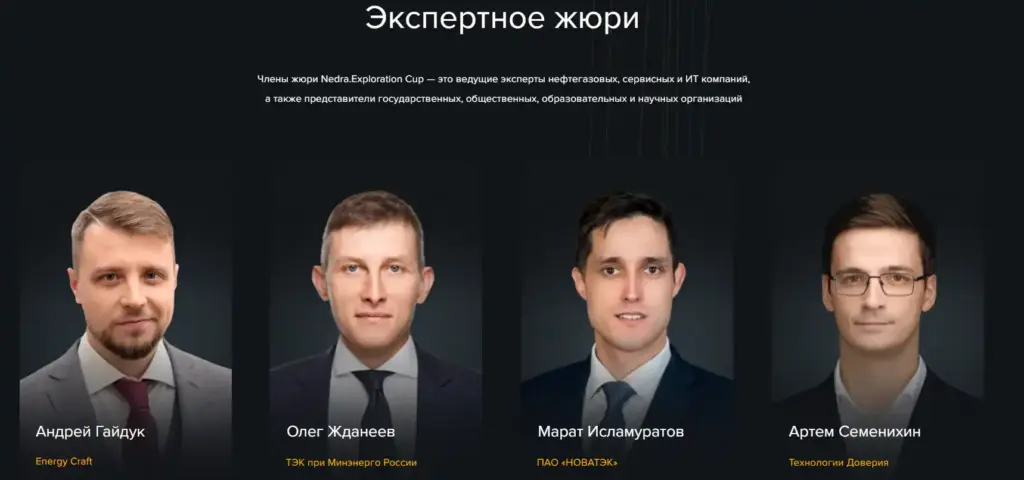
The jury experts themselves are from different companies. They evaluate projects according to certain criteria, including interpretation, logical solution, presentation and design. And if a team has really made a strong work – it will definitely be noticed. “We do not prescribe points on air to keep the intrigue until the final, but the whole procedure is completely transparent and managed according to the rules,” says Olga Fotiadi. In this championship, the main thing is not “who you are” but what you have done.
How the championship is held: step by step
How will everything be organized? Let’s walk through the steps from application to the final award. This is not an endurance marathon, but a structured sprint with clear steps, deadlines and support at each stage.
Step 1: Registration
Until August 20, you can apply for participation. It is quick: you fill in the form, confirm your data and wait for feedback. Any specialist or student over 18 years of age registered in Russia can participate.
Step 2: Confirming participation
After the registration is complete, the organizers will contact you with your contact details, confirm your participation and tell you how to access the platform. This is to make sure you don’t get lost – especially if you’re out in the fields in the summer.
Step 3: Preparation
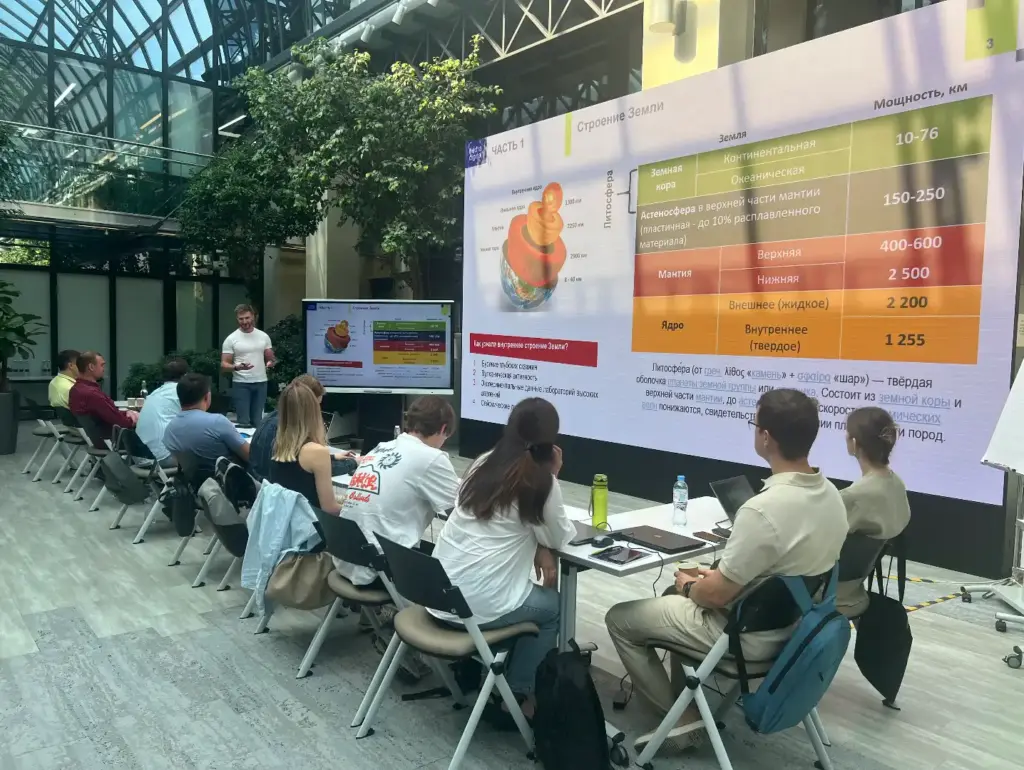
On September 1, the introductory phase will start. First there will be an organizational meeting, followed by 1-2 training webinars. They will explain how the web platform is organized, how to work with data, and where to start. If you are unable to attend, the webinars will be available in a recording.
Step 4: Solving the case
In a week’s time, all teams will simultaneously have access to the case study. Participants work with real 3D seismic data: they identify promising targets and suggest where to drill. Data processing is not required – only interpretation. They have three weeks to complete the case. This is a sprint: the goal is not to do it perfectly, but to go all the way from analysis to an informed decision.
Step 5: Finalizing the results
After the deadline, teams will have a few days to prepare a presentation with the results. The format is PowerPoint, the structure will be set. It does not need a complex or professional design – a simple and neat design is enough. The main thing is to show clearly what you have done and what conclusions you have reached.
Step 6: Verification of projects
All projects are subject to expert review: supervisors (geologists and seismologists) look at how well the work is constructed, how well it is coordinated and justified. This is not a search for the “right answer”, but an assessment of the approach and depth of development.
Step 7: Selection of finalists
Up to 15 best teams make it to the finals. An online defense before the jury awaits them: several meetings, feedback, discussion of solutions. The jury receives the presentations in advance to familiarize themselves with them. Scores are given but not published – to keep the intrigue alive.
Step 8: Results and awarding
After the defenses, the results will be announced. The representative of the winning team will be invited to Moscow, to the ProGRESS 25 2025 conference (November 24-25). There will be an award ceremony and a speaker’s speech from the stage. This trip is included in the prize package
What’s next: championships, development and community
The organizers emphasize that this is not just a case, but a full-fledged championship with a training block, a task, defenses, and a jury. Now it is planned to hold it once every two years, but the format is evolving: the team is collecting feedback and is already thinking about what tools can be added, how to improve the process, and what else to surprise the specialists with.
One of the possible points of growth is the formation of a professional community. Geologists, seismologists, IT specialists, teachers, students – everyone interested in digital solutions in geological exploration – are already uniting around the championship. So far, there is no separate community project, but the championship chat room may become its germ.
I would like to add: a living community does not start with declarations, but with a simple dialog – when one person asks a question and another answers. If such an exchange begins, it will already become a valuable result of the championship – no less important than a case or a prize.
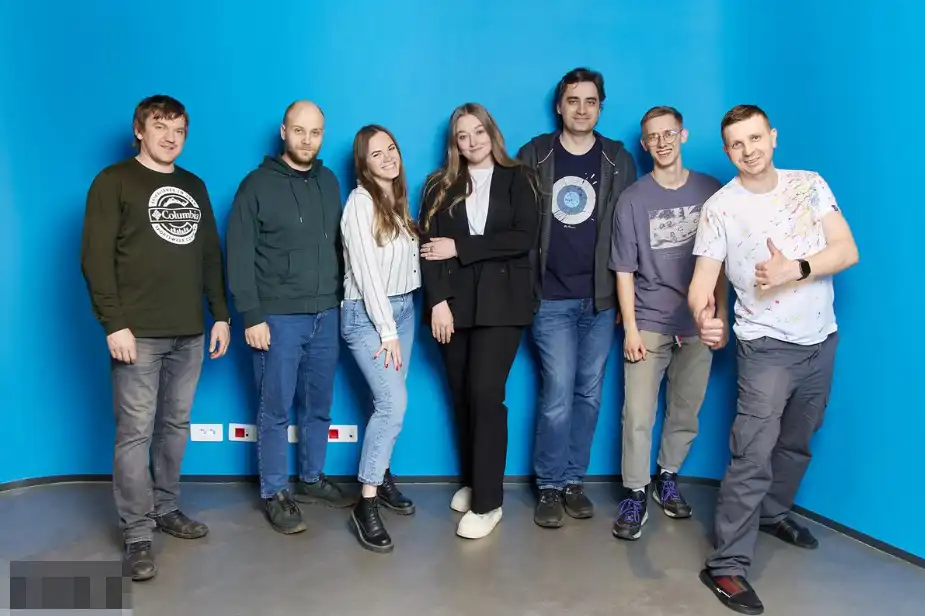
There’s more than just a case on the way out
The main prize of the championship is 500,000 ₽ and a trip to ProGRess’25. But even if you are not among the winners, your participation will give you much more than just a chance to win. It will be a case in your portfolio: seismic data interpretation, work with AI, a team project, a presentation – everything real. You can show it on your resume, discuss it at a job interview, use it as an argument for implementing digital tools in your company. Or maybe it will be the first step to changing specialization.
And then there are the people. A circle of professionals is already forming around the championship: those who want to understand, ask questions, share and do. This is a good opportunity to meet colleagues who think alike and are not afraid to learn.
Registration is open until August 20. All you need is interest, internet and some free time. You will get everything else in the process. You can register at the link.
The material was prepared with the support of the Russian Ministry of Education and Science within the framework of the Decade of Science and Technology