During Georgian Prime Minister Irakli Kobakhidze’s visit to Azerbaijan, the two sides signed an agreement to resume oil transit through the Baku–Supsa pipeline. The document provides for the restoration of Caspian hydrocarbon transit across Georgian territory to Europe, which will generate additional revenue for the Georgian budget and reinforce the country’s role as a reliable transit corridor.
The agreement was signed by Georgia’s Minister of Economy and Sustainable Development Maia Kvirivishvili, and on the Azerbaijani side by Economy Minister Mikayil Jabbarov and Energy Minister Parviz Shahbazov. Months of negotiations between the Georgian Oil and Gas Corporation, SOCAR Midstream Operation, and SOCAR concluded with a compromise: the parties agreed on a minimum guaranteed throughput level for the pipeline.
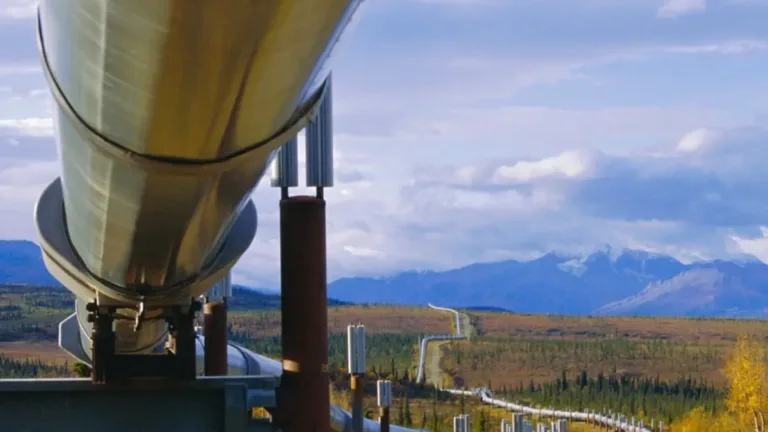
The Baku–Supsa pipeline — 837 kilometres long with a diameter of 530 millimetres — has been in operation since 1999. Its designed capacity is 7.5 million tonnes of oil per year. The route connects the Sangachal terminal near Baku to the Black Sea terminal at Supsa, enabling the export of Caspian crude while bypassing the congested Bosphorus Strait. In recent years the pipeline has been used only sporadically: 90,000 tonnes were transported through it in 2024 and 150,000 tonnes in 2023. BP-Azerbaijan has repeatedly stressed that the pipeline has not been mothballed and is technically ready to operate at any time.
Georgia’s Economy Minister Maia Kvirivishvili described Baku–Supsa as a strategic artery for the country, the wider region, and European partners, adding that the pipeline’s return to active service would strengthen Georgia’s reputation as a reliable transit state and would happen in the near future.
For Azerbaijan, reactivating this route means gaining an additional export outlet and reducing dependence on other corridors. For Europe, it represents yet another alternative supply path for Caspian hydrocarbons, enhancing energy security. The signed agreement therefore carries not only economic but also geopolitical significance, reinforcing the South Caucasus’s role in Europe’s energy architecture.
Source: neftegaz.ru
Image: haqqin.az