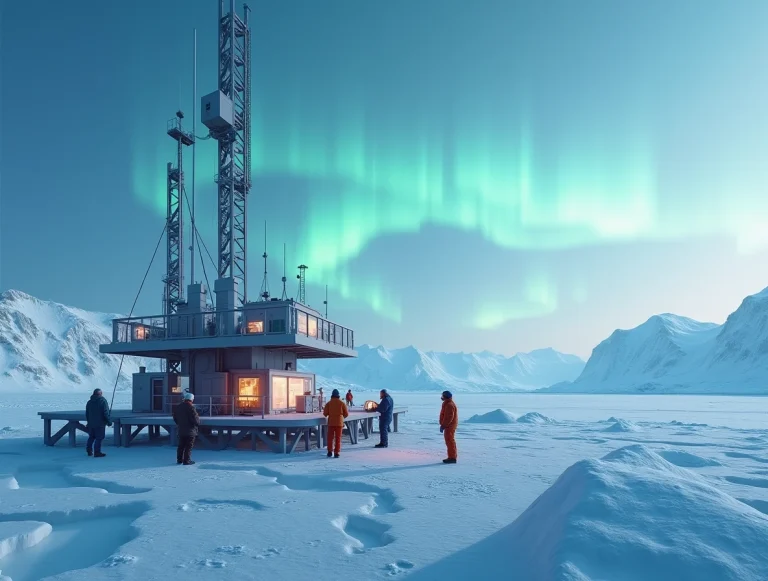
Russia’s first climate change monitoring system has been launched in the Arctic. Its main element is the Sea-Air-Wave Station (SAWS), which was successfully tested in 2024.
Scientists from the P. Shirshov Institute of Oceanology of the Russian Academy of Sciences presented a new system for studying climate in the Arctic Ocean. The development was announced on the eve of Arctic Day, which is celebrated on February 28.
The system includes marine and autonomous devices that monitor the environment. Its key component is the SAWS station. It has been tested in harsh Arctic conditions and has demonstrated high accuracy in measuring greenhouse gases.
The new system will help scientists study the atmosphere above the ocean and surface layers of water. This is important for analyzing energy and gas flows in the region.
The Arctic is a unique region where climate change is occurring faster than in other parts of the planet. It is called the “world weather cuisine”. The ocean plays a key role here, absorbing about 92% of the excess heat that is released due to human activities.
The system was developed within the framework of the “Unified National System for Monitoring Climate-Active Substances” project. The work involves six scientific groups that study changes in land and ocean ecosystems.
Source: neftegaz.ru