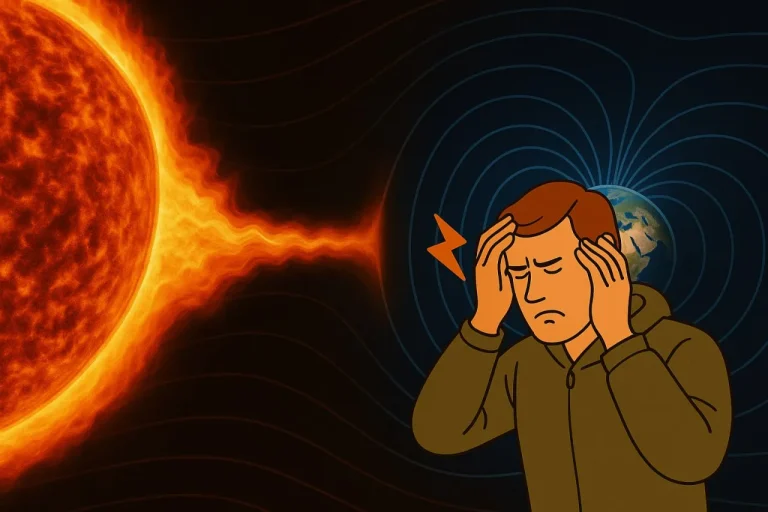
“Today there is a magnetic storm – take care of yourself!” — such warnings are sounding more and more often. Some people complain of headaches, others associate insomnia and apathy with storms. The news is frightening about solar flares and possible technical failures.
But is there really cause for alarm? Or is this another myth reinforced by alarming headlines? In this article, we figured out what exactly happens in the atmosphere during storms, how it affects technology – and whether it affects humans at all. Gleb Zagorsky, an employee of the Arctic and Antarctic Research Institute, helped us with this. Spoiler: don’t panic.
Magnetic storms – how they appear and can they be measured?
Thermonuclear reactions constantly occur on the Sun – in its depths, hydrogen turns into helium, and a colossal amount of energy is released. It is through these processes that the Sun emits light and heat.
But this energy also generates powerful plasma flows inside the star, which, in turn, form a complex and unstable magnetic field. It experiences glitches from time to time, especially in the sunspot area. This leads to flares and coronal mass ejections—giant ejections of charged particles into space.
This is how the solar wind is born – a stream of plasma that can move at speeds of up to several million kilometers per hour. When this flow reaches the Earth, it collides with the magnetosphere and causes current disturbances in the ionosphere. If they are strong enough, we observe a magnetic storm – this is a long-term (from several hours to a day or more) disturbance of the Earth’s magnetic field that can affect the operation of technology and communications.
How do space geophysicists work – and are they really developing “secret weapons”? Read our article: Secret weapon or science? What space geophysicists actually do
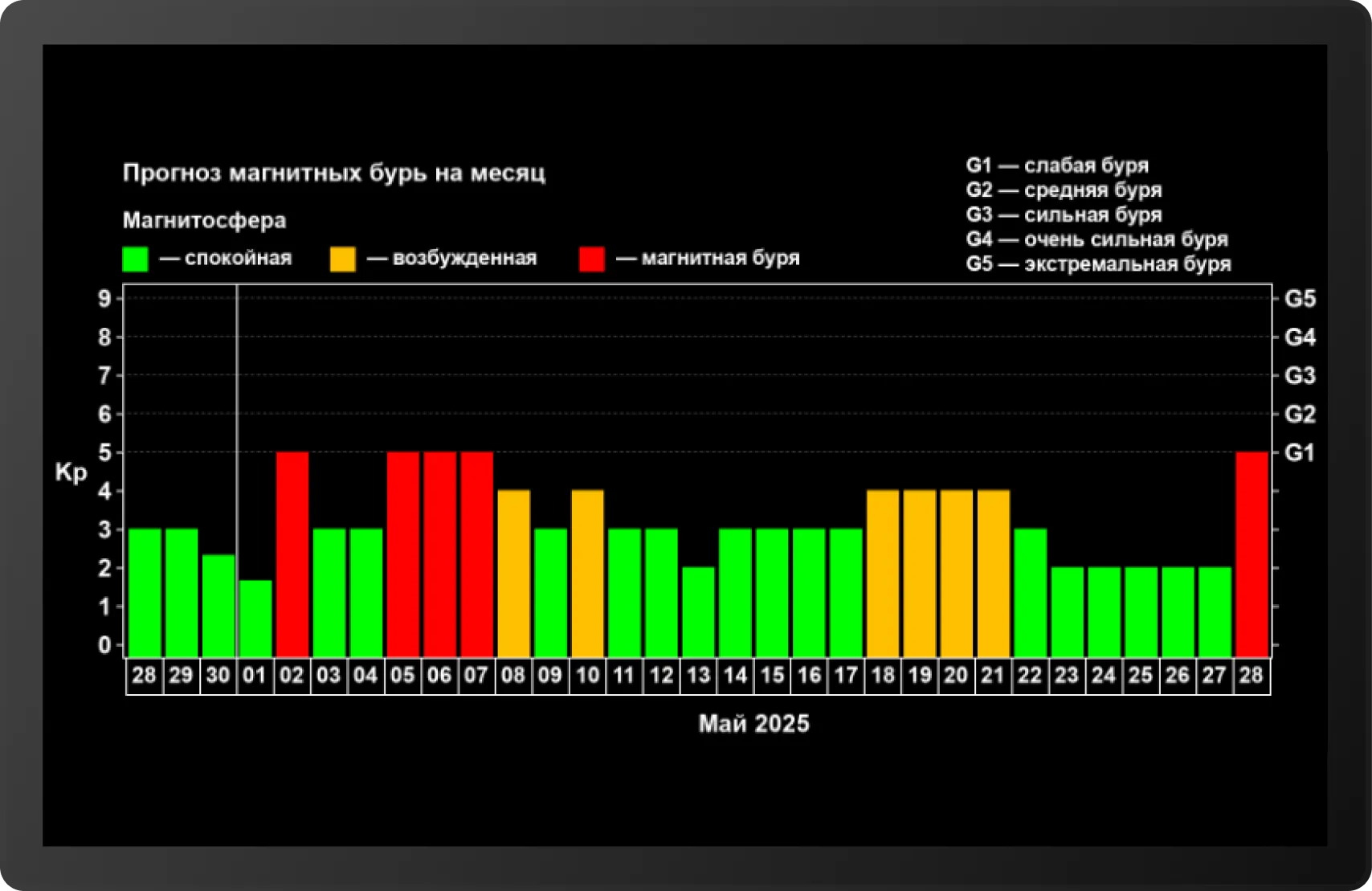
To understand how strong a magnetic storm will be and what consequences it may have, scientists measure its intensity using special scales. There are several such scales, but the Kp-index and G-scale are most often used:
- The Kp index is a numerical assessment of geomagnetic activity, which is calculated every three hours. Values range from 0 to 9: the higher the number, the more powerful the storm;
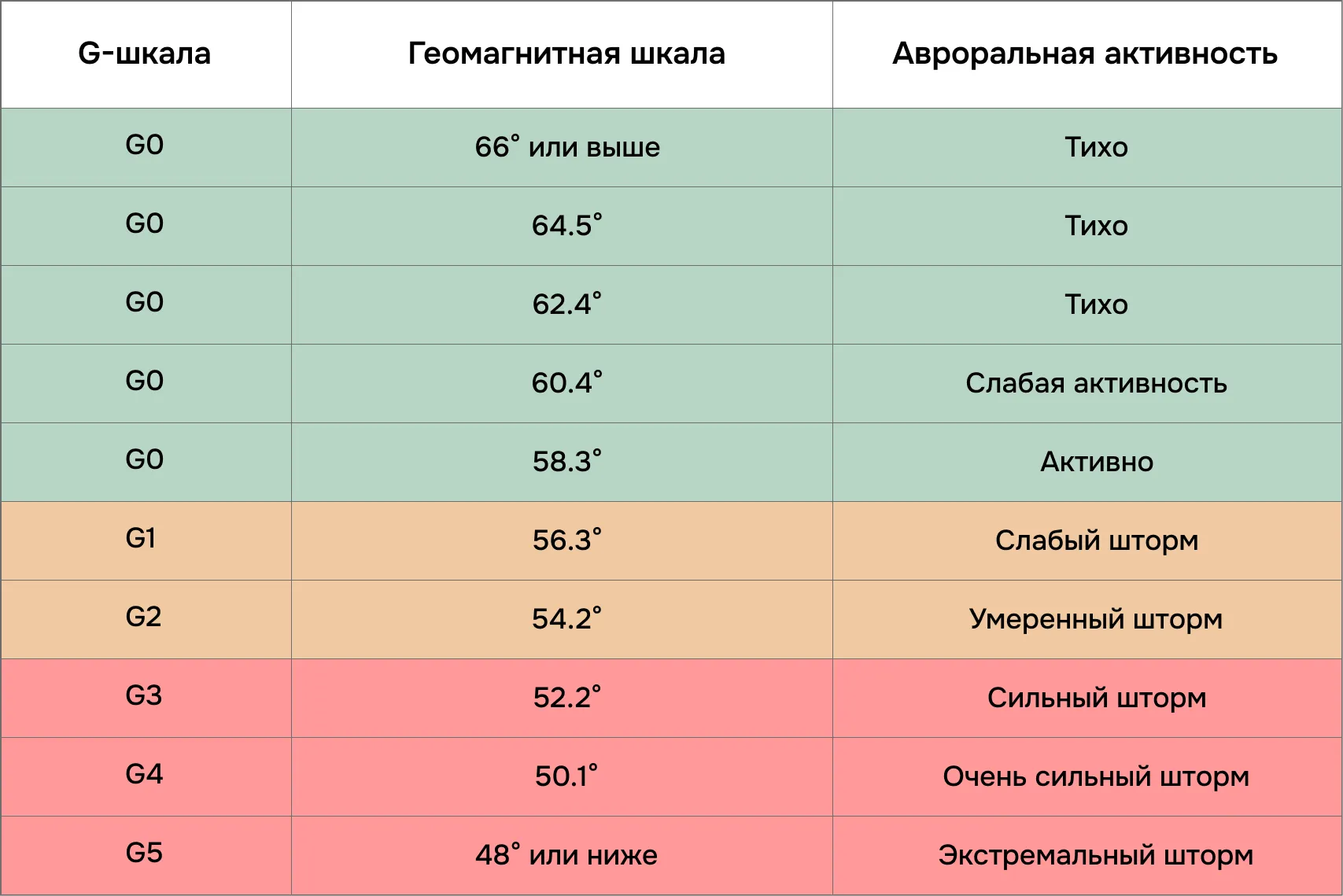
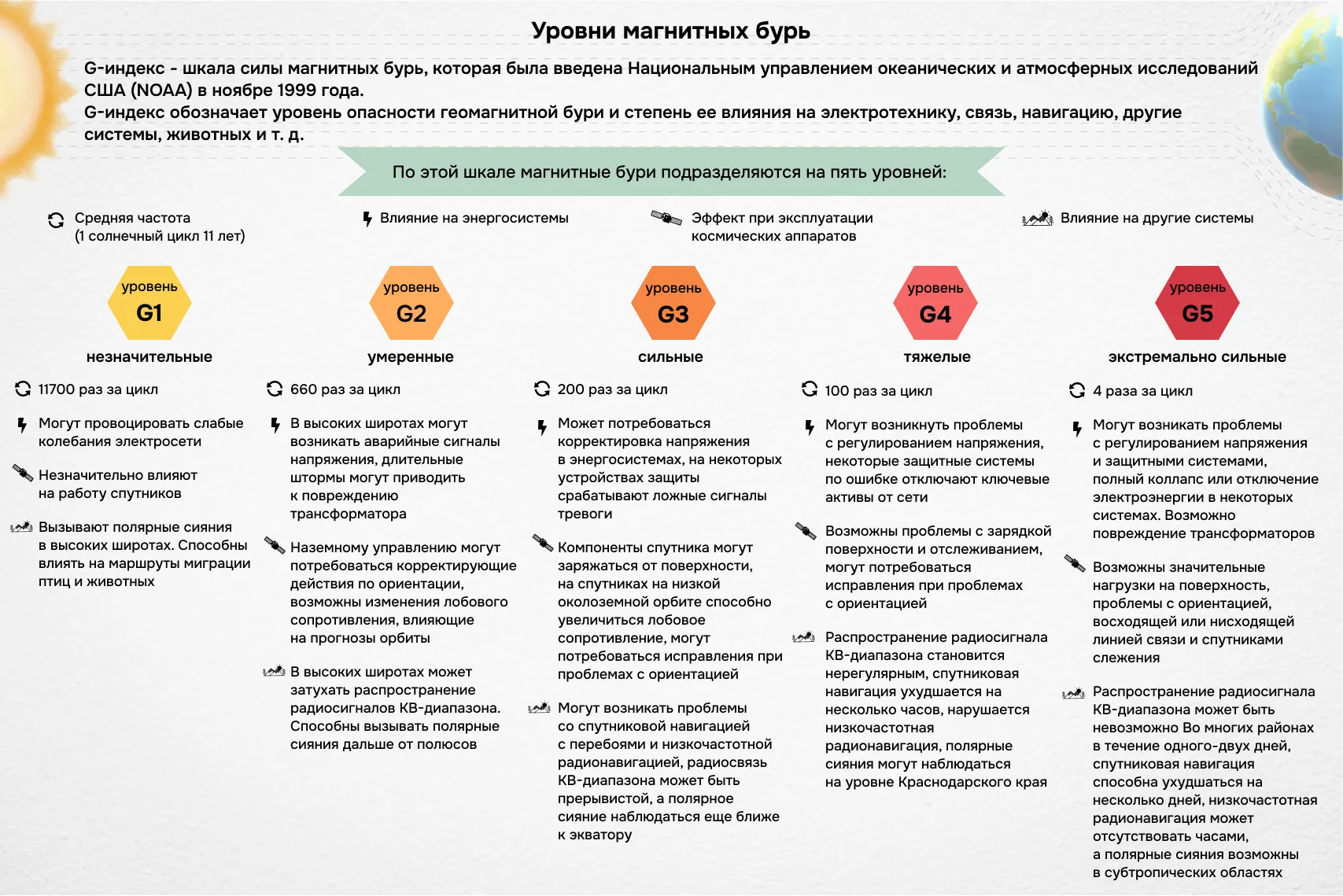
- The G-scale is a more visual and understandable system developed by NOAA. It includes 5 levels, from G1 (mild storm) to G5 (extreme). It is by this method that one usually evaluates whether it is worth waiting for the northern lights, communication failures and other effects.
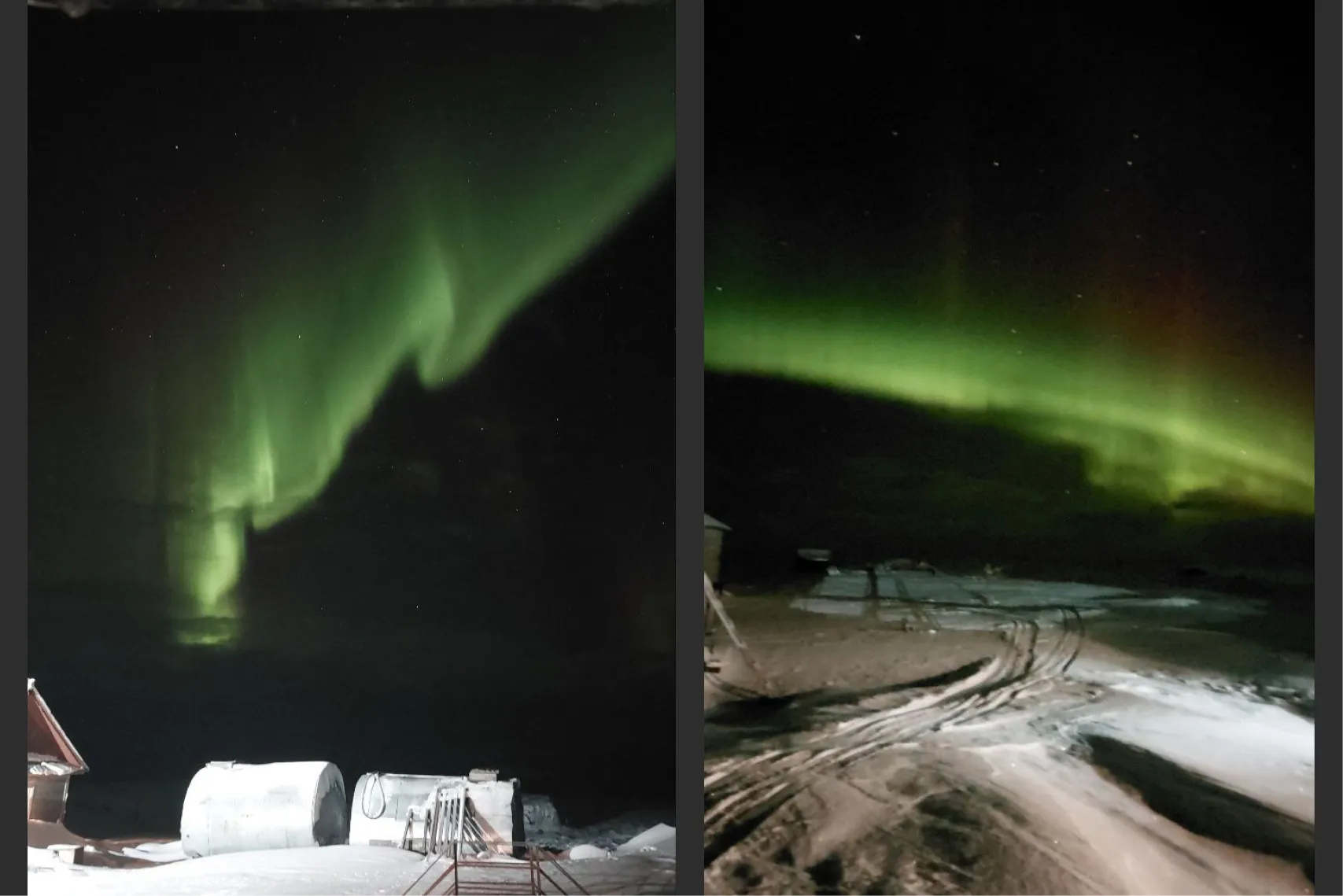
Determining geomagnetic activity indices helps predict powerful storms, as well as make forecasts for the appearance of such phenomena as the Northern Lights at different latitudes.
When the Sun “turns off” the Earth: the most destructive magnetic storms
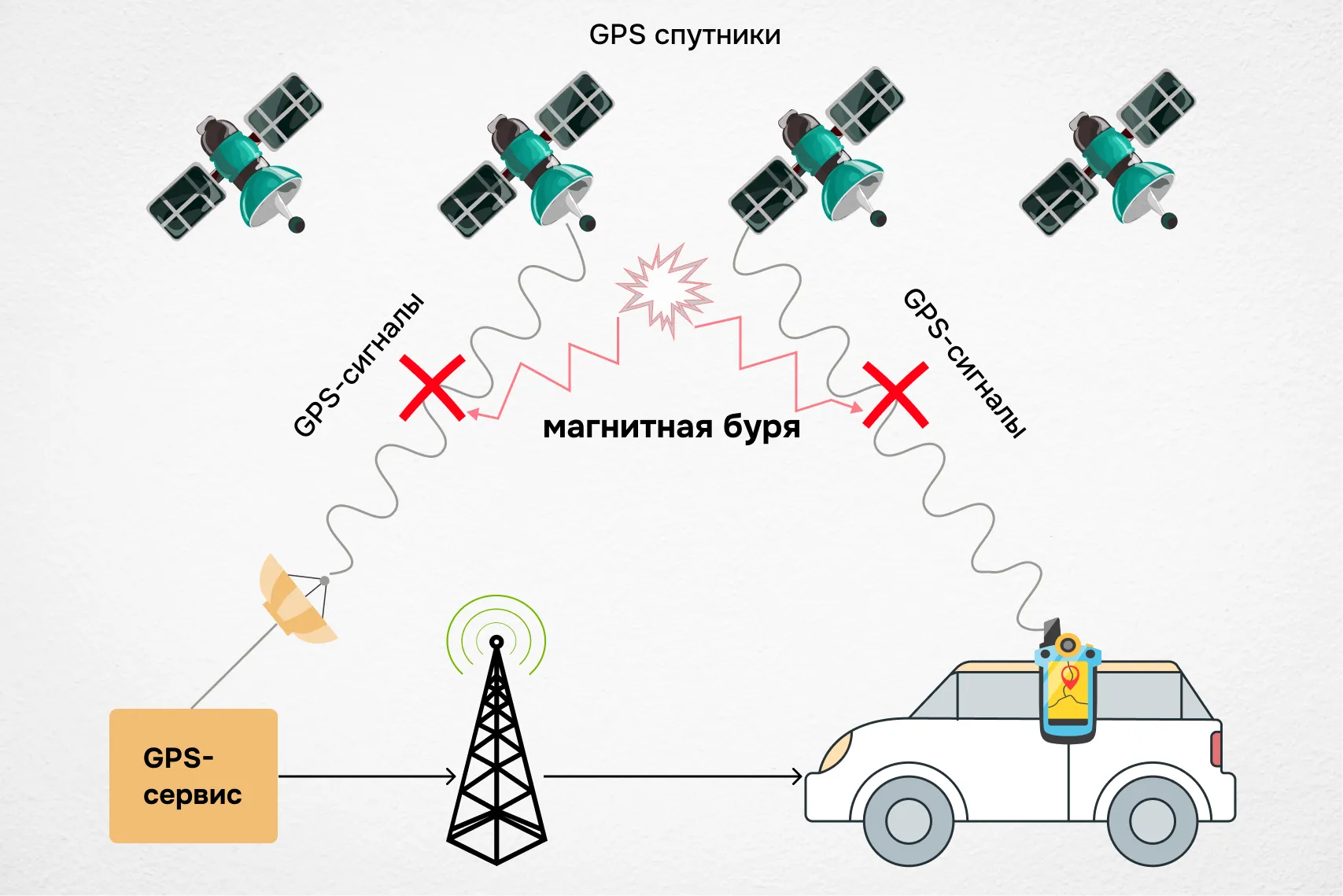
Today we know that strong magnetic storms can cause disruption to satellite communications, GPS and power grids. But there have already been cases in history when the consequences of solar activity became truly catastrophic.
We have collected three of the most famous events – from the first recorded superstorm in the 19th century to attacks on the digital infrastructure of the 21st century. This list includes not only the scale of destruction, but also an understanding of how humanity gradually became aware of the threat and learned to resist it.
Carrington Event, 1859: First recorded superstorm
In September 1859, British astronomer Richard Carrington became the first person to observe and document a solar flare. Just 17 hours after it began most powerful geomagnetic storm in history.
Against her background telegraph systems failed in Europe and North America. Some devices continued to transmit signals without connection to a power source, and the telegraph operators received electrical shocks and burns. Polar lights were observed even in the tropics – in Cuba, Panama and Hong Kong.
At that time, humanity did not yet have satellites and the Internet, but even the telegraph turned out to be vulnerable. If a storm of this magnitude were to occur today, it could cause mass communication blackouts, navigation failures, failure of satellites and energy systems. This event became the starting point in history space meteorology and regular monitoring of solar activity.
Quebec event, 1989: millions without power
In March 1989, a massive solar flare caused powerful geomagnetic storm, the consequences of which were felt by millions of people. For 90 seconds Quebec’s power grid is down: more than six million residents were left without electricity.
The reason was induced currents in power lines that overloaded and damaged transformers. In addition to the blackout, there were recorded satellite malfunctions and radio communications disruptions around the world. The scale of the storm was such that auroras have been observed even in Mexico.
Losses amounted to tens of millions of dollars. After this incident, Canada and the USA began revise electrical grid standards, strengthen the protection of transformers and implement geomagnetic activity monitoring systems. This event became turning point in engineering practice and understanding the vulnerability of land-based infrastructure.
Halloween Storm, 2003: satellites malfunctionI
In late October and early November 2003, a series of powerful solar flares caused one of the most destructive storms of the 21st century. She disrupted work American GPS system – there was no connection for 30 hours.
The storm caused disruptions in navigation, satellite communications, air travel, television and weather observation. In some areas it was recorded power outages, and communication with dozens of satellites (including scientific and commercial) was temporarily lost. If in 1989 mainly ground-based systems were affected, then in 2003 space infrastructure comes under attack – from satellites to GPS and aviation services. This event showed that even a moderate storm can paralyze digital infrastructure, critical to modern economics and security.
Why it’s important to prepare, even if storms don’t happen every day
Strong magnetic storms do not occur very often. But every year Our dependence on technology is growing – from the Internet and satellites to power grids and banking infrastructure. Even short-term disruptions in the operation of these systems can lead to serious consequences: disruption of transport, communications, industry and financial services.
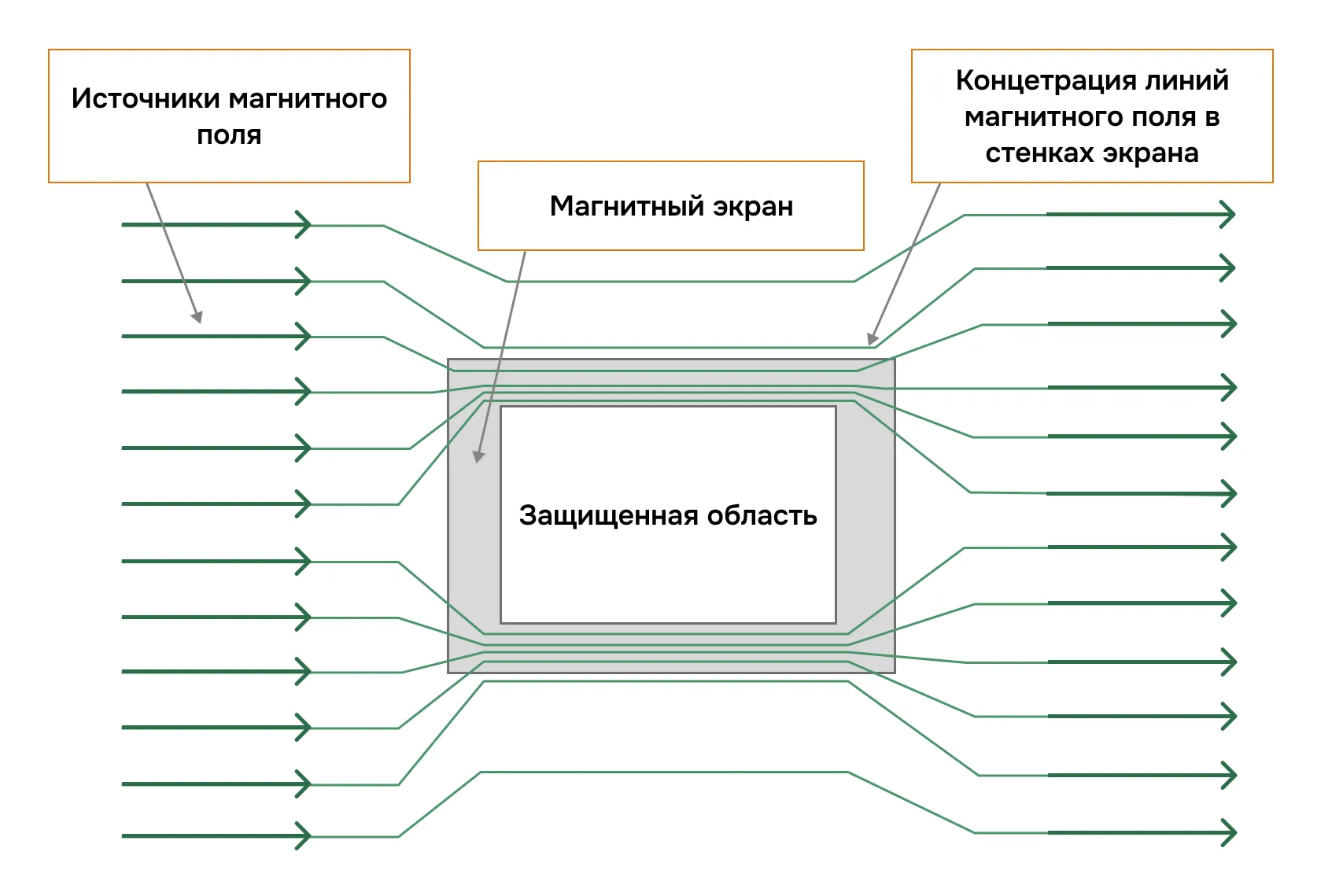
One way to protect equipment is ferromagnetic screens, which help shield sensitive components from external magnetic fields. They are used both in the energy sector and in consumer electronics – for example, to protect transformers and high-power cables.
Nevertheless, It is not yet possible to completely protect infrastructure from severe storms. Therefore, it is no less important to develop monitoring, early warning and backup systems.
Does this affect us? Magnetic storms and human health
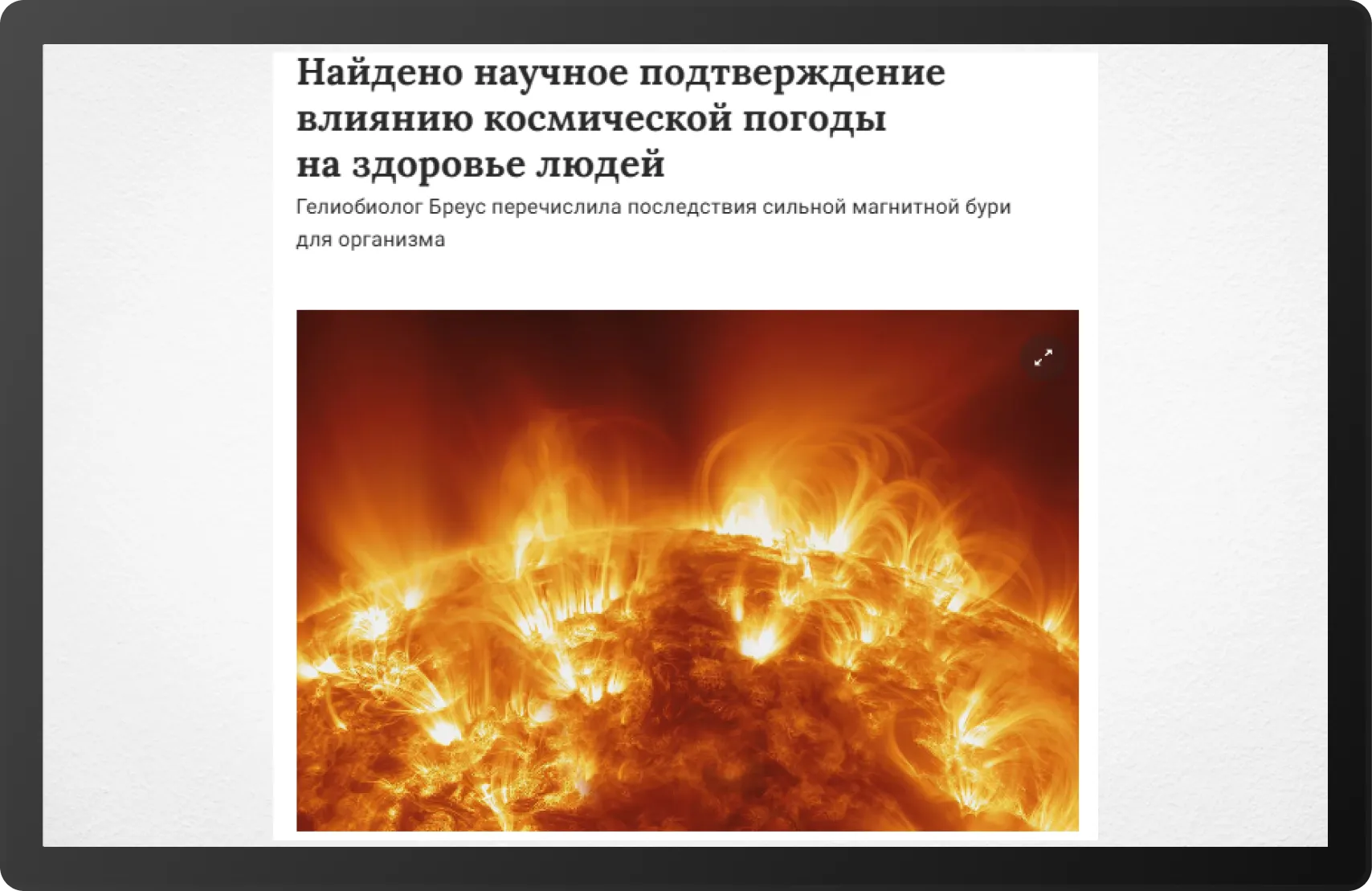
During magnetic storms, many complain of headaches, insomnia, pressure surges, anxiety or exacerbation of chronic diseases. Forecasts of solar activity sometimes sound almost like medical warnings – the idea of the influence of storms has become so firmly entrenched in mass perception.
At first glance, this seems logical: a magnetic field affects metal, there is iron in the human body – perhaps we also feel these changes. But for today no scientific evidence, confirming such a connection. Research on the effect of magnetic storms on health provides conflicting results. They rarely take into account other possible reasons for their well-being – stress, lack of sleep, anxiety, the media field. Often the samples are too small and the statistics are not reliable enough.
“If you want, you can find a correlation between anything. But this does not mean that one causes the other,”
— Gleb Zagorsky, geophysicist, Arctic and Antarctic Research Institute
In addition, state perception is influenced by self-hypnosis. If a person hears that “it’s a storm today,” he can begin to listen more carefully to himself – and associate any sensations with this factor. This is a manifestation nocebo effect – a psychological mirror of the placebo effect.
Science cannot yet give a definite answer. Magnetic storms cannot be studied in the laboratory or isolated from other factors. Not found yet and biological mechanism, through which magnetic field fluctuations could directly affect health.
If you want to figure out whether solar activity affects your condition, do a simple experiment: Don’t read storm forecasts for a few weeks, but write down how you feel every day. And then compare your observations with a graph of geomagnetic activity. You might be surprised by the results.


How to distinguish science from pseudoscience
Magnetic storms are one of those topics where it is easy to find next to scientific facts speculation, myths and false statements. Even conscientious authors sometimes cite outdated data or unverified research.
In order not to get confused in the flow of information and not to succumb to alarming headlines, it is useful to understand how science works — and by what signs can one distinguish verified data from pseudo-scientific versions.
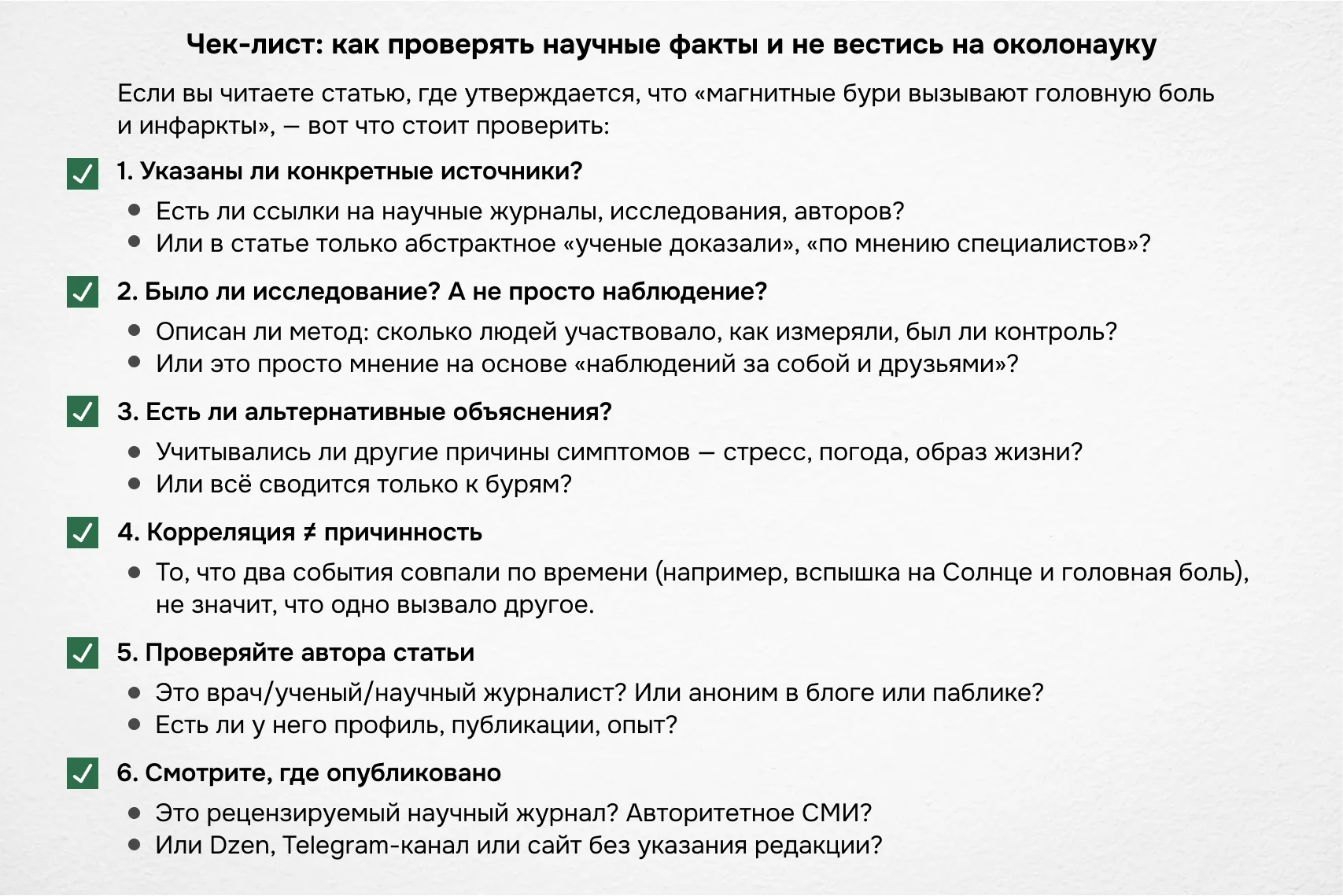
We have prepared small checklist, which will help you check such materials – not as an expert, but as simply an attentive and critically thinking reader.
Checklist: how to check scientific facts and not be fooled by pseudo-science.
Technology is at risk, health is in question
Magnetic storms are a real natural phenomenon that can affect the operation of equipment: disrupt communications with satellites, disable power grids, and cause navigation failures. That is why scientists and engineers closely monitor solar activity and develop protection systems.
As for well-being, everything is not so simple here. Science does not yet have reliable data confirming the direct impact of storms on human health. Many of the symptoms with which they are associated can be caused by other reasons, from stress to suggestion.
Instead of worrying about every storm forecast, it’s better to understand how nature works—and trust trusted sources. Awareness is the best defense. This means you have already taken a step in the right direction. How do you feel about magnetic storms? Have you ever noticed a connection between solar activity and your well-being? Share your observations in the comments – it will be interesting to compare impressions and views.