Murky water, reddish rivers, valleys dug up by bulldozers — this is how most people imagine placer gold mining. It seems like a relic of the “gold rush” — primitive, barbaric extraction that brings only losses and environmental scandals.
Why is this industry surrounded by continuous prohibitions, complaints, and conflicts? What lies behind placer mining — indifference to nature or a convoluted system where it’s impossible to operate legally? Alina Pavlovskaya, a geologist from Magadan who has been supporting licenses, projects, and reports in this field for nine years, explains how placer gold mining actually works. Let’s delve into it together.
Placers are Not Mines
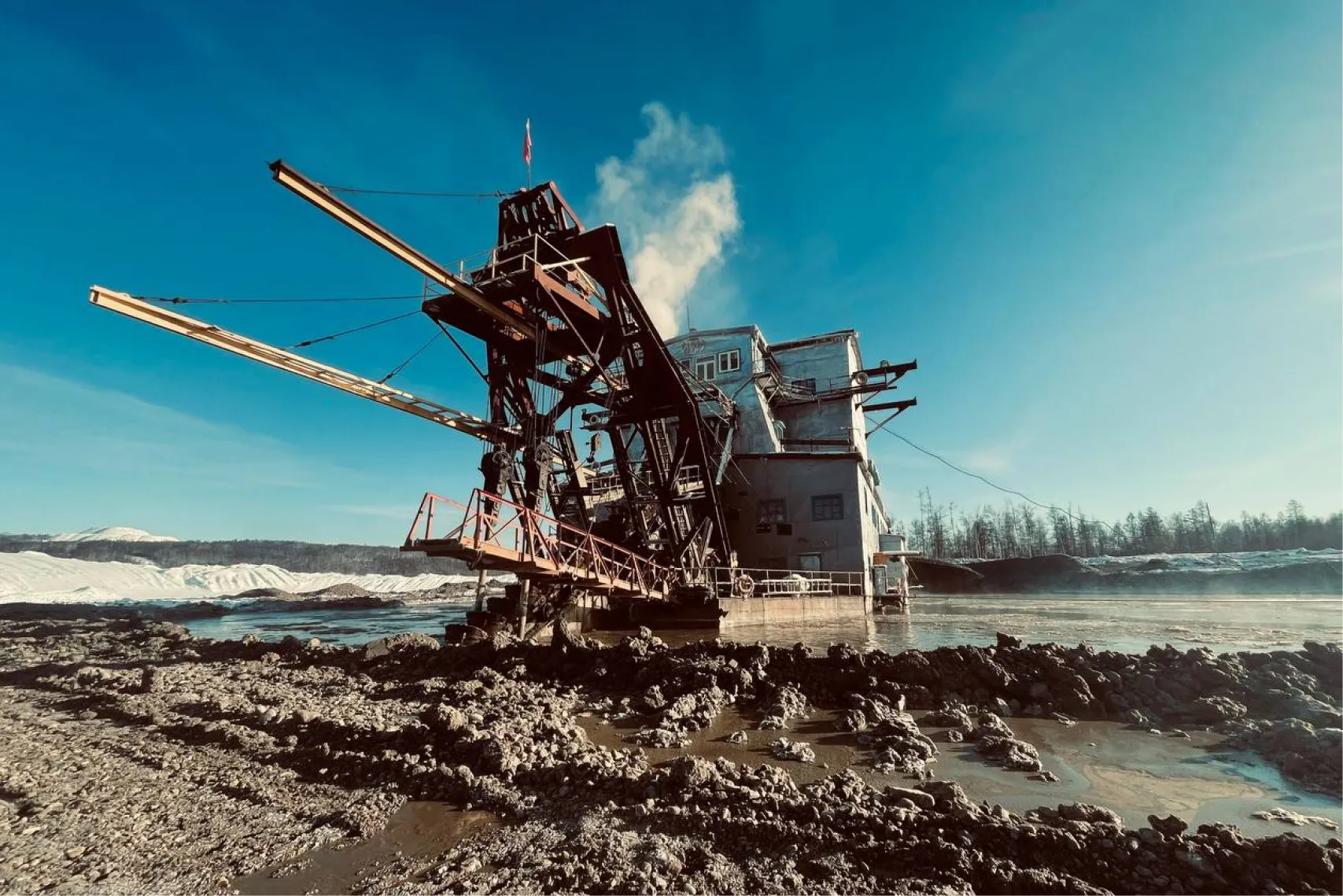
Currently, the biggest problem, as I see it, is that general rules are applied to both lode and placer deposits. And this is incorrect. When a lode deposit is found, everything is clear: first prospecting, then exploration, large investments, a processing plant, huge sums of money. Plans can be made for 10 years ahead, documentation prepared, programs outlined, and economics calculated. But our situation is completely different.
A placer is not a monolithic object. It is, in essence, a concentrate of products from the destruction of a lode deposit. But this concentrate is uneven — rivers, temporary streams, and rockfalls mix everything up. And gold in placers is distributed in patches: present in some places, absent in others. We start excavating a polygon, and it doesn’t yield (editor’s note: the site does not show industrial gold content during washing). This is normal. The reasons vary — gold fineness, quality of exploration, geology.
Placer mining has always relied on mobility. Today there’s gold in one stream — tomorrow we move to an adjacent one. That’s how it always worked. If a site doesn’t yield, the subsoil user simply moves on to fulfill their plan. But now everything has become more complicated. To move to another polygon, one needs to amend the technical project, obtain water and forest permits. Water permits usually go through quickly — within a month, but forest permits now take three months. For the North, this is almost the entire season. While waiting for approvals, equipment stands idle, people are out of work, and the enterprise incurs losses.
They force us to live by the rules of lode mines, and that is the main problem.
Ecology: Real Threats and Formal Requirements
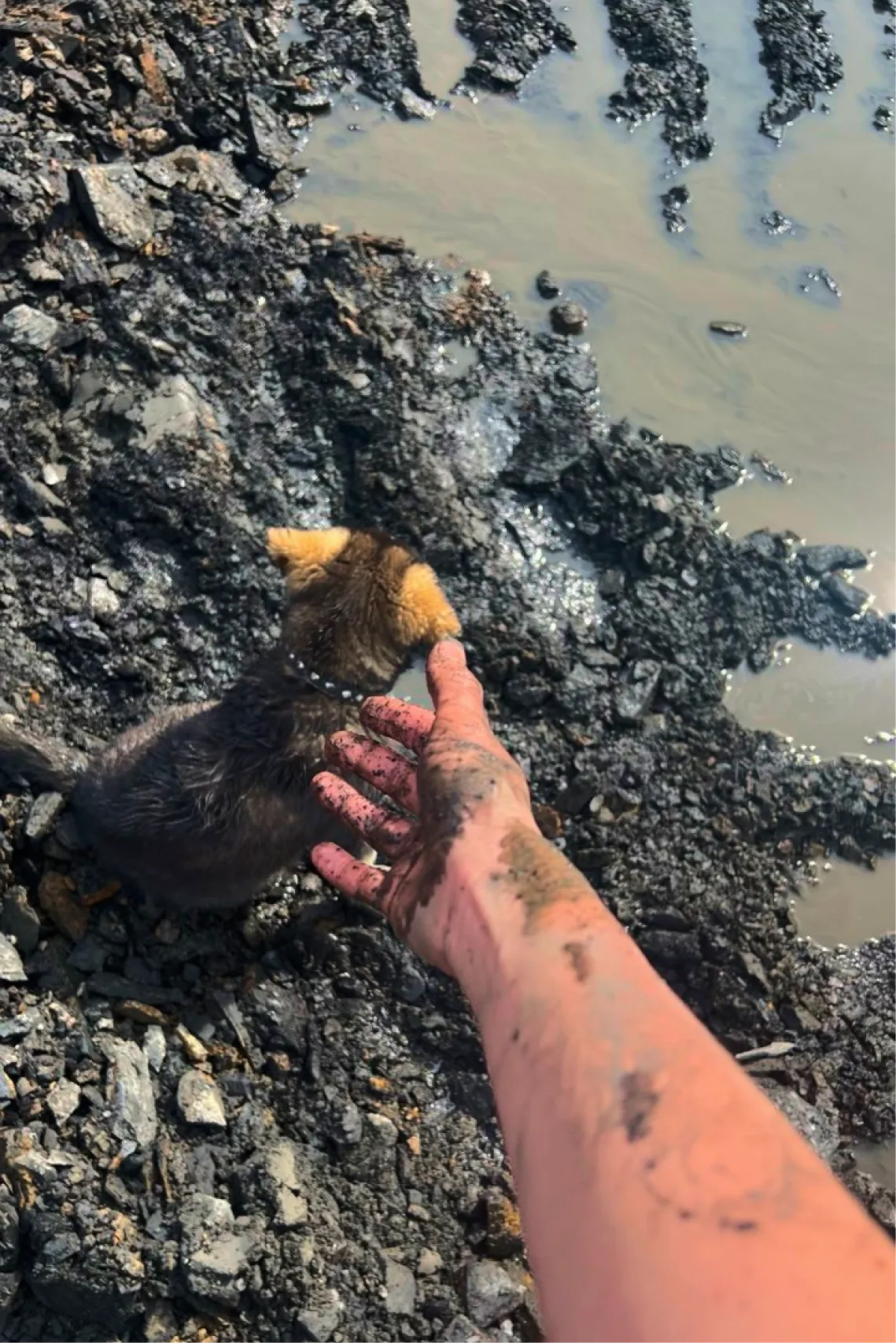
Today, even environmental regulations for placer enterprises are written as if we operate lode mines. The requirements are cumbersome, unmanageable — and often hinder nature more than they help. Environmental control is necessary, but the rules must consider where and how we operate. When standards are written by template, both enterprises and nature itself suffer. It is immediately clear here that we are perceived as lode mining enterprises, although we have a completely different specificity. All of this manifests in concrete things — from reclamation to waste management.
Reclamation That Doesn’t Work
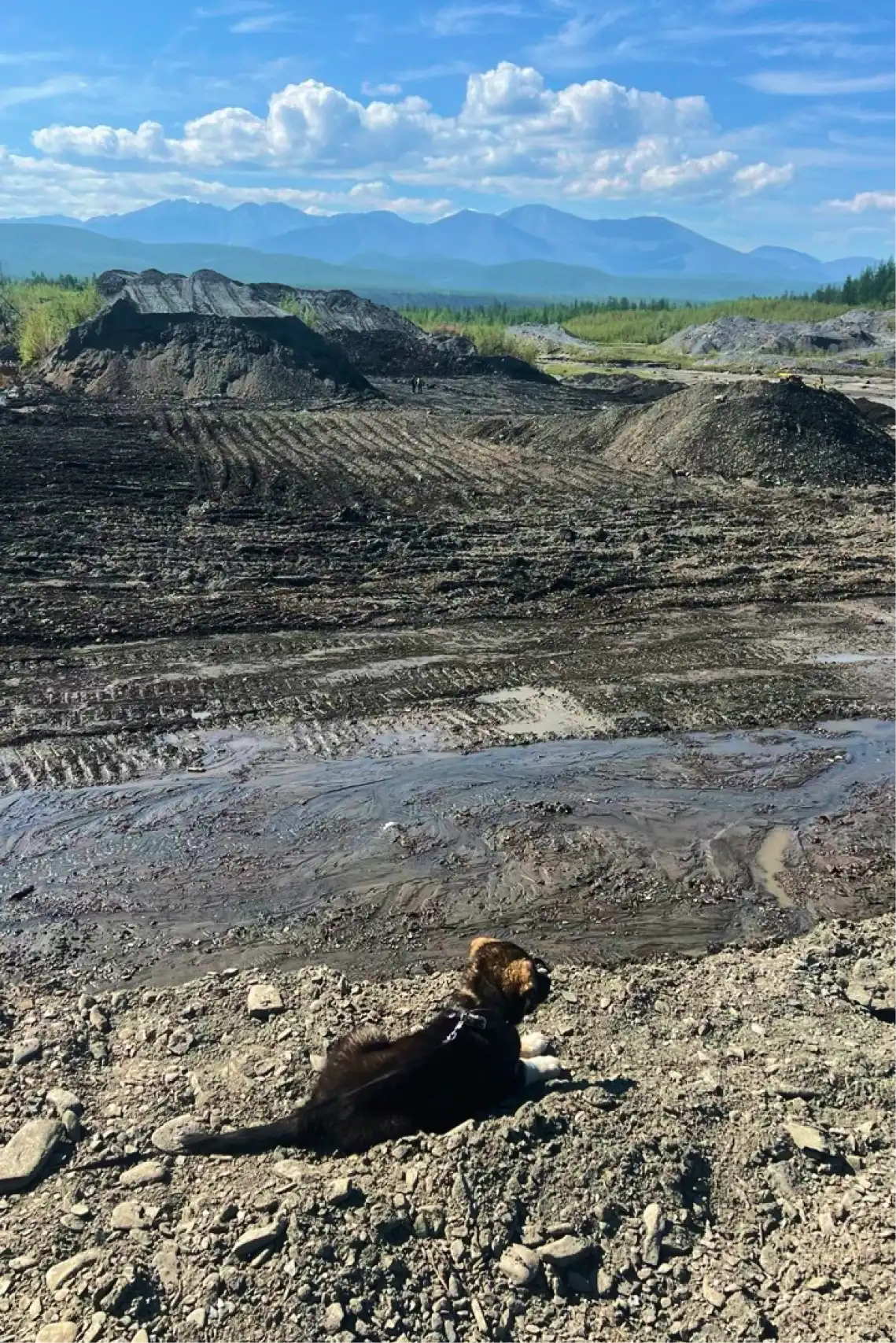
In the Magadan region, we are required to carry out reclamation according to the same standards as in Central Russia: “restore the soil layer,” “plant trees.” But in the North, this is simply impossible. There are no fertile soils here — nothing to “restore.” You can’t bring chernozem here, and it won’t do any good — it won’t take root. We have different climatic conditions, different terrain, a different ecosystem.
Nature here copes perfectly well on its own. After a couple of years, Siberian dwarf pine and alder thickets appear on the worked-out site — everything overgrows naturally. This is true reclamation, living, natural. But according to regulations, such sites are considered “unreclaimed.” And we are forced to plant vegetation that simply does not survive. As a result, we are literally burying money in the ground.
I always say: let’s do everything wisely. We have the Institute of Biological Problems of the North — this is their specialty. Let them develop regional reclamation standards that take into account the specifics of our territories. We, the subsoil users, are ready to pay for this. After all, it is much more reasonable to direct money towards real research than to formal compliance with dead rules.
I recall how the chief geologist of the Magadan region, Yuri Prus, used to say: in Soviet times, they tried to carry out “centralized” reclamation — and simply silted up the river valley. When everything was left as is, the river restored its course on its own. Nature here knows how to heal itself — we just need not to interfere.
Tailings — “Hazardous Waste” with Nothing Hazardous About Them
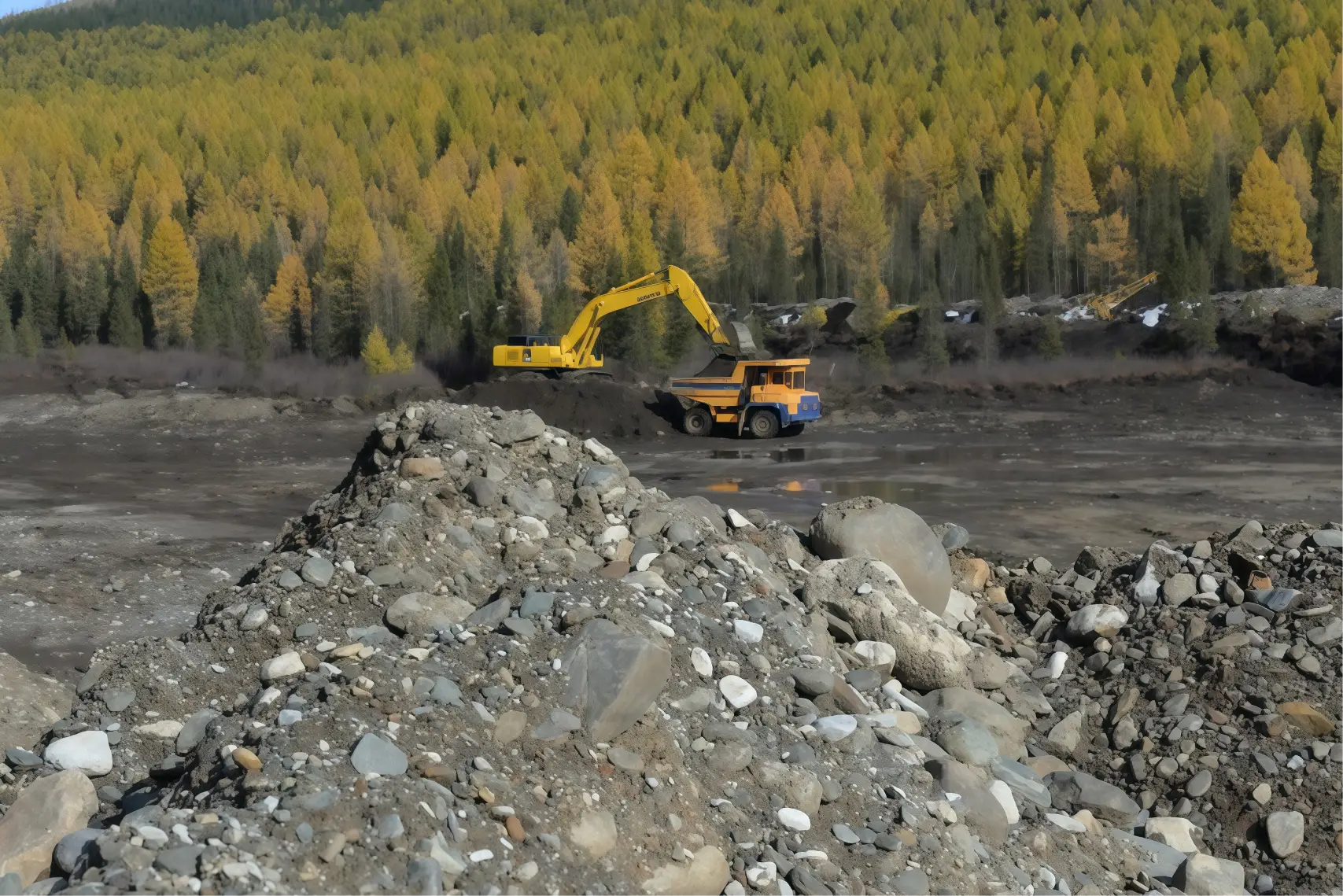
When uniform waste management rules were introduced for all enterprises, it turned out that we were simply equated with lode mines. For lode deposits, this is logical — there are tailings ponds, reagents, cyanides. But we have nothing of the sort. Tailings are just ordinary washed stones. They contain no chemicals, no reagents, nothing hazardous. They are simply inert material, washed clean of clay by water, but according to documents, they are classified as waste. To “store” them, special sites must be created, expert reviews passed, permits obtained — as if it were a tailings pond of a mining complex.
In reality, there is nothing harmful in tailings. Moreover, they are often reprocessed when technologies change or the price of gold increases. This is normal practice: gold can remain in the tailings, and with new equipment, it is extracted again.
But the system makes no distinction between lode and placer enterprises. This leads to an absurdity: you mine gold cleanly, without harm to nature, yet on paper, you are a violator. The classification of waste for placers needs to be reviewed separately. Until this happens, it is impossible to implement real environmental protection measures — all time is spent on approving things that pose no danger.
When Ecology Truly Matters
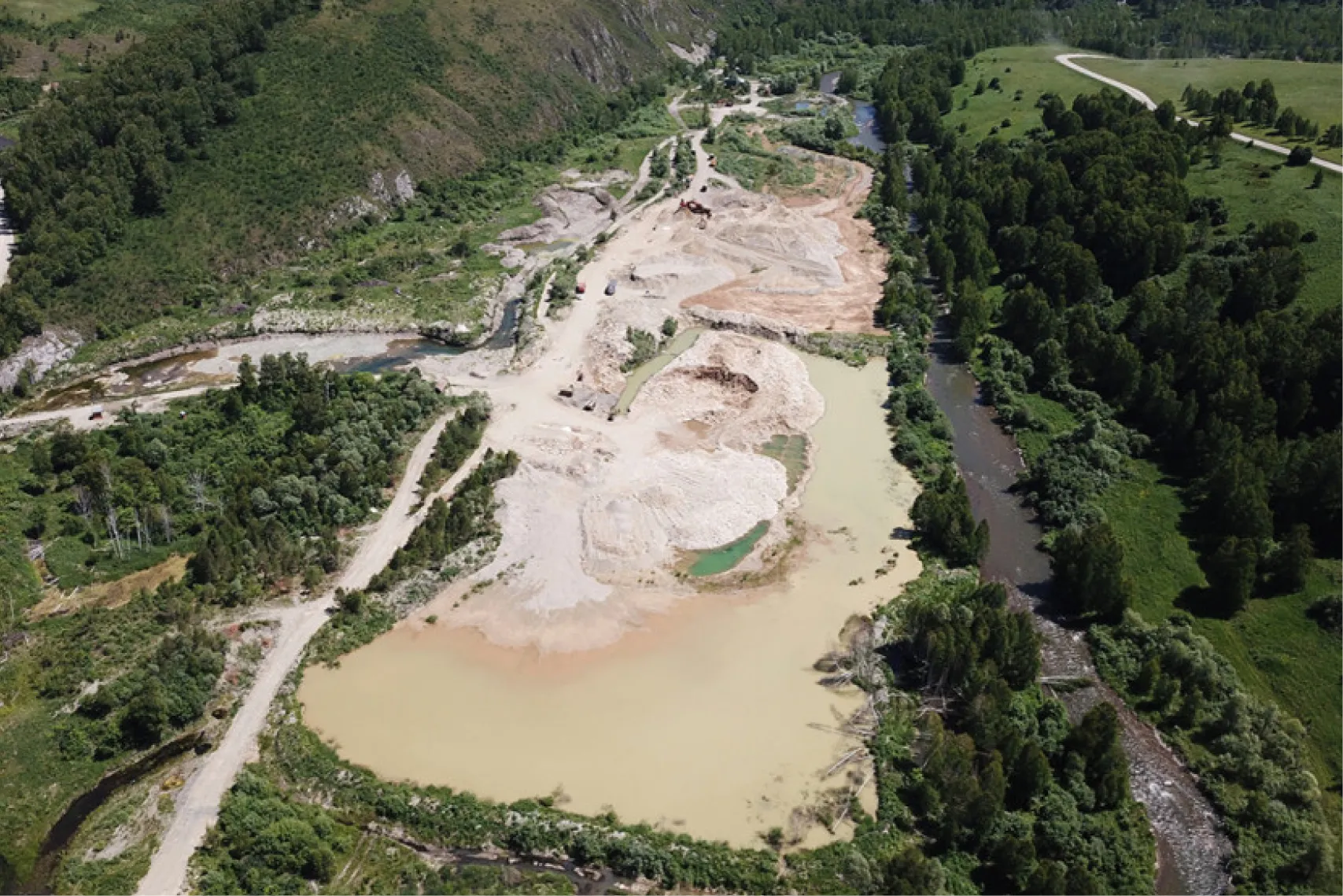
I am not against environmental control — I am against the formalism that replaces substance. We are ready to work by new rules, but only if they are feasible. A real threat to nature arises not where there is a lack of paperwork, but where enterprises discharge wash water directly into the river. Then the water becomes turbid, and the river effectively dies.
This happened on the Bakhapcha River — one of the most beautiful places I know. Mountains, waterfalls, turquoise water — and suddenly a murky brown streak. One of the subsoil users was mining in a straight flow, without purification, meaning with direct discharge of wash water into the river, without a settling pond system. After this, I realized: such cases should not go unpunished.
But these issues should be resolved not by prohibitions, but by engineering. A simple system of settling ponds — one or several cascading ponds — allows water to be purified before discharge. This does not require billions in investment, just a reasonable organization of the process. This is where true ecology should be — not in reports, but in practice.
We, the subsoil users, are ready to follow new, environmentally friendly rules. But these rules must be feasible and reasonable. Of course, there are also those who still work in the old ways — for them, any changes are difficult. They think: “I have equipment, I have gold — why do I need your paperwork?” I understand such people, but today it no longer works. Now, if you don’t process documents on time, you can lose your license. Therefore, everyone must adapt. Old schemes will not save us; we need to learn to work in new ways.
The problem is that Rosprirodnadzor today imposes requirements that are simply impossible to meet. They write conditions designed for lode mining complexes: deadlines, procedures, technical standards — everything for “large” enterprises. But we are seasonal, mobile, and we physically cannot fit into such frameworks.
At the same time, Rosnedra issues licenses and says: “work.” And Rosprirodnadzor simultaneously sends an official conclusion: “we are against it.” We are given the right to mine gold — and immediately it is taken back. We find ourselves between two structures, and no one takes responsibility for the fact that, in the end, we simply cannot work.
It is not the task of the subsoil users themselves to “fight” the system. We comply with all requirements, submit reports, pay taxes, but the clash of regulations makes honest work impossible. The problem lies between the agencies. And it can only be resolved at the top.
Rosnedra and Rosprirodnadzor must agree among themselves: coordinate requirements, deadlines, and procedures. Only then will the industry be able to operate legally and without losses — and ecology will truly be protected, not merely simulated on paper.
Nevertheless, I feel that dialogue is finally beginning. I recently attended a forum for subsoil users in Khabarovsk — and for the first time in a long time, we were heard. We were able to openly discuss the problems, and that is already a step forward. It’s just a pity that Rosprirodnadzor representatives were not there — they are the ones we need to talk to. (According to the forum organizers, Rosprirodnadzor representatives were present on the second day of the event. — Ed.).
Formalism of Expert Reviews: When Paper is Stronger Than Gold
All problems in our industry converge at one point — in documents and expert reviews. Literally everything depends on how quickly and with what conclusion an enterprise passes them: whether the season will start, whether we will manage to retain the license, and generally — whether we will stay afloat.
Environmental requirements are not the only area where the system fails. There are also reports, approvals, expert reviews — the very “paperwork” without which we cannot take a single step. We submit everything on time, in November–December, strictly according to regulations. By law, an expert review should last thirty working days, but in practice, conclusions arrive in March, April, sometimes even May. Yet, responsibility for late submission begins as early as February 5th. So, you’ve done everything by the rules — and you’re still a violator.
The expert reviews themselves are a separate pain point. Even if a report is perfectly prepared, no one guarantees it will pass. Experts are also human: some don’t have time to write comments, others have personal antipathies. And then, on the last day, instead of arguments, a short word appears — “negative.”
They simply don’t make it on time. Instead of issuing comments that could be corrected, the expert, whose deadlines are already burning, writes a refusal — without explanation, without specifics. And what to do with this next is unclear: nothing to refer to, nothing to correct.
It also happens differently: experts are connected with organizations that prepare reports, and then specialists from the same circle participate in their verification from other structures. Everyone knows about this. This is not so much about corruption as it is about a system that effectively controls itself — and therefore does not change.
I know colleagues who have worked by all the rules for decades — and still receive rejections. And this is not just a bureaucratic trifle. Behind each such piece of paper are seasons, salaries, equipment, real people. Real gold that could be added to the country’s balance sheet is lost between agencies.
The state demands: “give us increases, new reserves,” but the agency that is supposed to approve them blocks the process to show that it is “thoroughly checking.” This creates a paradox: the state asks for results, while the system demonstrates the appearance of control. And it’s not the numbers that suffer — it’s the industry.
Disappearing Artels
All these barriers have concrete consequences. Those who cannot endure leave. Small enterprises simply cannot survive: it’s too expensive, too long, too complicated. Large artels don’t leave — they are all in debt, they have obligations, they simply cannot stop.
Perhaps the state believes this is better: order, control, consolidation. But in essence, this means the very living fabric of placer mining is disappearing — seasonal artels, jobs, employment in small settlements where there are simply no other work options. People lose their jobs, and entire territories stagnate.
Now completely different players are entering the market — large corporations, like ALROSA or Rosneft. They have no problems with documents, resources, or approvals. This is a completely different scale and different capabilities. Meanwhile, small enterprises, which have sustained the industry for many years, are leaving one by one. And then the question arises: is the state’s goal really to develop placer mining, or on the contrary — to bring it to extinction?
If the goal is for the industry to survive, systemic contradictions must be resolved: Rosnedra and Rosprirodnadzor must agree among themselves, and officials must listen to those who actually work in the field. But if the goal is for only large players to remain, then everything is logical: small ones simply don’t need to be considered.
A typical placer subsoil user is not a corporation. It’s a person who has another business and invests in mining, creating dozens of jobs, paying taxes, and sustaining life in northern settlements. They don’t ask for benefits — only to be able to work according to the law, not despite it.
Why I Stayed Here
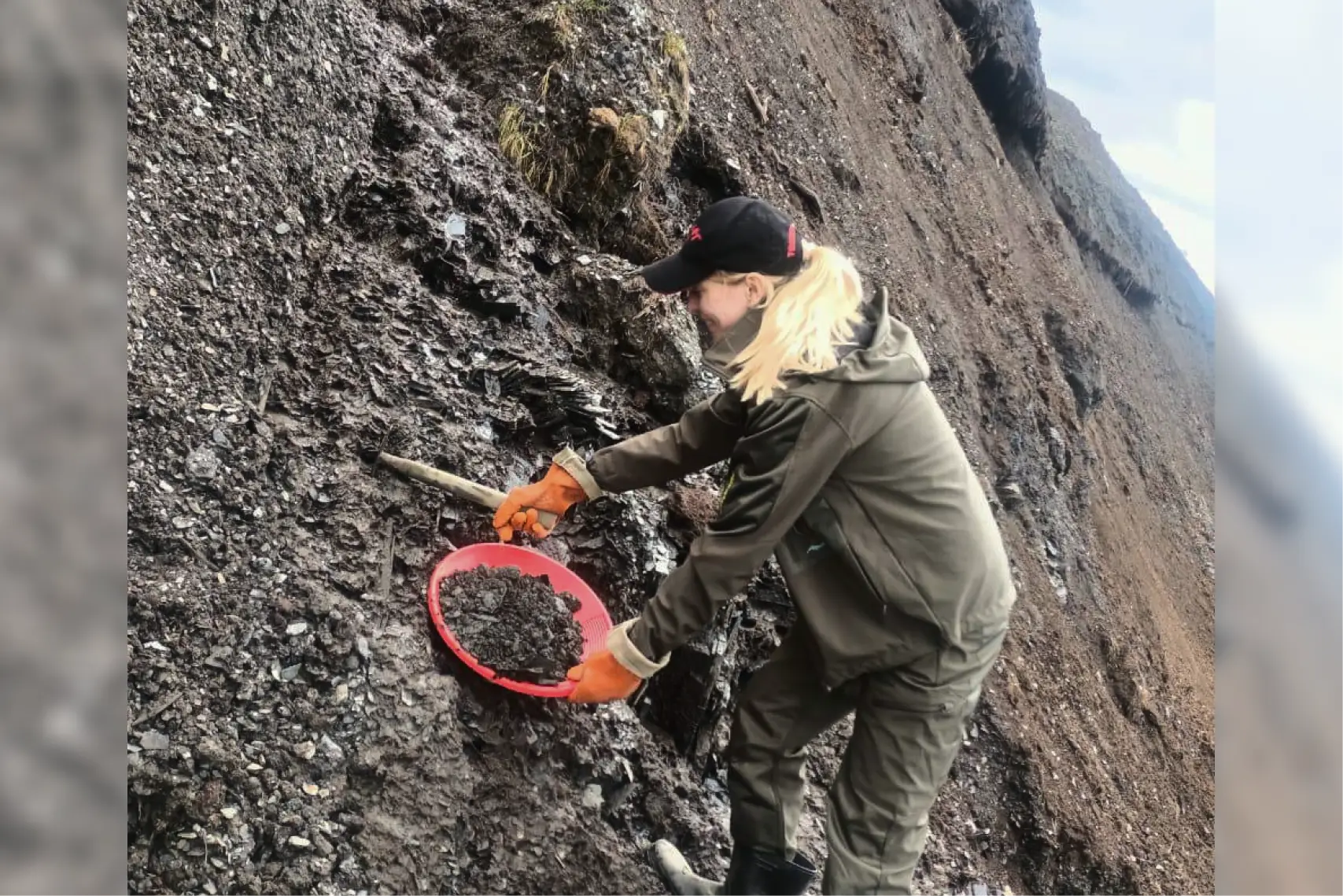
Sometimes I wonder why I’m still here — in this industry, where there are so many complexities, bureaucracy, and uncertainty. Why I haven’t gone somewhere else, where everything is simpler and calmer. Probably because I truly love this profession. When I was at university, we had only one course on subsoil use — and it seemed the most useless of all. Now I understand: working with documents, projects, licenses — this is a separate, very important part of geology. And yes, universities hardly teach this — everything has to be learned through practice. Every new law, every requirement — it’s like a separate experiment. You never know if it will work until you try.
Over time, I realized that I could be useful not only to my company. More and more often, I help aspiring subsoil users — I consult, accompany, and explain how to navigate these labyrinths of expert reviews and permits. Many of them have the energy and desire to work, but they simply don’t know where to start or where to go. I want them to succeed.
I don’t want to complain or look for culprits. I want us to be heard. I want the state to stop perceiving “placer miners” as an obstacle or a relic of the past, and instead see us as those who genuinely support the economy of the northern regions.
I love Magadan. This city has long become home to me — with its nature, people, and rhythm of life. Everything here is real: the labor, the gold, and the character. And perhaps that’s why I stayed here. I believe that the system can be made a partner, not an enemy. After all, at the core, all of us — the state, businesses, and geologists — have one goal: for gold to be mined wisely and with respect for nature.
The material was prepared with the support of the Russian Ministry of Education and Science within the framework of the Decade of Science and Technology.