The world is gradually changing the fuel of its development. If the 20th century was built on oil and gas, the 21st century increasingly relies on metals — lithium, nickel, cobalt, and rare earth elements. They are needed in virtually everything: from electric vehicles and servers to solar panels and wind turbines. While global companies are building new supply chains, Russia is betting on the Arctic — a territory where, according to officials and scientists, the world’s largest reserves of strategic metals are concentrated.
But is this really the case? How real and extractable are these reserves, and can they become the foundation of a new economy? Let us examine this using the example of the Tomtor deposit in Yakutia, which today is being discussed as an “Arctic treasure” and Russia’s possible response to China’s leadership in rare earth metals.
The world is moving away from oil: the age of metals begins
The global economy is changing rapidly: oil and gas are being replaced by metals of the new technological cycle — lithium, nickel, cobalt, and rare earth elements. These materials have become the heart of modern industry: they are used to make batteries, electric vehicles, servers, turbines, and renewable energy components.
Why is it necessary to work and increase metal reserves? — asks Academician Nikolai Pokhilenko. — Look: over twenty years, lithium consumption will increase more than forty times, and graphite, cobalt, nickel, and rare earth elements — six to seven times. And this is only in sectors related to new energy.
According to the International Energy Agency, by 2040 global demand for raw materials for “clean energy” will increase at least fourfold, and for certain metals — tens of times. Even if the transition to a green economy slows down, the world will still face shortages of copper, lithium, and cobalt.
We see that demand is growing in all scenarios, — notes Pokhilenko. — Therefore, we need to develop the base for producing these metals now. Otherwise, the deficit will only intensify.
The energy sector is becoming the main consumer of mineral raw materials, and whoever controls the supply of “transition metals” gains a new strategic advantage — the kind that oil and gas once provided. How are things in Russia in this regard?
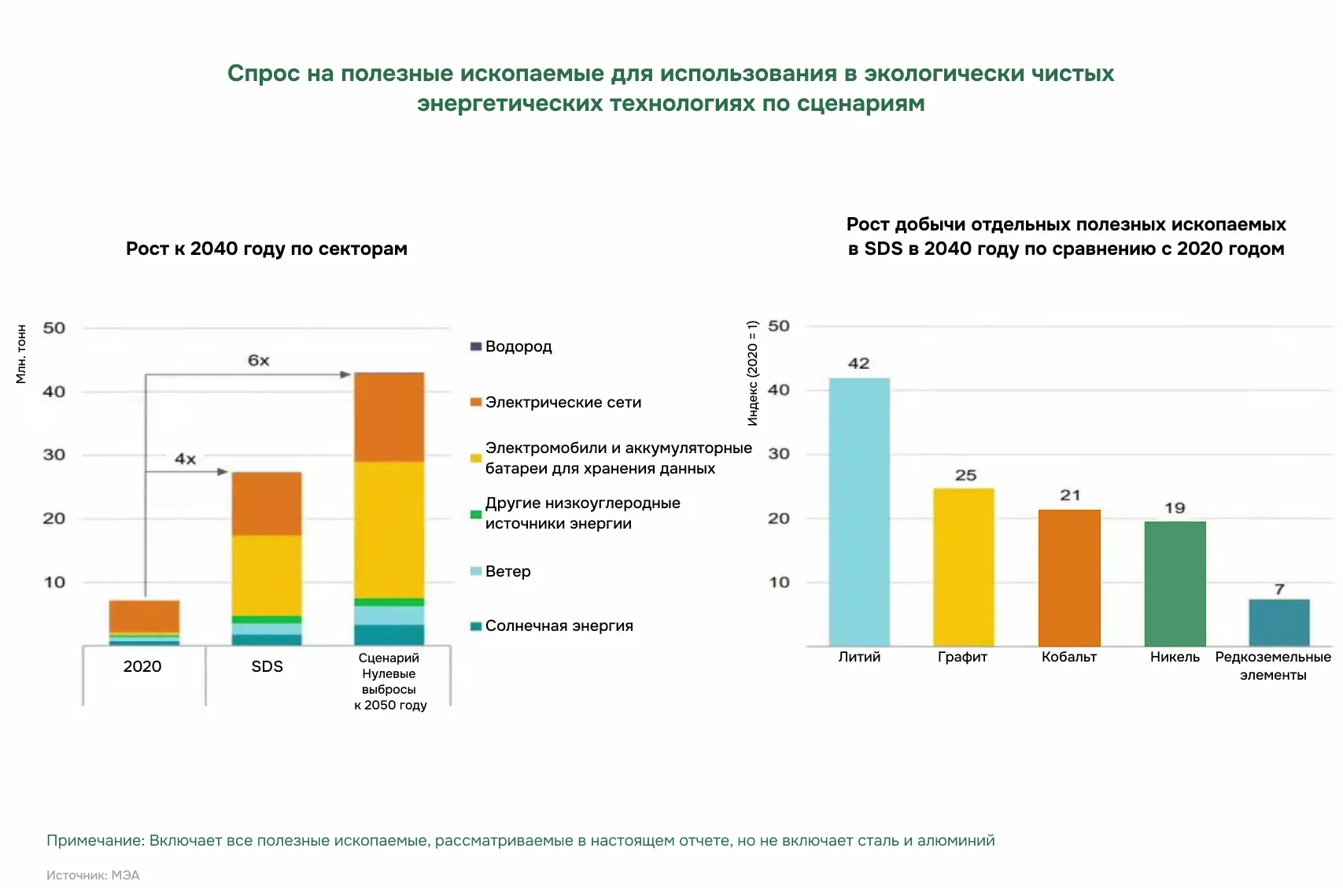
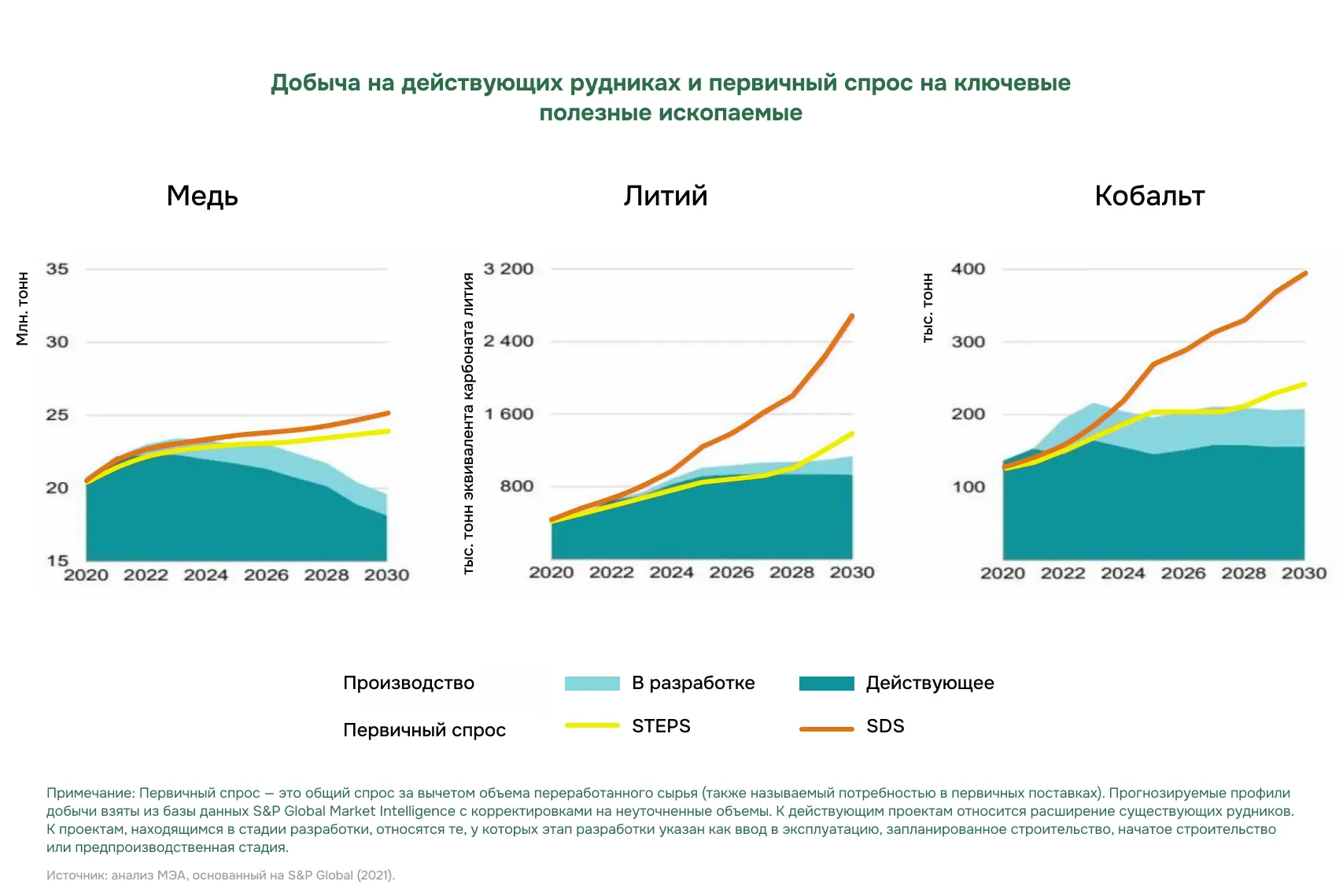
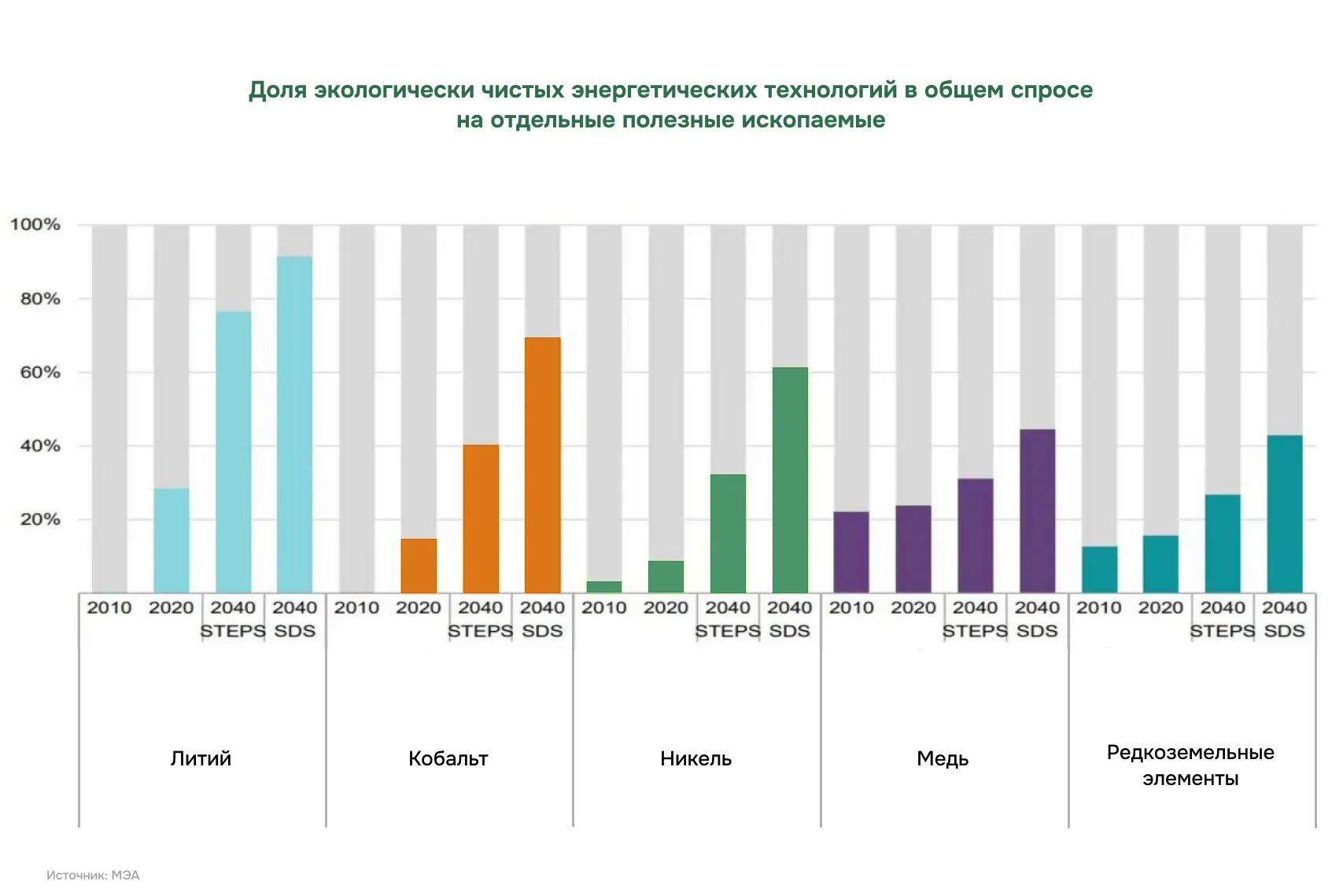
STEPS (Stated Policies Scenario) — a scenario based on current policies and commitments of countries. SDS (Sustainable Development Scenario) — a sustainable development scenario assuming achievement of net-zero emissions by 2050
Russia in the global race for “transition metals”
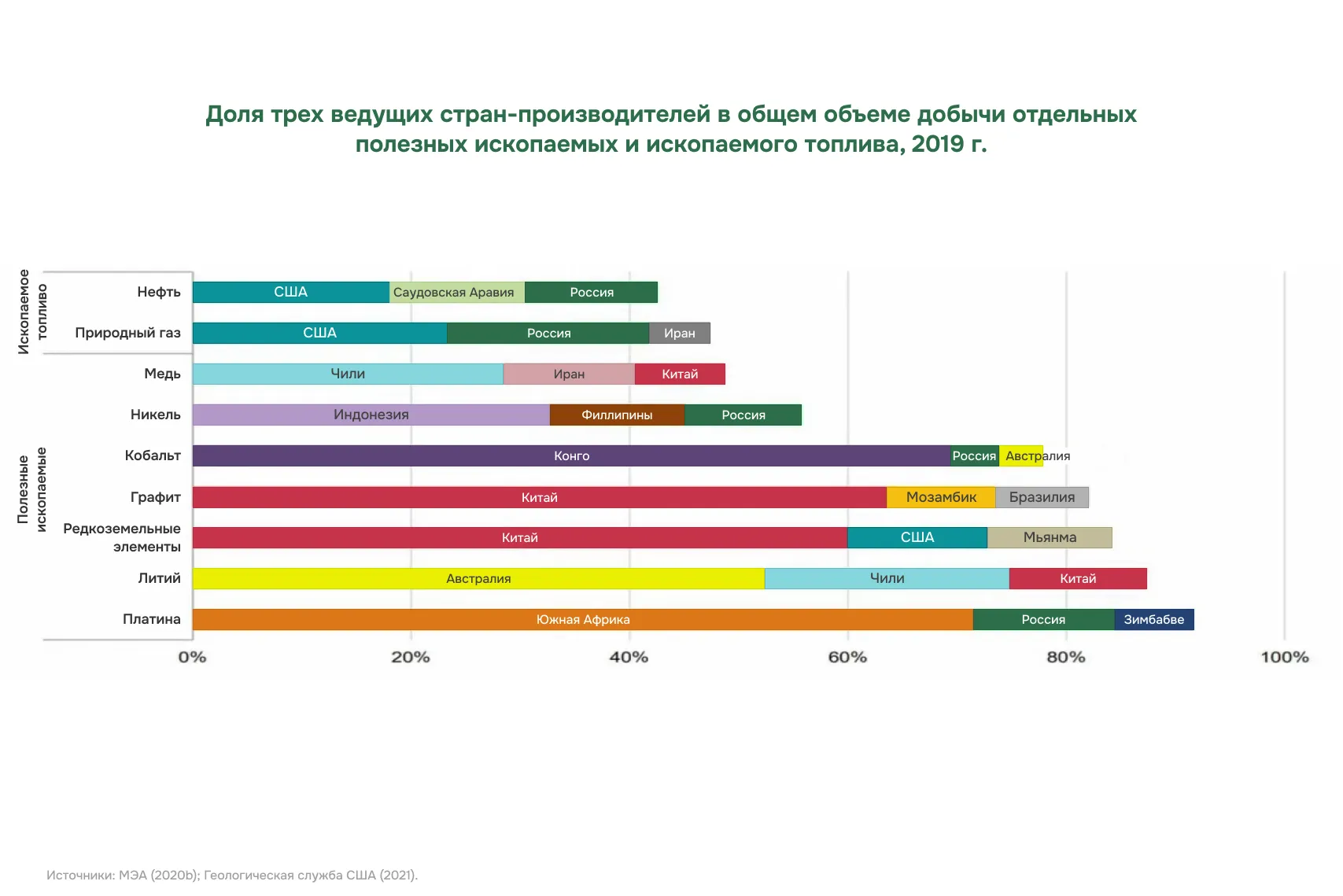
The global market for critical metals is already divided. While dozens of countries trade oil, rare earth elements, lithium, and cobalt are controlled by literally a few players. Today, 60% of rare earths and 80% of graphite are produced by China, and most lithium and nickel processing is also concentrated there. The rest comes from Chile, Peru, Congo, Indonesia, and Australia.
We are doing well with oil and gas, — says Academician Nikolai Pokhilenko, — but not so well with metals. Look: copper — Chile, Peru, China. Nickel — Indonesia, the Philippines, Russia is only in third place. Cobalt — mainly Congo. Graphite and rare earths — China. Lithium — Australia and China. Russia is almost absent here.
Such an imbalance turns “transition metals” into a new instrument of geopolitical influence — what oil was in the last century. Russia remains on the sidelines: we still have strong hydrocarbons, but in the metals that shape the future, we are falling behind.
However, reserves exist. While Russia remains on the periphery of the global critical metals market, its subsoil contains enormous reserves of rare earth elements — primarily in the north of the country, in the Arctic and Yakutia. This is potential that could become the foundation of a new raw materials strategy if an industry capable of not just exploring but also processing such ores is created.
One can start with three directions that experts discuss:
- Reviving old production facilities — for example, resuming operations at the Lovozero deposit in the Murmansk region.
- Co-extraction of rare earth elements from Khibiny apatites, where enrichment facilities already exist.
- Development of new deposits — primarily Tomtor, which accounts for up to 60% of Russia’s balance reserves of rare earth metals.
And if we are talking about Russia’s chances to catch up in the global race for “transition metals,” the conversation should certainly begin with one name — Tomtor.
Tomtor: a rare earth giant in the permafrost zone
When you look at the map of global critical metals production, Russia is almost absent. But reserves exist — and they are colossal. Academician Nikolai Pokhilenko provides an example:
The Tomtor deposit includes the Buronny, Northern, and Southern sections. In terms of rare element content, it surpasses most global analogues. In just one kilogram of ore — dozens of grams of neodymium, cerium, lanthanum, dysprosium, and niobium. For comparison: in Brazil, where we buy niobium, its content is 23 kg per ton. In Tomtor — 57 kg.
According to the scientist’s estimates, the total resources of the deposit amount to:
- Nb₂O₅ — 73.6 million tons,
- TR₂O₃ (rare earth oxides) — 153.7 million tons,
- P₂O₅ — approximately 2 billion tons.
Tomtor’s potential allows not only to fully meet Russia’s domestic needs for rare earth metals but also to turn it into a strategic asset of global significance
Tomtor and Rosneft: a rare earth pivot
In May 2025, Rosneft made a strategic move — acquired Tomtor, the management company of the Tomtor deposit in Yakutia. The oil giant has now become the sole owner of one of the world’s largest sources of rare earth metals. The deal followed the Russian president’s directive to accelerate the development of strategic assets that had been stalled for years.
For Rosneft, this is not just business diversification but an attempt to enter the new “metal economy” — to secure a place in the supply chain of raw materials that will determine the technological future. The company has acquired an asset of strategic importance directly linked to the country’s technological sovereignty.
Rosneft has won strategically but has taken on enormous responsibility. If the project is implemented, Russia will establish itself in the “new raw materials club” alongside China and Australia. If not, Tomtor risks remaining another symbol of the undeveloped north and unrealized opportunities.
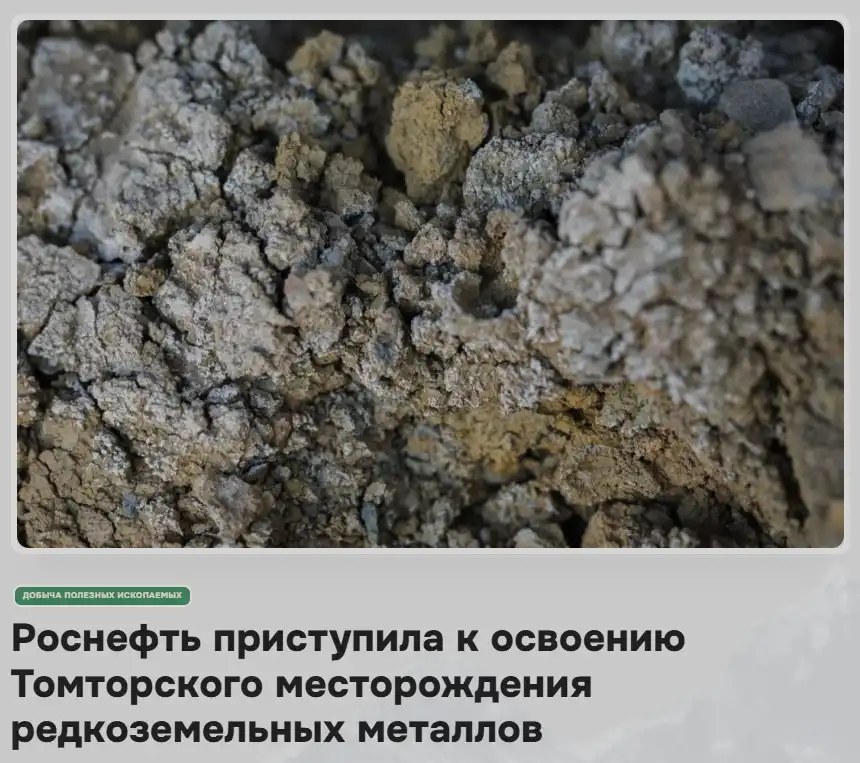
However, on October 23, 2025, Rosneft was included in the U.S. sanctions list under Executive Order EO 14024. This has direct implications for the Tomtor deposit project: despite its strategic potential, the project’s implementation may now face additional obstacles — access to external investments, financing, and international partnerships may be complicated.
Why Tomtor is attractive but requires billions
The concentrations of rare and rare earth elements in Tomtor are so high that the deposit can provide stable supply to Russian high-tech industries for decades to come — from electronics and mechanical engineering to the defense industry.
If Tomtor were in any other country, it would have long since become an industrial center, — notes Pokhilenko. — But we have neither infrastructure nor personnel. For the enterprise to operate, it will take at least ten to twelve years and enormous investments.
If it is possible to create a continuous full-cycle technological chain — from ore extraction to obtaining pure metals and producing final products — Russia will be able to occupy its own niche in the global market and enter the export of rare elements on par with China.
This will ensure Russia’s integration into the global market alongside China, — comments Academician Nikolai Pokhilenko. — We can provide competitive products: with such concentrations, the cost will be low, there will be no losses. But at the start, significant investment volumes and time are needed to create infrastructure in the region.
In fact, Tomtor’s potential is colossal:
- it is capable of reducing Russia’s dependence on rare metal imports,
- providing high-tech enterprises with strategic raw materials,
- and even including the country in the global REE market as a supplier, not just a holder of reserves.
However, as the scientist emphasizes, this is only possible with systematic state support: construction of roads, energy hubs, processing plants, and personnel training. Without this, even the richest deposits will remain on paper.
Reserves are not yet production
For a reader far from the mining industry, news of “the largest reserves” sounds like guaranteed wealth: found — means they will soon be developed. But in reality, between the words “reserves exist” and “production is underway” lie years of investment, construction, and human work. Especially when it comes to the Arctic, where there are no roads, energy, or permanent population.
Even deposits like Tomtor, with their unique concentration of rare metals, remain resources on paper for now. For them to become a real economy, three key tasks need to be solved:
— where to get the money — long-term and affordable investments capable of covering a decade-long construction and launch cycle;
— where to get technologies and logistics — how to extract, process, and transport raw materials in permafrost conditions and without infrastructure;
— and who will work there — specialists ready to live and work in Arctic conditions.
As long as the answers to these questions remain open, even the richest reserves will remain just that.
Why investors do not go to the Arctic
Interest in the Arctic is enormous in words, but in reality, only a few go there. For business, this territory remains a zone of high risks and low predictability. Several factors converge here: harsh climate, lack of infrastructure, enormous distances, and high costs at every stage of work — from geological exploration to construction.
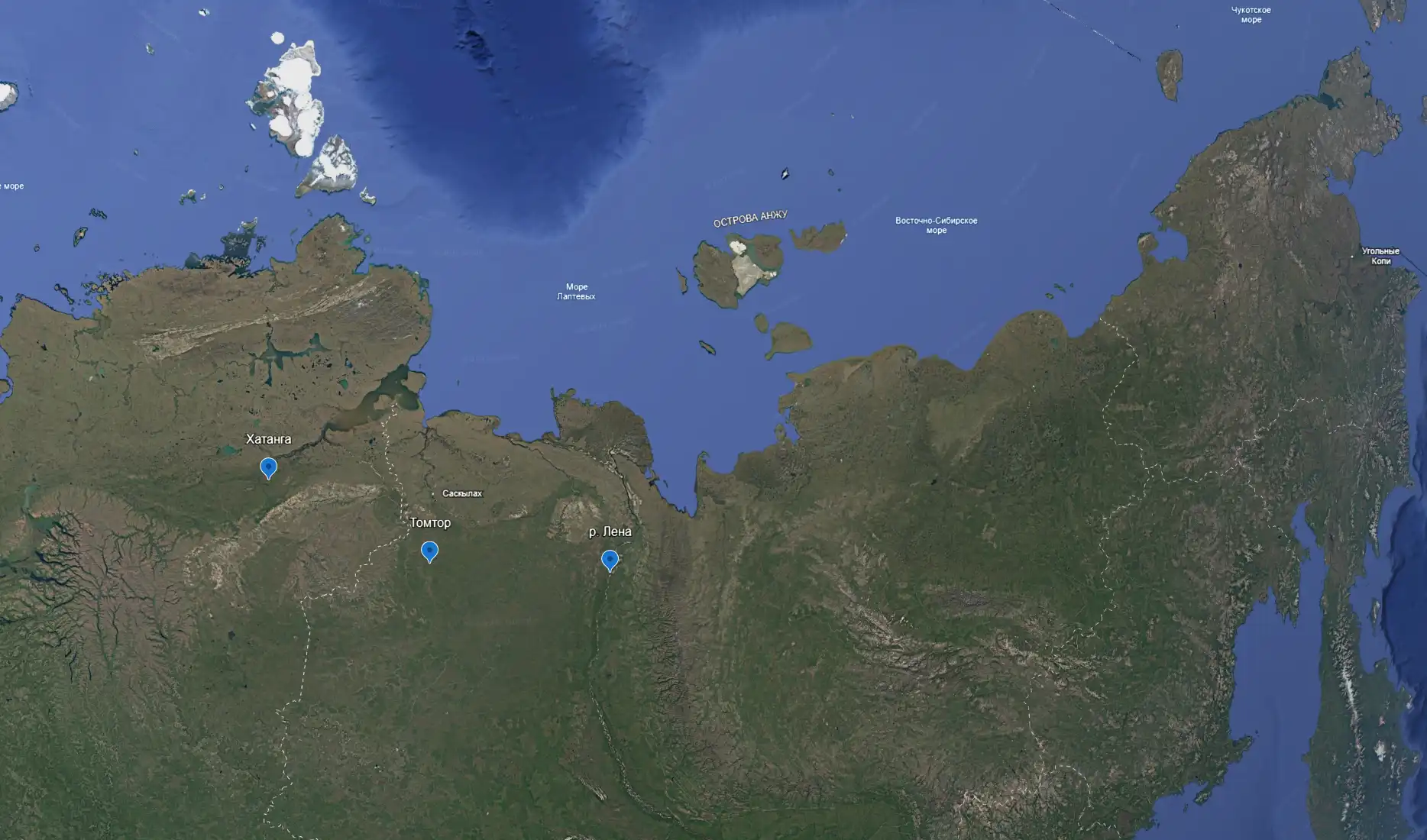
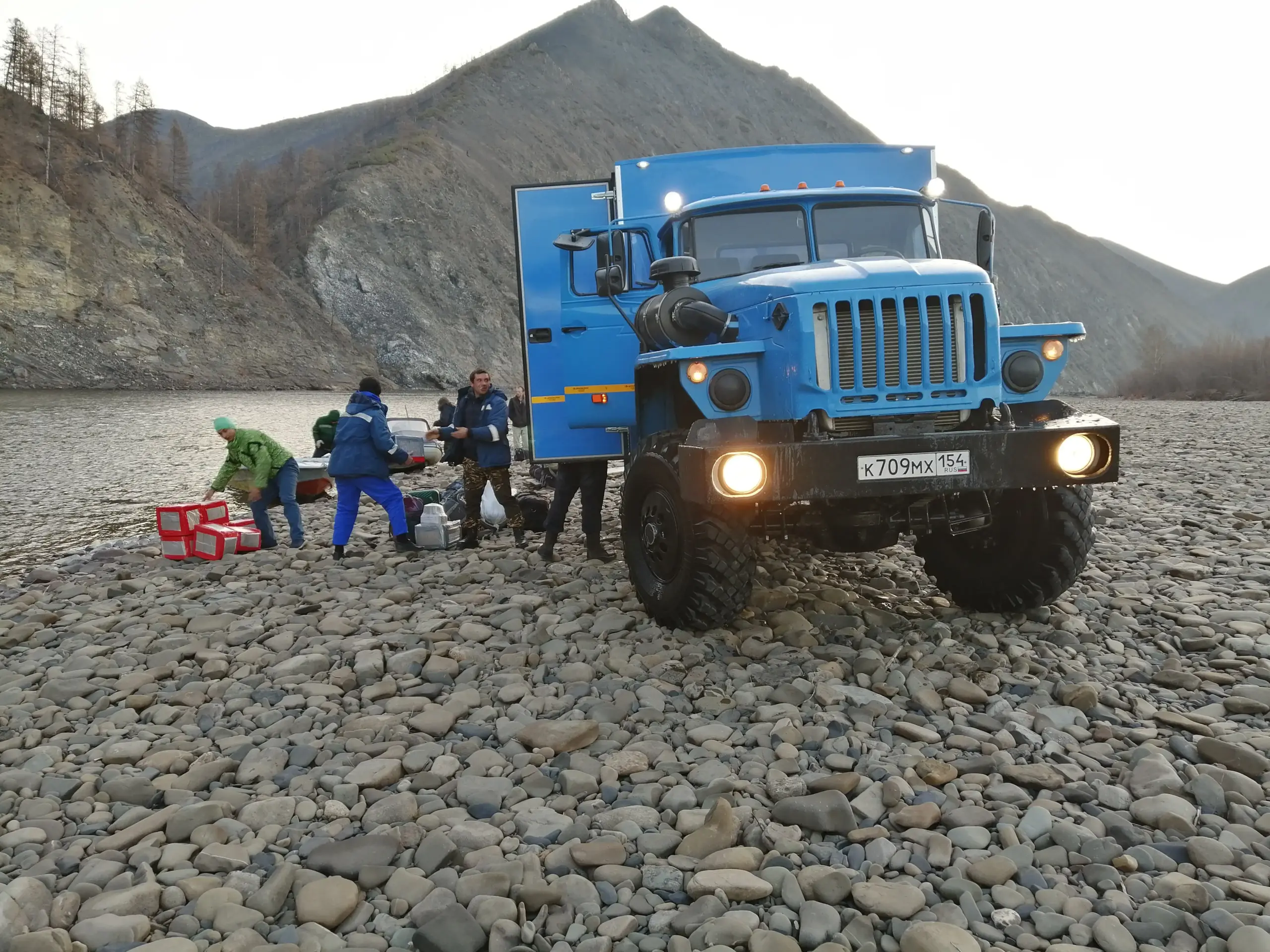
For example, in the Murmansk region or in Komi, it is still possible to work: there are roads, cities, a nuclear power plant, at least some base. But in areas like the Lena-Khatanga interfluve — there is nothing. Several small ports, such as in Khatanga, require complete reconstruction, and the energy supply situation is critical. Under such conditions, launching large projects is almost impossible.
Academician Nikolai Pokhilenko, Deputy Chairman of the Siberian Branch of the Russian Academy of Sciences, emphasizes: the key problem of the Arctic is the lack of sufficient exploration groundwork.
There are almost no territories left where new deposits can be confidently predicted. Geological knowledge is low, many areas are still literally “blank spots” on the map.
Today we face a whole complex of problems, — says Pokhilenko. — Exhausted exploration groundwork, reduction of the fund of profitable sites, lack of conditions for private — junior — companies. All this makes the Arctic a zone of very high risks for investors.
Technologies and logistics: the most difficult thing in the Arctic is not to extract but to transport and process
Even if rare metal extraction in Tomtor begins tomorrow, the question arises: where and how to process them. Rare earth ore requires complex chemical extraction — dozens of elements with different properties must be separated from it. The country currently has no operating enterprises ready to accept such concentrates and refine them into pure metals.
One of the discoverers of the Tomtor deposit, Doctor of Geological and Mineralogical Sciences Alexander Tolstov, believes that the most rational processing center could be Krasnoyarsk:
There is a ready domestic deep processing technology that will allow extraction of up to twenty different elements. It can be implemented at the Krasnoyarsk Metallurgical Plant. Initially, in the justification for developing the deposit, we indicated Krasnoyarsk as the most suitable processing center for ores from Tomtor. Perhaps now this idea will be realized.
Such a solution could indeed change the project’s economics: through the port of Khatanga and Dudinka, ore can be delivered along the existing route on the Yenisei, without building new railway branches. But even this scenario will require significant investment, coordination between regions, and — most importantly — the state’s readiness to develop not only extraction but also the entire chain “extraction → processing → production”.
For now, the main difficulty in developing Tomtor lies not in extracting rare metals but in creating the infrastructure and technologies that will allow them to be turned into an industrial-level product.
People who “fall in love with the North”
The problem of the Arctic is not only money and technology but also people. Only a few are willing to work there.
We also need to work with personnel, — says Academician Nikolai Pokhilenko. — There are few people willing to work long-term in Arctic conditions. This is not only our problem. My experience working in Canada shows: young specialists come to a project for two to three years, then get tired and leave. But those who stayed, who settled in — are now company managers, chief geologists. These are people who fell in love with the North. When a person loves the North, work becomes effective.
His words are true. To become a professional, you really need to work long-term, go deep into the profession, not take on everything superficially. But it is easier to love the North when you have a place to live and food to eat. When there is hot water, normal food, and the opportunity to rest after a 12-hour shift — then you want to work.
But for now, reality looks different. Field workers often share stories that are disturbing.
We work in the taiga, live in trailers, wash wherever we can. Shifts are 12–14 hours, the food is terrible. For breakfast — one sausage and two pieces of bread, for lunch — instant noodles and a thermos of tea. People are half-starved, steal food, exchange leftovers in villages for meat. This is terrible. Simply terrible.
Personnel are indeed the industry’s main resource, but the system still relies on enthusiasm rather than provision. Under such conditions, even the most dedicated northern specialists burn out.
The world is changing — and requires different resources
The world has already entered an era where the decisive factors are not hydrocarbons but critical metals — lithium, nickel, cobalt, and rare elements. They are becoming strategic raw materials for the global economy: without them, the development of energy, transport, electronics, and communications is impossible.
Russia indeed possesses significant reserves of such metals — Tomtor alone is capable of providing the country with strategic elements for decades to come. But having rich subsoil is not yet industry. To turn resources into an economy, long-term and affordable capital is needed (long-term investments from investment and sovereign funds, calculated for decades), a predictable environment, and clear rules of the game.
Unfortunately, we do not have an industry that could produce these metals in the required volumes. But there is a growing global market: by 2040, demand for rare earth elements will increase sevenfold. China, of course, dominates, but it will not be able to cover everything. This gives Russia a chance to enter the global supply system. The main thing is to understand when and how much we will need and to start planning in advance, — explains Academician Nikolai Pokhilenko.
For this opportunity not to remain on paper, Russia needs to create conditions: stable legislation, infrastructure, technological partnerships, and trained personnel. And most importantly — maintain connection with the external market. To sell rare metals, one must be part of the global economy, not stand apart from it.
Reserves are only the beginning. Everything else requires time, systematic approach, and will to turn natural potential into real development, and the Arctic — from a territory of expectations into a territory of the future.
Covers Investment Portal of the Arctic Zone of Russia
The material was prepared with the support of the Russian Ministry of Education and Science within the framework of the Decade of Science and Technology.