The profession of geomechanics often looks narrow and purely technical – as a set of “stability” calculations and determination of the stability category of a rock massif. This perception is in many ways not accidental: universities do not have a separate specialty “geomechanics”, and young specialists often have no clear navigation – how to enter this profession and where to grow further in it, and those who are already working often have a feeling of “doing the same thing”: experience is accumulating, but it is not clear how to expand the role and reach the next level.
But in practice, everything is broader. Sergey Kuzmin, Ph.D., full member of the Academy of Mining Sciences, ISRM member, head of Deep Engineering and DEEPMINE LAB, says: geomechanics is not a “narrow set of calculations” but an integrator between geology, mining operations, safety, economics and enterprise development strategy.
And in this article, using the example of his career path – from science and production to design and consulting – we will analyze how the career path of a geomechanic is built and where the “ceiling” most often occurs.
How does one become a geomechanist in the first place
Almost no one enters the geomechanics profession in Russia “directly”. There is actually no separate specialty. Sergey Kuzmin himself came to geomechanics not through a ready-made professional track, but through mining education and work in a scientific environment. He directly says that geomechanics in universities exists in a fragmented way – within other areas, without a complete picture of the profession.
At the same time, in recent years, there have been the first attempts to organize targeted training specifically for the profession. For example, in 2025 MGRI announced an enrollment for a specialized program in geomechanics.
A young specialist leaves the institute with formulas, terms and an idea of models, but without understanding how geomechanics actually works at the enterprise:
- what data even exists;
- who’s in charge of them;
- how decisions are made;
- what happens when geomechanical calculations are wrong.
According to Kuzmin, it is this gap that can be observed in novice engineers – not in classrooms, but in mines and projects. Formally, a person “knows the subject,” but he or she does not understand how his or her calculations fit into the chain of production decisions.
“The knowledge that was given at the institute is all for nothing. You can forget everything you were taught there. Practical geomechanics at enterprises is fundamentally different from what is taught”
explains Kuzmin
The point, as he emphasizes, is not that universities are useless. The point is that in real geomechanics, an error is not a minus grade, but physical consequences: how the workings will proceed, how the massif will behave, what risks arise for people and the enterprise.
One of the illustrative cases that Sergei recalls from practice:
“A young specialist calculated a target (ed. – an untouched part of the rock mass left between workings in order to prevent displacement of the ground above them) between two mine workings, which are five meters wide. The target was one meter wide. In reality, this is physically impossible, because the mine workings are drilled and blasted, and a one-meter target would simply be blown away by the first explosion.
The chief engineer saw it, and everyone had a lot of fun. That is, we, as senior colleagues, did not look at it, did not check it, and it got through the local project to the chief engineer. There was a debriefing. And we found out that the person had simply made a mistake in the properties that he had set in the model. The program does not care, it gives any error as some final result. This shows that the program is a tool, not a source of truth.
For Kuzmin, this episode is not about a “funny case”, but about the key problem of start-up training: the inability to check the model with reality. Not by numbers, but by mining technology, sinking methods, geology, changes in the physical and mechanical properties of the rock massif.
He separately notes that training has started to change in recent years. When he himself was studying, there was almost no specialized software in universities. Now there are specialized classes, students start working with industrial software earlier, build geological, geomechanical, geofiltration models, and process geomechanical data sets. The threshold for entering the profession has become lower.
But, in his experience, the key problem has gone nowhere: without constant reference to real objects and real constraints, any model very quickly becomes an abstraction.
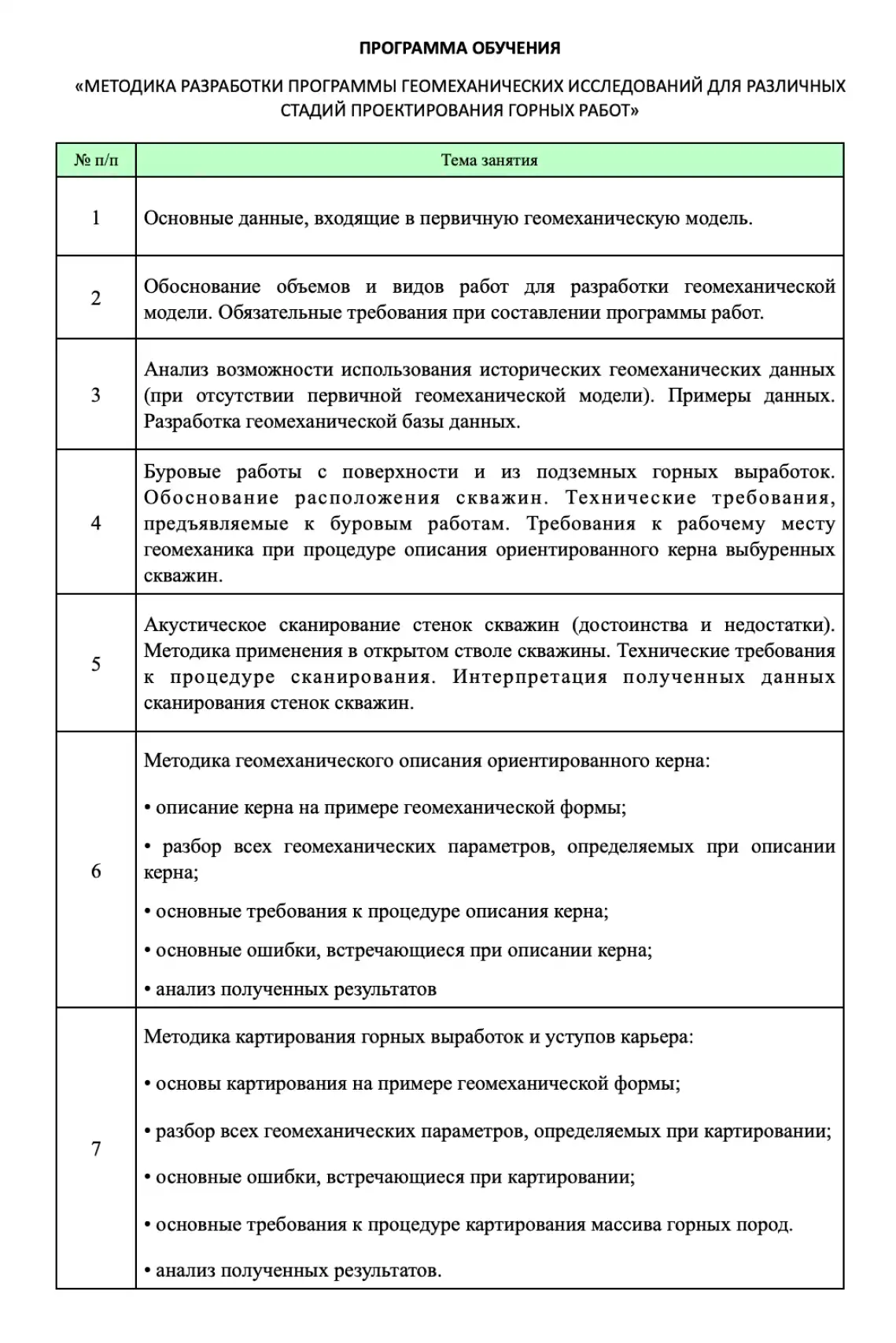
It is this gap that Sergei is working with today from a different angle – as an expert and a teacher. He has built his own training program, where students and engineers go through the entire cycle: from what data can be obtained at an object, to how to check models, find typical errors in them, and understand where calculations cease to relate to reality.
Further in the article we will go through the career path of Sergey Kuzmin, step by step and analyze what problems he solved at each stage and where the very “ceiling” where geomechanical engineers usually find themselves.
Career path of a geomechanic
Sergey Kuzmin talks about his profession through practice: where he worked, what problems he solved, what limitations he encountered, and why he changed his trajectory in the end. His path is not a “universal recipe”, but a sequence of stages: science → production → design and complex projects → consulting.
Next, let’s break down these stages as a working model: what he did, what problems were uncovered, why he had to move on – and what conclusions you can take away from that, whatever stage you’re at now.
Phase 1: Science: first professional environment
Sergey Kuzmin got into geomechanics in his fifth year at St. Petersburg Mining University. He was recruited to the scientific center of geomechanics:
“I was very lucky to have a supervisor. Rosenbaum Mark Abramovich is a very strong specialist. I always say that he “found me in a garbage dump, washed me up and guided me”. It was then that I generally understood what geomechanics was all about”.
He spent the next five years in a scientific environment. But it was not a “cabinet” science. The laboratory accompanied real underground coal deposits.
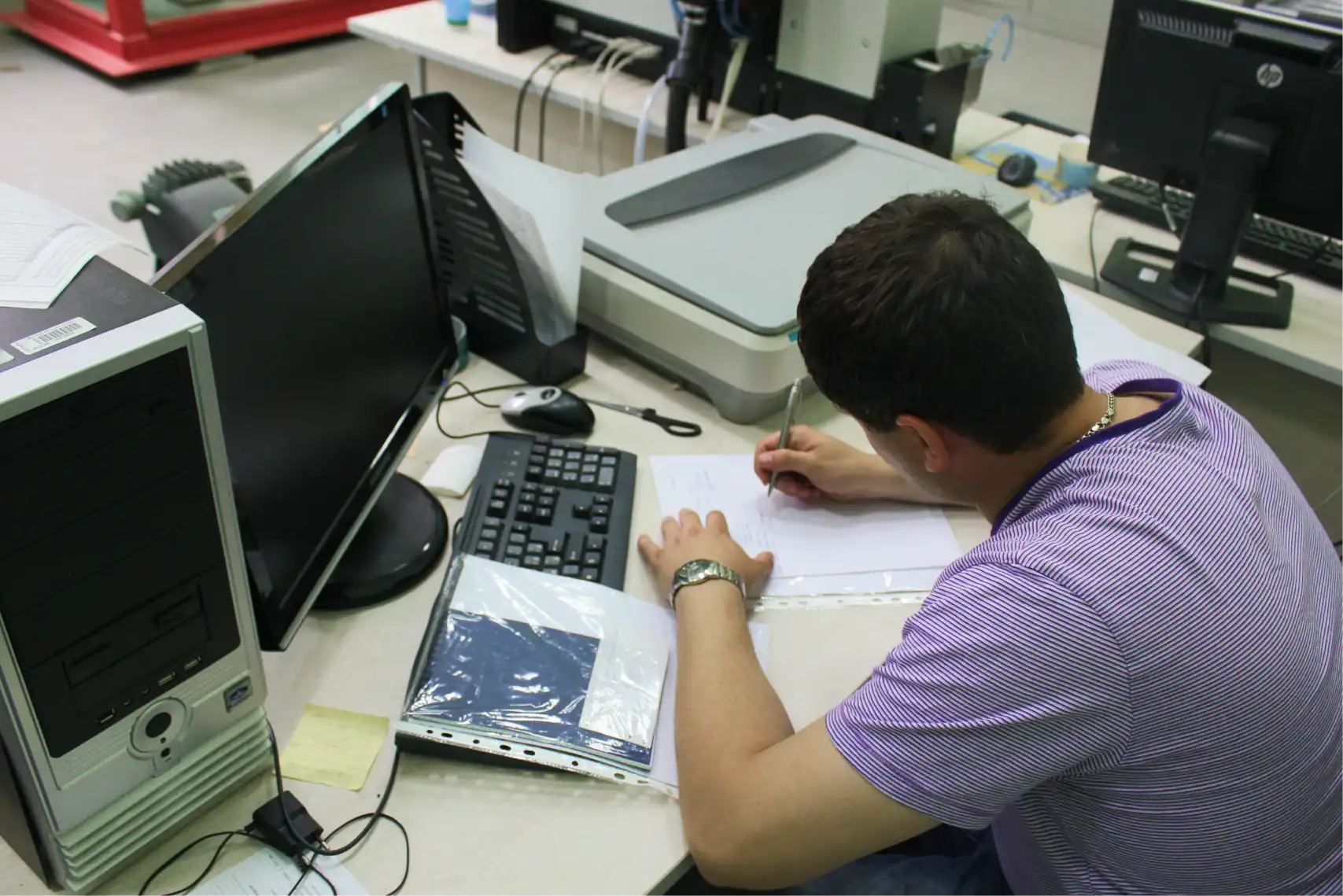
The work routine looked like this: site visits, collection of initial data, observations, then processing, reports, recommendations for enterprises, and publications. Formally, Sergei participated in the support of production tasks, but his role almost always ended at the level of a report. The documents went to the enterprises – and what happened to them in the real mine, what decisions were made and what they led to, he most often never saw.
At the same time, he studied in a correspondence graduate program. The thesis grew directly out of the same projects.
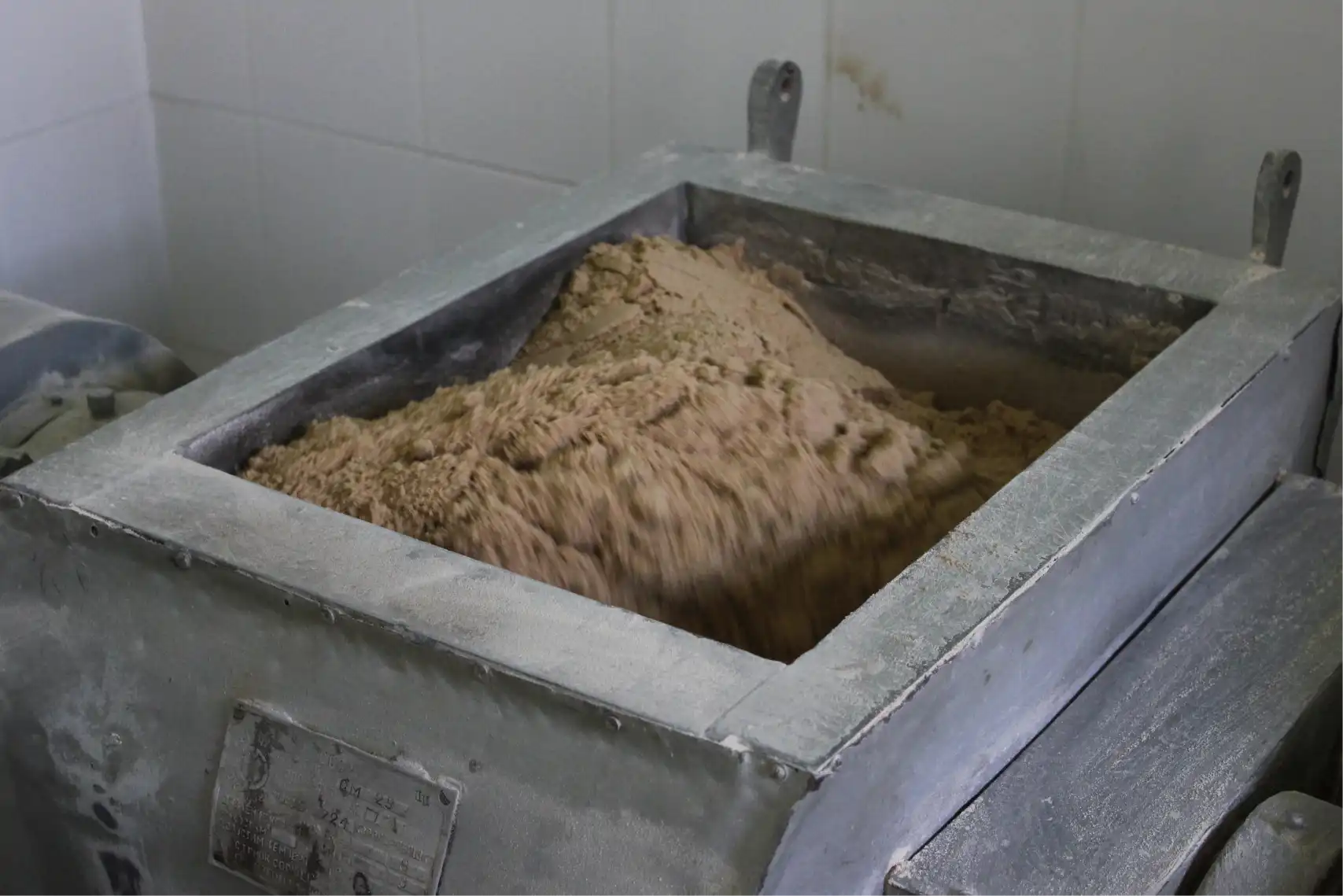
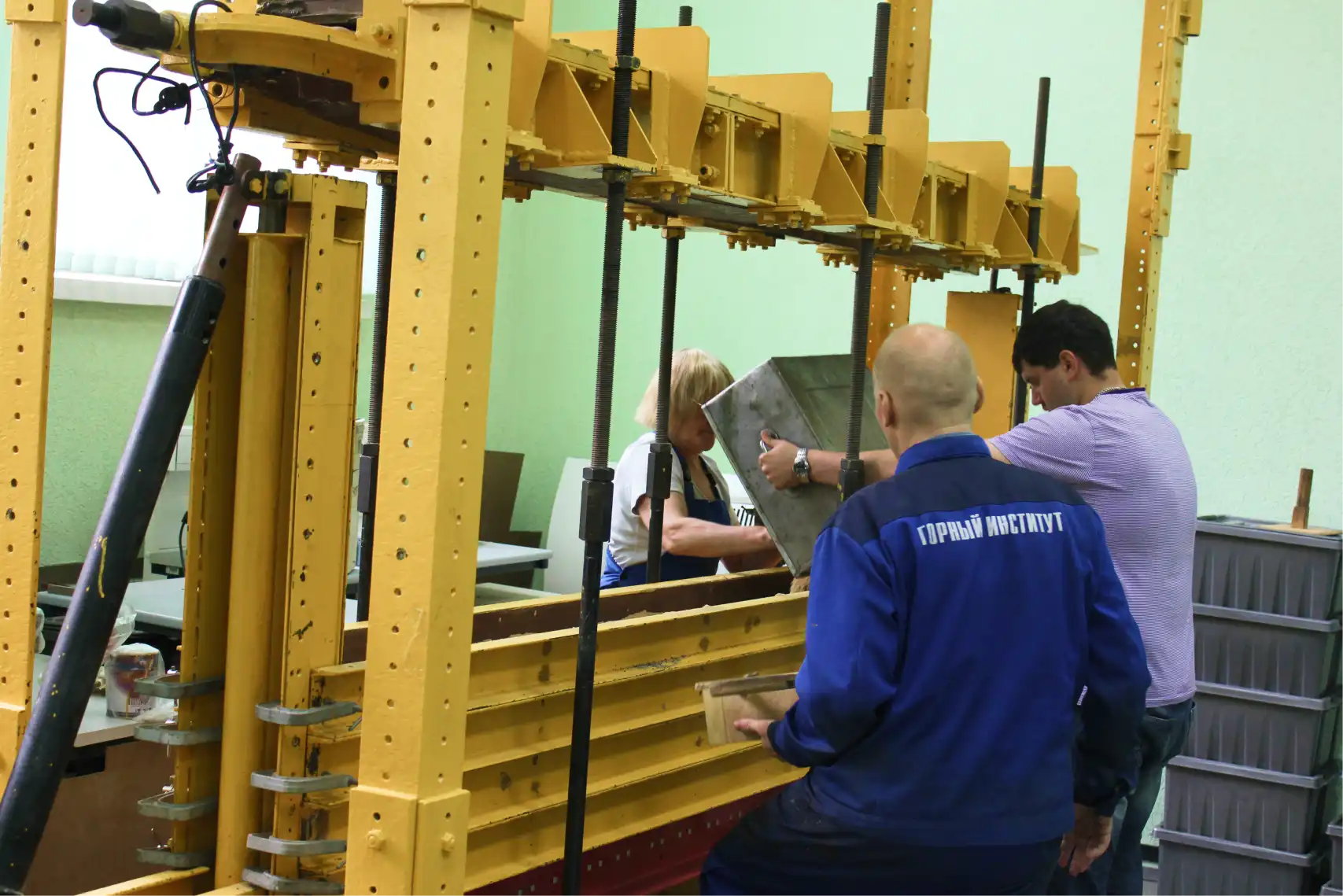
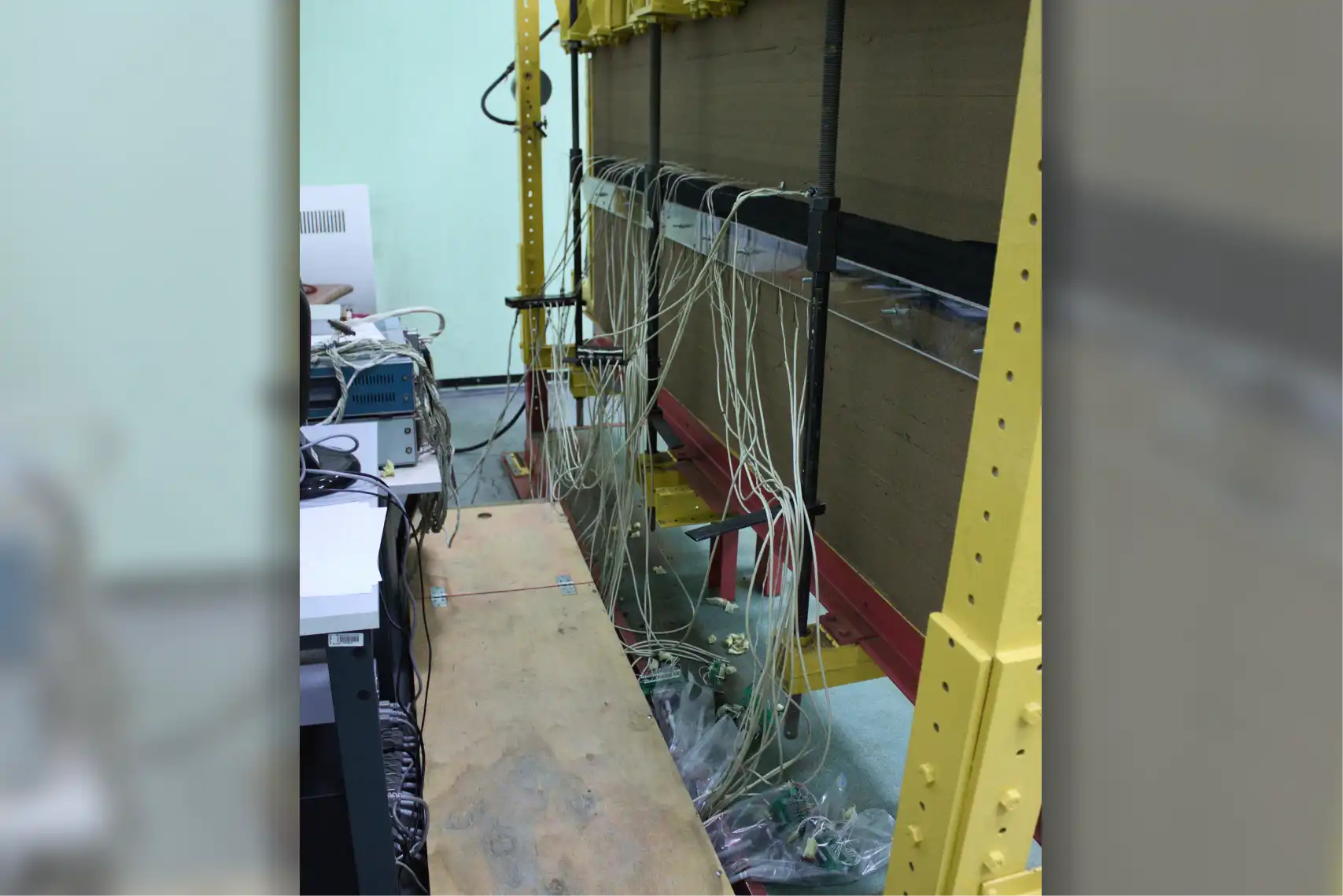
One of the characteristic episodes of that time is physical modeling on equivalent materials. This is the process of selecting physical and mechanical properties of rocks of a real deposit by mixing certain types of sand mixture and epoxy resin. After the model is made, the process of mining a coal seam or ore body is carried out, depending on the mining technology. Kuzmin recalls this process as follows:
“We made a physical model out of sand and resin. We spent six months preparing it strictly according to the methodology. And when we started practicing it, it simply collapsed.
Today, says Kuzmin, such problems are solved by numerical modeling in a few days. Its advantages over physical modeling are the speed of creation, variability of the parameters under study, increased accuracy of the data obtained, solving the problem in a 3D setting, etc.
To give an example: one physical model takes 3-5 months for the entire cycle of work (total length 5 m, height 1.5 m). Today, an experienced geomechanic would spend 2-3 hours on this. Taking into account especially the work in production, the speed of the obtained data is a priority. Physical modeling can be used for scientific purposes (this is a separate topic for discussion).
The academic environment gave Sergei a professional base:
- data skills;
- to organize the logic of the research;
- formalize the results;
- understand how models are created and where their weaknesses lie.
This was the stage where he learned to “think like a geomechanist”. But the further away, the more the limitations of this environment became apparent. Work became stable and predictable. Projects were repeated. And most importantly, Kuzmin stayed away from production decisions all the time.
The turning point came after a conversation with the chief engineer of one of the enterprises, a man who himself had once left science for production:
“We explain something to him, prove something to him. But for each of our arguments, he has thirty-three practical answers from the coal mine. And at some point it clicked for me: theoretical knowledge without production is incomplete. Here’s an integral. Where will you apply it in the mine?”.
At that moment, it became clear: if he wanted to understand how decisions were really made, he had to go to a place where people were responsible for them. The decision was abrupt: he left the research institute and moved “nowhere” – to the Far East, to Khabarovsk Krai, on a shift.
Sergey emphasizes: if you go into science, it is critically important what kind of science you choose. In his experience, at the start it makes sense to look not for a “department”, but for an environment where:
- there are real industrial projects;
- work with live data, not training sets;
- there are site visits;
- the practical result is clear – reports, recommendations, enterprise support.
These are the conditions, says Kuzmin, that really shape geomechanics. Scientific work with no connection to the objects hardly reduces the very gap between university and industry, which you will have to face later anyway.
Stage 2: Production: shift and responsibility
Sergey’s first shift lasted three months. His formal position was leading geomechanic. In fact, he was the only specialized specialist at a small mine with a combined mining system: open pit and underground operations.
He came in with no reputation and no “credibility”. No credibility. Responsibility – immediately maximized. The geomechanic here was perceived not as a risk management system, but as a function: to calculate, make recommendations and be responsible for the consequences. There was no organized service, no colleagues to rely on, everyone learned as they went along.
In the first weeks there was a fatal accident at the site. Inspections, proceedings, prosecutor’s office, daily interviews, memos, explanations began.
“It was all in front of me. My watch. Every day, questions to colleagues, pressure. Seven thousand kilometers from home. And you realize that your calculations and recommendations are not a report, but real people and real consequences,” recalls Sergey Kuzmin.
In this situation, it was the scientific basis that unexpectedly “shot up”: the ability to collect data, reconstruct the logic of events, write technical conclusions, and formulate reasons in correct language. Not “counting”, but explaining what happened and why.
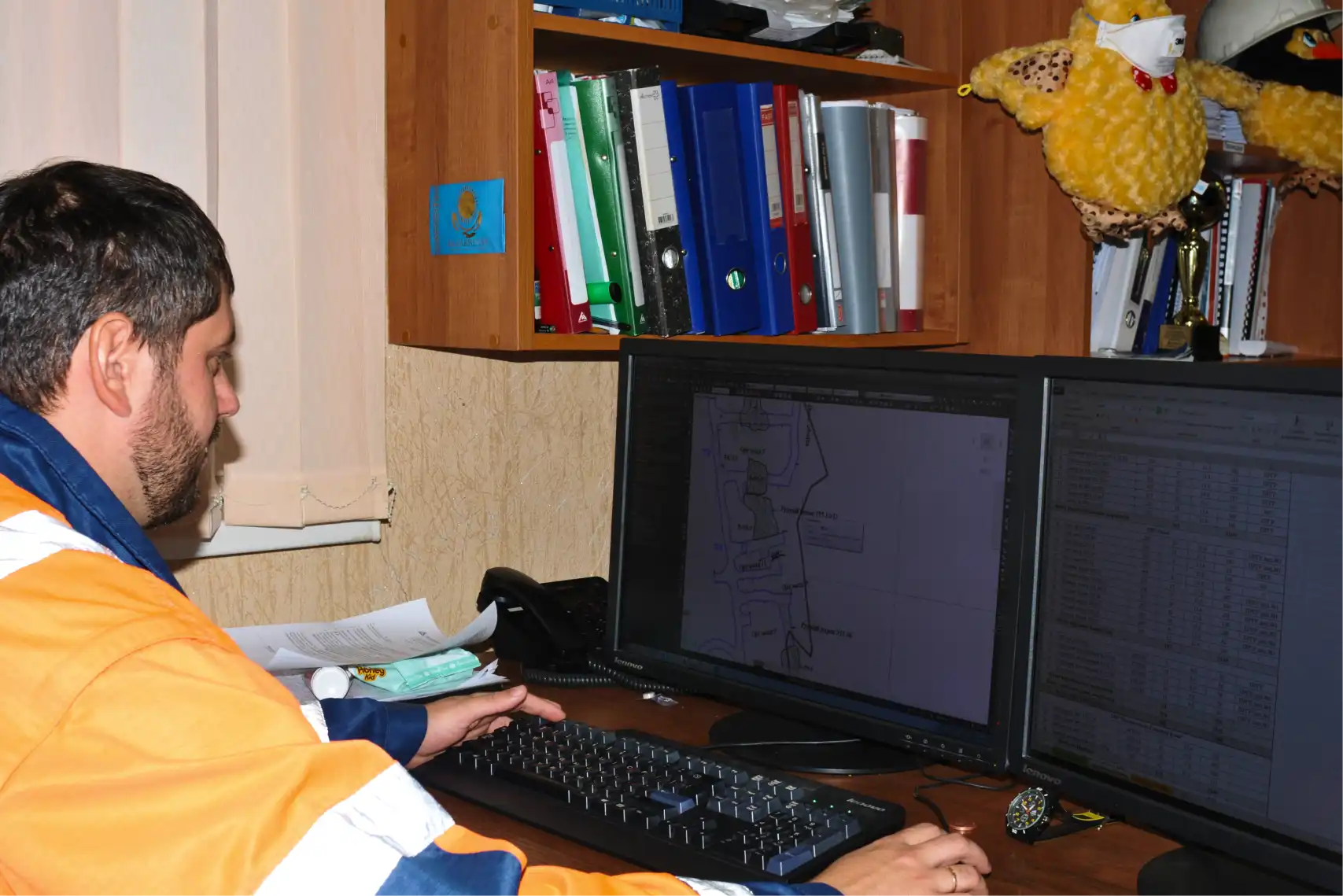
After working at the university, everyday production life was tough. The dormitory for engineering and technical workers (ITR) – three people per room. We lived together, went to work together. In the morning, you would walk to the administrative and welfare complex (ABK), where the mining planning department sat. From there, it was on to the mine or open pit.
“We tried to visit the mine or open pit every day. We had to walk a lot, we didn’t have cars, but that’s a plus, because when a geomechanic drives a car, you can’t see much out of the window. You have to walk with your feet, you have to look, you have to know the company,” explains Kuzmin.
He quickly found himself inside all the processes: planning, observations, field trips, drilling and blasting, discussions with surveyors, geologists and mining engineers.
Manufacturing gave Sergei something he didn’t have in science:
- living the consequences of their own recommendations;
- Understanding of real constraints – equipment, people, timelines, budget;
- full-cycle experience: from calculation to how the solution “goes down the hole” and where it leads months and years later.
After two or three years, Sergei caught himself in a new sensation. He knew the mine very well: its massif, geology, accident history, typical risks, and accepted approaches. But more and more often he realized that he was developing not so much as a geomechanic in general, but as a specialist for one specific object.
At the same time, fatigue was accumulating: the shift, the distance from my family, the constant tension. Interest gradually shifted from solving problems to maintaining the system already in place. Sergey Kuzmin considered offers to move to related functions, such as planning, but saw them as an expansion of his current role, not a new scale.
The decision was again linked to a change of scale: to return to St. Petersburg and enter projects that cover not just one facility, but the entire life cycle of a deposit. He got involved in integrated mine and open pit development projects for companies within the Nornickel structure.
Production is the environment where a geomechanic really becomes a geomechanic. Everything is tested here: calculations, character, the ability to take responsibility. But this stage also has a typical ceiling. Long work at one enterprise forms a very deep but localized expertise: one array, one geology, one history of solutions. This expertise is valuable but poorly scalable.
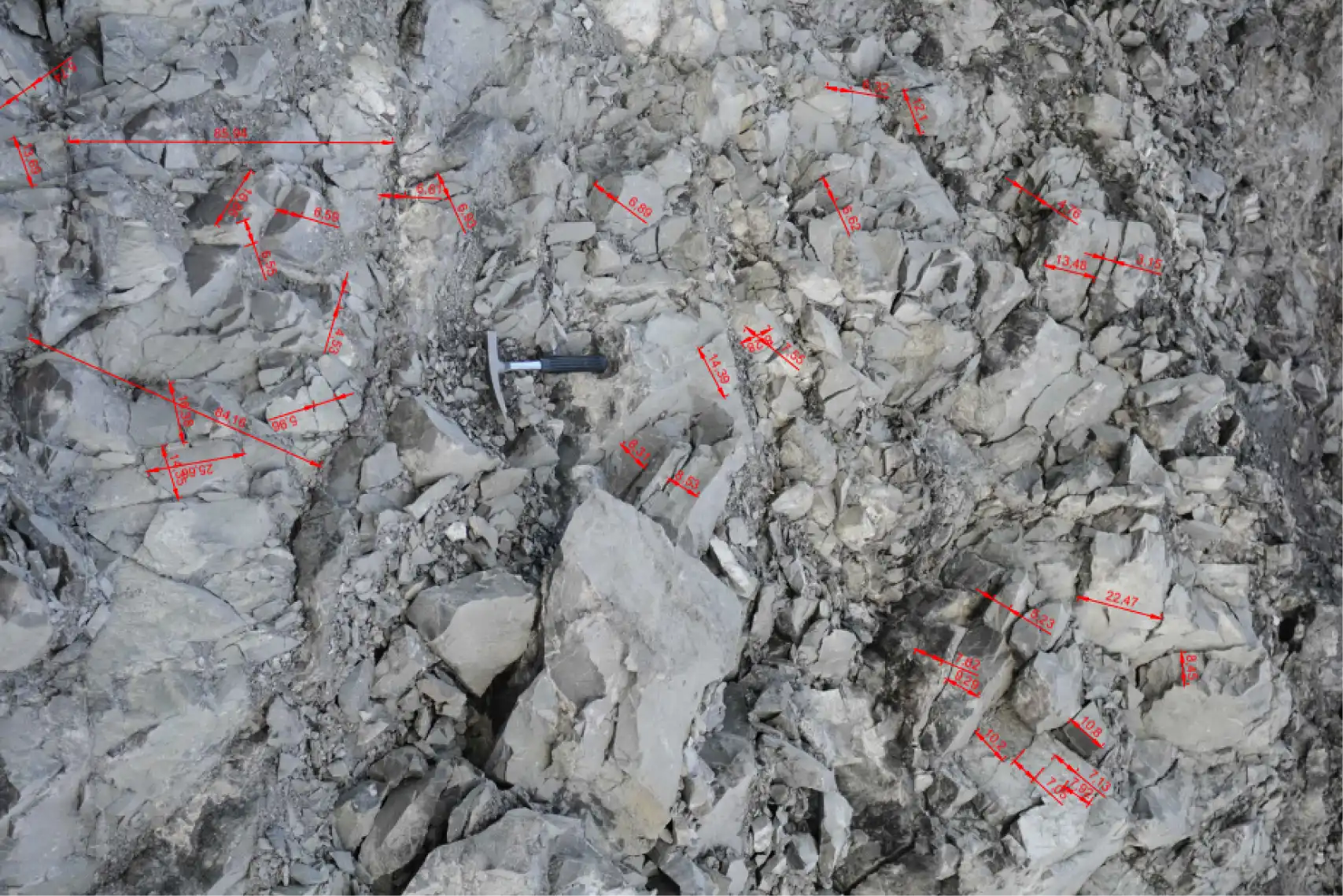
For further growth, it is important for a geomechanic to move beyond a single site: to take on multiple sites or assets, to participate in mine development projects, to move into an environment where you have to work with different types of deposits and scenarios at once.
Stage 3: Design and complex projects
Sergey’s next step is to move into complex field development projects. In Nornickel’s structure (through Norilskgeologiya), he worked with PFS and FS level programs – feasibility studies that are prepared to attract financing.
It was a fundamentally different scale. Not a single mine or a single mine, but models that described the entire life cycle of a deposit – for decades to come. Geomechanics here became part of the investment design: along with geology, geomechanics, hydrogeology, mine planning and economics.
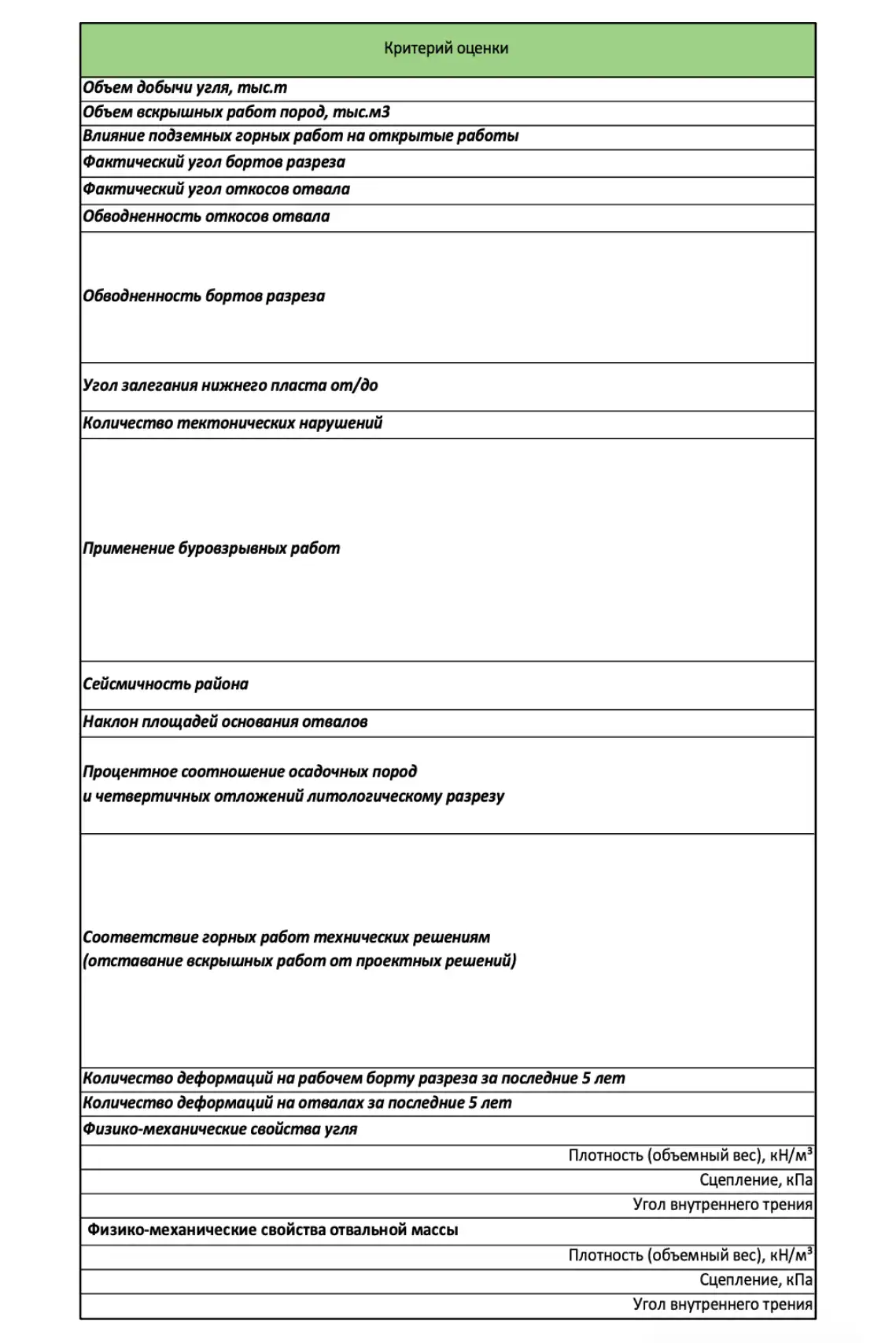
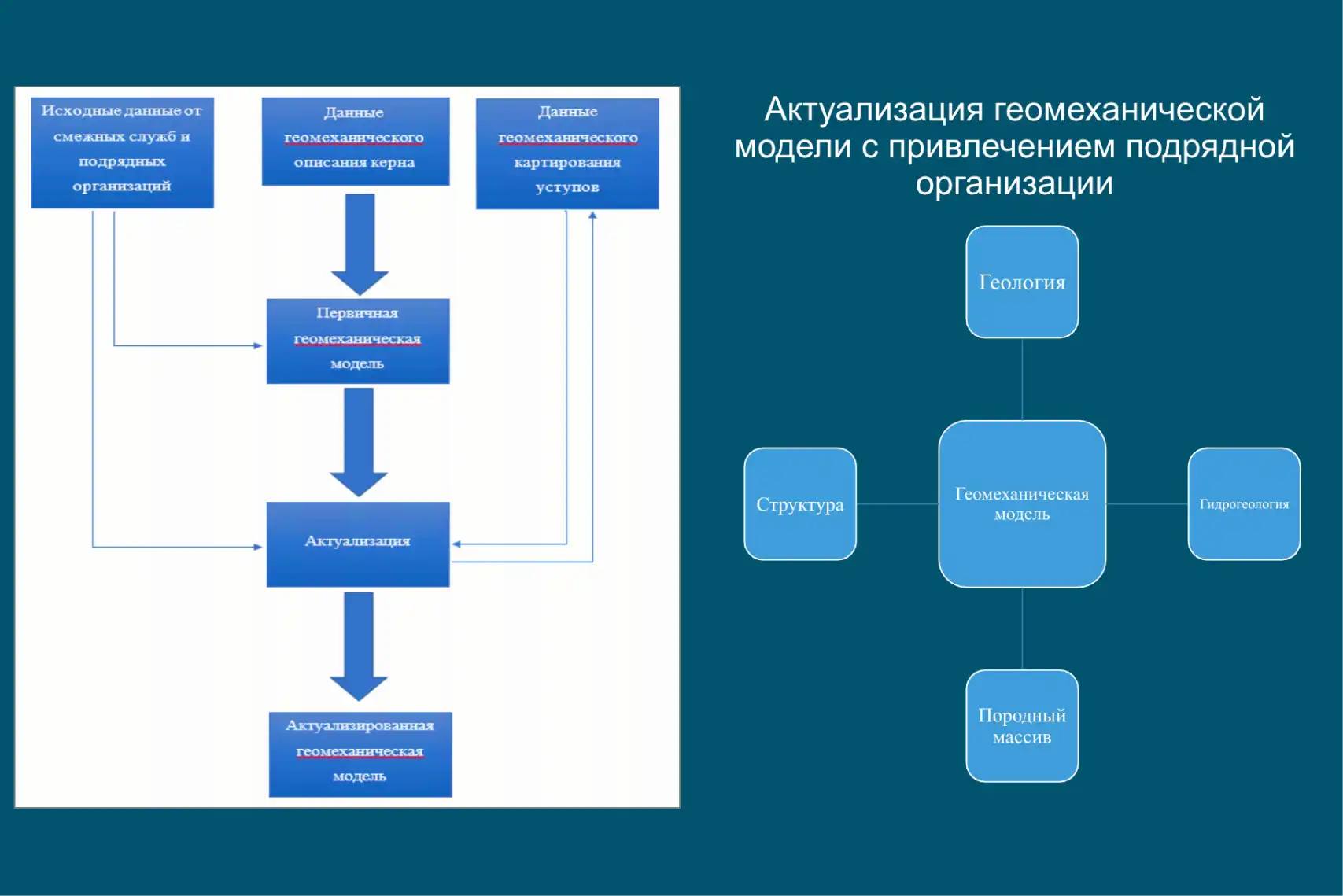
While working at SUEK, Kuzmin formed a system of geomechanical risk assessment for all the company’s enterprises – by 15 key indicators. It was not a question of formal comparison of assets, but an attempt to bring different fields to a single assessment logic:
- quality of source data;
- degree of study of the massif;
- history of accidents and stability failures;
- level of monitoring;
- adopted mining schemes;
- sensitivity to changes in plans;
- other parameters that directly affect stability and safety.
“When you have one enterprise, that’s one approach. When you have thirty of them, it’s a whole different level of thinking. You have to not only remember the names of the assets, but also understand all their problems”
Kuzmin explains.
Based on the assessment results, high-risk assets were identified, and separate risk mitigation programs were formed for them – no longer at the level of individual calculations, but at the level of managerial and technical decisions. This was the moment when geomechanics finally went beyond the “engineering function” and became a strategic management tool.
According to Kuzmin, this is not taught directly anywhere. A specialist reaches this level himself through a combination of education, practical work in production and design experience.
“Education and practice is the base. It is the skeleton. Everything else – experience, understanding of business, the ability to communicate the value of solutions – is already strung on top of it,” he says.
Later, there was a stage in SPb-Giproshakhta, the design organization. Another layer was added there: state expertise. The project had to be not just calculated, but formalized in the normative logic, defended, passed the comments and brought to a positive conclusion.
Here the role of the geomechanic changed again. Often his task was not to propose a variant, but to analyze already implemented solutions:
- whether the initial data is set correctly;
- what’s really behind the numbers;
- what risks are hidden in the model and how they may turn out at the construction and development stage.
In fact, it was the first systematic experience of external verification of engineering solutions – when you are responsible not for the calculation, but for its validity.
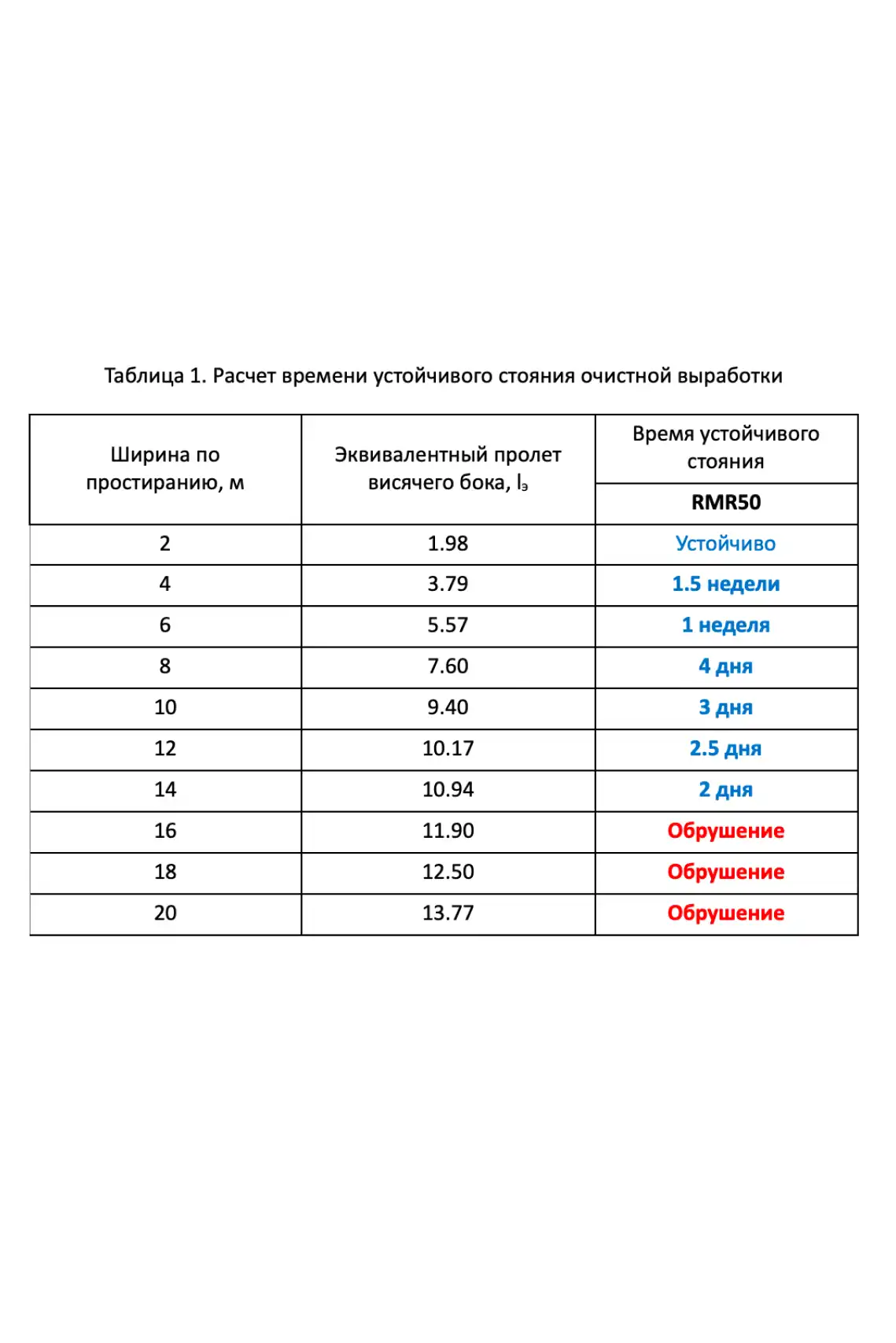
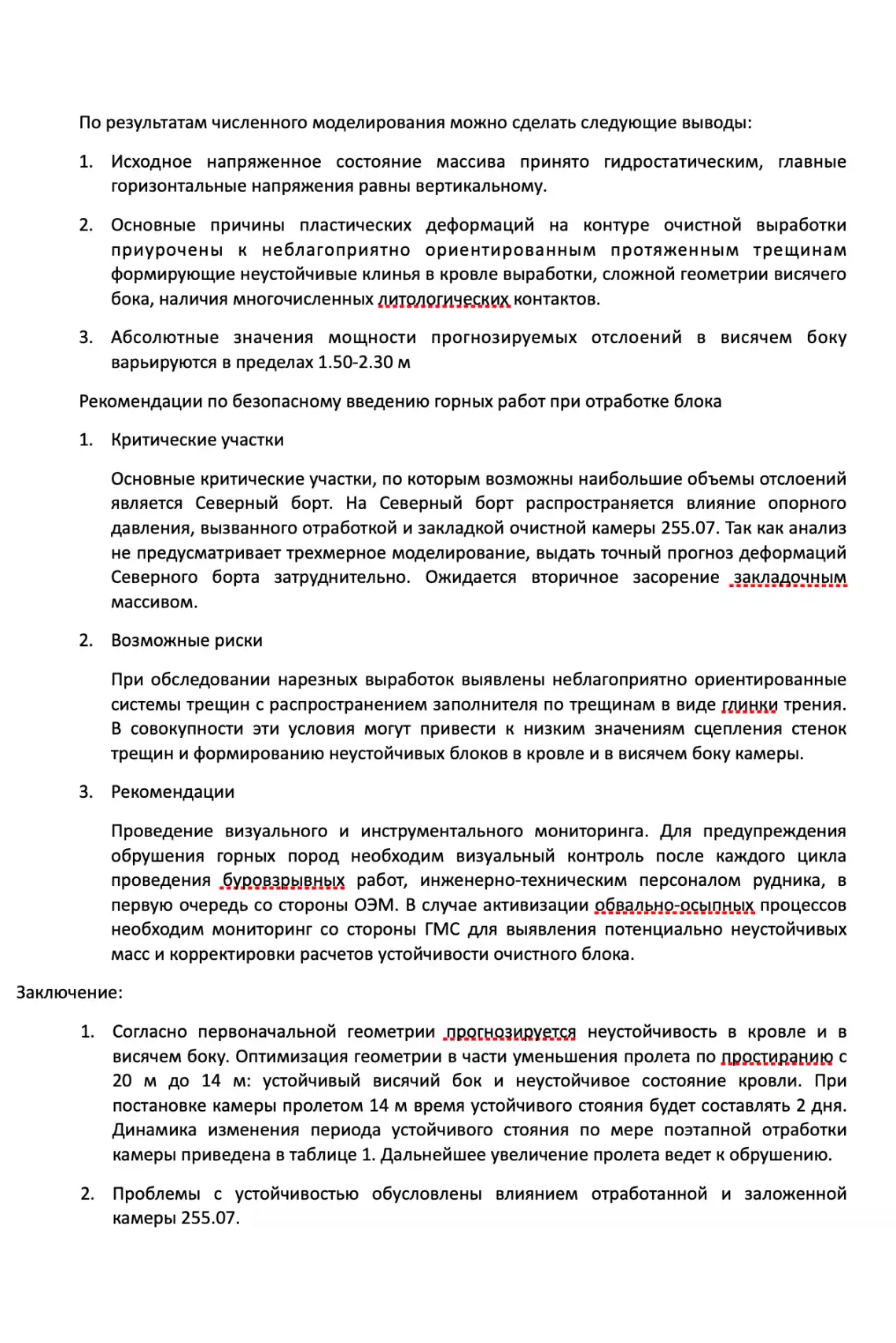
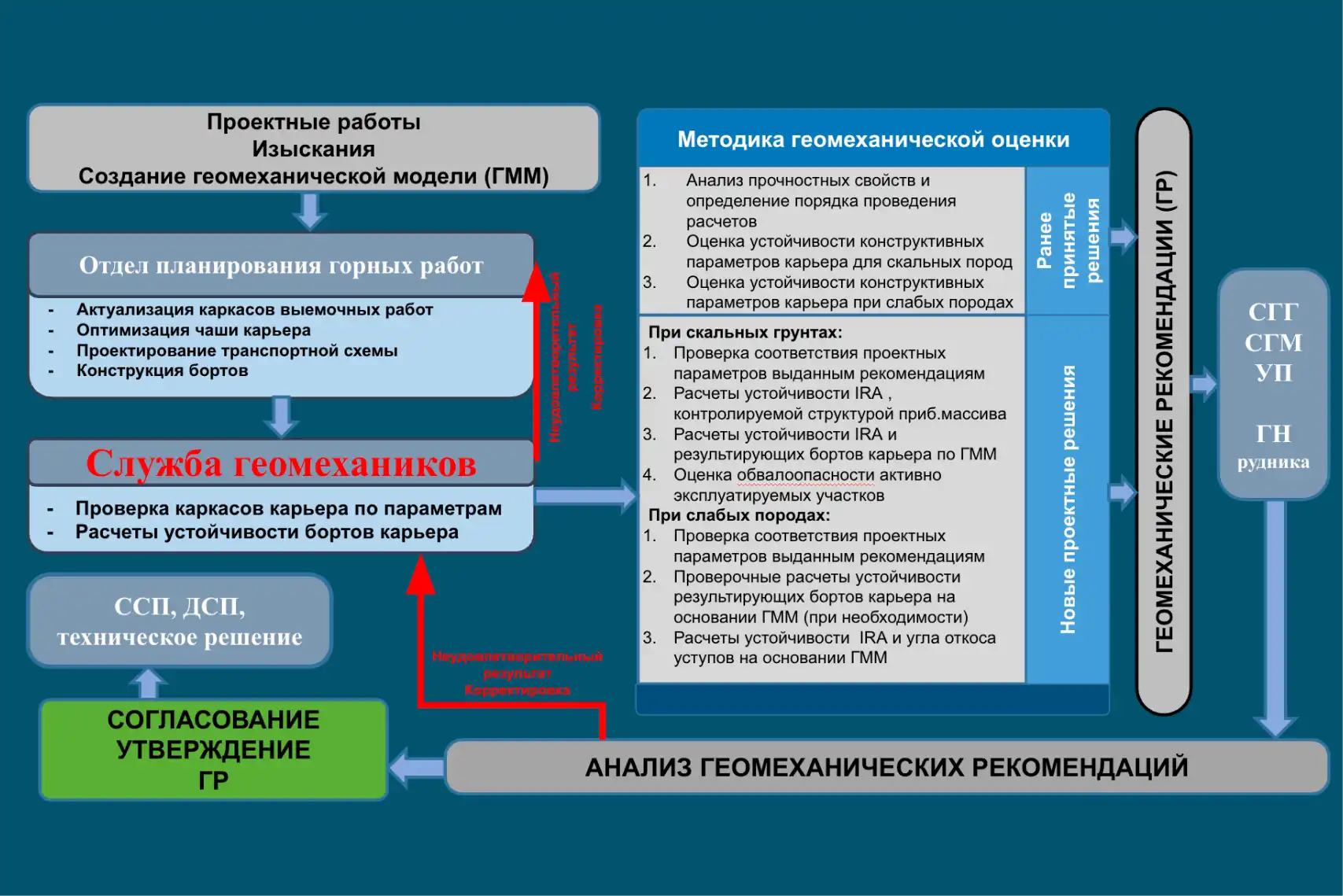
The experience at Karelsky Okatysh is illustrative, where Kuzmin actually created the geomechanical service from scratch. The decision to create it was a managerial one: the company made a willful decision to create a stability monitoring group. People were recruited, and then the question arose as to what exactly they should do and how.
“The service was created – and then we started teaching people how to work. My task was to build the whole system for them,” says Kuzmin.
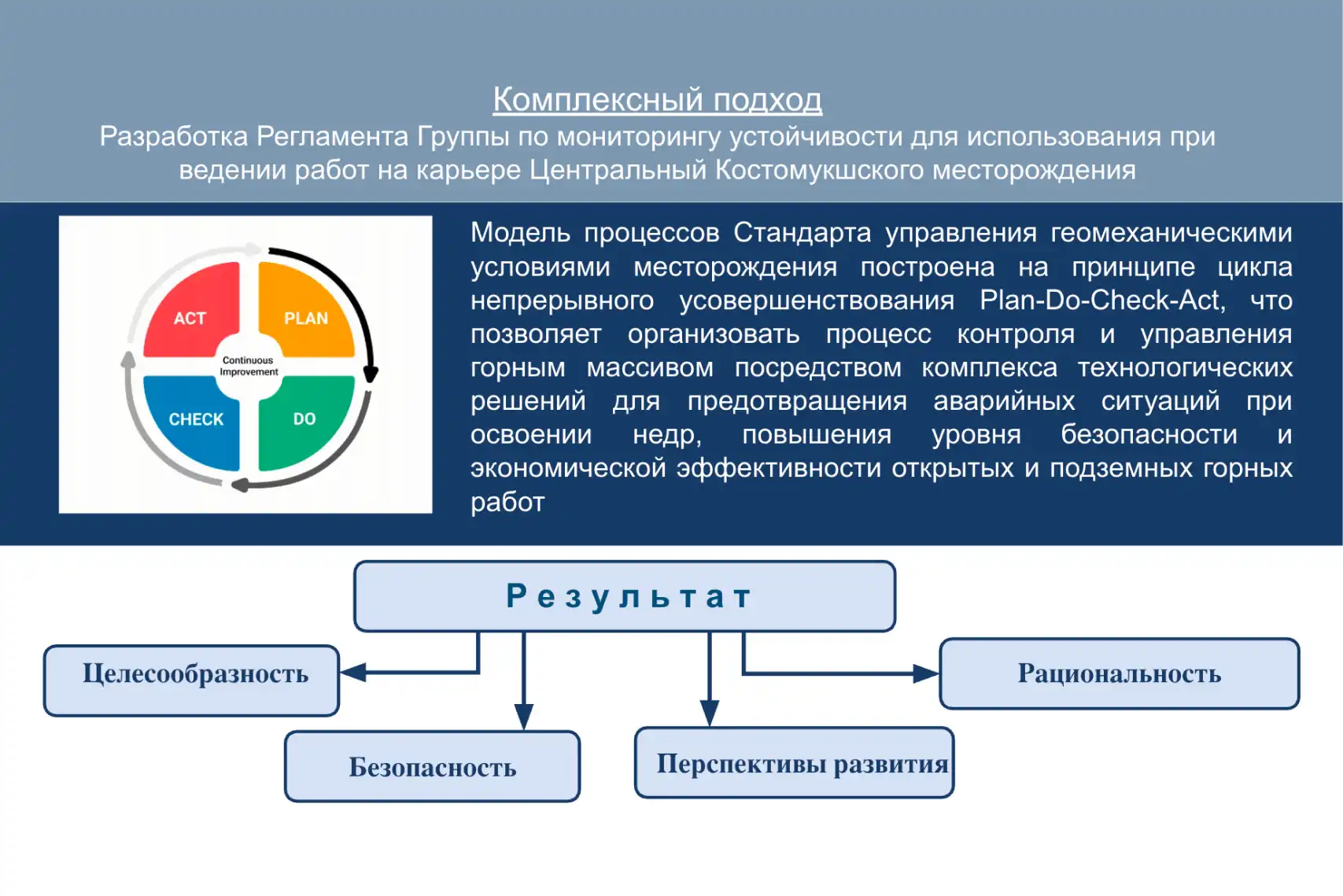
Within six months, he developed the regulations for the service:
- what data is collected, how it is verified;
- what paperwork is involved;
- what calculations are being performed;
- in what form the results are passed on.
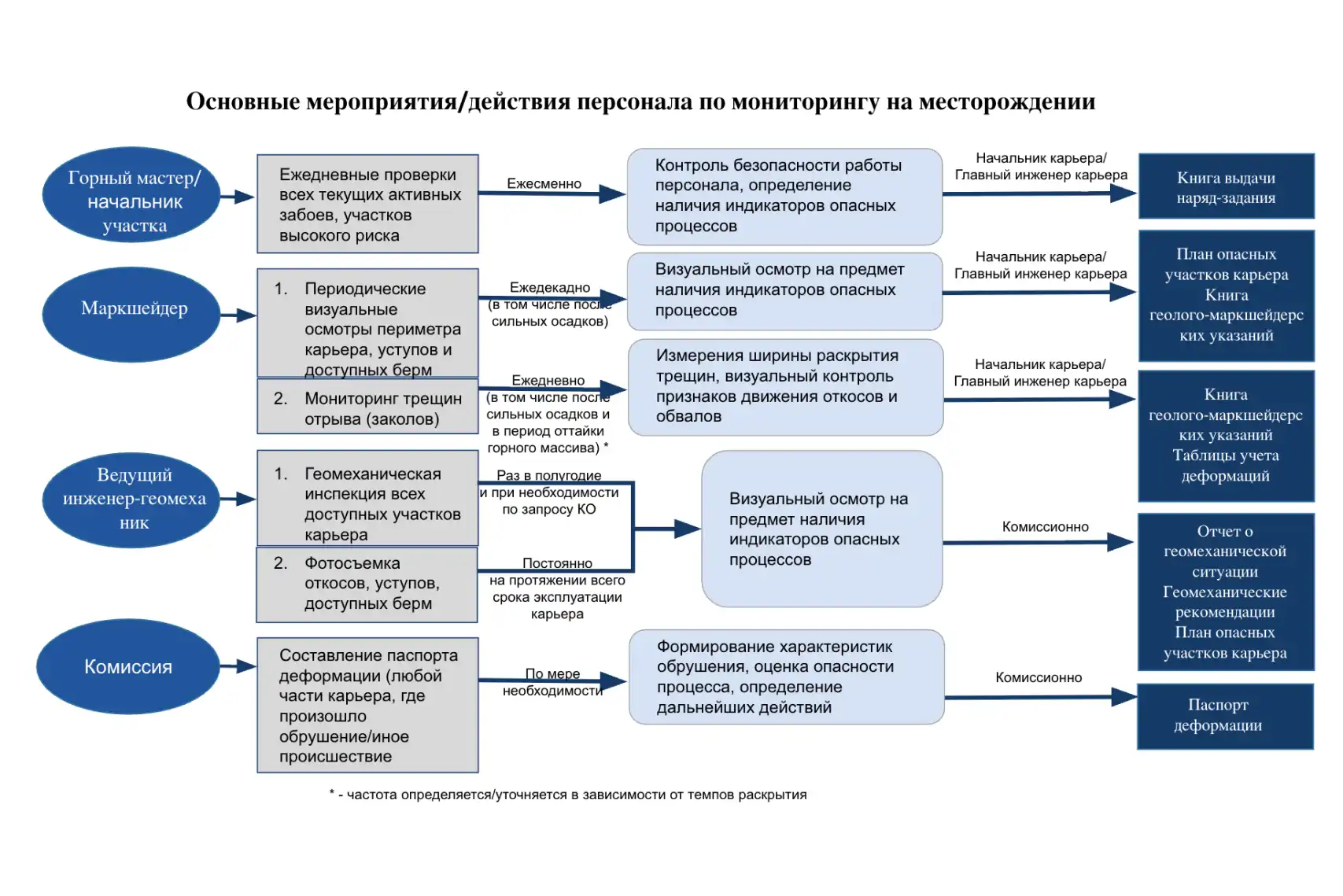
In parallel, the staff was trained: field observations, working with raw data, basic models, interpretation and drawing conclusions.
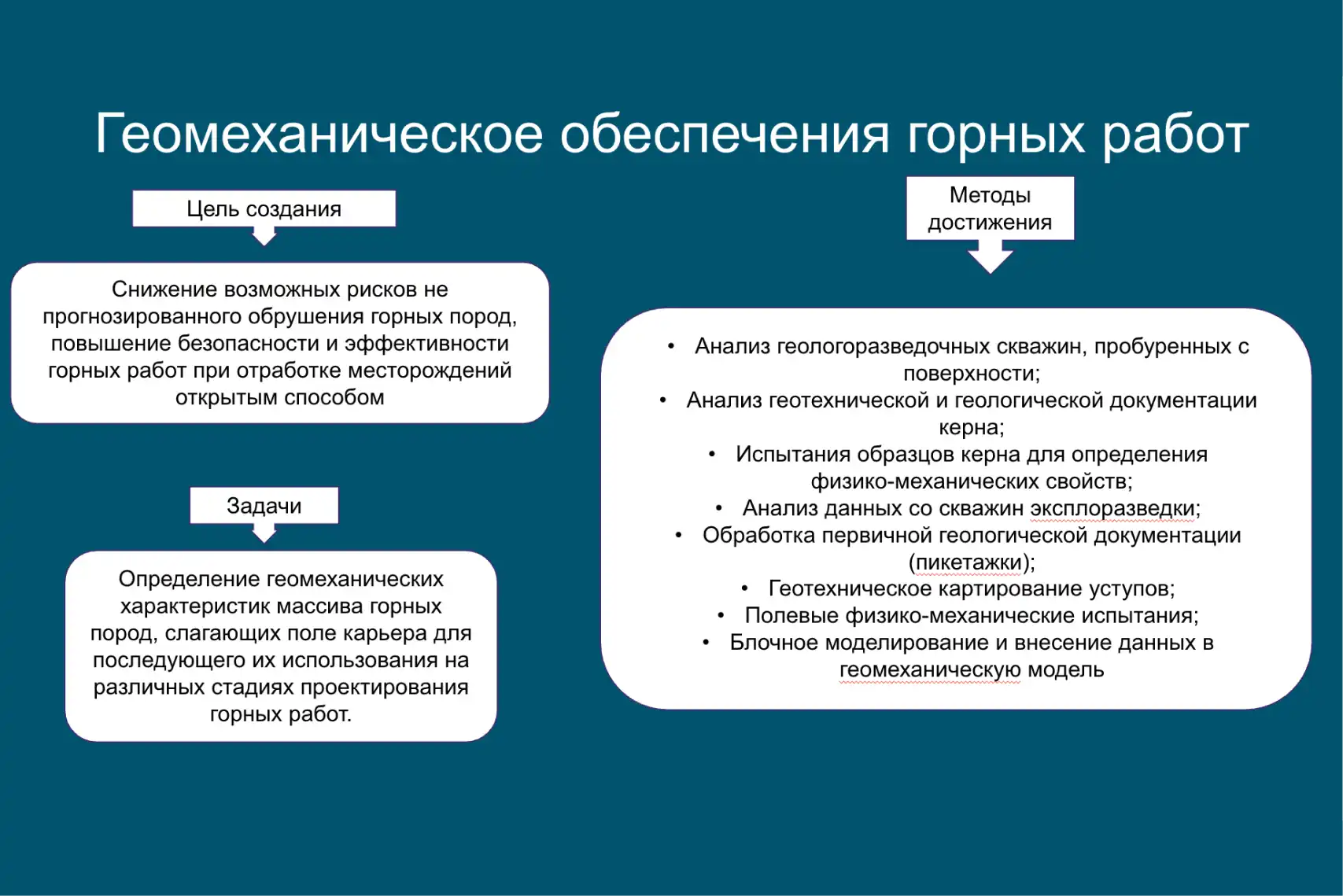
This service initially had a clearly limited task: not strategic design, but geomechanical risk assessment within one year of plant operation. Medium- and long-term planning was left to the design institute. But another important thing was fundamental: designers began to rely not on scattered reports, but on systematically collected actual data from the service.
Over time, projects began to repeat themselves in terms of the type of tasks. The fields and customers changed, but more and more often his role was reduced to a separate fragment within an already defined framework. Sergey Kuzmin had a feeling that the accumulated experience could work more widely: not only within project contours and not only as a part of someone else’s tasking. This is how the request for an independent format came about.
Stage 4: Consulting and own business
In practice, Sergey Kuzmin’s consulting turned out not to be “desk-based” at all. One of the main formats of his work is field projects, where, in a limited amount of time, it is necessary to immerse oneself in the tasks, gather a complete picture, and build a logic for further actions.
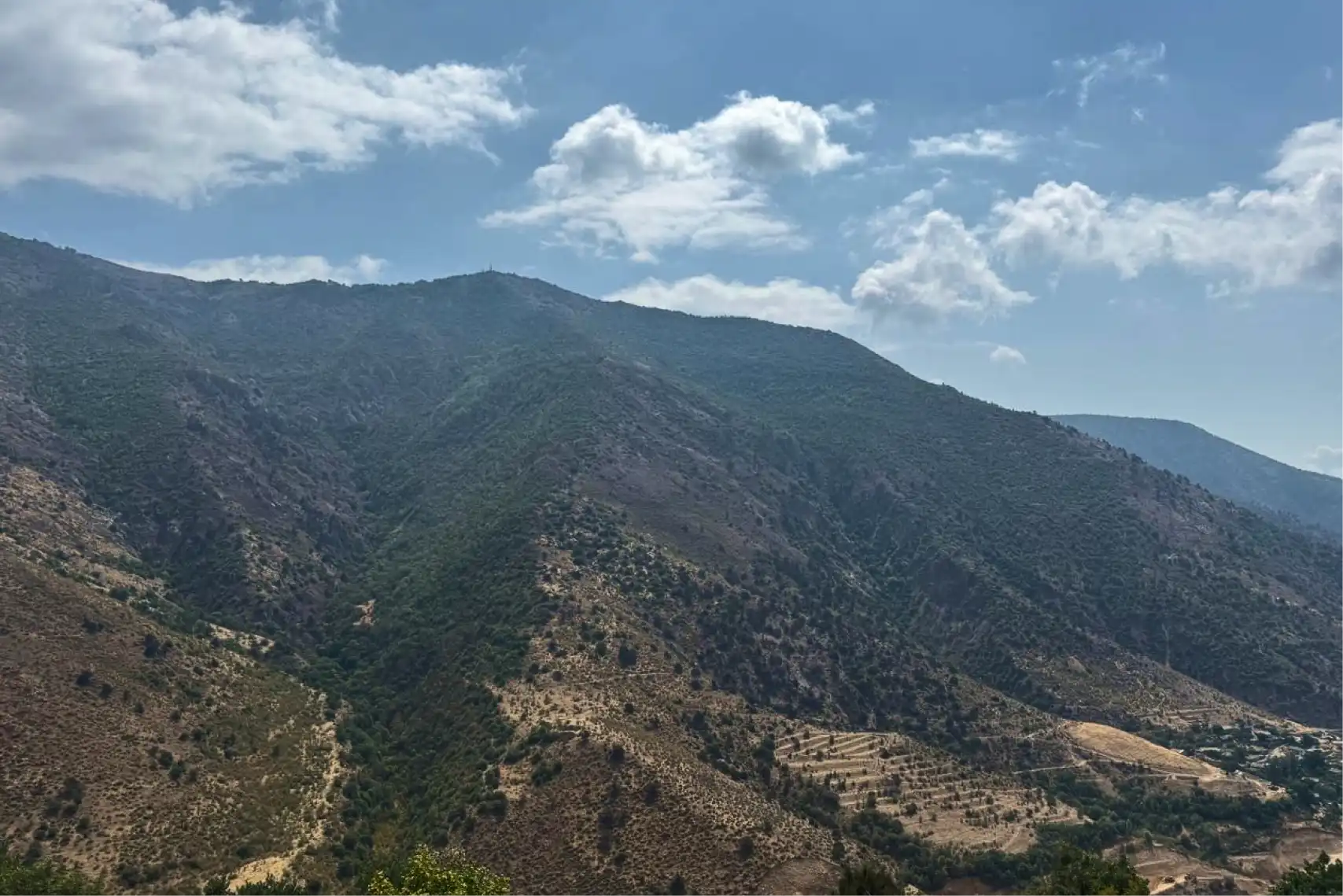
Thus, one of such projects started in Armenia – with geomechanical support of the operating enterprise at the Lichkvaz field.
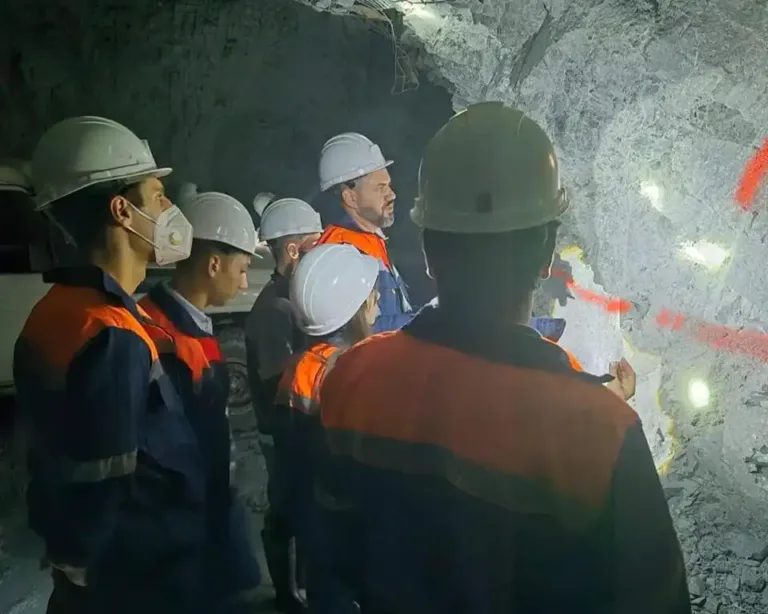
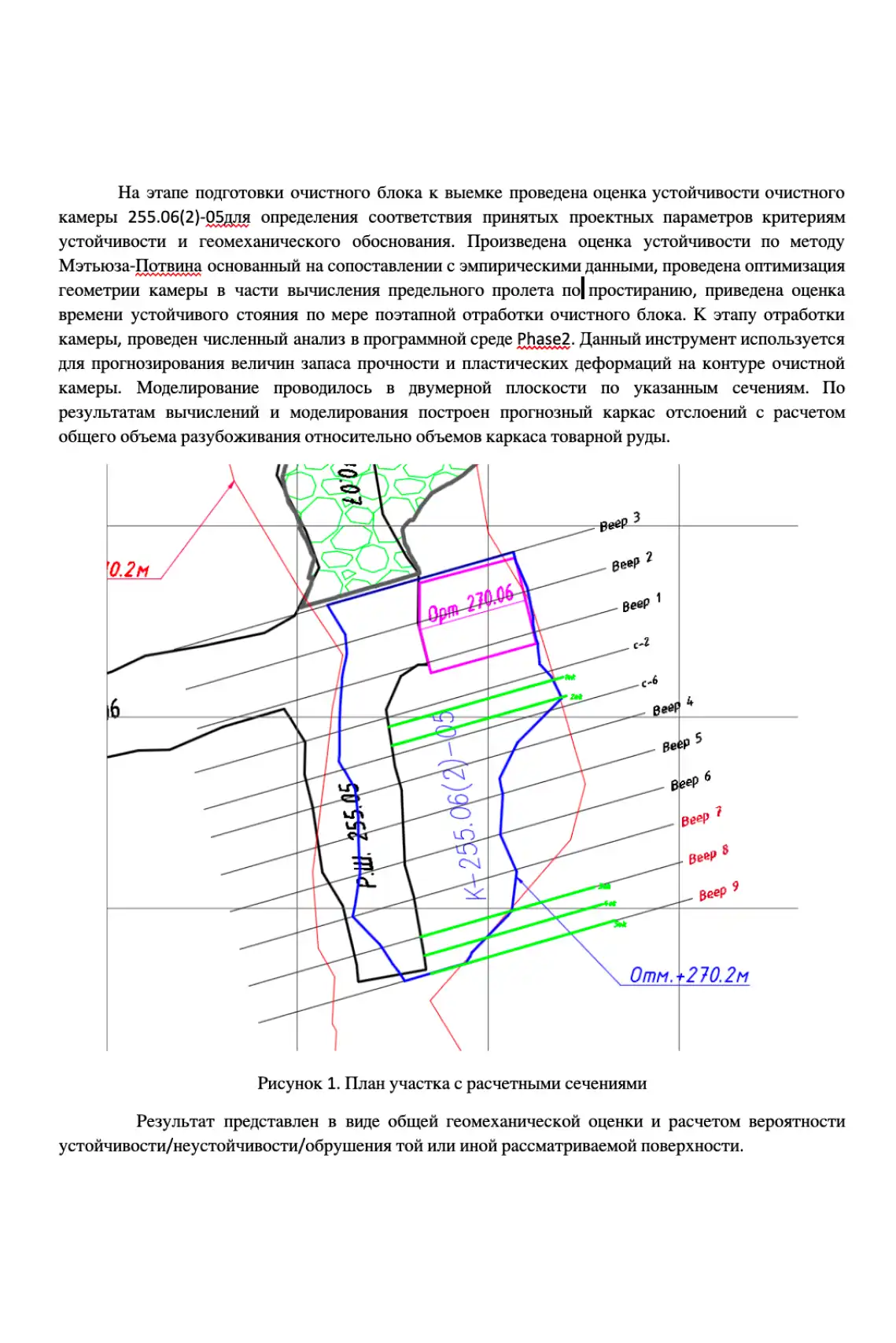
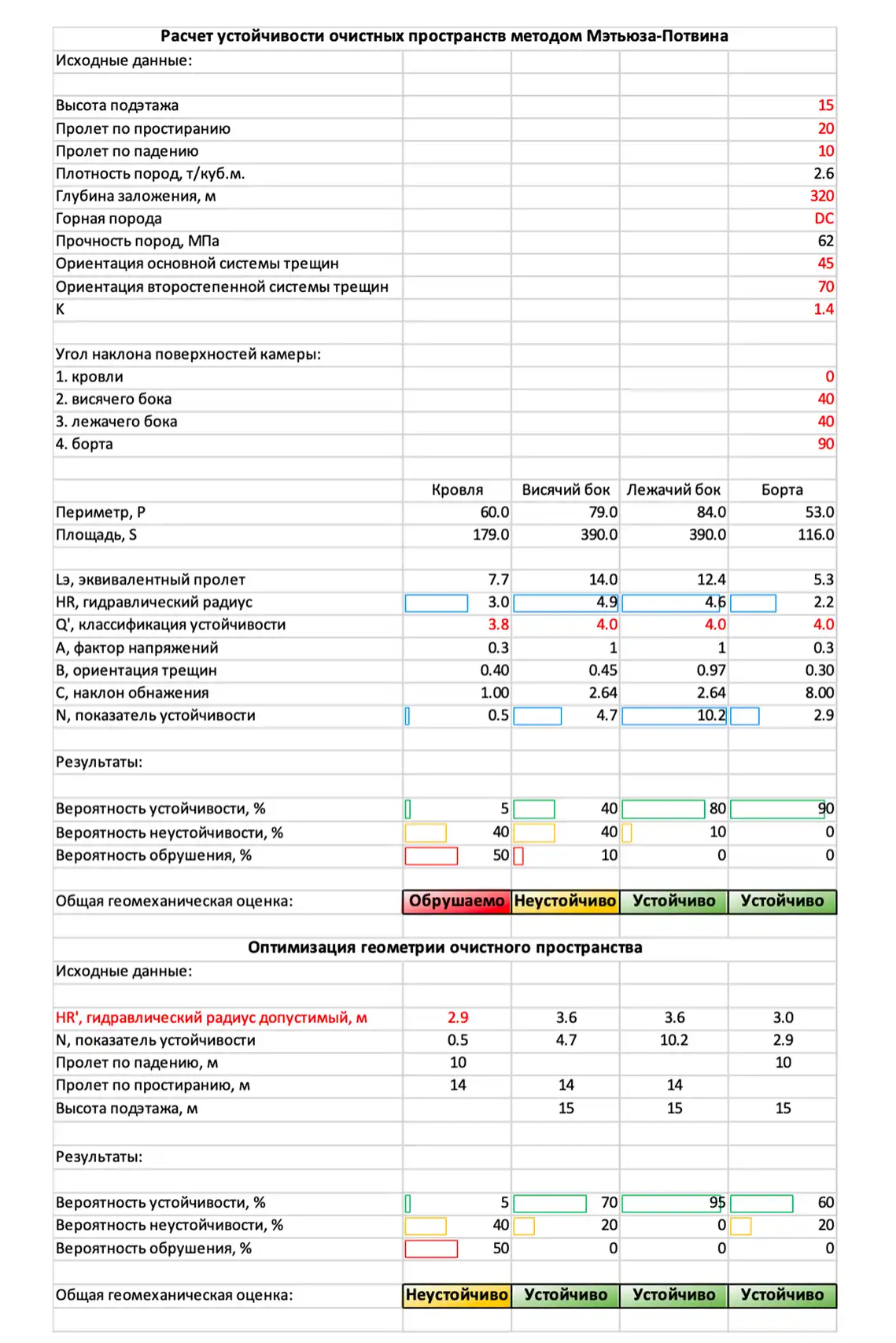
The team analyzed the fracturing of the massif, the existing observation system, the interaction of services, the regulatory framework and the quality of the raw data. In essence, this was a geomechanical “survey” of the mine – an attempt to answer basic questions:
- what’s really going on with the array here;
- where the key risks are;
- which in a risk management system doesn’t work.
The work was organized in stages: setting objectives, selecting methods, mapping excavations, analyzing deformation data sheets, assessing the need for monitoring, collecting geological, geomechanical and hydrogeological data. In parallel, Sergey worked with the engineering staff: he conducted joint mapping, analyzed errors, and showed which parameters really mattered.
The result was specific recommendations:
- which areas need priority attention;
- what data is critical to the models;
- how the geomechanics system should be built at the enterprise so that it works not “for reporting” but for decision-making.
Part of Sergey’s consulting tasks is related to sites where geomechanics becomes not an auxiliary discipline, but a key factor in the project’s existence.
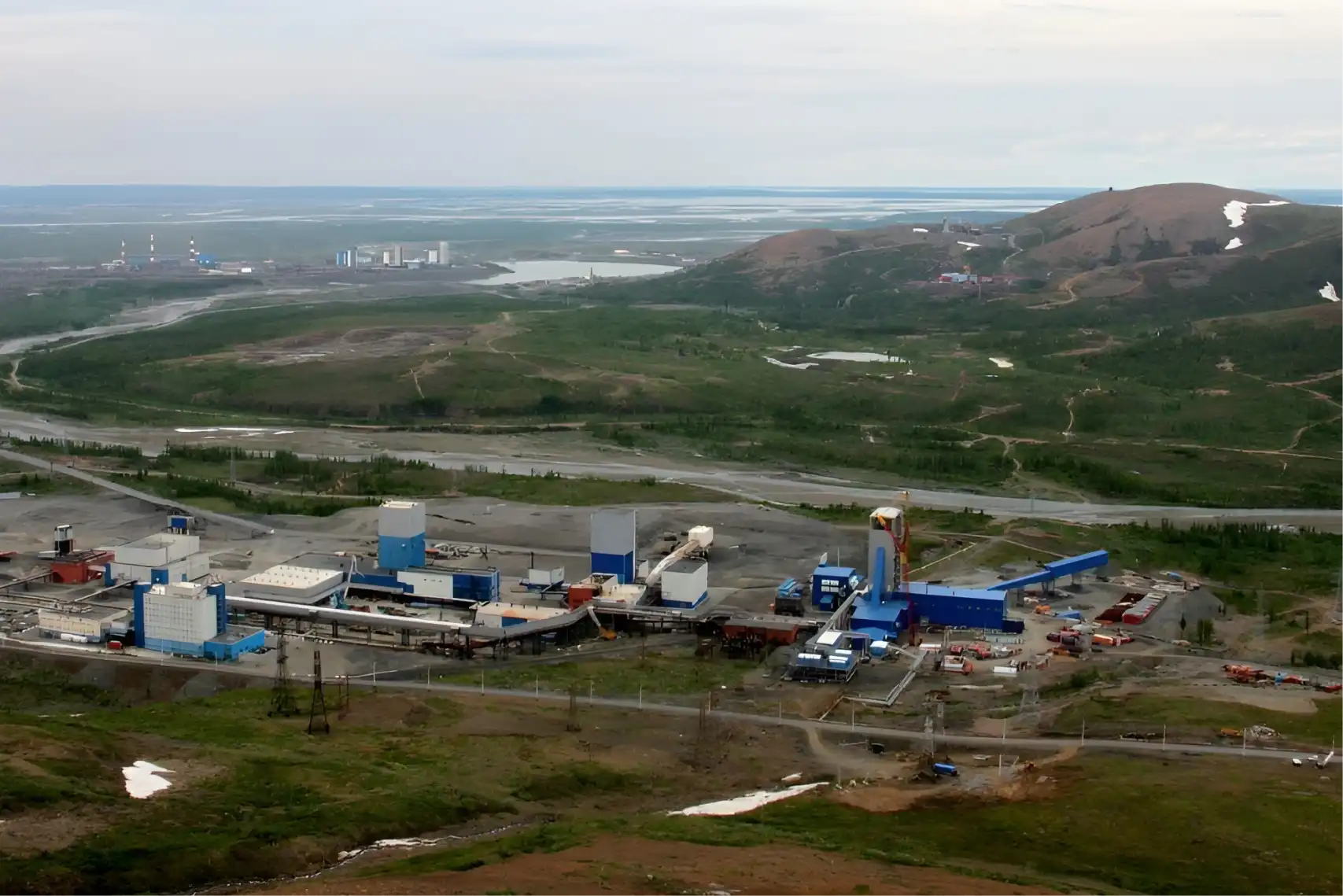
One such example is the Gluboky mine in Norilsk. These are mines at depths of two kilometers. At such elevations, geomechanics ceases to be a “calculation of excavation stability” and turns into a comprehensive system of research and management of the rock mass state.
This involves assessing the stress-strain state, working with safety pillars, managing shear processes, and preventing mining impacts. Here, the geomechanist’s recommendations are directly related to the possibility of increasing production, the timing of mine development and investment decisions.
In such projects, Sergey no longer works as an engineer for an individual task, but as a specialist influencing the long-term trajectory of the object: where it is possible to develop, where risks are marginal, and what engineering solutions determine the future of the field.
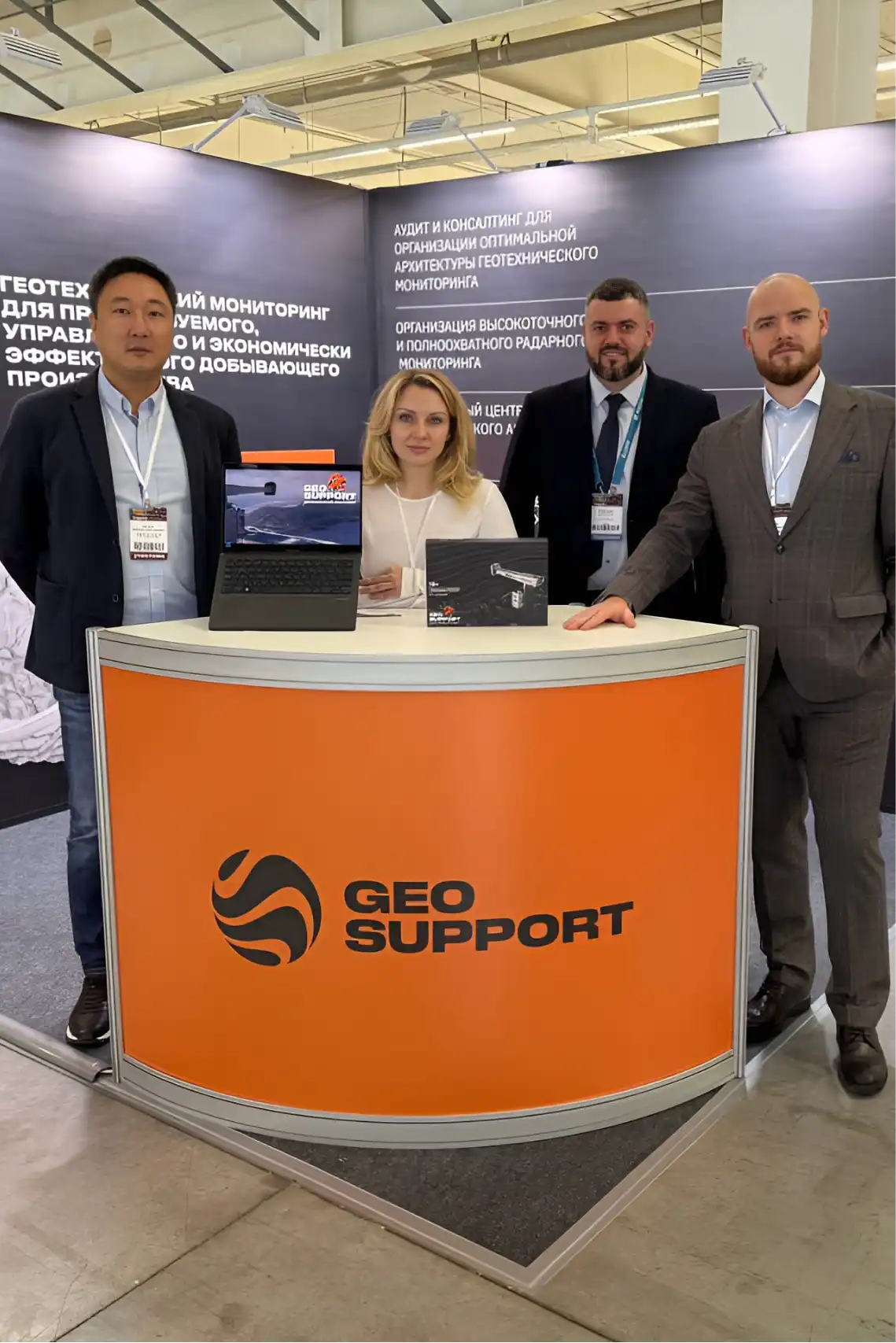
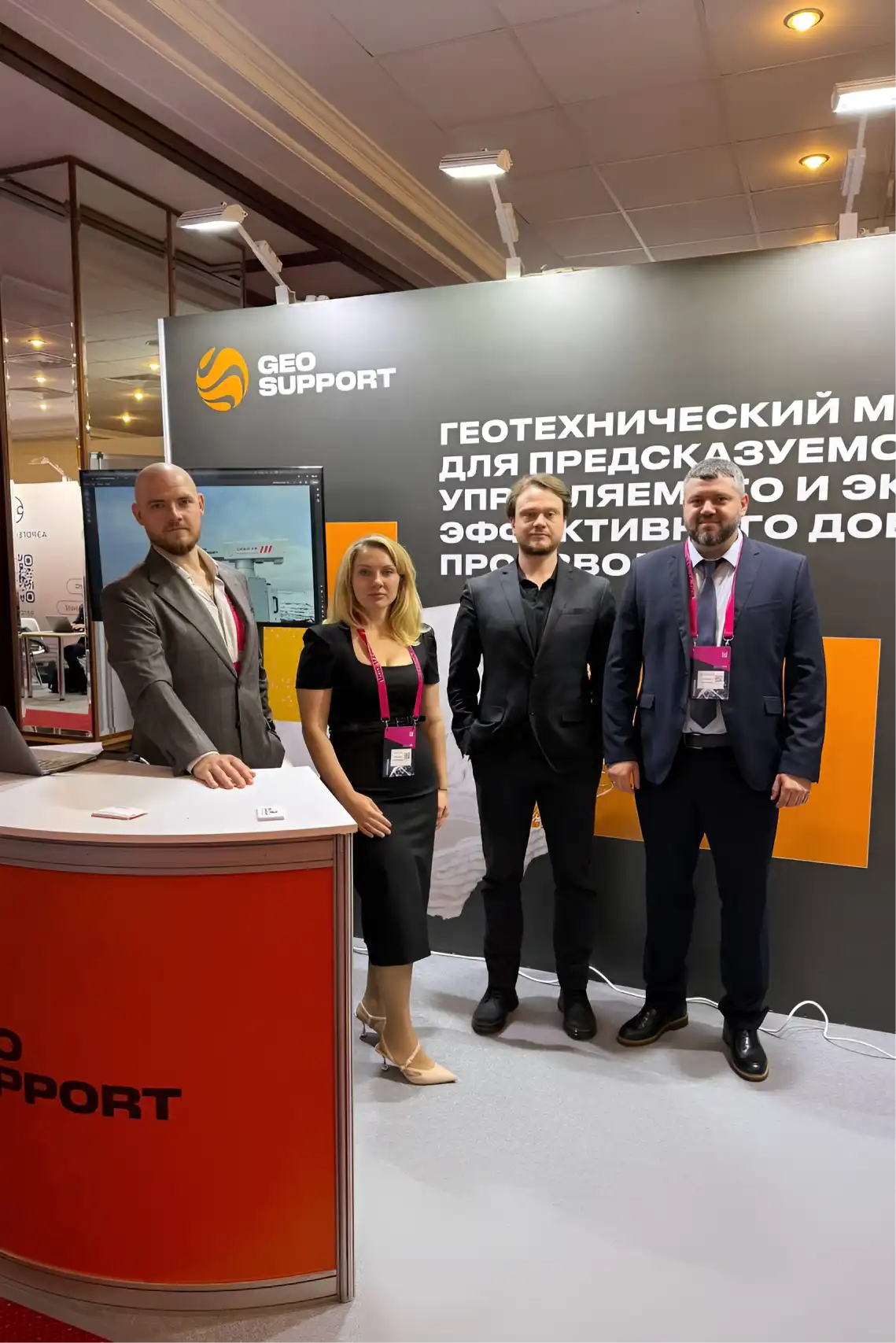
Gradually, the public side of the work also took shape. Sergey began to speak at industry conferences with reports that grew directly out of his projects. He spoke about the creation of geomechanical services at enterprises, methods of building models for complex deposits, and how geomechanics is integrated into investment and management decisions. For example, he spoke at international and Russian conferences on the creation of geomechanical services as an element of sustainability and development of mining enterprises.
In all of these speeches, the same idea that he has lived in practice many times is repeated: geomechanics is the system on which the safety, planning and economics of a project depend.
A separate discovery for Kuzmin was the non-engineering part of consulting.
It quickly became clear that being a strong specialist is not enough. You need to be able to explain why the business needs you, what tasks you solve, what format you work in, and how your approach differs from project and contracting models.
Sergey had to master something that is not taught either at university or at design institutes: marketing, packaging of expertise, negotiations, sales, working with market demands. He had to form proposals, analyze typical problems of enterprises, and build his own position as an independent engineer. In fact, next to the engineering role, a second role appeared – the entrepreneurial one. And it was this role that largely determined what his consulting became, where the two came together:
- field trips and strategic projects;
- engineering calculations and management decisions;
- expertise, training and systems alignment.
In this format, Sergey Kuzmin helps companies align geomechanics as a function that impacts the safety, sustainability and future of assets.
The future of the profession: where calculations end and decisions begin
Over time, Sergey Kuzmin’s role has shifted from a geomechanic who builds models to a specialist who is involved when it is necessary to understand the situation at the site and make decisions that affect the safety and development of the project.
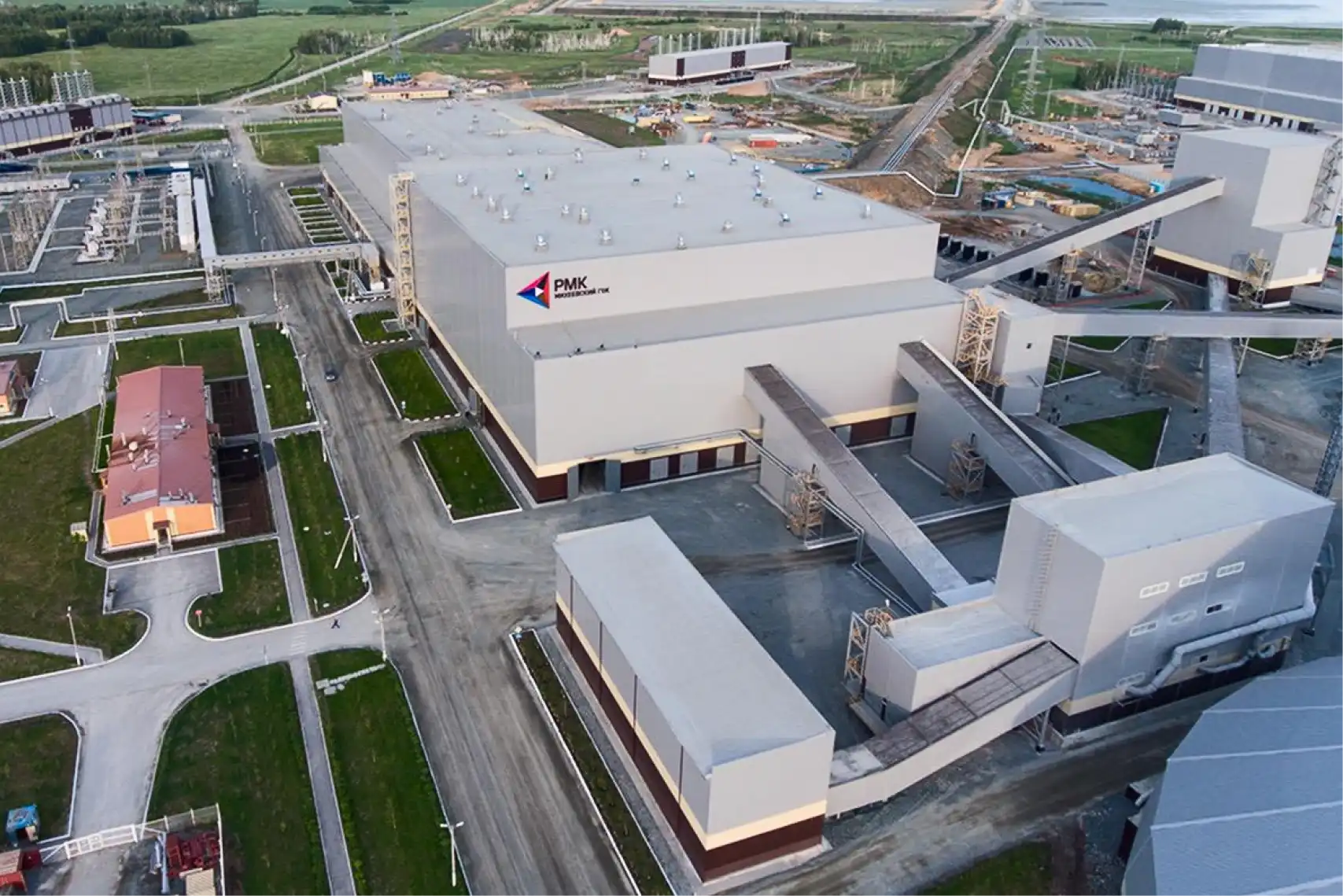
One of such cases was a visit to the Malmyzhskoye gold-copper porphyry deposit in Khabarovsk Krai. Formally it was a familiarization visit, but in fact it was a quick audit, an express assessment. Sergey Kuzmin’s team examined the geomechanical features of the massif, the state of the infrastructure, and the quality of the initial data for future modeling. The main focus was not on calculations, but on what data it makes sense to collect at this stage, what risks are laid down “by default” and how the project will have to live with them later. This is a typical situation in consulting: decisions are made even before detailed models are available, and the cost of a mistake here is years and billions of investments.
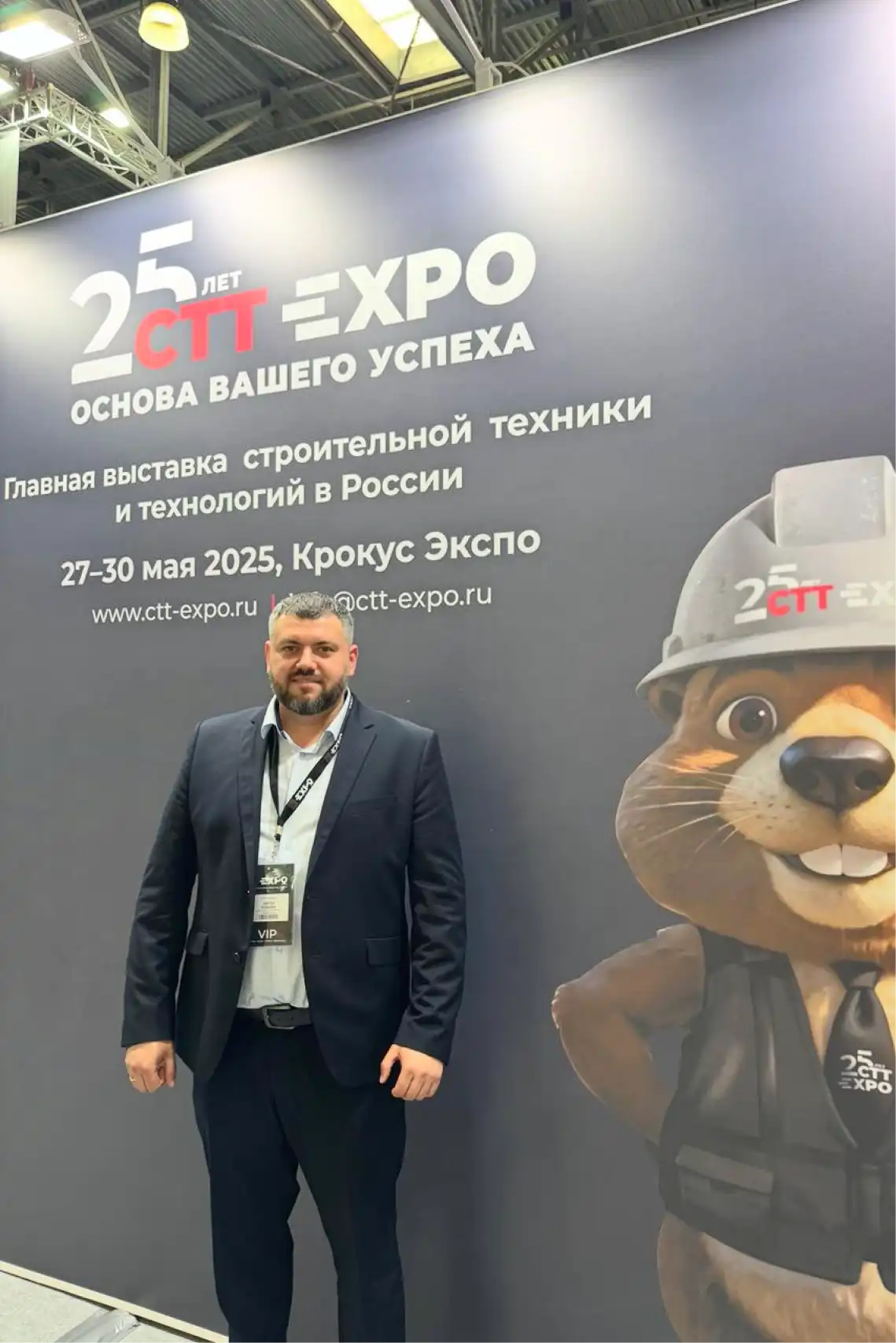
Another layer of work is communicating with market participants and creating a demand for geomechanics as a function. At industry events, Sergey Kuzmin talks about why enterprises should create geomechanics services at all. For example, at the Future of the Mining Industry conference, his report was devoted to investment logic: how an in-house geomechanical service affects safety, the quality of medium- and long-term planning, and compliance with regulatory requirements. In fact, the point is that geomechanics is starting to be seen not as a cost item, but as a risk management tool.
Sergey is no longer confronted with engineers “within the profession”, but with line managers, technical directors, and representatives of service and digital companies. Their demands are different:
- How to build geomechanics into existing processes;
- what data you really need;
- why the project approach does not cover all risks.
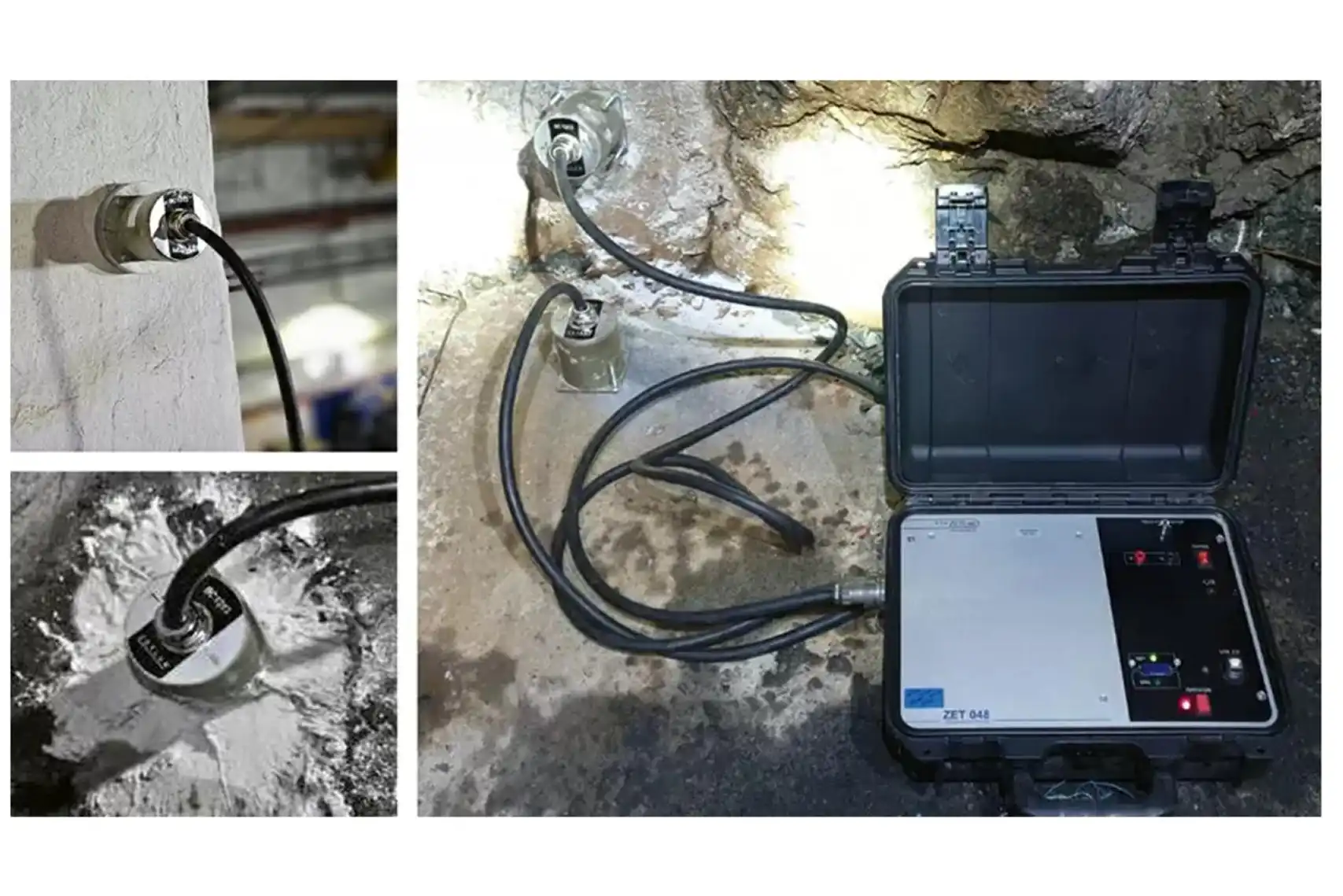
Separate is the practical work at the intersection of engineering and service – implementation of technical solutions: monitoring systems, fasteners, slope stabilization methods. Here geomechanics acts as a link between equipment, conditions of the massif and real production constraints.
If you put all these episodes together, you can see where the boundary of growth in the profession actually lies. It is not in mastering another program or in making the models more complex. It is the moment when a specialist starts to be responsible not for the correctness of the calculation, but for the consequences of decisions based on this calculation: for the work schedule, for the budget, for safety, for the asset development strategy.
That’s why at the end of this journey, the geomechanic increasingly finds himself in the role of the one who is called when it comes to understanding the limits of what is permissible. Where you can accelerate and where you can’t. What is an engineering risk and what is a management illusion. And this, in fact, is the point where the profession ceases to be a narrow technical specialization and turns into an independent role with real influence on the future of projects.