Specialists from the Federal State Budgetary Institution GSAS “Kirovsky” continue experiments on the use of ephel – gold mining waste – in agriculture. In 2024, scientists took soil samples for analysis and began monitoring yields in experimental plots.
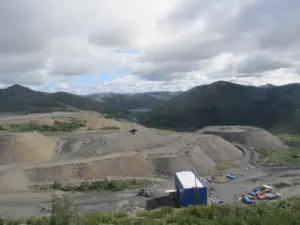
Ephel is the fine-grained material left behind when sands are washed during the mining of gold, platinum and other minerals. Usually its particles do not exceed 12–16 mm. Even though ephel is considered a waste product, it may contain valuable elements that are beneficial to the soil.
Since 2023, agrochemists have been studying the effect of ephel on soil fertility and productivity. Experiments are carried out in fields with perennial grasses. Scientists apply ephel in different doses – 3, 6 and 8 tons per hectare, combining it with phosphate rock (1 ton per hectare).
This year, experts are not only analyzing the composition of the soil, but also monitoring how yields change in experimental plots. This approach allows us to evaluate the effectiveness of ephel as a fertilizer and determine the optimal rates of its application.
Experiment value:
– Checking the safety of using gold mining waste in agriculture.
– Search for new ways to increase soil fertility.
– Possibility of recycling industrial waste for the benefit of the agricultural sector.
If research confirms the effectiveness of ephel as a fertilizer, this could be a new step in the development of agriculture and waste recycling. The results of the experiments will be known after harvesting and detailed analysis of the data.
Source: zolteh.ru