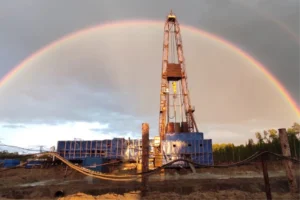
Independent U.S. oil producers are increasing investment in drilling as WTI crude prices remain above $90–100 per barrel. The U.S. Department of Energy has already raised its forecast for associated gas production in the Permian Basin, with output expected to reach nearly 827 million cubic meters per day by the end of the year.
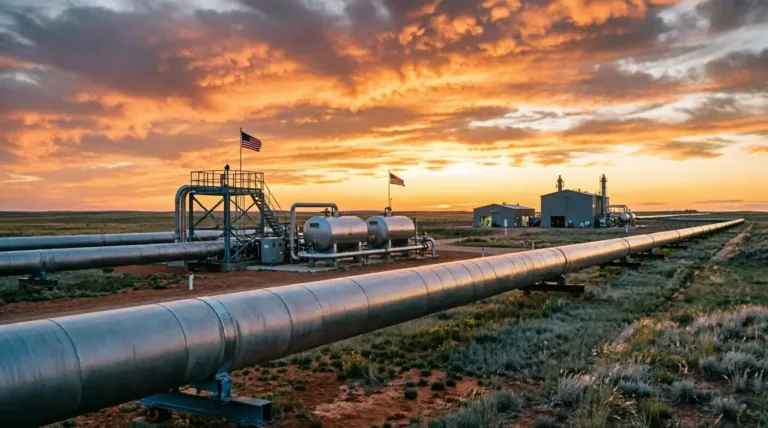
The challenge, however, is not how much gas can be produced, but whether it can be transported to market. Pipeline capacity remains the industry’s primary bottleneck. When production exceeds available takeaway capacity, operators are often forced either to pay buyers to take the gas or to seek permits for flaring. Negative gas prices at the Waha hub in Texas have become a recurring phenomenon under such conditions.
To avoid a transportation crisis, companies have accelerated investments in new compressor stations and expansions of pipeline networks connecting production regions with the U.S. Gulf Coast. At the end of May, TC Energy and Kinder Morgan completed the Bison XPress project. Rather than constructing a new pipeline, the project reversed the flow of the previously idle Bison pipeline and upgraded its compressor infrastructure. This enabled surplus associated gas from North Dakota to be redirected southward toward the Cheyenne hub in Colorado.
At the same time, WBI Energy and Intensity Infrastructure have launched an open season for long-term shipping commitments on the Bakken East project. The proposed pipeline will transport associated gas from western North Dakota to industrial consumers in the eastern part of the state. Combined capacity from the new infrastructure projects is expected to reach approximately 3 billion cubic feet per day.
Most of the additional associated gas is expected to supply LNG export facilities along the Texas and Louisiana coasts. This would further strengthen the United States’ position as the world’s leading LNG exporter and could potentially ease spot gas prices in Europe and Asia by offsetting supply shortages from other regions.
However, the most optimistic scenarios are far from guaranteed. LNG export projects frequently face delays due to environmental litigation or shortages of skilled labor. If new liquefaction capacity is not commissioned on schedule, excess gas could remain trapped within the domestic market, driving U.S. gas prices close to zero.
Another significant risk comes from the Gulf Coast’s exposure to hurricanes. A single major storm can disrupt operations at key export terminals for weeks, as demonstrated by previous interruptions at the Freeport LNG facility. In addition, ongoing tensions between the U.S. Environmental Protection Agency (EPA) and the oil and gas industry create persistent regulatory uncertainty. Stricter environmental rules could quickly limit production growth and infrastructure development.
The United States continues to expand associated gas production, but maintaining its leading position in global energy markets will depend on whether infrastructure development and regulatory policies can keep pace with rising output.
Source: CDU TEK
Image: AI-generated