Researchers from KamSU named after Vitus Bering studied the structure of volcanic deposits of Mount Tarbaganya, located between the Mutnovsky and Gorely volcanoes. Their work sheds light on the history of volcanic activity in the region.
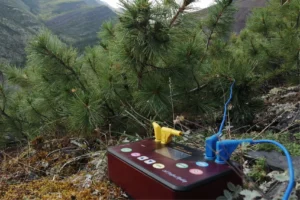
For a long time, there was no consensus among scientists about the origin of these breeds. Some considered them the result of an eruption, others – a consequence of the extrusion of viscous lava. To figure it out, experts used ground penetrating radar, a device that scans soil to a depth of 6 meters without excavation.
“We took measurements on 12 profiles: eight on the slopes of the mountain and four at the foot,” said Veronika Pavlova, associate professor at KamSU. Data Analysis showed that the sediments lie almost parallel to the earth’s surface, which is typical for cover formations. In the upper part of the mountain, three layers with different properties were discovered: dense rocks on top and looser rocks with cracks in the depths.
Scientists have noticed that the processes at Tarbaganya are reminiscent of the consequences of a powerful eruption in 1912 in Alaska, where the Valley of Ten Thousand Smokes was formed. Then the hot flow of volcanic rocks and gas left behind areas resistant to erosion.
This work helps to understand how the volcanic deposits of Kamchatka were formed and to clarify the history of the Mutnovsky and Gorely eruptions. The data obtained is important for predicting future activity in this seismically dangerous region.
Source: naked-science.ru