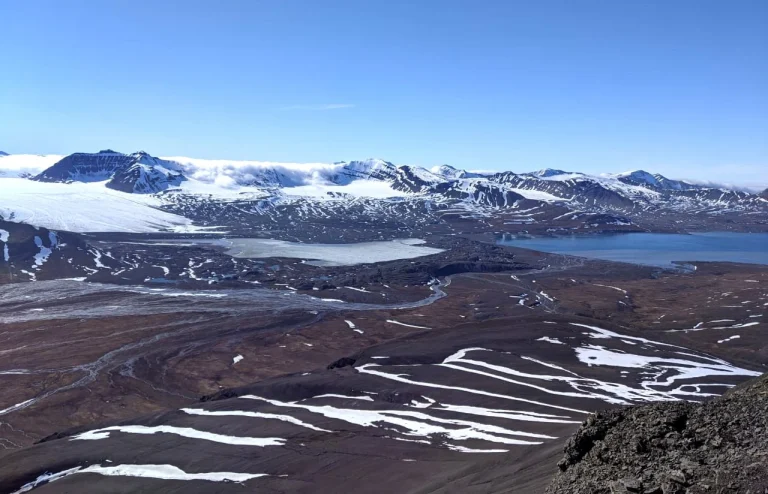
The Arctic archipelago of Svalbard is rapidly losing glaciers, indicating catastrophic climate change. British researchers from the University of Bristol have found that the area of ice masses has decreased by hundreds of square kilometers over recent decades.
A research team from the University of Bristol, using cutting-edge artificial intelligence technology, has discovered a significant reduction in the area of Svalbard glaciers. Research published in the journal Nature Communications, shows that since 1985, 91% of glaciers in this region have lost a significant portion of their volume.
For the analysis, experts used millions of satellite images. Neural networks helped not only speed up data processing, but also identify key patterns in the destruction of ice fields.
According to the study, more than 62% of Svalbard’s glaciers suffer from ice calving, which becomes more active during the warm season. The reason for this phenomenon is an increase in air and water temperatures. Scientists note that such processes accelerate the destruction of ice masses, which enhances the overall trend of global warming.
The geographical location and low altitude of the glaciers make the archipelago one of the most climate-prone areas on the planet. Arctic regions are particularly hard hit by warming, which threatens not only natural ecosystems but also the stability of global sea levels.
Rising temperatures in Arctic regions pose increasing risks to coastal areas around the world. Scientists continue to study the dynamics of melting glaciers to better understand how to slow the devastating effects of climate change.
Spitsbergen is a kind of indicator of the state of the entire Arctic. The rapid melting of glaciers is not only changing the appearance of this unique region, but also reminding humanity of the importance of combating global warming.
Sources: izyskateli.info
Photo: AARI