Russia is extending its deep-sea exploration program. A subsidiary of state-owned holding Rosgeo has signed an agreement with the International Seabed Authority (ISA) extending geological exploration for polymetallic nodules through the end of the decade. The project covers one of the richest areas of the world’s oceans, where ferromanganese ores occur at depths of more than five kilometers.
The agreement was signed at the Russian Ministry of Natural Resources and Environment. On the Russian side, the document was signed by Yuzhmorgeologiya JSC. The extended contract preserves Russia’s exclusive rights to exploration and environmental studies across 75,000 square kilometers of the Clarion–Clipperton Zone.
Rosgeo CEO Kirill Lyovin emphasized that another contract extension is not simply an administrative formality, but reflects international confidence in Russia’s marine geology expertise. While hydrocarbon exploration is typically conducted at depths of up to three kilometers, solid mineral deposits have to be investigated at roughly twice that depth. Only a handful of countries possess the specialized technologies required for such work.
Over nine years of field research, detailed surveys have covered approximately 3,000 square kilometers. The chemical composition of the seabed ores offers a valuable mix of raw materials: manganese accounts for almost a third of the ore, alongside nickel, copper, and cobalt.
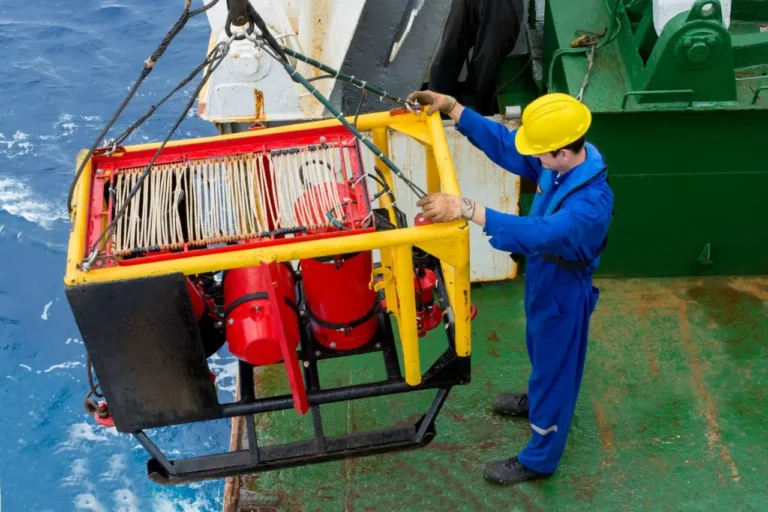
Exploration is being conducted with autonomous underwater systems developed by Yuzhmorgeologiya specialists. The equipment enables detailed mapping of the seabed and investigation of sediment layers beneath it. According to Managing Director Denis Rodnitsky, geologists have already outlined areas potentially suitable for future development and identified test blocks for pilot-scale trials of mining equipment.
As international forums continue debating moratoriums on deep-sea mining, Russia is pressing ahead with the systematic study of its deep-sea asset. By the time commercial mining becomes a serious policy issue, the country expects to have both prepared exploration blocks and tested technologies ready for development.
Source: Rosgeo
Image: Rosgeo