Do you want to understand where the fuel that turns turbines and warms cities comes from? The map of gas fields and areas today looks different than it did ten years ago. If previously most of the fuel came from Russia, the countries of the Middle East and Central Asia, now they are joined by shale heavyweights from the United States and promising newcomer projects from Australia, Africa and Asia.
Together with industry experts, we analyze statistics and understand where the main gas production areas are concentrated and why they will determine the energy sector in the coming decades.
What are natural gas production areas?
When they talk about the largest gas production areas or what the main natural gas production area is, they do not mean a single well.
Gas production areas are areas where fields, wells, drying installations, compressor stations, and connection points to main gas pipelines are concentrated. Taking all this into account, they believe how much gas does the country produce or region in total.
In world statistics, two types of volumes are used:
- Raw gas is a mixture that rises from a formation. It contains water, condensate and heavy hydrocarbons.
- Dry gas is an already prepared product that has been purified and entered the pipelines.
The difference between these volumes in some regions of the world reaches 10–15%, especially where a lot of associated gas and condensate is produced: in Saudi Arabia, Iraq, Kuwait, the UAE, and Russia. Therefore, data from different organizations may differ. For example, in the USA fix only dry gas, which is why their performance sometimes appears lower. In Russia, raw gas is taken into account minus technological losses.
Next, we will look at which main gas production areas form the map of global energy and why some territories become production centers and others do not.
How Siberian scientists transform natural gas into valuable products for the petrochemical industry, read in our material
Three forces that shape the map of global gas production
When we talk about how the largest natural gas production areas are developing, we take into account three components.
Technologies
US deepwater platforms in the Gulf of Mexico, offshore Gorgon and Pluto fields in Australia, and the North Field in Qatar have opened the way to reserves that previously lay beyond the common sense of investors: too deep, too expensive, too risky.
Now, thanks to cheaper LNG production technologies and a breakthrough in offshore engineering, these projects are starting to pay off.
Economy
Production today is growing fastest where there are large reserves and money for complex projects, for example, in the USA, Qatar, Australia, and Russia. Investments are important because they go towards exploration, infrastructure and LNG capacity, and high global gas prices make these investments worthwhile.
For large and relatively inexpensive projects (Qatar, USA), profitability typically falls within the range of approximately $6 to $9 per million British thermal units. More complex fields – Arctic or offshore fields – require a higher price on the world market, so investors first look at the prospects (quotes, long-term contracts) and only then give money.
Infrastructure
Gas pipelines, LNG plants, refining and logistics are often more important than the resource base itself. Without export routes, gas remains in the ground. So, “Sakhalin-2» in Russia processes and transports gas to the Far East and Asia, while large gas-bearing areas in Mozambique, Tanzania, Senegal, Mauritania and parts of Nigeria remain undeveloped due to a lack of infrastructure.
Together, technology, economics and infrastructure decide whether the region will become a new “Sakhalin-2” or will remain a point on the geological map where there is gas but no real production.
Main gas production areas: how the global volume is distributed
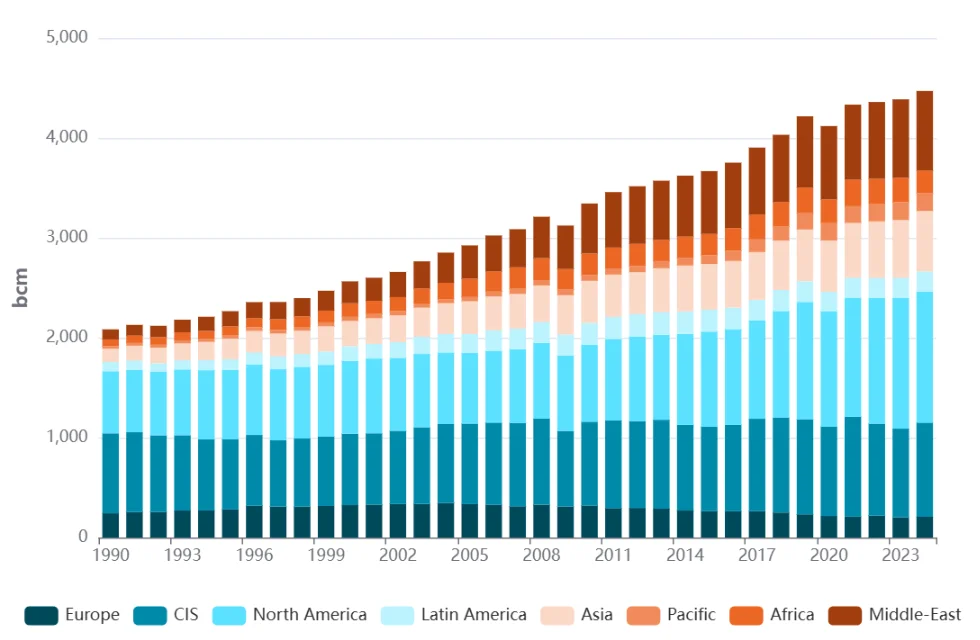
Four regions set the pace of the global gas economy: North America, the Middle East, Eurasia and Asia-Pacific. Let’s take a closer look at these largest gas production areas.
North America
The main gas production region is North America. Region holds on in the top thanks to the shale provinces. Thanks to shale, the United States has brought its share to about a quarter of global production, and Canada adds about 5% due to fields in the west of the country and LNG exports from the Pacific Coast.
Marcellus, Permian Basin, Haynesville – three “engines” of fuel production in the United States. One produces huge volumes of dry gas, the second maintains leadership in associated gas, and the third is expanding its LNG capacity on the Gulf Coast.
Middle East
The most important natural gas production areas are: North/South Pars (a link between Qatar and Iran) and the Arabian Platform, where the related infrastructure is being developed by the UAE and Saudi Arabia. Countries are increasing production to export LNG to Asia.
Andrey Ryabov, head of the project “Directions of world markets” of the oil and gas consulting department of the AC TEK, notes:
“In the next ten years, LNG production may double to 300–400 million tons per year. At the same time, the growth in demand in Asia may not keep up with supply, which will affect prices.”
Eurasia
The largest gas production areas in Eurasia are an arc from Western Siberia to Central Asia, where huge reserves and an extensive pipeline system are concentrated. The core of this arc is the West Siberian gas province, the Caspian Sea operates as a mixed oil and gas basin, and the role of Central Asia is enhanced by supplies via the Central Asia-China gas pipeline, for which Beijing became both the main investor and the main buyer of gas.
Offshore mining areas
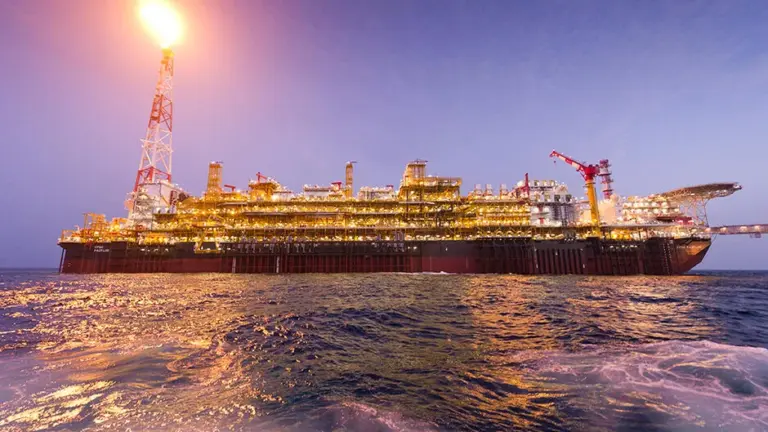
Marine oil production and gas is one of the fastest growing segments, because it is on the shelf and in deep-sea basins that large untapped reserves remain, and technology and high investments have finally made it possible to reach them.
Deepwater projects in East Africa (Mozambique, Tanzania), the Brazilian Atapu, and the Zohr and Leviathan fields in the Eastern Mediterranean are already providing such an increase in production as if another large oil and gas region had appeared on the map, only taken out to sea.
Offshores are growing because technology has become cheaper, environmental restrictions on land have increased, and LNG can be exported without being tied to pipelines.
Gas production areas in Russia
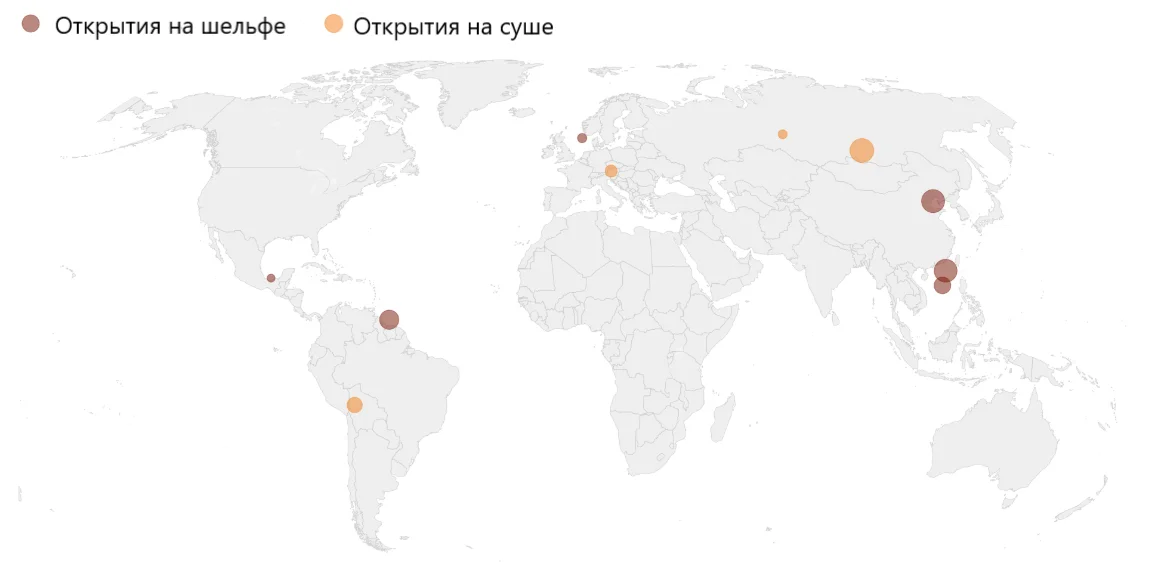
The main gas production areas in the country are concentrated in three zones. Yamalo-Nenets Autonomous Okrug is in the lead – more 80% total production volume (almost 550 billion m³ in 2024). Eastern Siberia (Yakutia, Irkutsk region) becomes the second center thanks to new gas provinces and routes to China.
Arctic shelf turns into a strategic reserve: the country owns 73% gas reserves of the region. About 55 trillion m³ natural gas.
“Despite the significant potential for increasing production, most of the Arctic reserves are classified as hard-to-recover and require significant investments in technological development”
reported Natalya Samsonova, Head of the Strategic Development Sector, Vostokgosplan Agency
Not only hydrocarbon deposits are hidden in the Arctic, what else – read in the article
Trends of the 2020s: how the main gas production areas are changing
In the 2020s, the global geography of gas production ceases to be predictable. The center of gravity is distributed between certain areas and several processes form growth points for the decade ahead.
Firstly, offshore is finally consolidated as a strategic reserve of global production. In the early 2010s, deepwater projects were considered risky. Now offshore companies account for about 30% of global production. East Africa, Brazil and the Eastern Mediterranean are becoming key sources of growth in proven reserves.
Secondly, Asia is moving from gas consumption to production. China, India and Southeast Asian countries accelerate development of shale deposits and extraction of methane from coal seams. In 2024, China invested more than $15 billion in national production programs to reduce dependence on imports.
Thirdly, The Arctic is acquiring a strategic vector. Investments in the icebreaker fleet, modernization of LNG lines and development of new areas do The Arctic is a platform for gradual but sustainable growth. Over time, the region could become one of the main natural gas production areas in the world.
Finally, climate policy changes the rules. Tighter emissions regulations, carbon taxes and investor pressure stimulate operators to reduce the carbon footprint of mining. Areas with low-carbon production and effective leakage control will benefit.
Which regions do you think will be key for the gas industry in the 2030s? Write in the comments – we will include the most interesting answers in future materials.
Cover photo by Pascal Laurent TotalEnergies