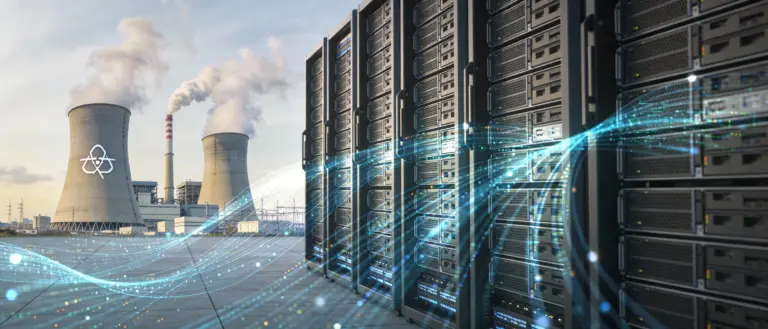
The development of artificial intelligence and the expansion of data centers sharply increases electricity consumption and increases investor interest in nuclear energy. Against this background, the uranium market may face a deficit as early as next year.
Artificial intelligence is becoming one of the key factors in the growth of global electricity demand. Analysts came to this conclusion based on the results of a global survey of investors conducted on behalf of the Uranium.io platform. More than 600 market participants took part in the study.
According to the survey, 63% of investors believe that energy consumption related with the development of AI and large data centers, will become a long-term factor and will directly influence plans for the development of nuclear energy in the next ten years. Many have noted that current demand models underestimate the actual needs of computing infrastructure.
Against this backdrop, nuclear power is increasingly seen as a reliable source of carbon-free baseload generation. It is capable of providing a stable energy supply to the digital economy, where interruptions are unacceptable.
Growing demand coincides with limited supply. Most investors surveyed expect uranium production to cover less than 75% of the needs of existing and future reactors. Among the reasons are many years of underinvestment in the industry, lengthy approvals for new projects and a reduction in secondary sources of uranium.
More than 85% of survey participants predict an increase in uranium prices by 2026. The most commonly cited range is $100-$120 per pound, with a rise to $135 possible if shortages persist.
Sprott Asset Management gives a similar assessment. The company notes that short-term market fluctuations mask persistent long-term deficits. Uranium production lags behind demand from nuclear power plants, and the volume of contracts of energy companies remains below the required level. According to Sprott, without rising prices, it will be difficult to launch new mines and restore old mines.
Government policy provides additional support to the market. Investors point to plans to expand nuclear capacity in the US, Europe, the Middle East and Asia. The USA and Canada have incentive programs, in Europe nuclear energy is included in sustainable financial instruments, and China, South Korea and the UAE are developing nuclear energy with government support.
Increased energy consumption because of AI, limited uranium supply and government support are changing market perceptions. Uranium is increasingly seen as a strategic resource for energy security and critical infrastructure beyond 2026.
Source: MINING.COM