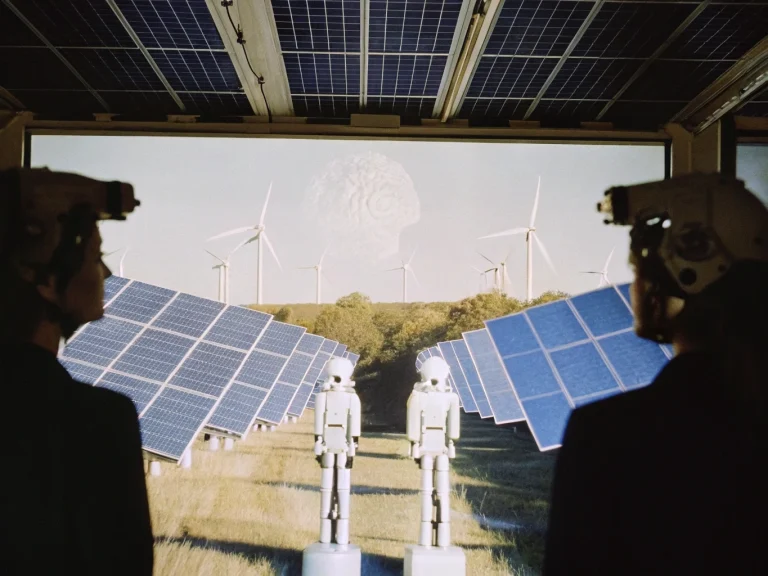
At CERAWeek 2025, experts discussed how artificial intelligence (AI) could change the energy industry. However, unlocking its potential requires not only technological progress, but also a change in thinking.
The round table “Artificial Intelligence for Energy, Energy for Artificial Intelligence,” held in early March 2025, became a key event of CERAWeek. Participants discussed how AI can optimize processes in the oil and gas industry, but also highlighted significant challenges.
One of the main problems is the high power consumption of AI. As technology spreads, the demand for electricity will only increase. For example, Linda Clemmons, senior vice president of NRG Energy, noted that Texas alone will require additional energy comparable to California’s consumption to meet future needs.
Data quality remains another challenge. AI is only effective when the data is accurate and accessible. B. Krishnamurthy, vice president of Chevron, emphasized that the oil and gas industry collects more than 1 terabyte of data every day, but employees spend up to 50% of their time searching for the information they need.
Experts also discussed how AI can improve processes. For example, A. Orad, CEO of Kraken, noted that AI has the potential to make operations more efficient. R. Jaggi, President of SLB, added that AI will accelerate exploration and discovery in the energy sector.
However, the adoption of AI faces resistance. A. Schierenbeck, CEO of Hitachi Energy, noted that employees are often afraid that technology will replace them. To overcome this fear, support from management is needed.
Artificial intelligence opens up new horizons for the energy sector, but its successful implementation requires not only technological solutions, but also changes in corporate culture. Experts are confident that the future of energy depends on the balance between technology and the human factor.
Source: neftegaz.ru
Image generated by a neural network