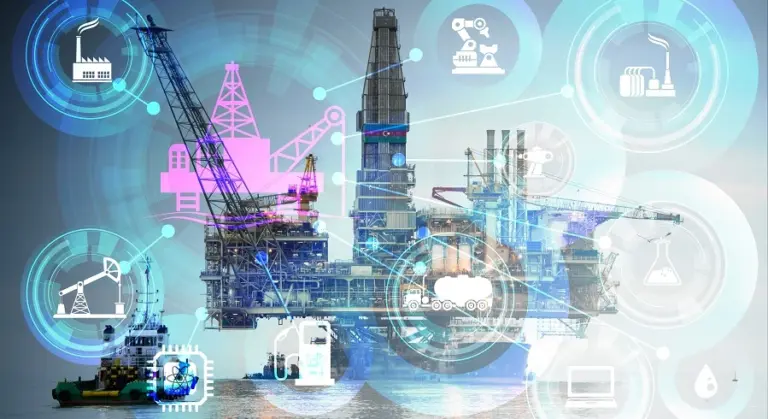
The oil and gas industry remains a key player in global energy, providing more than 80% of energy consumption. However, companies face a number of challenges: exhaustion deposits, obsolete equipment and price fluctuations. Under these conditions artificial intelligence (AI) is becoming a powerful tool for process optimization.
According to the Russian Ministry of Energy, the introduction of AI can bring the industry up to 700 billion rubles annually. Technologies are used at all stages – from intelligence before marketing the products.
1. Exploration of deposits. AI analyzes geological data to reveal hidden patterns. This allows you to more accurately determine where to drill and reduce the cost of searching for hydrocarbons. For example, neural networks help study core samples (rock samples), speeding up calculations tens of times.
2. Optimization of production. Machine learning reduces drilling risks. For example, ExxonMobil used AI to predict accidents, which increased safety and efficiency.
3. Safety and diagnostics. Computer vision monitors safety compliance, and AI sensors detect leaks and equipment wear. This reduces downtime and reduces repair costs.
4. Logistics and sales. Algorithms predict demand, prices and optimal supply routes, which helps companies minimize costs.
- Gazprom Neft has developed a Seismic Digital Twin, which has been analyzing data since 1999 and helping in planning new projects.
- Rosneft uses AI to analyze seismic data as part of the Digital Field project.
- Tatneft, together with ITMO, created an AI-based platform to support employees in decision making.
- Lukoil uses neural networks to manage production at mature fields in the Perm region.
Despite the benefits, the mass adoption of AI is hampered by several factors:
- Lack of quality data—information is often stored in disparate formats, including paper.
- Difficult production conditions – deposits in the Arctic or deserts make it difficult to collect and transmit data.
- There is a shortage of specialists – we need personnel who combine knowledge in AI and the oil and gas sector.
- Industry inertia – long investment cycles and strict regulatory requirements slow down innovation.
Full production autonomy is not yet achievable, but AI is already changing the industry. Key areas: Digital twins of fields; Integration with IoT and robotics; Predictive analytics for predicting breakdowns.
Companies that implement AI will benefit from efficiency and cost savings. However, large-scale changes require investment in infrastructure and training.
Artificial intelligence is transforming the oil and gas industry, making it more efficient and safer. Russia is actively introducing technology, but for success it is important to solve problems with data and personnel. The future belongs to those who can combine innovation with industry expertise.
The material was prepared with the support of the Russian Ministry of Education and Science as part of the Decade of Science and Technology
Source: neftegaz.ru