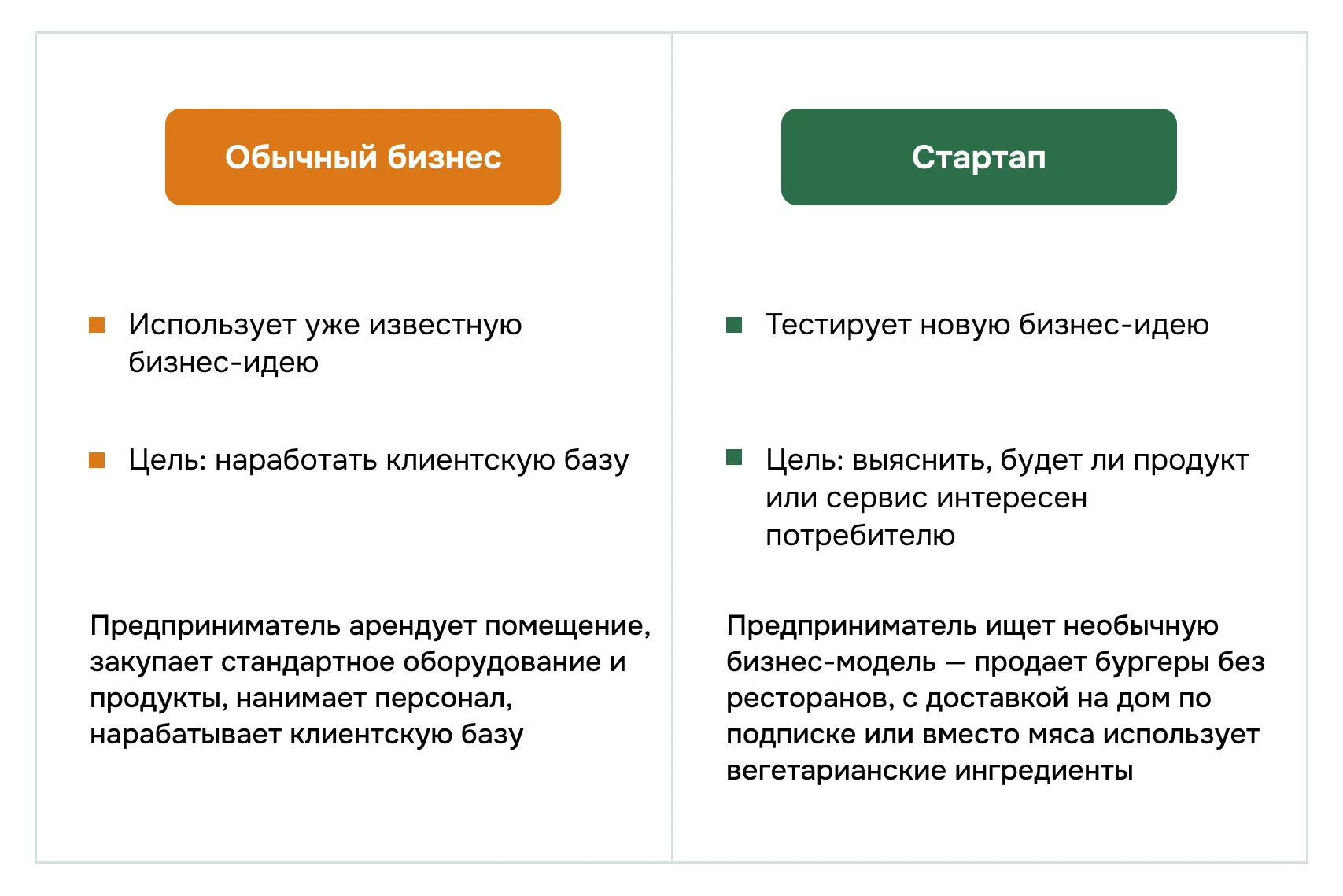
A startup is a business that is based on a completely new idea. Its creators do not know whether it will “shoot” or not. GeoConversation editor-in-chief Maria Kostina asked Boris Kurtsev, director of strategic development at Gintell, about what helps a startup survive and what problems and concerns startup teams face.
The departure of Micromine and the emergence of Gintell
Maria: Boris, hello. We last saw each other at a conference in 2023, when Micromine’s departure was announced. And then I find out that you work at the startup Gintell, Mining Intelligence. Tell the readers a little about it. It was formed in 2022, that is, when Micromine was still around?
Yes, Gintell and Micromine existed in parallel at some point. The company was founded in 2022 by former Micromine employees. “Gintell” was a foundation for the future. We hoped that Micromine would not leave, and our Australian colleagues told us this more than once, but some concerns still remained. When they grew, we began to work more closely with Gintell.
The departure of Micromine came as a shock, but not in the sense that we would suddenly be left without work, but because a well-coordinated organism was taken and torn into pieces. I still believe that the Micromine Rus LLC team is one of the best on the market not only in Russia, but also in the world in terms of experience, qualifications and soft skills of employees. 80% of our colleagues moved to Gintell, and it was a great success, because they were invited by many companies – stable, rich, mining, and consulting. Each person had three offers. We took everyone who wanted it gradually: the first batch, the second. There was no plan at all on what to do.

When the Russian Micromine began to close, we told our Australian colleagues that there is a company called Gintell, where almost all the employees of the Russian branch are moving. Would you like to support us somehow? At least morally? Yes, our managers said and wrote an official letter that Gintell is Micromine’s partner. Not a legal successor. We can continue to provide Micromine training and technical support. That is, our main business at the beginning was project support and technical support for Micromine users. I would like to note that Micromine did not abandon its clients and partners. Many licenses, including for universities and government agencies, are valid and have been extended until 2026. Those who wanted were legally transferred to Gintell technical support; all this was regulated in such a way that it did not cause any financial or organizational difficulties for clients.
Gintell products are not a copy of Geobank
Maria: At the beginning of the journey, you provided technical support. Do you already have your own product?
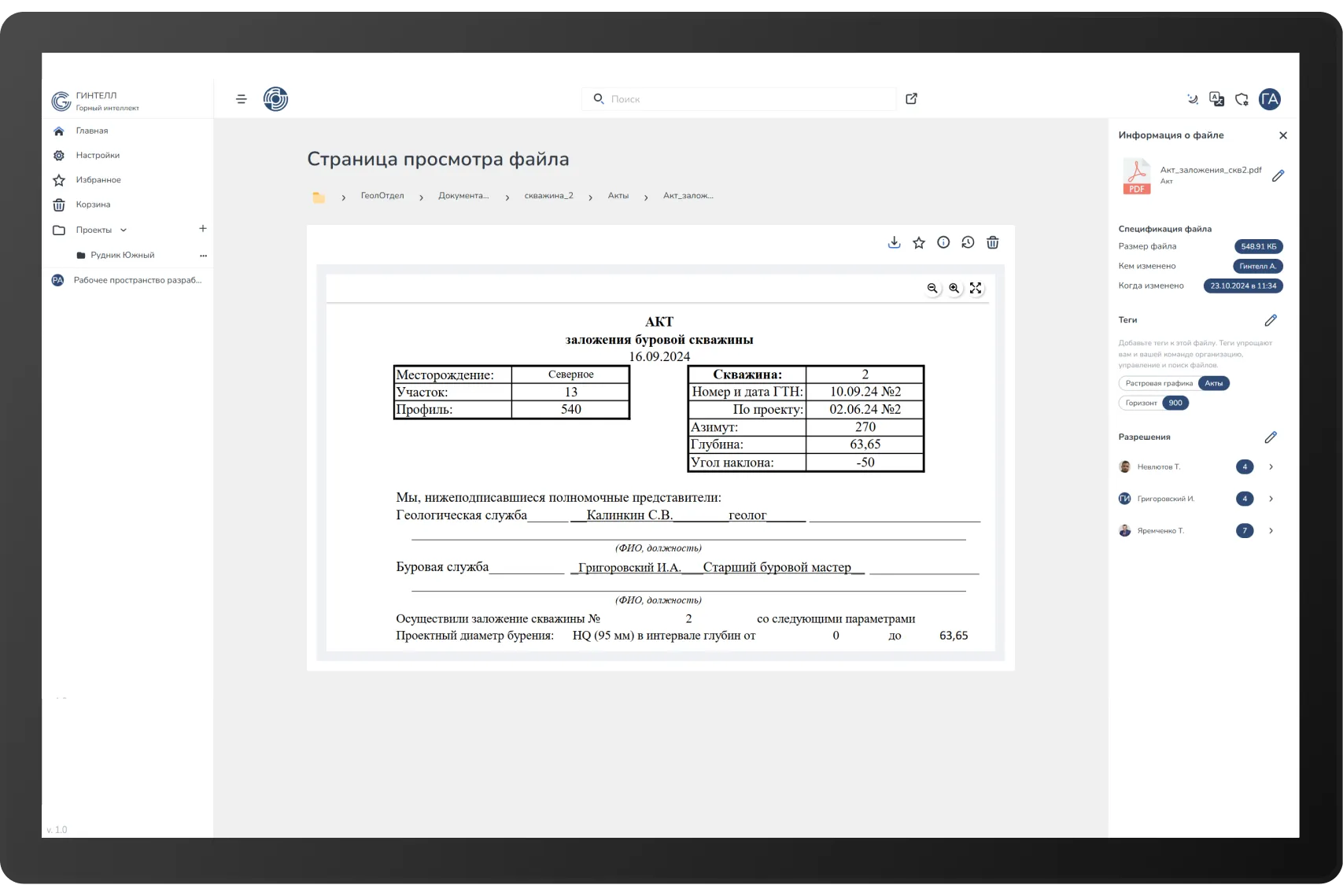
Yes, we understood that we couldn’t live on services alone, especially since some licenses would soon be stopped, so we began to write our own software product. The first line of code was written in February 2024, and already in September we released the MVP (minimum working product) that we offer to the market. At the end of February it will have new functionality. We have another release planned for June-July, and already in September-October we want to 100% replace the data management system in enterprises.
Important point: we are not writing a replacement or copy of Micromine Geobank or Micromine Nexus. Based on our experience and developments, we write something in between. Of course, some functionality will be repeated, but not the principles themselves. We didn’t take Micromine’s developments as a basis, no, our specialists took a blank sheet of paper and wrote everything anew, using the latest technologies.

At the same time, we continue to write scripts – add functionality and automate processes in Micromine, which cannot be updated or purchased. For one mining company, we wrote an entire module, exactly the same as in Micromine, but which could not be extended. This is not a separate program, we are not stealing any technology or creating a competitive product. We simply adapt and configure Micromine to perform the functions of modules that cannot be purchased.
Managing a team in unpredictability
Maria: You said that 80% of employees switched to you Micromine Rus, and I have a question: do you feel the difference in management in a startup and in an established company? The lack of a clear understanding of the future probably affects team management?
A most wonderful question, not in the eyebrow, but in the eye. Both I and my comrades felt it. At our conference, which was first held by Gintell in October 2024, I very much thanked my colleagues who went with us to this startup. People believed in us, and this, on the one hand, makes it easier, and on the other hand, there is an additional sense of responsibility. If there were four or six of us and everyone clearly understood the risks, that would be one thing. But when we hire more people, it’s different. We are already responsible for them, their families, their well-being. It is already in our hands so that they feel stable and continue to grow professionally and financially. Here you cannot raise your salary to the desired level – you are obliged to provide a good salary to your colleagues. And this additional responsibility makes us more constrained than at Micromine. But it makes our life a lot easier that the 35 people who work with us believe in our business.
To manage the team, we develop a strategy. I’ll go back a little and say that I studied, took training on strategic thinking, digital transformation – as soon as you try to put this into practice, everything turns out to be completely wrong. Especially now, when everything is changing quickly – I calculated the market capacity, studied competitors, then suddenly everything turned upside down. The strategy must be dynamic, regularly updated and refined. At first we worked on it once a year, then once every six months, now we are moving to planning once a quarter, or maybe once a month, because our plans are becoming more ambitious. We started out very carefully, looking back and keeping our eyes open, but now we are approaching the strategy more boldly, because what we had in mind at the beginning is working out. And this also inspires faith that we are doing something new and necessary. We do not have stupor, despondency, disappointment in everything and everyone.
“There is no mediocrity in our team”
Maria: When you talked about a team that believes in the business, it really resonated with me. When an article is published on GeoConversation, I am always so happy! Our team created a product in the form of an article, and now it has seen the world. I even had one note when I first started thinking about creating media, “Leap of Faith.” I don’t know what views there will be, whether anyone will be interested in it, I just believe that it will be great. It is very important, I think, for a startup to have a leader who energizes the team with his faith, ideas and ambitions. And the team is important, you can’t do anything alone.
I subscribe to every word you say, because do you know what the value of Micromine Rus, and now Gintell, is? The fact is that we have no mediocrity. Our leaders are not afraid to work, I will say loudly, with outstanding people. We have created a great atmosphere where new guys get involved, get involved and become another important part of the mechanism. We do not have one leader, but many bright leaders and many people who, although they do not consider themselves leaders, are real leaders. For example, we have a programmer who just worked at Micromine, and now he has blossomed incredibly. And there are not two or three such examples.
Maria: I’ll add. There is always a person on the team who is responsible for marketing, and another who is a technician. I have the same situation. I am in charge of sales and advertising, and I have a technician who is responsible for running the site.
Speaking of marketing, it is very important not to forget about it. You can come up with a great screwdriver, but if you don’t have the skill or time to tell the whole world about it correctly and prepare it for sales, then you will stand with it and look around while everyone passes by and buys something that is simply better packaged.
You can read more about the power of marketing in the article: “I received a bid for $2 million from a blog – how is this possible?”.
Maria: How did you understand that the market would need Plyta? Was there a request from subsoil users?
The request was made 5 years ago, which is why Nexus appeared, which is very similar ideologically to “Stove”. But then, probably, no one thought about this request globally. And at Gintell, before we figured out where to go, we looked at the fact that we had money that could be spent on product development. There is no point in developing GGIS – by 2026, it seems to us, there will be many players with a similar product. In addition, the development of GGIS is an expensive proposition. Therefore, we chose what we had money for, what we believed and believe in, and what allows us to develop.
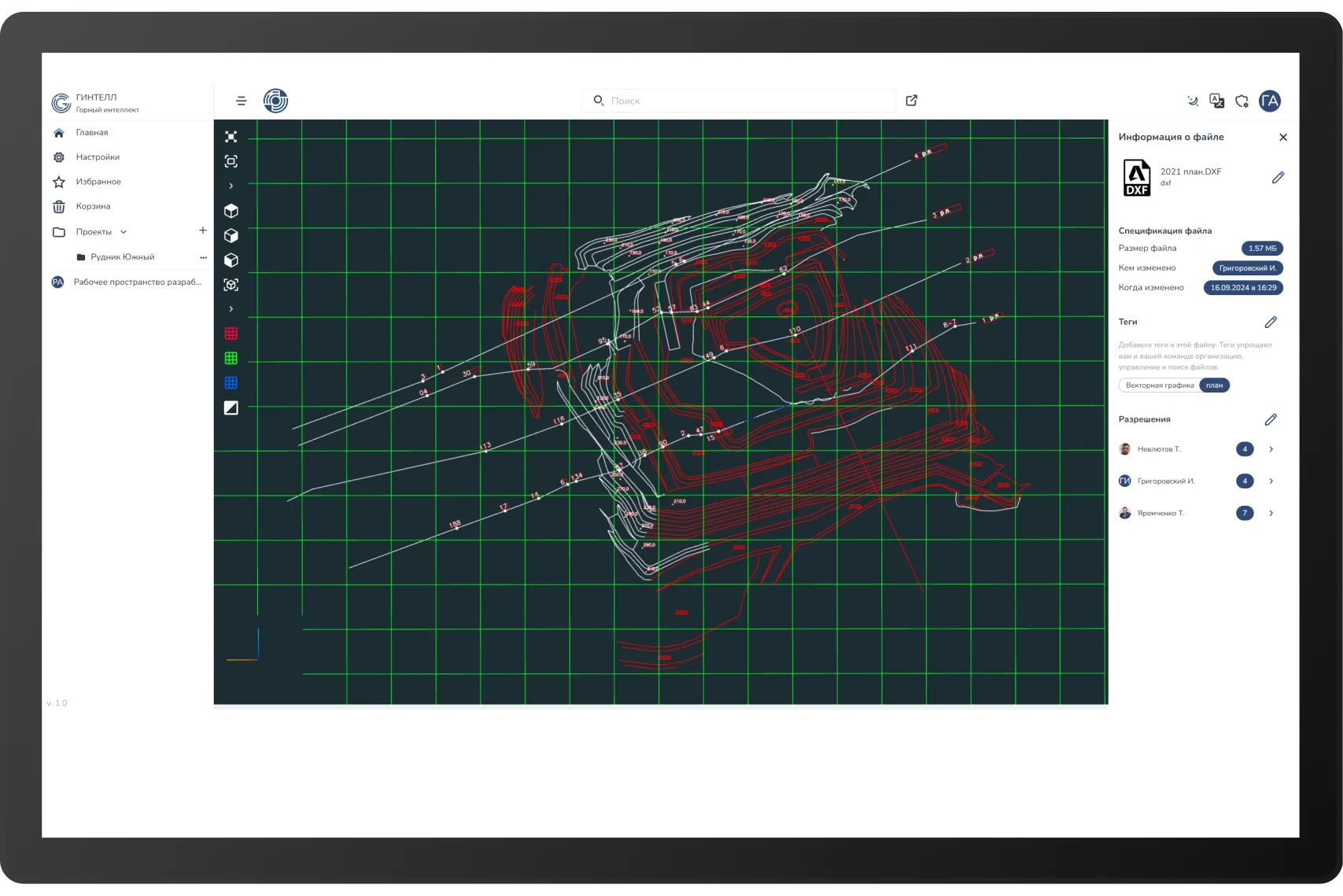
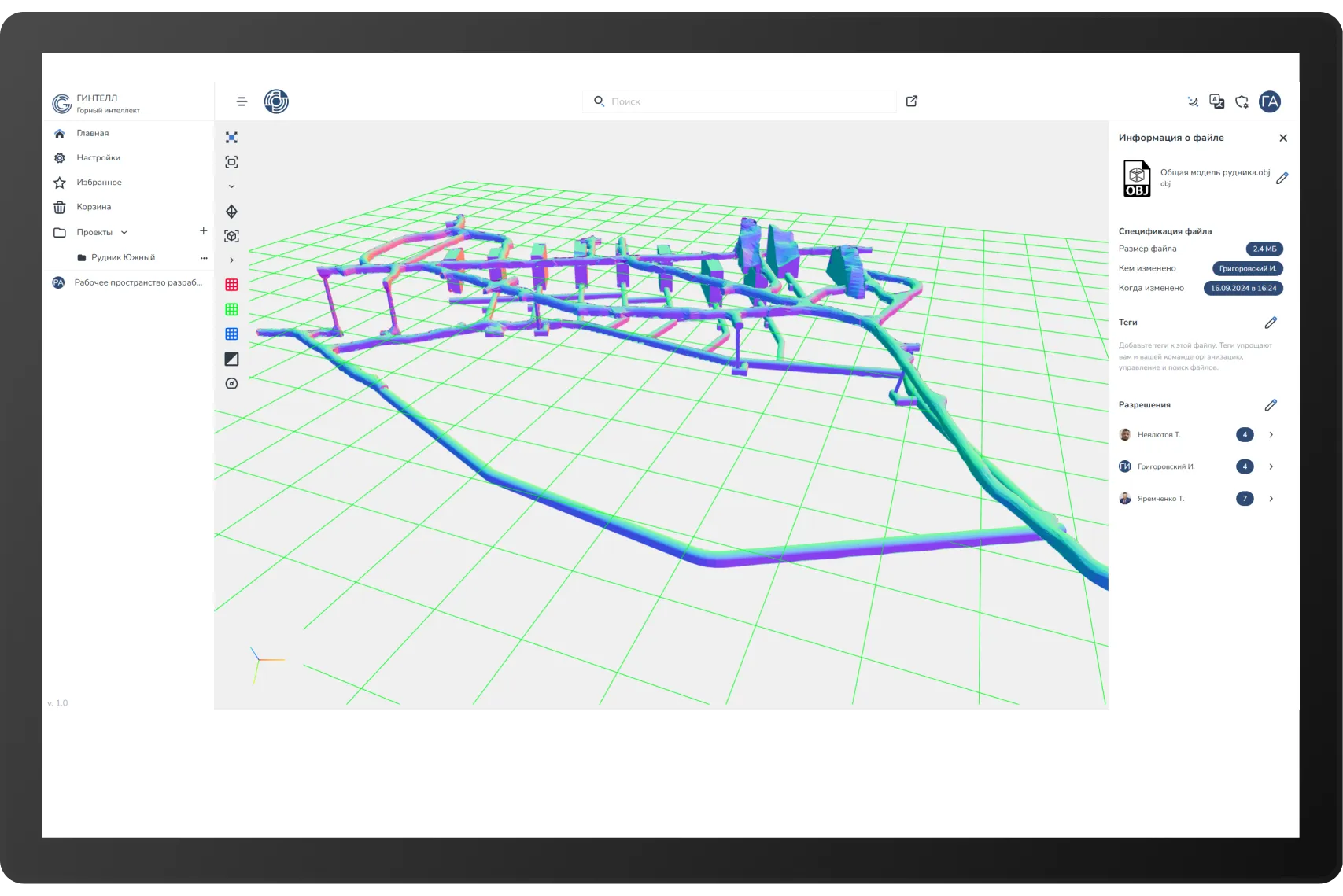
The “slab” is a kind of core of a large construction set. Imagine a skewer. This is a skewer on which various modules are strung: “Visualizer”, “Kernel”, and in the future – “Reporting” and others.
Investments are needed to take a step forward, but there is a nuance
Maria: Tell us how you use your funds to develop products? Are you attracting investments?
Now we are spending our own revenue on product development and for now we are doing without external investors, because we want to have an already built business and an already existing software product. So that investors come to us interested in cooperation, rather than us running around and snatching up investors.
At some point, investments will be needed – they are needed for a qualitative step forward. The same Micromine made a leap only when a powerful investment fund invested in it, which also acquired other companies and, roughly speaking, gave money to urgently increase the pace of development.
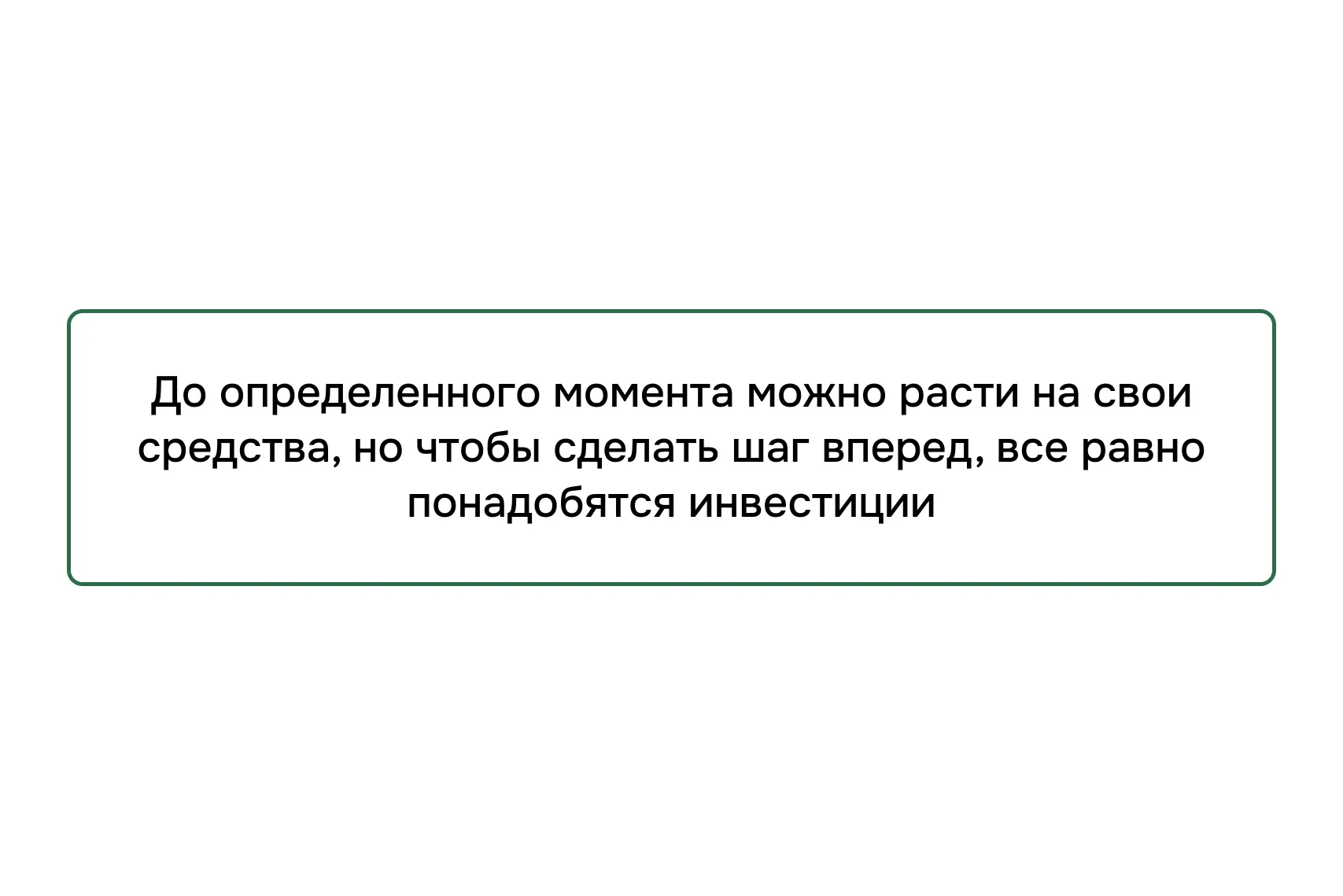
Next, we come down to the volume of investment. If you need a million rubles, then it is generally easy to find an investor. If we are talking about a billion, difficulties already begin. But first, the same Skolkovo works. If necessary, you can find investments there. People have money, and since foreign markets have closed, they are ready to invest inside, the only question is where to find it.
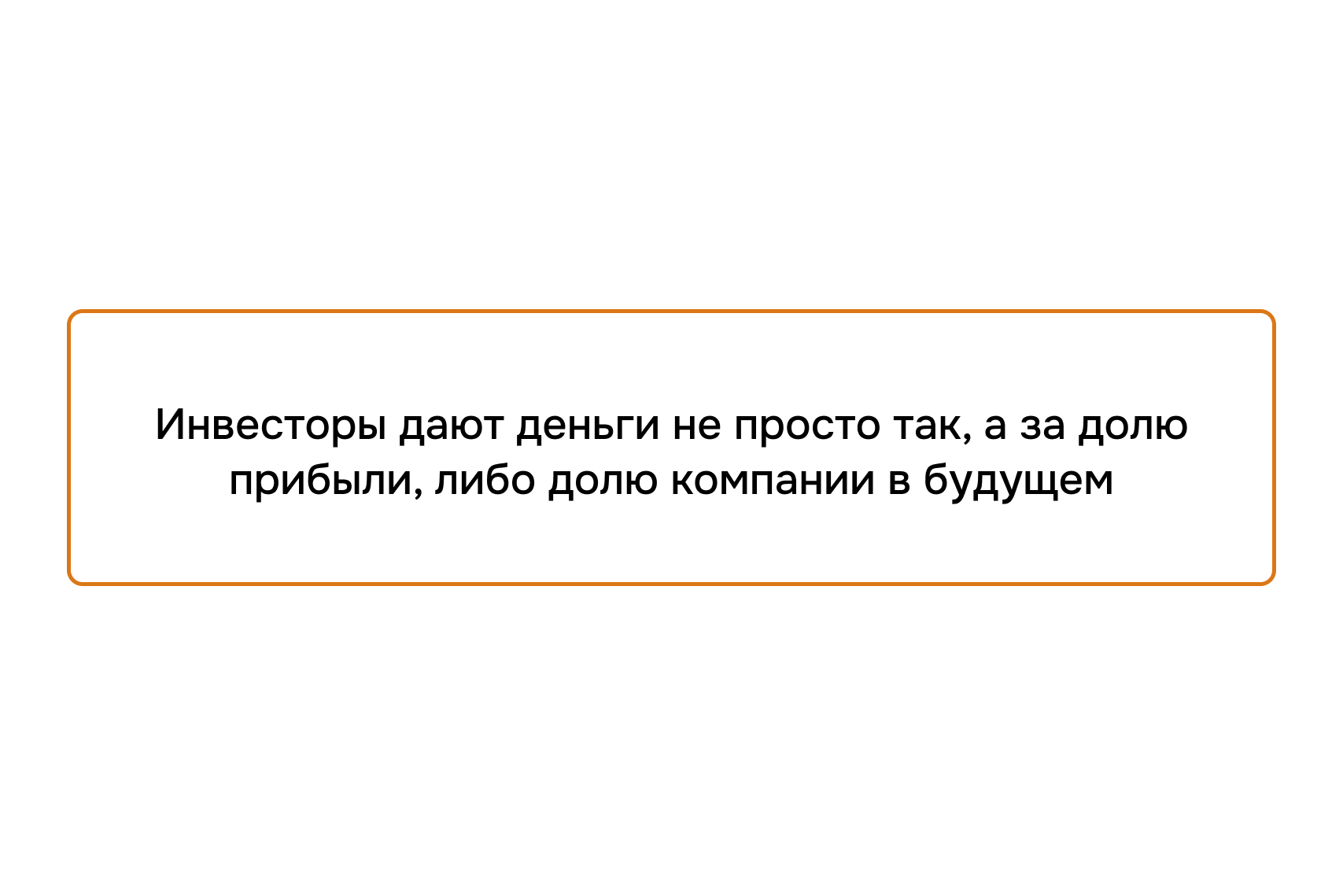
All the people who give you a ruble want to receive three, or better yet four, five, or ideally ten rubles. Question: what do we want to sell – a kidney or a soul? A soul is much more valuable than a kidney, that is, an investor can buy 10% of a company and not have the final say, but he will give that notorious million, and this million will be like a dead poultice for you, and your company will not grow.
On the other hand, you can sell your soul, that is, 51% or 70% of the company, but all decisions will be made by the investor, and not by you and your associates. This is how it was at Micromine: investors came and made several decisions that made the previous owners’ hair stand out. And they chopped it down because what was their task? Buy cheaper, upgrade the company, sell more expensive.
Before you go for investments, you need to clearly understand why you need them, and whether you need them at all. This will determine what to sell – a kidney or a soul. Because if we only need a million and we open another tent, that’s one thing. Maybe the game isn’t worth the candle. And if I get billions and we open a large shopping center or tents in all cities of Russia, perhaps this is just the game that is worth the candle.
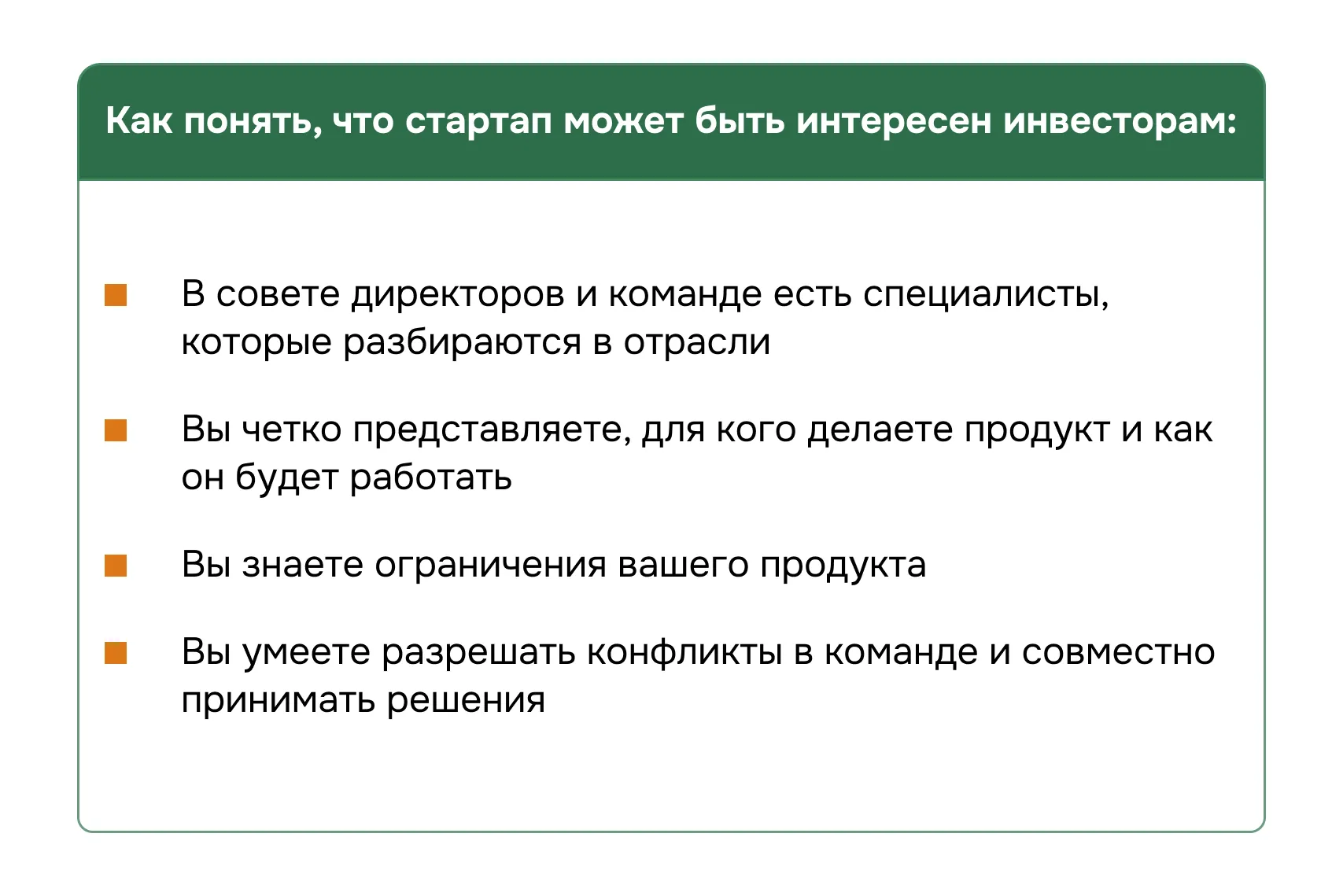
A startup is based on an idea or what does it have to do with fantasy?
«Innovation distinguishes the leader from the catch-up»
Steve Jobs
I love science fiction very much, and I liked one piece of news. I’m not sure if this is true, but let’s call it a good legend: the Chinese invest a lot in science fiction writers. It would seem, what about science fiction writers? And science fiction writers, in fact, write technical specifications for science, and science writes technical specifications for industry, and industry implements it all.
For example, the Strugatskys in “The Land of Crimson Clouds,” where the heroes flew to Venus for radioactive elements, write in detail how people flew there, why, what they did, and how they returned. You just need to figure out how to do it. It’s the same with a startup.
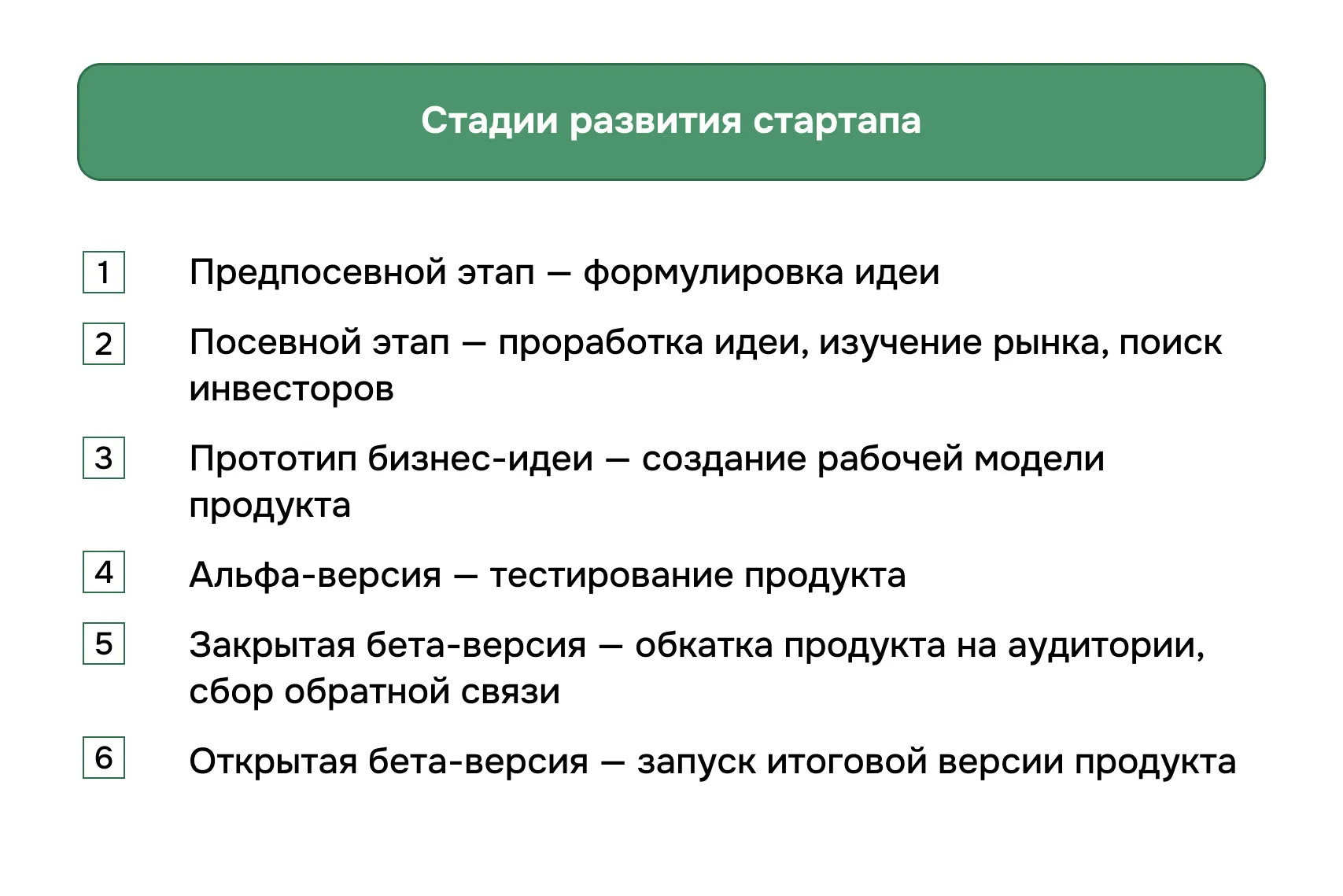
At the heart of a startup is an idea. For example, Steve Jobs had a revolutionary idea that changed the world – the iPod. He passed it on to someone who would figure out how to implement it, and he passed this idea down to departments, programmers, and so on. But the idea itself was formulated by Steve Jobs. And we at Gintell are now making great efforts to come up with a product that will produce that “Wow!” effect that will change the world.