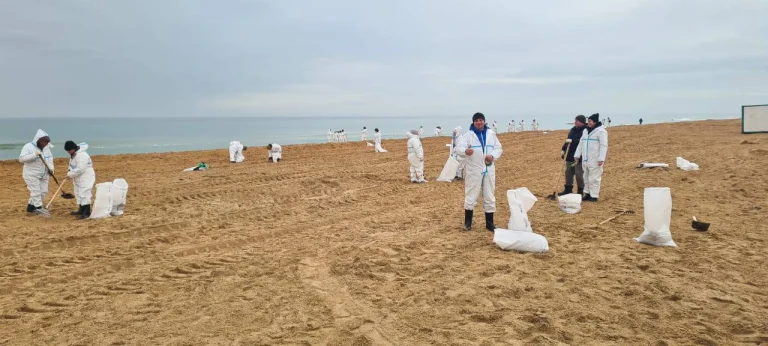
After a major environmental disaster in the Black Sea caused by the sinking of oil tankers, authorities cannot accurately estimate when the beaches will again become safe for recreation. Rescue efforts are ongoing, but full recovery may take several years.
In December 2024, two oil tankers, Volgoneft-212 and Volgoneft-239, sank in the Kerch Strait. Of the 9 thousand tons of fuel oil they transported, 40% ended up in the sea, which led to large-scale pollution of the waters and coastal zone of the Black Sea. The spill occurred amid stormy weather, which made it difficult to localize the consequences.
At the moment, the elimination of pollution continues. Special Presidential Representative for Environmental Affairs Sergei Ivanov said that it is not yet possible to assess the safety of the 2025 swimming season. “No one can guarantee that the consequences will be eliminated completely in the coming years,” he said. According to the forecasts of the head of the Ministry of Natural Resources, Alexander Kozlov, the restoration of the beaches may take until the summer of 2026. To do this, it is necessary to completely stop the emissions of petroleum products and complete the cleanup of the coast.
Environmental damage is of particular concern. More than 60 dead dolphins have already been found on the beaches, and scientists continue to study the causes of their deaths. Numerous emissions of fuel oil have been recorded in the oil spill area. Thus, according to the Ministry of Emergency Situations, pollution stretches for 50 kilometers from Anapa to Cape Zhelezny Rog. Environmentalists warn that as water temperatures rise, new portions of fuel oil may emerge from sunken parts of tankers.
Work to raise sunken fragments of ships is still at the design stage. According to Deputy Prime Minister Vitaly Savelyev, 1,100 tons of fuel oil have already been pumped out of the stern of one of the tankers. However, a final decision on how to eliminate the remaining contamination has not yet been made. Questions are also raised regarding responsibility: Rosprirodnadzor plans to file a lawsuit within three months against those responsible for the disaster.
In addition, volunteers and rescuers continue to rehabilitate the injured birds, but there are not enough rooms for treatment. The Moscow Zoo has formed a working group to provide assistance to injured animals. Despite the efforts of volunteers, experts say the damage to the ecosystem is significant and its exact extent will not be known until next year.
To eliminate the consequences of the disaster, the government allocated 1.5 billion rubles to the Krasnodar Territory. These funds will be used for emergency rescue operations, transportation of contaminated soil, and its disposal.
The largest oil spill in the Black Sea has become a serious environmental challenge for the region. It may take years for the ecosystem and beaches to fully recover. While the situation remains under the control of rescuers and volunteers, residents and tourists should refrain from visiting contaminated areas. The authorities, in turn, continue to work to minimize the consequences of the disaster and prepare the region for future holiday seasons.
Source: kedr.media *The Ministry of Justice recognized him as a foreign agent
Photo: Operational headquarters – Krasnodar region