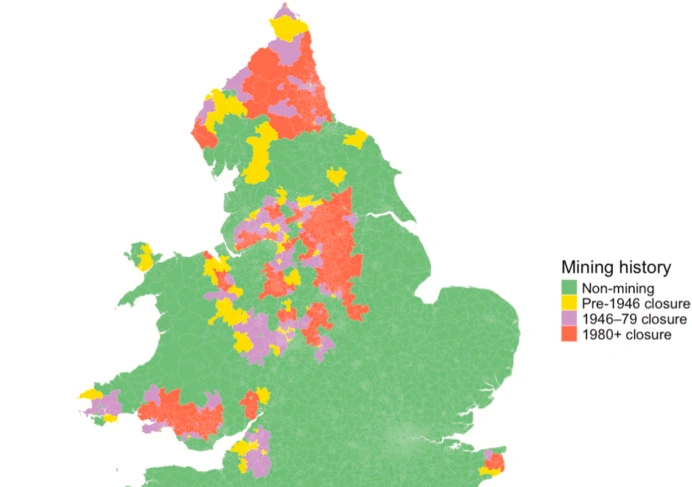
Researchers from the UK have studied the phenomenon of so-called “deaths of despair” in former coal mining areas. We are talking about suicides, alcohol-related deaths and drug overdoses. The conclusion turned out to be alarming: in regions with mining history coal, these indicators are consistently higher than in areas where coal has never been brought to the surface.
The most noticeable gap was recorded for alcohol mortality and drugs. It is also present in suicides, but less pronounced. Interestingly, the gender differences were not so great, although the coal industry has traditionally been considered a male sector. Women suffer almost as much from the consequences of deindustrialization.
The key factor is the timing of mine closures. The situation is worst where enterprises closed later, especially after 1980. The closer the territory came to the late wave of deindustrialization, the more severe the delayed social consequences turned out to be.
The authors of the work emphasize that it is not just a matter of current poverty. The association between a coal background and high mortality persisted even after adjusting for socioeconomic conditions. This means that the closure of a mine brings not only unemployment, but also a deeper structural impact. Loss of identity, destruction of communities, disappearance of meaning – all this drags on for years and affects your health no less than your wallet.
Scientists warn: mine closure is often perceived as a purely economic problem, but in fact it is a powerful social blow, the consequences of which will have to be dealt with for decades. Stopping production is easy, but restoring people’s hope and desire to live is a task of a completely different scale.
Source: Elsevier BV
Image: Eurwen H. Williams, Christopher W.N. Saville