Scientists from the Perm National Research Polytechnic University (PNRPU) have developed an innovative way to transmit data in oil wells using drilling fluid. The technology provides stable communication at a depth of up to 3000 meters and is 1.5–2 times cheaper than foreign analogues.
When constructing oil wells, precise control over the movement of drilling equipment is extremely important, especially at great depths. However, standard methods of transmitting data – cables, radio waves or acoustic signals – are often unreliable: cables break, radio signals do not penetrate the rock, and equipment noise drowns out the sound.
PNIPU specialists proposed a non-standard solution – to use drilling fluid as a communication channel. This liquid is usually used to cool the tool and carry cuttings to the surface. Scientists modified an intelligent drilling control system by adding a pulsator, a mechanical device that creates hydraulic pulses in the solution flow.
These pulses are converted into a digital code (0 and 1), similar to Morse code. Sensors on the surface detect changes in pressure, and special software deciphers the data, providing the operator with an accurate 3D model of the drilling trajectory in real time.
The technology is already being tested at the fields of the Perm region. According to Alexander Melekhin, associate professor at PNIPU, the system does not require additional infrastructure and works without stopping drilling. This opens up new opportunities for the safe and economical construction of complex wells.
Source: naked-science.ru
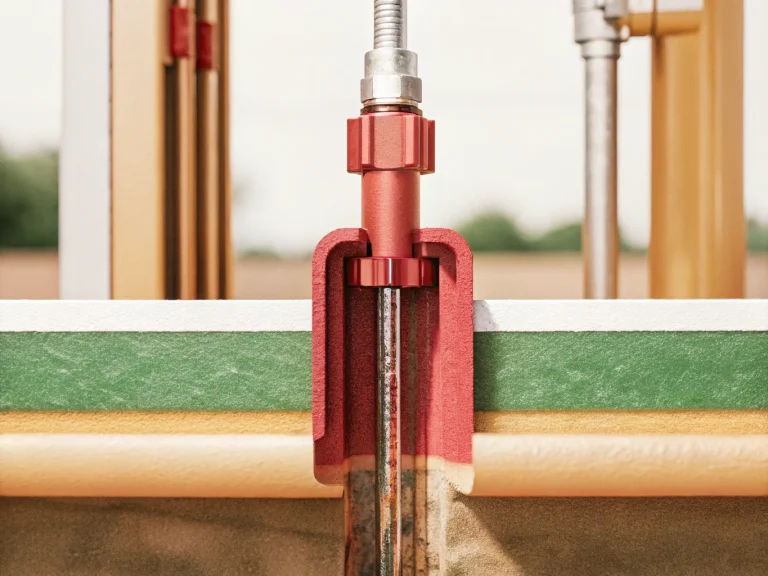
Image generated by a neural network