Russian scientists have developed an innovative method for studying composite materials in real time. The technology makes it possible to monitor changes in the structure of materials under load, which simplifies the design and reduces the cost of producing parts for aviation, space and transport.
Scientists from NUST MISIS, Skoltech and Moscow Aviation Institute presented a new approach to the study of composites such as carbon fiber. The material is widely used in aviation and astronautics due to its lightness and strength, but its heterogeneous structure—a combination of carbon fibers and a polymer matrix—makes product design challenging.
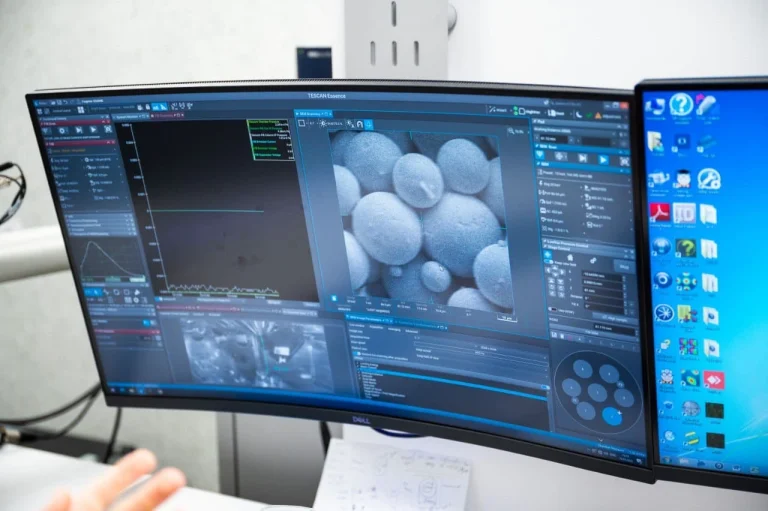
Traditional testing methods require large samples and do not allow detailed study of fracture processes. The new method uses miniature samples 0.5 millimeters thick, which are examined in a scanning electron microscope camera. This makes it possible to monitor deformation, cracking, and fiber-matrix interactions in real time.
“We proposed starting to study composites at the micro level, and then using computer modeling to transfer the data to larger objects. This eliminates the need to use large samples and allows us to study microdeformations in detail,” explained Evgeniy Statnik, associate professor of the Department of Physical Chemistry at NUST MISIS.
Using digital cameras and special algorithms, scientists record changes in structure at the level of individual fibers and matrix. This helps to identify defects that can degrade the properties of the material.
The new method will make it possible to predict the initiation and development of damage in composites, which will reduce the cost of production and increase the reliability of parts for aviation, transport and space technology. The research was supported by the Russian Ministry of Education and Science, and its results were published in the journal Fracture and Structural Integrity (Q2).
Source: naked-science.ru
Photo: A new method for studying composites from NUST MISIS will allow one to detect an incipient defect in the material / © NUST MISIS Press Service