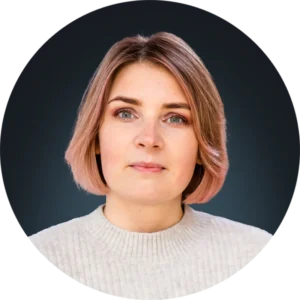
It seems that universities are not changing: the same rote learning, outdated programs, teachers over 70 and no digitalization. Universities are still perceived as bureaucratic machines stuck in the past. But this is not entirely true. There are those who change the system from the inside – like Ishak Farkhutdinov, candidate of geological and mineralogical sciences, teacher and expert of the Priority 2030 program. He went from a graduate student to a department head, and then to an expert in the federal program for transforming universities, and knows how higher education works and what is really changing in it.
In this article, Ishak will tell you what the trends are today. influence universities – from new approaches in management to individual trajectories and popularization of science.
Hours are more important than knowledge: how the system slows down universities
I stayed at the university to write my PhD thesis. I entered graduate school, started teaching and thought: I’ll defend my dissertation and go into industry, into the oil industry. But teaching took a long time. When I saw how students understood the material better, and after graduation their employers gave positive feedback, it was inspiring.
In 2016, I became the head of the department and was already responsible not only for teaching my disciplines, but also for the entire educational process. It was difficult, but it gave a sense of meaning. Although I was offered a job in the industry with a salary two to three times higher, I stayed – I wanted to change the educational system from the inside.
One of the problems that existed in our university, as in most others, was that each department worked like a feudal fortress. The basic unit is the clock. One teacher’s rate is 900 hours. If you give a subject to your neighbors from other departments to teach, even if they specialize in it more and teach students better, you lose department hours, and therefore teachers’ salaries. Therefore, any proposals to update the curriculum related to the redistribution of workload in departments, as a rule, are met with hostility.
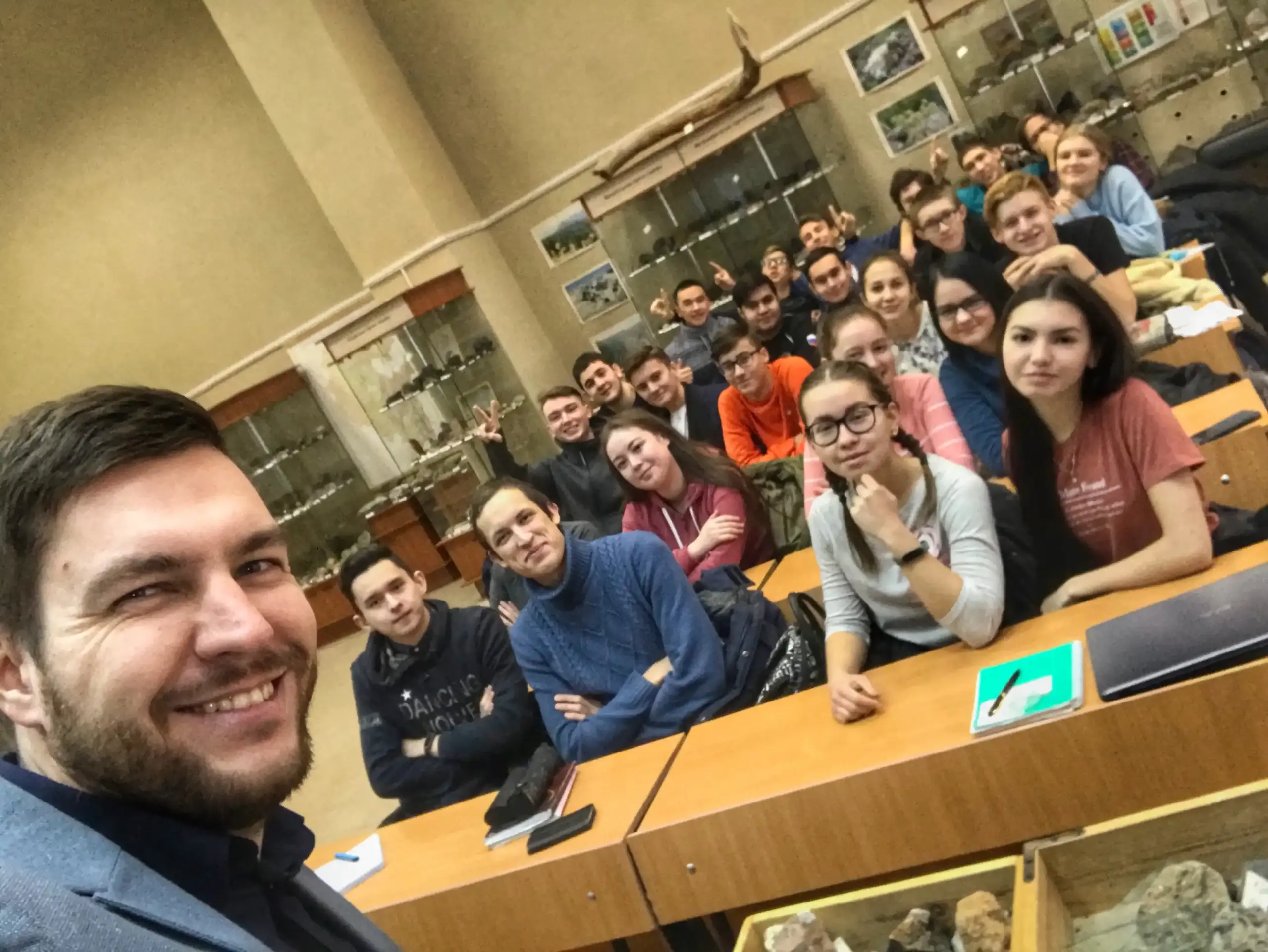
When I became the head of the department, I also encountered this. We conducted summer geodetic practice for geodetic students – such practices are always a tasty morsel, since they involve a large number of hours. But geodesy was not in the area of expertise of our geologists. At the same time, the faculty had a neighboring department of geodesy and cartography, where there were experts and more modern equipment.
As the head of the department, I stood at a fork in the road: either maintain the hours, workload and salaries of teachers, or transfer the hours to a neighboring department and improve the quality of education for our students. I chose the second option, although this choice was difficult.
This is a systemic problem. The head of the department takes care of his staff, and the head of the educational program (ROP) thinks about the effectiveness of training. Often this is the same person – and two opposing roles are fighting within him.
In 2019, our university underwent accreditation: a year of paperwork, more energy was spent on reports than on teaching students or research work.
At some point I realized that I needed to exhale and change focus. I moved to Moscow and became deputy director for science at the State Geological Museum. V.I. Vernadsky RAS. In 2021, I passed a competitive selection by the Ministry of Education and Science to train managers of scientific institutes and universities; out of 800 participants, 60 were selected, who were trained to transform science and higher education in the country. The program was called “School of Research Program Management” at the Skolkovo Moscow School of Management, and I graduated from this program.
This training gave me a broader perspective on higher education. We were taught to look at the system from different positions – not only from the position of the head of the department, but from the position of the rector, director of a research institute, general director of a corporation, minister of science and higher education. In 2023, there was a competition to select experts for the federal university development program “Priority 2030”. I took part in it, joined the team and began working with universities.
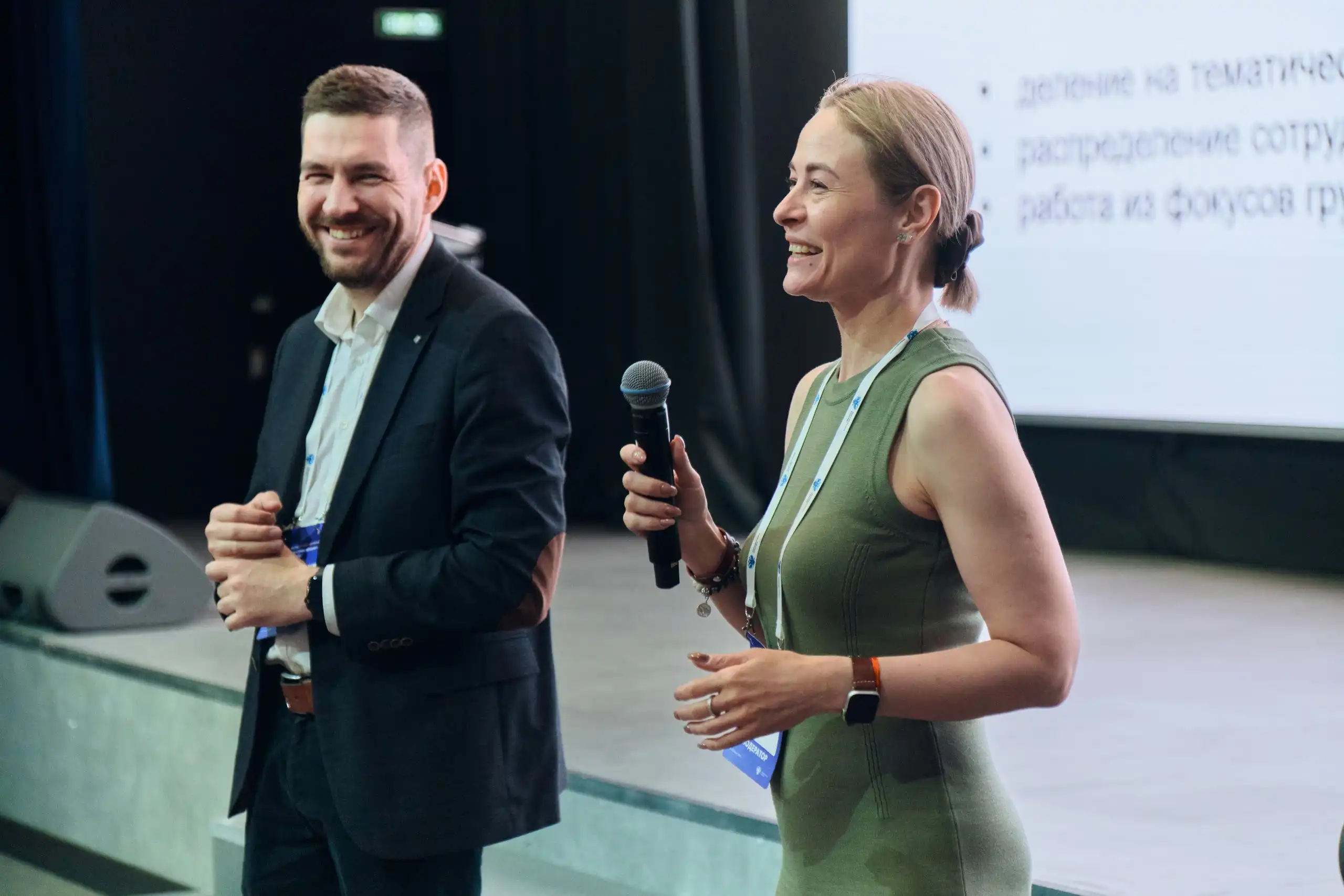
Over the course of 2 years, together with my colleagues, I was able to visit universities in different regions of our country. At that time, there were 60 program experts throughout the country, and we worked in threes. We came to the university, organized, together with the host party, a design and analytical session with the participation of 60 key employees: administration, directors of institutes, heads of departments, leading scientists, graduate students.
During the session, we divide the 60 participants into groups of 8–12 people. Each works on its own topic: science, education, innovation, human resources or digitalization. First – work within the group, then – general discussion with reports and questions
Our task is not to give lectures, but to facilitate dialogue: so that everyone can see the system as a whole, go beyond their position and think at the level of the rector and above. Usually strategy is a matter of a small circle, but here for the first time it is discussed by the whole team. It is at these sessions that participants see what really prevents the university from changing, and what steps really work. Let’s talk about this in more detail now.
Bring back how it was in the Soviet Union
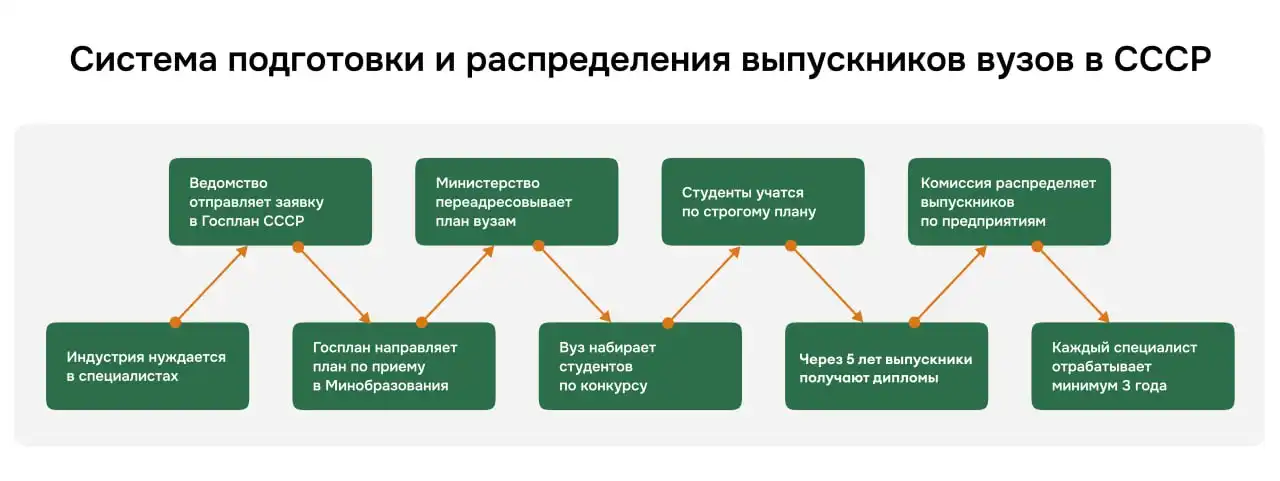
Today, calls are increasingly heard: “Bring it back to how it was in the Soviet Union. After all, the system worked, the specialists were strong – just restore what has already been tested by time.” But this is an illusion and you can’t go back.
There are several important points that, from the point of view of higher education, distinguish the situation of those times from the present one.
Firstly, during the Soviet era, the country lived under a planned economy. The state was both a supplier and a customer of personnel; it could plan where which factories would open and how many specialists would be needed in which region. Secondly, the rate of technology change was slower than today. For example, a geologist could work in geological exploration for 20 years, come to university at 45, and teach geology to students for another couple of decades, sharing experience that remained relevant all this time.
But today we live in a market economy, the state cannot accurately plan how many specialists it will need in each region, as it was before, and professions are changing and appearing at a much faster rate than 60 years ago.
Artificial intelligence, neural networks, and remote sensing of the Earth have appeared in geology and geophysics – something that was not even dreamed of in the 70s. Knowledge and experience today quickly become outdated, and teaching students based on industrial experience gained 10-20 years ago means sending them back to their professional past. Times have changed, and it is simply impossible to return to the old model of education.
But then what to focus on? What standards should I follow? What is becoming the new normal? — This is what we will talk about further: from individual tracks to flexible programs and working with real data.
New normal: individual educational tracks
Remember your time as a student: you come to class, the curriculum has already been approved, everyone is studying the same subjects. No maneuvers – strictly according to the program, everything is planned in advance. You are simply following a route laid out by someone else.
Now imagine that you choose which subjects to study. Instead of cramming everything, you can choose those disciplines that are more interesting to you:
- where the teacher better reveals the essence of the subject and talks more interestingly;
- where there is an opportunity not only to cram, but also to solve real cases and work in teams.
This is an individual educational trajectory – the opportunity to put together a program for yourself, based on your interests and goals.
Successful case: how IOT changed Tyumen State University
One of the most striking examples of the introduction of individual educational tracks is Tyumen State University. In the early 2010s, the university found itself at a crossroads: either closure and merger, or dramatic changes. Tyumen State University chose the second path – and became one of the pioneers of IOT in Russia.
Since 2017, the university began the transition to individual trajectories with pilot projects – first at the School of Advanced Studies, institutes of history, psychology and philology. Today, IOT covers the entire university, and more than 5,000 students can form their own route: select courses to suit their interests and combine disciplines.
Training at Tyumen State University is carried out according to “2+2” models. The first two years are the foundation: general disciplines, critical thinking, digital skills, project work. At the same time, the student tries different directions – from geochemistry to the analysis of data on deposits. After the second year, a narrow specialization begins with an emphasis on practice: cases from companies, modeling, working with GIS. If necessary, you can change the track.
This approach makes students more conscious: they do not just receive a diploma, but prepare for real work in a specific field. In the end, the university also benefits: due to the transformation of education, as well as the active development of innovation, the income of Tyumen State University increased to 8.1 billion rubles, of which 30% is extra-budgetary funding. This became possible through partnerships with industry, commercialization of developments and launch of our own educational products.
The success of the model did not go unnoticed. The rector of the university, Valery Nikolaevich Falkov, became the Minister of Science and Higher Education of Russia in 2020.
“It sounds cool, but…” – which usually confuses the university and students
The Tyumen State University case is impressive. But anyone who works at a university can say: “It worked for them, but it won’t work for us.” Or: “What if students choose the easiest thing?” Let’s honestly deal with the main objections that arise when moving to individual tracks.
Students will choose only easy disciplines
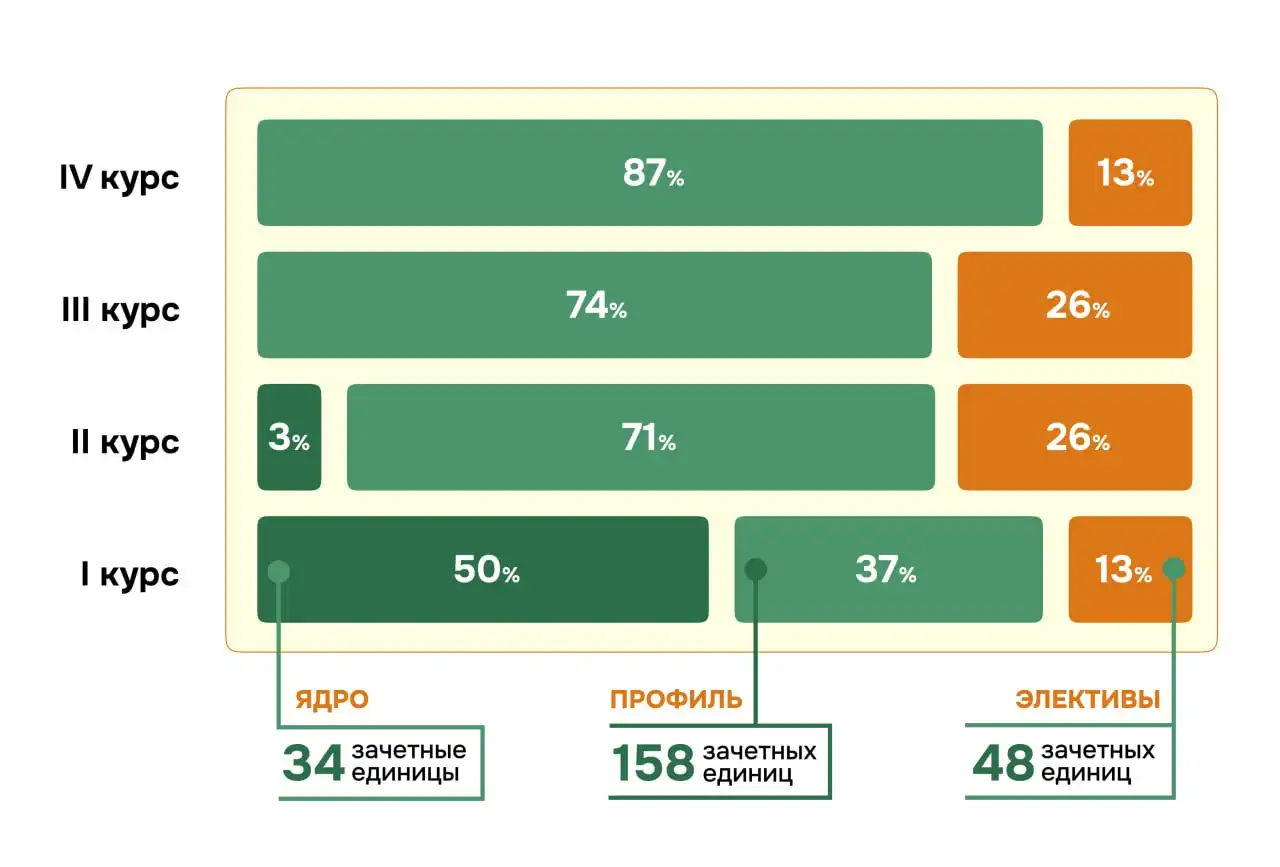
Compulsory disciplines are not going away: they account for 60–65% of the academic load. If you are an engineer, you will definitely take strength of strength material; if you are a doctor, you will take anatomy; if you are a geologist, you will take mineralogy and regional geology. Without this base you will not be able to become a professional. But at the same time, a course in conditional mineralogy can be chosen from different teachers. And this triggers healthy competition, when each teacher tries to talk about their discipline in an interesting way.
But what is beyond this base is already the zone of maximum flexibility. For example, a future geophysicist can delve deeper into IT, take a course in machine learning or data analysis. Or vice versa – choose geoecology if your interest lies in sustainable development.
Thus, you do not have the opportunity to “run away” from serious subjects – but there is a chance to strengthen yourself in what you really need. This is not a simpler path, it is a path of conscious choice. And today more and more students are making a choice not in favor of “light”, but in favor of meaning and their future trajectory.
How to explain to the professor that he is no longer chosen?
In the old system, the teacher could simply come, open the book, and for an hour and a half the students would copy the text after him. This is how some couples went through during my student years. Today, in the digital environment and open access to information, this approach loses its meaning. But he is still alive – also because there is often no competition in the departments. If you dictate from a textbook for 10–20 years, no one will tell you anything. Even if students complain and classes are useless, the teacher may remain “untouchable” – especially if he has credentials, scientific merits, or administrative weight.
Sometimes the head of the department himself understands that the teacher is weak, but he does not have the tools to change anything. Especially if it is an authoritative professor. And such people continue to teach disciplines to which students become irritated and tired. This is another vicious circle: formally everything is there, the program is being executed, but the output is no knowledge or involvement.
With the introduction of individual educational trajectories, the situation may change. Universities are restructuring their logic: students now choose courses and teachers. Dozens of students enroll in popular courses, and only a few or none at all in unpopular courses. And the reason is not the complexity of the discipline, but the approach of a particular teacher. If you read from a piece of paper or don’t know how to interact with an audience, they won’t come to you. Natural selection begins: those who know how to teach stay, those who don’t move on to scientific or administrative work.
This transition is painful. For example, at Tyumen State University, after the introduction of IOT, according to their estimates, about 20% of teachers quit. But this is the point of growth. Because in a system where there is choice, a teacher becomes in demand only when people want to learn from him.
I don’t understand which disciplines I need and which ones I don’t.
When a student first enters university, especially after school, he has almost no experience of choice. He was used to everything being decided for him – what subjects to study, what to pass. And then suddenly: choose yourself. How to choose if you don’t yet know what you want to become?
To help students shape their individual trajectory, the university is creating a tutoring institute. This is not just consultation – it is an infrastructure that helps to take a subject position: not “I am being taught,” but “I am learning.” But there is one important point. If tutors work at faculties or are assigned to departments, they, whatever one may say, are interested in “pushing their own” – dragging a student into the courses of their department. This is a conflict of interest.
Therefore, tutors must be independent. Their task is not to guide, but to ask questions and help the student make conscious choices. Do not dictate, but accompany. This approach allows students not only to understand the disciplines, but also to better understand themselves and their future profession.
Is it time to change? How to understand if your university is stuck in the past
There is no need to wait for the moment when everything completely breaks down – programs will become outdated, reports will be stifled, students will stop coming. If you think: “As long as we hold on, then everything is fine,” you are already too late. A modern university must live in a mode of constant renewal. Don’t “raise your strategy” once every five years, but ask yourself the question every year: Are we sure we’re not behind? And if the answer is “well, everything seems to be stable,” this is already an alarming signal.
Life on Earth appeared 3.8 billion years ago, but rapid growth began only 540 million years ago, when real competition between organisms appeared and predators appeared. It was competition that gave impetus to development. To survive, it was necessary to adapt, develop senses, change lifestyle, and even leave the beloved ocean on land. Those who did not have time died out. It’s the same with universities: if there is no competition, there is no evolution.
Now let’s go step by step: where to start if you really want to change? Here is a checklist that will help you build the transformation step by step.
Assemble a transformation team
Nothing will work without like-minded people. This is not about positions – rector, department head or teacher – but about people with a common vision. They need to be ready to negotiate, hear each other and move in the same direction. Not every university has such a team. The team may be colleagues, too, but a transformation team is a completely different level of communication and goal setting.
Learn best practices
Once the team is assembled, the next step is to study the experience of comparable universities. Where can we go in terms of individualization? Tyumen State University is not the only example. Southern Federal University (SFU) or Ural Federal University (Ural Federal University), for example, showed excellent dynamics in the implementation of IOT.
Introduce new things gradually
You shouldn’t break everything at once – this can lead to chaos. It is better to start with a pilot project at one faculty. Optimally – in a flexible direction such as IT or social and humanitarian. From there it’s easier to scale successful practices.
Choose a platform solution
If you want to implement IOT at the level of the entire university, you cannot do without a digital platform. At Tyumen State University, for example, they use the Modeus system to manage 5,000 individual trajectories. But if there are fewer students, you can get by with simple tools – the same Yandex.Forms. You shouldn’t assign a BELAZ to a task that a trolley can handle.
Change your thinking
Faculty and department heads must move beyond the hours-load-rates logic. University is not only about reports and schedules. This is a space to prepare people for real life. Changing your focus is one of the most difficult but key steps.
And one more thing – tune in to a marathon, not a sprint.
It takes at least five years to feel the first serious changes. And at first there will be a drawdown: teachers don’t understand, students don’t get involved, parents worry. But if you go through this, the results will come. And they are definitely worth the effort.
What other trends are changing higher education?
Individual educational trajectories are not the only thing that transforms the university environment. There are other important trends that relate to how exactly teach and how new involve students. Universities can implement some of them now, without a complex restructuring of the entire system.
Clip thinking and how to work with it
Remember how we wrote term papers when we were studying: you came to the library and calmly worked on the topic for three hours. Today’s students perceive information very differently.
And it’s not just about young people. I notice for myself that it has also become more difficult for me to focus on one task for a long time, as I used to do in the library. The same applies to learning – to maintain engagement, you need visual triggers, dynamics, changing formats, working in teams and solving interesting cases. Education has become part of the digital environment, and teachers are full participants.
Now you need to take into account the peculiarities of perception:
- add gamification – points, badges, ratings;
- engage through examples, storytelling, practice;
- shorten lecture “sheets” and switch attention.
Short forms, visual content, quick changes of focus – this is the new reality in which we have to work.
Diploma – no longer alone: interdisciplinary teams
Just 10–20 years ago (and even today), people wrote their thesis alone. For example, when describing a deposit, the economic part, the geological part, and everything else was written by one student. It seemed like it should be – one student is responsible for the entire project.
Today everything is different. One of the new trends is degrees in interdisciplinary teams. At the Russian State University of Oil and Gas, for example, there is an approach where a geologist, geophysicist, economist and lawyer work on one thesis topic. Everyone is responsible for their part, and together they complete the project from different sides.
This gives several effects at once:
- engagement increases – you see your real contribution;
- communications are being adjusted – as in a real project;
- Soft skills are formed even before entering the market.
This approach is closer to reality: the industry also employs interdisciplinary teams. Why not do the same in universities?
To know is to do: a trend towards practice
In many universities, the theory still prevails: the teacher tells what he himself has not done for a long time or has never done at all. This leads to a gap between the educational process and reality. Students feel that their knowledge is divorced from life, and after graduation they have to learn again – in the workplace.
One of the key trends today is bringing education as close as possible to practice. Live data, real cases, tasks from industrial partners – all this makes learning meaningful.
There are advantages for everyone:
- a teacher working in the industry brings current examples and solutions to the classroom;
- the student learns not abstractly, but from real problems;
- The university receives feedback from the market and does not prepare specialists for the table.
This approach helps students understand how the industry works even in their junior years, and not be lost after graduation. And here, individual educational trajectories are also useful, as they help to more effectively integrate industry representatives into the educational process.
How a blog saved the department: popularization of science
Individual educational trajectories are powerful, but not the only way. This is a systemic and long-term change, and it is worth going into it only when the university is really ready for it. It is important to understand: IOT is not a fashionable trend that needs to be followed blindly. For example, at one of the most prestigious technical universities in the world, ETH Zürich, the classic “educational pipe” still operates. And this is also a conscious model: it is effective for them.
If your university decides to change, it’s a long road. But we can start now, without a total restructuring. Even within the current system, universities can implement important changes:
– more gamification and digital tools;
– project and team training;
– working with real cases and data.
And then there is a trend that seems unexpected, but in practice can save the department and revive interest in science. We are talking about blogs and personal publicity of teachers.
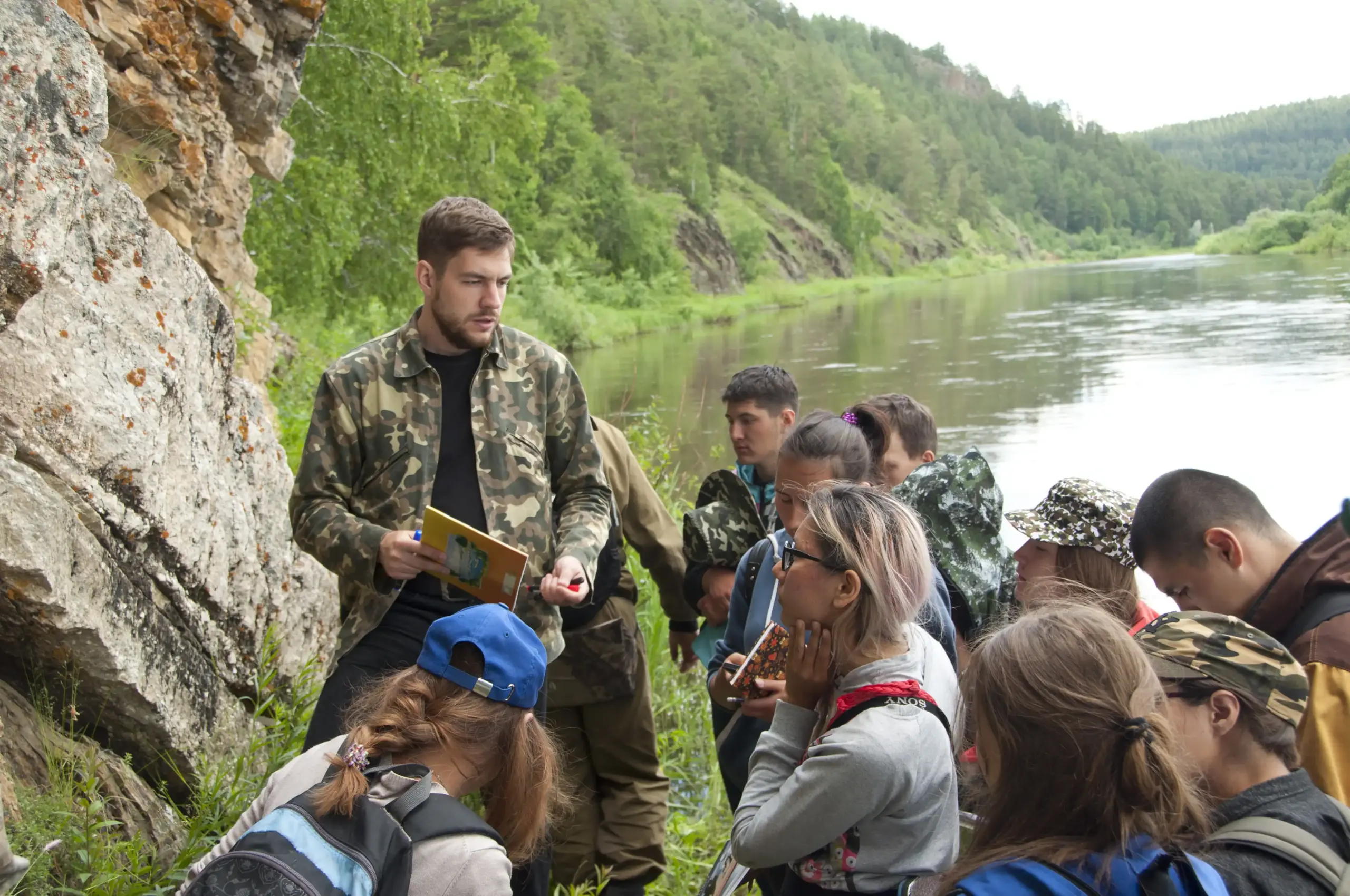
When I became the head of the department of geology in 2016, it coincided with the fact that the Ministry of Education and Science reduced our number of budget places from 25 to 10. The department was threatened with reduction: if we did not recruit at least a few commercial students, the teachers would not have enough hours. And our applicants – guys from the districts and rural areas of Bashkortostan – could rarely afford paid education. Something needed to be changed: not only to attract students to commerce, but also to make sure that they generally learn about the specialty and want to study in it.
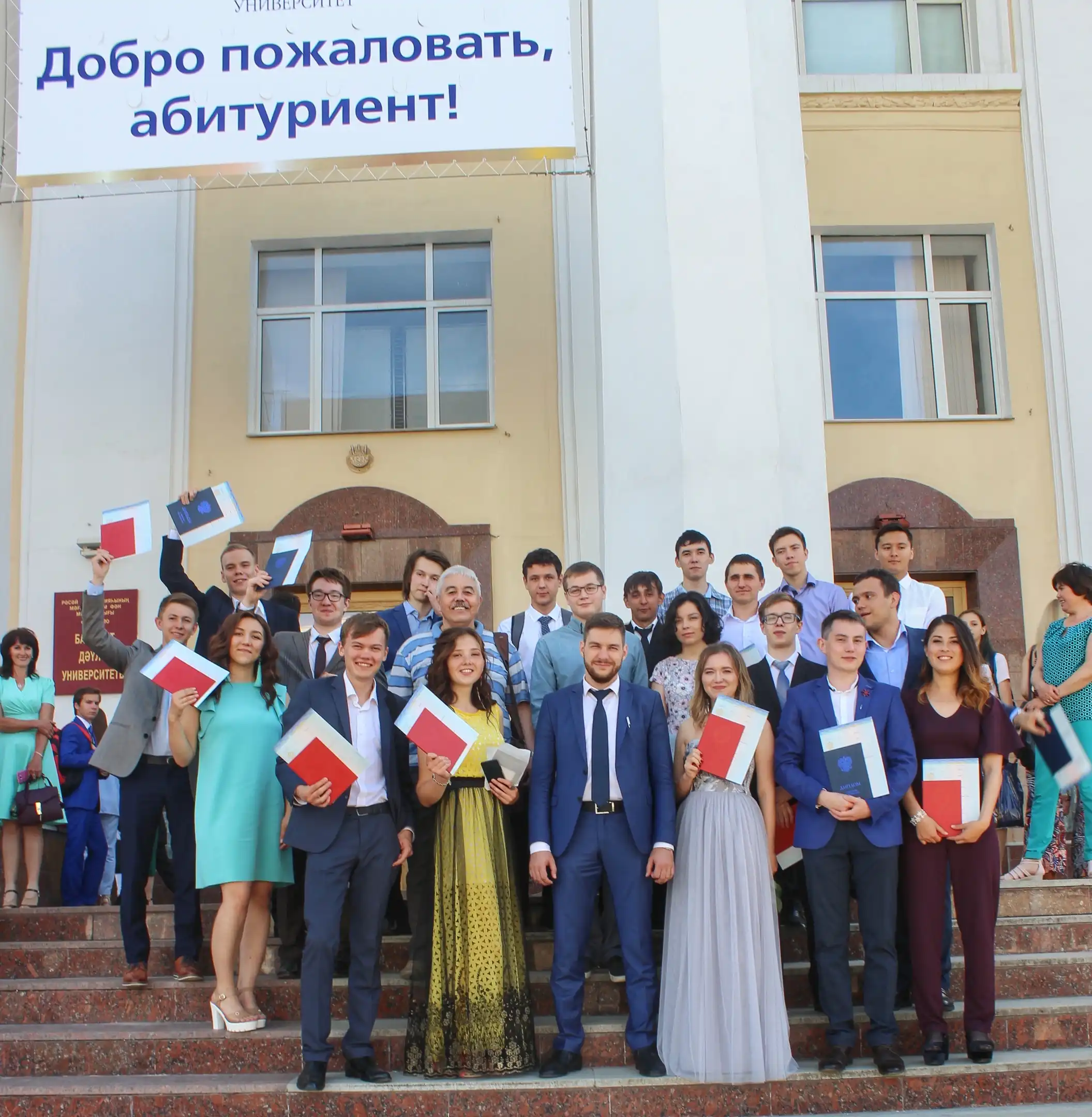
Then I started a blog. A friend who was involved in SMM helped with the setup and said: “Tell me about geology.” At the time, it seemed strange – the social network feed was about food and selfies in elevators, and here the head of the department was posting about geology. But I started writing – about expeditions, about my specialty, about my experience. After two years of blogging, an effect appeared: we began to easily recruit commercial students, no matter how many neighboring faculties recruited together. I realized: a personal blog works much better than the official page of the department. People come not for a faceless brand, but for a living person.
If you want people to know about your university, give a voice to your teachers and students. Maintain a vibrant, personal presence in the public sphere. Let them talk about their profession, their studies, their discoveries, even their difficulties. This attracts, inspires and can really save not only the department, but the entire faculty – and even the university as a whole.
If you’re a teacher, tell us what new formats you’re already implementing or would like to try – and what really worked. And if you are a student or have recently been one, share what courses, teachers or formats really sparked you – this will help others understand what changes education makes in practice.
The material was prepared with the support of the Russian Ministry of Education and Science as part of the Decade of Science and Technology