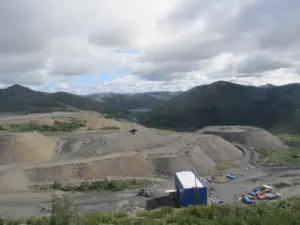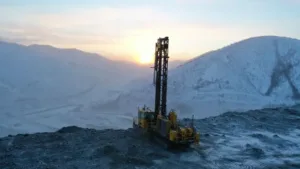
At the beginning of June 2025, the State Duma Committee on Ecology proposed lifting the moratorium on inspections gold mining enterprises. According to deputies, alluvial gold mining leads to river pollution and a reduction in biodiversity. However, industry expert Gadzhi Mirzekhanov believes that fines should be imposed only if there is clear evidence of damage.
A moratorium on routine inspections of gold miners has been in effect since March 2022, but, as noted in the industry, this does not relieve companies from control. Inspections continue based on requests from the prosecutor’s office or government decisions.
“In fact, a moratorium does not mean complete freedom,” explains Doctor of Geological and Mineralogical Sciences Gadzhi Mirzekhanov. — If a complaint is received, supervisory authorities are obliged to respond. Inspections are ongoing, and enterprises are held accountable for violations.”
Over the past three years, Rosnedra has revoked more than 3,000 licenses from gold miners. According to Rosprirodnadzor, the amount of environmental damage exceeded 17 billion rubles. However, as Mirzekhanov emphasizes, these figures require detailed justification.
“Where is the concrete evidence of damage? – the expert asks. — If we are talking about muddy water, then this is a natural process during rains. Fines should only be imposed when there is proven harm, such as the death of fish or livestock due to pollution.”
The debate around environmental controls in gold mining continues. Authorities are pushing for stricter inspections, and industry representatives are demanding transparency in damage calculations. As Gadzhi Mirzekhanov noted, only objective evidence will help find a balance between economics and ecology.
The material was prepared with the support of the Russian Ministry of Education and Science as part of the Decade of Science and Technology
Source: @nedradvnews