Gazprom Neft has put an end to a long-standing issue of outdated industry regulations. The company’s specialists have developed a comprehensive new standard that defines how core samples should be handled at every stage—from extraction and transportation to laboratory preparation and long-term storage. The document has already been recognized by the industry’s leading professional institute.
The previous requirements governing core handling dated back to the late Soviet era and had not been significantly updated for decades. The new standard fills this regulatory vacuum. Developed by Gazprom Neft experts, it combines the company’s practical experience with modern industry best practices. The methodology was tested in real exploration projects across two regions of Siberia before receiving formal approval.
Field trials delivered measurable results. The proportion of high-quality core samples fully suitable for laboratory analysis increased by 15%, directly improving the reliability of subsequent geological assessments.
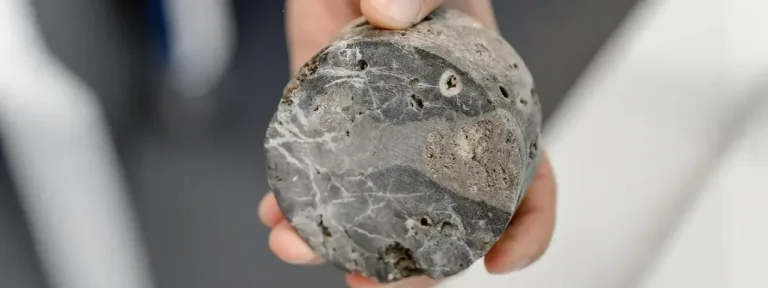
The importance of core samples is difficult to overstate. These cylindrical rock specimens preserve a record of geological processes that occurred millions of years ago, providing critical information about sedimentary formations, reservoir characteristics, and the presence of hydrocarbons. If a sample is damaged during recovery, transportation, or drying, the entire chain of geological interpretation—from reserve estimation to production planning—can be compromised. The new standard is designed to protect this primary source of information from degradation at every stage.
Yury Masalkin, head of the relevant department at Gazprom Neft, explained the rationale behind the initiative. Exploration is fundamentally a process of reducing uncertainty, and core samples are among the few objective sources of information about subsurface conditions. The better these samples are preserved, the more accurate geological forecasts become and the lower the investment risks. According to Masalkin, the standard is based on real operational experience and is now available for adoption across the industry.
The unified methodology covers the entire core management cycle, including proper recovery, safe transportation, preparation for laboratory testing, and long-term archival storage. It eliminates inconsistencies that previously arose when different companies relied on their own internal procedures.
A nearly forty-year pause in industry standardization has now come to an end. The introduction of a unified core handling standard is more than a formal regulatory update—it represents a significant step toward improving geological models, reducing uncertainty, and supporting better decision-making in future exploration and development projects.
Source: Neftegaz.RU News Agency
Image: Gazprom Neft