My name is Victoria Chikatueva, I am a leading geologist at the IGT Service company. We are engaged in the search and exploration of solid minerals. In our company, there are no geologists “in the office” – everyone, without exception, works in the fields. Each specialist goes to the site, performs field tasks, goes on routes and takes samples.
And perhaps that is why we especially notice how the quality of geological exploration decreases every year. This can be seen in everything: in reports, technical specifications, and geological notes. And, what is most alarming, there are fewer and fewer competent specialists who really know how and want to work in the field. This is exactly what I want to talk about – about the systemic problems due to which the quality geological exploration It begins to crumble even before we leave for the fields. Because if everything continues “as it is now,” at some point there will simply be no one left to work.
What Victoria says resonates with me too. I am not a geologist or geophysicist. But everything she describes is how I lived every field season. Tender – in May. Departure is in June. The equipment is unprepared and there is no time to check it. You come to the field with equipment that doesn’t work, and you bear the brunt of everything. You work neither for the sake of discovery, nor for the sake of data, nor for the sake of the project. And in order to “close the volumes”. And at some point, not just fatigue comes, but sense of meaninglessness. And when I heard Victoria’s speech, I realized that we have to publish this. Because if we don’t give a voice to those who work in the field, we will never change anything.
Maria Kostina, editor-in-chief of GeoConversation
The material was prepared based on Victoria Chikatueva’s speech at the scientific and practical conference “Current problems of exploratory geology”. The full report can be viewed at link.
Why do a raw technical specification and a fixed tender price ruin a project even before it goes into the field?
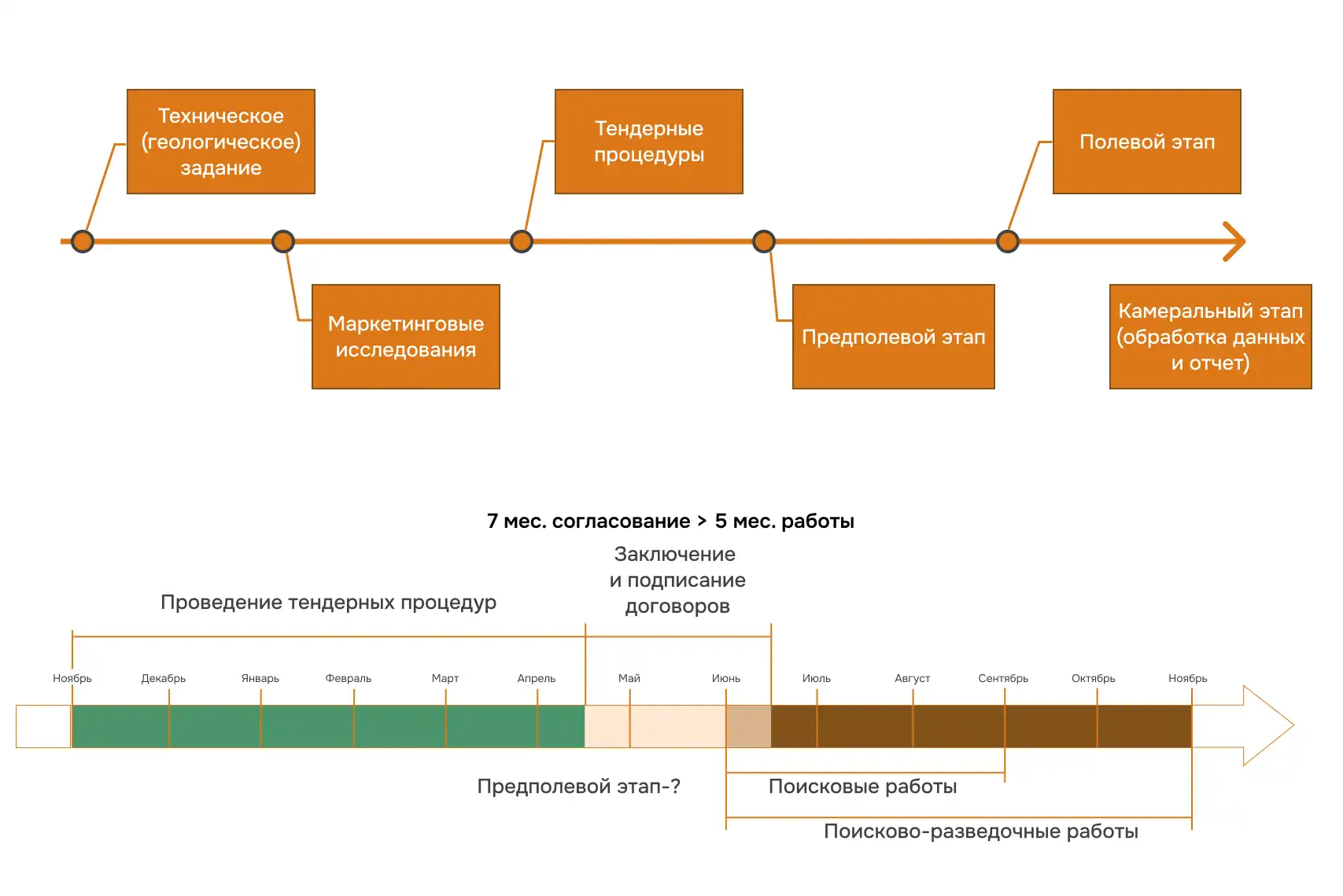
If we look at the structure of a geological exploration project, we are accustomed to dividing it into three classic stages: pre-field, field and office. But in reality, everything starts earlier – with tender procedures, which have already become an integral part of our geological life. And this is where the first errors are made, which then affect the entire project.
It all starts with a technical specification. As a rule, it is prepared by the customer’s geological service. And in recent years, we are increasingly seeing crude, undeveloped technical specifications. We read them and it’s immediately obvious: the paragraphs were copied from different projects, with different goals, objectives, and approaches. The texts are collected haphazardly, without a single logic, without comprehension. And in this form they move on – to the purchasing department.
There the next stage begins – the so-called marketing research. These raw technical specifications are sent to potential contractors, they name their price, and based on these responses, a price corridor is formed. But here’s what’s important: the price is “fixed” even before the task itself has become adequate. Even if the technical specifications are then corrected, finalized, and the essence is understood, the price corridor no longer changes.
After the raw technical specifications have been sent to the mailing list and proposals have been collected from contractors, the technical specifications begin to be finalized. They are trying to clarify, rewrite, put in order – as best they can. But the price corridor, which tender procedures are already oriented towards, remains the same. No one is reviewing it, even if it has become clear that the amount of work is an order of magnitude higher than initially expected.
Then the tender itself begins. On paper, this is a procedure for selecting the optimal contractor based on the price-quality ratio. But in practice, the main criterion remains one thing – price. And the one who gives the cheapest offer wins. A cheap offer means:
- fewer specialists
- fewer people in the fields,
- minimum equipment,
- minimum security
- and, as a consequence, a minimum of conditions to work normally at all.
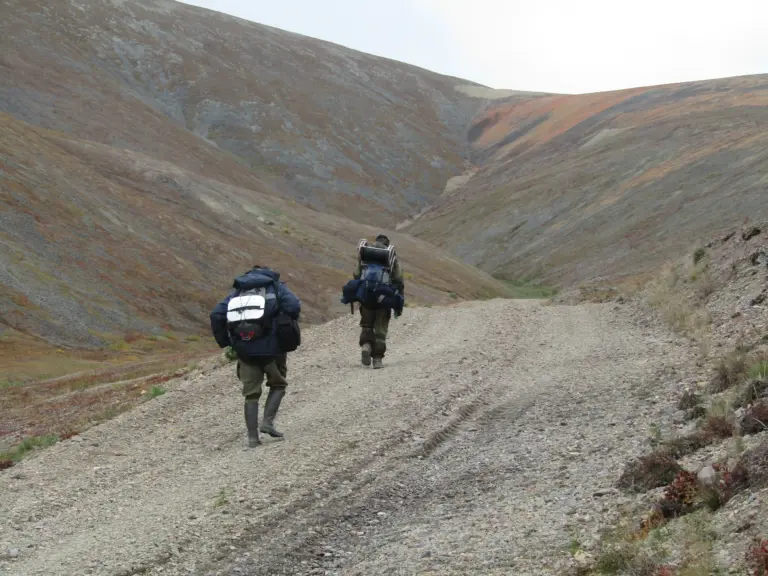
This is not just saving – it is a trap from which a whole chain of problems then grows: from bad data to people leaving the profession. But it doesn’t end there. After the tender, it takes another month and a half to sign contracts. A field season meanwhile it has already begun. And in the end it turns out that the geologists had to leave “yesterday”, and they had not even assembled a team yet, had not purchased equipment, or had time to prepare anything. The frantic assembly of the field group, all-terrain vehicles, equipment begins – and all this in a hurry, on the go, without time for analysis.
How we ourselves give up knowledge – and again do what has already been done before us
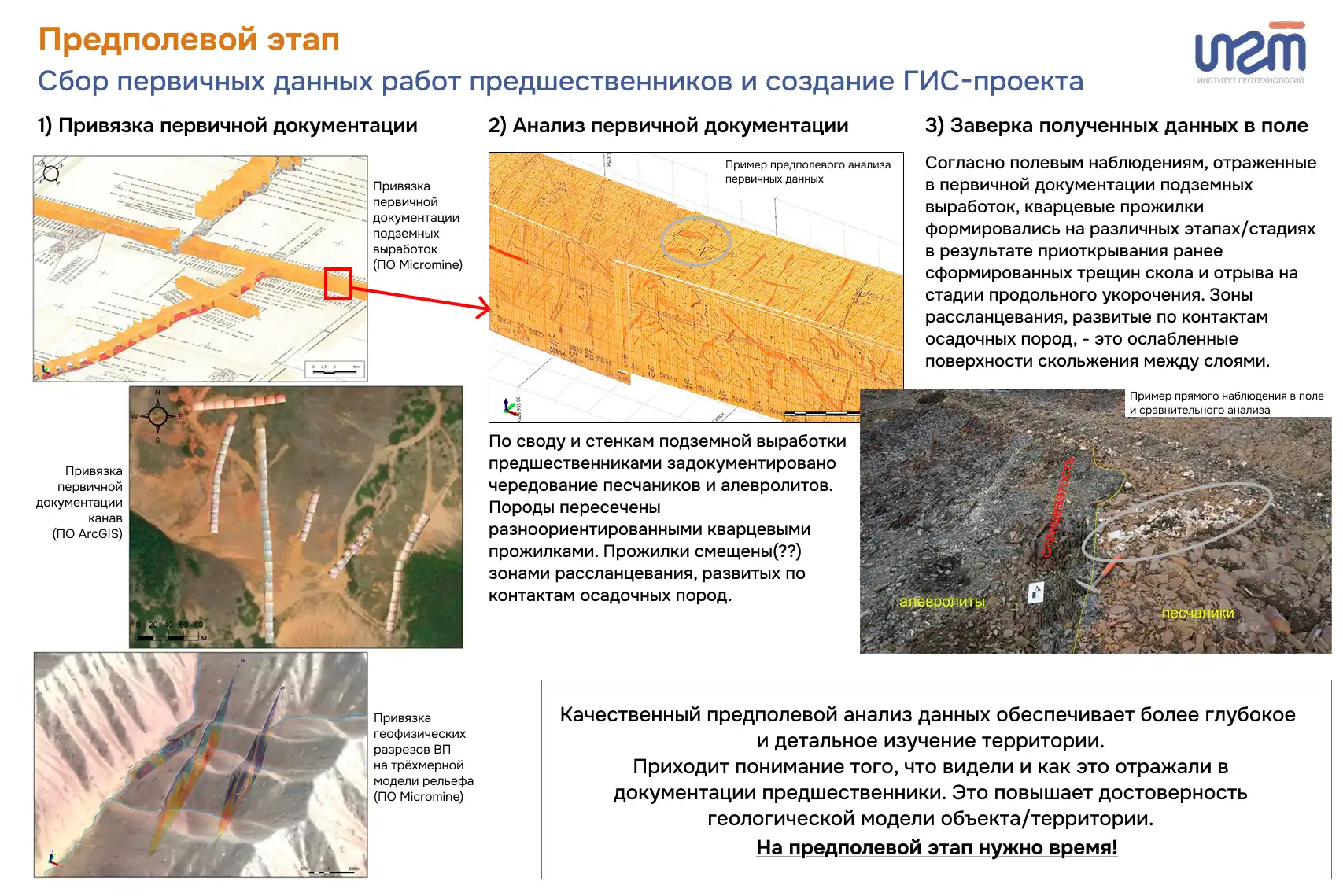
In this rush, geologists have little time to dive into the project from a geological perspective. And more and more often I hear from geologists on the customer’s side the question: “Why do we need the pre-field stage at all?” And this is very depressing. The pre-field stage is an integral part of field work. This is not just a period when a team is formed and equipment is purchased. This is the time when geologists can delve into the project and understand the geological information that already exists on the site.
We often work in areas where geological exploration work was already carried out during Soviet times. Ditches were passed, samples were taken, geochemical studies. And I must say – the quality of the work of Soviet geologists was really high. We often have primary documentation at our disposal, in which we can trace how they saw the geological situation, how they perceived the section, what details they considered important – and how they reflected all this in the materials.
If you really work with this documentation, it can be fully used when preparing a report. But most often things look different now. They say: “Well, there is some kind of primary thing. Something interesting is drawn, but nothing is clear.” And the data is simply postponed. They are not disassembled, not used, not included in the work. But it is in these archives that the answers may lie.
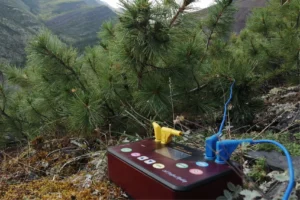
I had a similar case. We went to the fields “yesterday”, without time to study what had already been done. We were doing geophysics – and one worker suddenly said: “Oh, and here we have already cut profiles and taken measurements.” I asked again and thought he was joking. And he shows: “Over there, in the dwarf forest, we already did everything a couple of years ago.” When I returned to the camp, I asked the geologist. Yes, they say, there really was already geophysics here, the same method, on almost the same profiles. It’s just that this data was not raised. As a result, we simply re-did what had already been done before us.
Maria Kostina
How we lose people – and turn geology into a formality
And here we are again returning to the key parameter of tender procedures – price. It is she who determines everything that happens next. And this ultimately results in total savings – primarily on people and the conditions in which they work. The first thing contractors begin to save on is the provision and transportation of field geologists. These expense items, oddly enough, are very often underestimated. But they are the ones who influence whether a person returns to the field next season – or leaves the profession altogether. I’ve seen this more than once.
Here, for example: on one of the projects, after a heavy shift, a very competent documenting geologist left geology. A year later, I called her and invited her to work in our company – and she said straight out: “No. I will not return to geology again. Not for anything in life.” Although she was a strong specialist. And this is no longer uncommon – people leave not because they are not interested in the work, but because it is impossible to work like that.
The next place where savings begin is on people. On the number of field workers, on the availability of experienced specialists who could work alongside young geologists and transfer knowledge to them. What does this lead to? To clumsy databases. There are a lot of mistakes: both technical and geological.
Technical errors appear because the volumes are large, there are few people, and everything is done in a hurry. No way to double check, no control, no time to think. There are also plenty of geological errors – because there are simply no people nearby who could give advice. How to do it right. Where to find out. What is important and what is secondary. I was once told: “An experienced geologist in the field is too expensive.”
So we save. But in fact, young people are left without support, and the data turns into information garbage. In reports it seems to be “available”, but cannot really be used. Everything will have to be redone. This means that the money spent on filming, descriptions and samples is simply buried in the ground. No analysis, no result, no benefit.
This total saving on field workers – it destroys not only processes, but also people’s attitude towards work. When deadlines, resources and support are constantly being cut to you, at some point you simply become doesn’t matter. Well, they cleaned something up. Well, something was taken away. How did you select it? And for what purpose? Who needs this anyway? All the same, no one will come, check, or ask. And in the end work becomes a formality. Money is spent on something that will still have to be redone later.
When price becomes the primary parameter in a tender, this inevitably leads to one thing: the quality of prospecting and geological exploration begins to decline sharply. People don’t want to work in the fields. People don’t want to go back there. And now we hear more and more often from the stands: “We have a personnel shortage. We don’t have specialists. Nobody goes into geology.” And I have a question: “And after such conditions, will they appear? Who would want to work in such fields? Who would want to go back there? Maybe it’s time reconsider your attitude towards those who work in the fields. Because while people are there – on the last line of the estimate, there is simply no way to expect sustainable results.
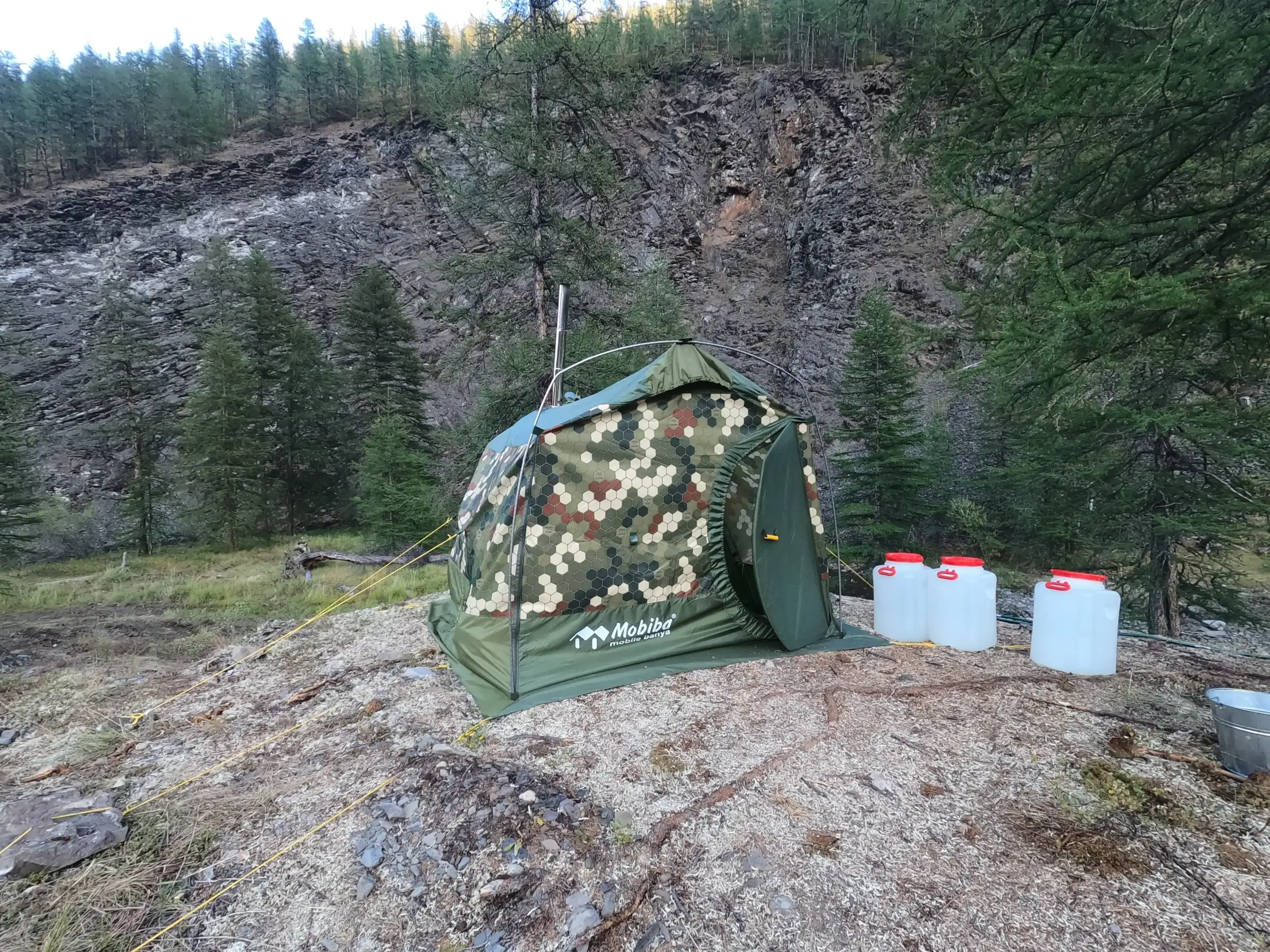
There is one stable thing in Russian geological exploration – love of suffering. When you say: “We bought a field bathhouse,” the answer is: “We didn’t have one at all, we washed ourselves in a rusty barrel.” Or you say: “We bought a pump pump, we’re pumping water,” and you: “We carried it in buckets.” And nothing.” And instead of saying: “Cool, it’s better,” it begins flaunting – who had it worse. But a geologist in the field must think not about how to light the stove or find food, but about how to do a good job.
Maria Kostina
Desk stage: when you have to interpret garbage
And then – the desk stage. And what do geologists get in their hands? Substandard, crude, databases with errors. But they also need to be interpreted somehow. And it begins: “Let’s fit it to the model. Well, to make it “beautiful.”
This is what happened at one of the projects: geologists did not delve into it, they simply adjusted the data to the well-known Bendigo model – the classic scheme of gold-bearing veins in anticlinal structures. And when we started comparing the sections with the texture, it turned out that there were no substratal deposits there. The ore bodies are cross-cut, with a complex folded structure. The object must be studied from scratch. What about the calculations? What about resources? Wrong. And again – money down the drain. And this is not a special case. This is the result of the existing system, where the priority is not quality, but the minimum price.
What the current system leads to: honestly, without illusions
We can discuss special cases as much as we want, but let’s be honest: the entire geological exploration system is now structured in such a way that it becomes impossible to really work.
- The quality of geological exploration work itself is falling. Technical specifications are crude, budgets are cut, the approach is formal.
- Qualified specialists are leaving the profession. Not because they are not interested, but because they do not want to work in such conditions.
- The young have no one to learn from. More and more often, inexperienced teams are entering the field without support and mentors – because they “save money” on experienced ones.
- Contractors, in order to fit into the budget, hire people “off the street.” Without the necessary preparation and understanding of the tasks. Just to cover the volumes.
- Responsibility for the result is blurred. The system is designed in such a way that everyone “does their own thing” – and no one is responsible for the outcome of the project.
- We receive incorrect primary data. This means a distorted picture, incorrect calculation of resources, useless models.
- And in the end, everything has to be redone. Huge amounts of time, effort and money are spent on work that would be easier to do from scratch.
This is not just a sore point. This is a dead end. And if we want geological exploration in Russia to continue to exist not formally, but truly, the system needs to be changed.
What can (and should) be changed now?
Since we’re talking about problems, let’s talk about solutions.
FirstWhat needs to change is timing. Tender procedures must be completed before the end of February to allow time for full pre-field preparation. Now it takes seven months to complete the documents, and at best five months to complete the work itself. And this does not take into account problems with technology, weather and logistics. We spend more time on paperwork than on geology itself.
Second — trust in your specialists. Geologists who formulate a project should be involved in the evaluation of contractors and not merely observers in the process. At a minimum, they understand what exactly needs to be done and why.
Third — competence in procurement. There should not be random people on procurement commissions without specialized education and practical experience. Because this is not just a formality – it is a decision on which the result of the entire geological exploration depends. The responsibility of the purchasers should be measured not only by how the tender was conducted, but also by the result: whether the contract was fulfilled, whether there was an increase in resources, whether the project worked as an investment.
Fourth — selection criteria. The cost of work is critical, but cannot be the only parameter. You need to look at the qualifications of the performers, the elaboration of the technical specifications, and the real capabilities of the company. Often it will be cheaper to pay more but get a high-quality result. Otherwise, everything will have to be redone, and “the miser pays twice” is not a proverb, but the reality of geological exploration.
And lastly, fifth — honesty on the part of contractors. If you go to tender, you must honestly assess your resources and competencies. Because this attitude: “The main thing is to take the project, and then we’ll get out of it somehow” – doesn’t work. Don’t get out of it.
The purpose of the tender is not to “close the budget,” but to ensure efficiency. The effectiveness of geological exploration is not reports for show, but the maximum of reliable information per unit of investment. This is the only way to talk about real growth, new deposits, and the future of the industry.
What do you think about this? Have you ever been in a situation where a tender undermined the quality of geological exploration? Do you agree that “geology for three kopecks” is a road to nowhere?
Leave a comment – let’s talk openly and look for solutions together.
The material was prepared with the support of the Russian Ministry of Education and Science as part of the Decade of Science and Technology