Have you thought about becoming a geologist? Someone told you about it or saw a photo from the expedition – and it became interesting. But a lot of questions immediately arise: what universities train geologists, what subjects to take to get admitted, what prospects await you after graduation, and in general – what does a geologist do? Don’t worry, you will find the answers in this article. We will tell you what geology is as a profession, where higher education in geology is obtained, how master’s and bachelor’s degrees differ, how internships are carried out and what to expect from geologist career in the future.
Who are geologists and why are they needed?
Geology is the science of the Earth, its structure, history and processes that occur on the surface and in the depths. She studies volcanoes, plate tectonics, earthquakes, minerals and rocks, and how mineral deposits are formed. Geology helps us understand how the planet was formedhow the continents and oceans have changed, and how these processes influence our lives Today.
Read the review: How much do geologists earn in Russia??
The profession of geologist combines science and practice. Geologists work in a variety of areas: from searching for oil, gas, gold and rare earth metals to assessing engineering risks at construction sites and environmental monitoring. They study groundwater, analyze rocks and minerals, create digital models of deposits, and develop strategies for sustainable environmental management. In short, a geologist is a researcher and engineer who helps society use the planet’s resources efficiently and safely.
What if I don’t know anything about geology?!
At school they hardly tell you what geology is as a science and profession – although Russia is a raw materials country, and mining is one of its main industries. Geology is the foundation on which this system is built: without geologists it is impossible to find deposits, evaluate reserves and begin development.
“Half of our country’s budget is formed from subsoil use – oil, gas, ores. But in the school geology curriculum there is a maximum of 20 hours for the entire course. The shortage of personnel in the industry is directly related to this: schoolchildren simply do not have the opportunity to understand what kind of profession this is and why it is needed.”
— notes Ishak Farkhutdinov, vice-president of RosGeo, associate professor and popularizer of geology
Many people enter universities with only a general idea of the profession. And that is why educational programs are structured in such a way as to introduce the specialty gradually. In the first year there are familiar school subjects – mathematics, physics, then – “general geology”, and then specialized disciplines begin.
Educational practices at geological universities begin after the first year. For example, at MGRI, students undergo practical training near Moscow – they go to quarries in the Moscow region and get acquainted with real sections, the geological features of the region, learn to use a geological compass and identify rocks.
At St. Petersburg State University, after the first year, there are also basic field trips to the Leningrad, Novgorod regions and Karelia. After the second year, bachelors go on geological practice to Crimea or other regions of Russia, and after the third year, they go on practical training and internships, including trips abroad. Geophysics students undergo individual internships in Karelia, where they master electrical prospecting, magnetic prospecting, gravity survey, and seismic exploration – often even in winter, in difficult conditions.
“Freshmen in the oil and gas field at Tomsk Polytechnic have been fully immersed in the profession since their first year: geological excursions, seismic exploration, core work and reserve calculation simulations. The guys don’t just listen to lectures – they drill, calculate, build and dig themselves. This is a great start, especially for those who are just trying their hand at geology.”
tells Alexandra Volkova, teacher of geophysics and coordinator of educational practices at Tomsk Polytechnic University
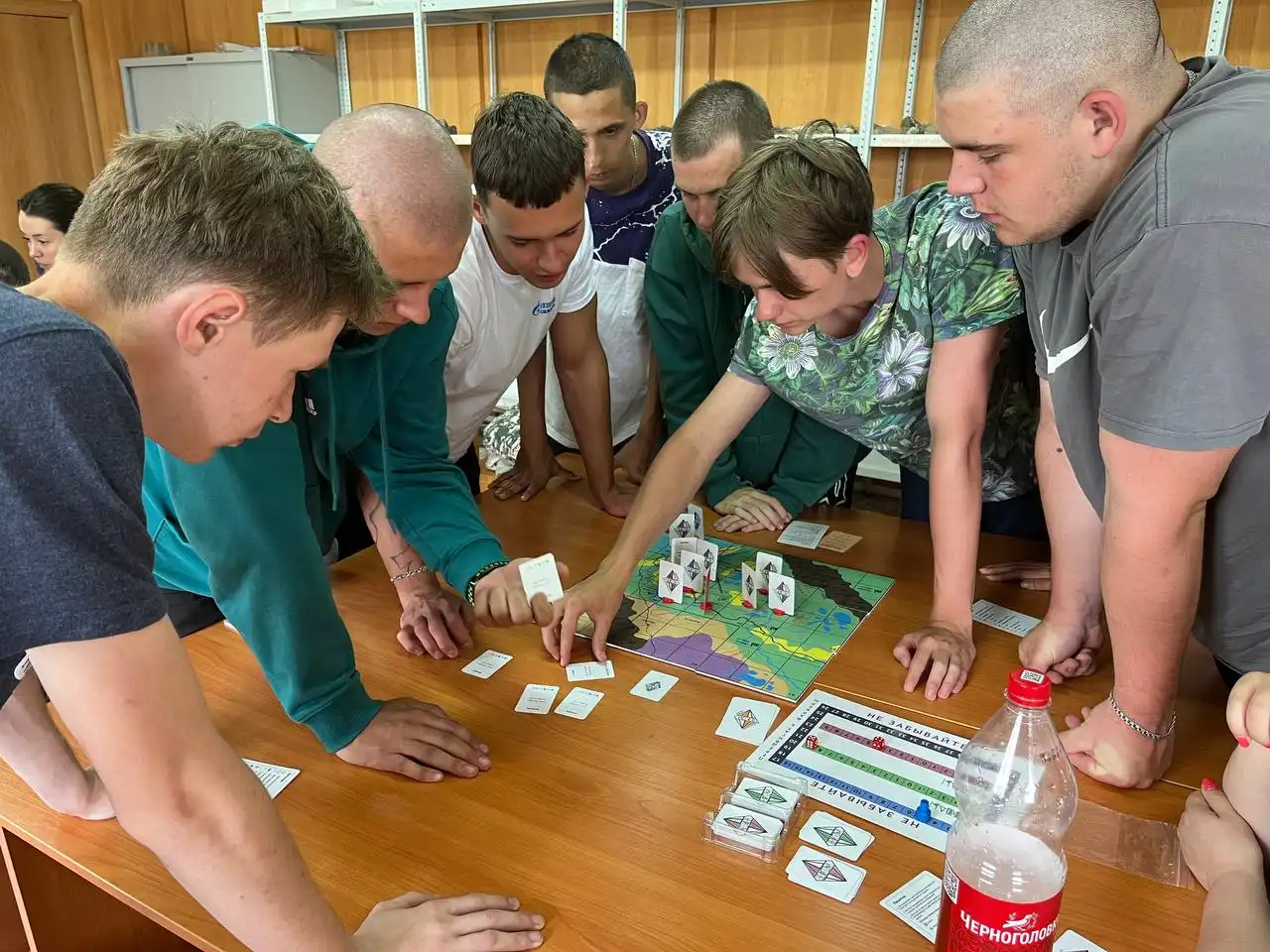
You have 2-3 years before admission – now is the time to learn more about the profession
If you are still in school and have two or three years left before enrolling, this is a great opportunity to get acquainted with geology and understand whether this field is right for you.
This can be done in “Young Geologist” mug. Schoolchildren there learn to identify minerals and rocks, participate in expeditions and competitions, go on real routes and try themselves as researchers. Such experience not only makes it easier to apply, but also gives you a foundation in your first year.
Sometimes interest in geology is awakened in specialized school programs, as happened with Alexandra Volkova, a graduate of seismic exploration.
“A Rosneft class has opened at our school. At first I went there because of my strong background in physics and mathematics. But one day a teacher, an astrophysicist, came to us and told us about geophysics, the structure of the Earth, and the influence of the Moon. He gave us real scientific problems – for example, analyzing the energy of earthquakes and the cyclicity of processes. We downloaded data from the USGS database, calculated correlations in Excel, and worked with time series. It was like magic – complex, real, but understandable.”
Such experience before university gives not only knowledge, but also confidence in choice. You try yourself in real problems and understand how science comes to life. Some of these schoolchildren then go into geology, some into geophysics, but the main thing is that the choice of profession becomes conscious.
Use this time: sign up for clubs, participate in competitions, read books and watch films. Attend open days meet teachers and students, ask where internships take place and what career tracks are available. This will not only prepare you for admission, but will also help you understand: “Do I want to do this all my life?”
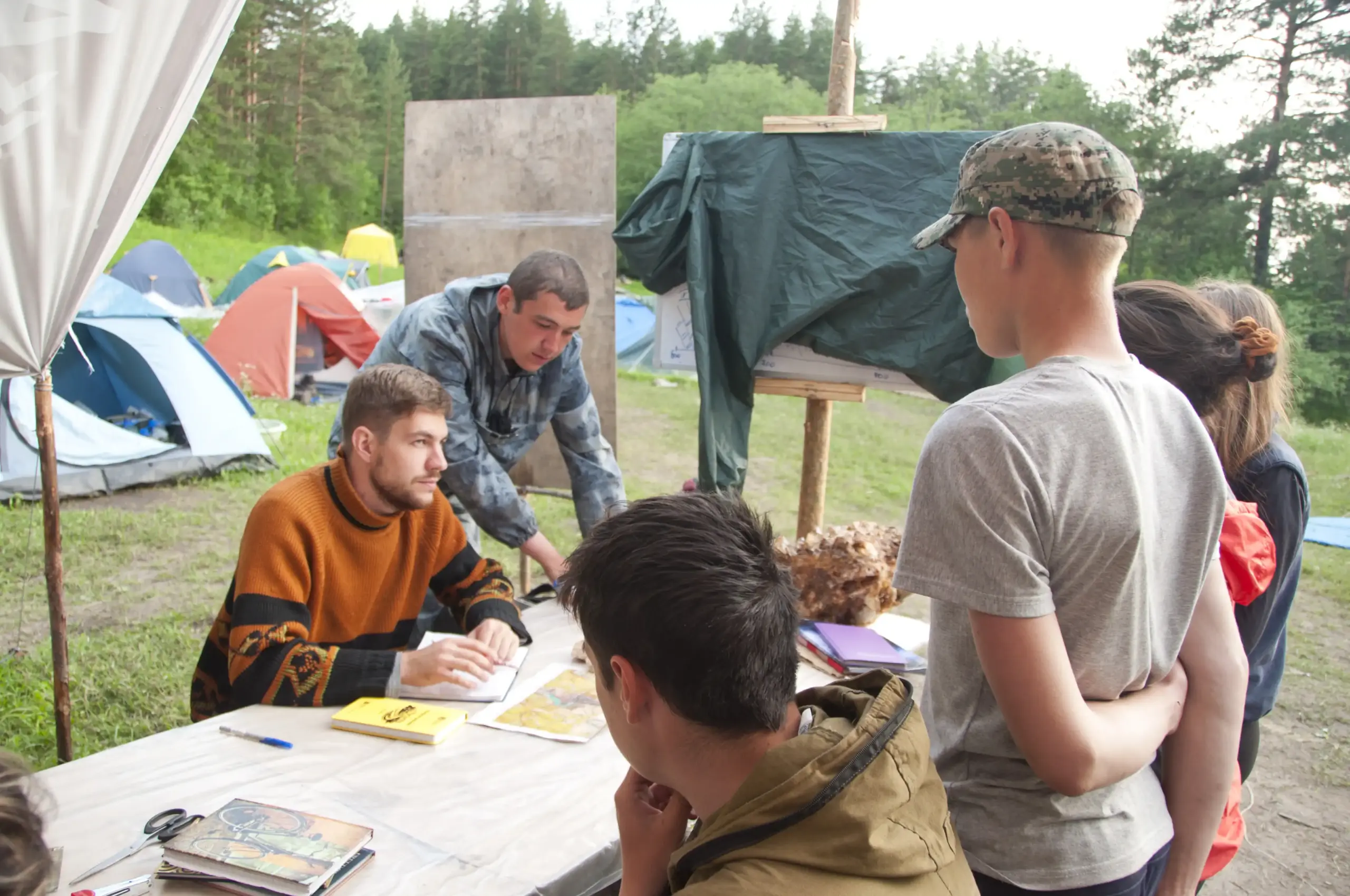
How to choose a university: what to look for
In Russia there are dozens of educational institutions where they study to become a geologist: from classical universities to specialized industry universities. But how to choose exactly where it will be interesting to study and where to start a career in the geological field? Here’s what you should pay attention to:
Geography and infrastructure
- In what city is the university located? Can you afford to live there?
- Is a hostel provided, what condition is it in and how much does it cost?
- How convenient is it to get to the university, is there transport accessibility?
- Important: look at real photos and reviews of students on social networks – they are often more honest than the information on the website.
Type of educational institution
- Classical universities – such as Moscow State University, Tomsk State University, Southern Federal University, Novosibirsk State University – provide fundamental education. Geology is studied there as part of large faculties (for example, the Faculty of Earth Sciences or Geological Geography), and the curriculum includes many general educational and theoretical disciplines. This is a good option if you want to deeply understand how the Earth works, are interested in science, and are considering pursuing graduate or graduate studies.
- Industry universities – such as MGRI, St. Petersburg Mining University, Ural Mining University – are focused specifically on training specialists for industry. The training programs are more applied, with an emphasis on the real problems of mining companies. Such universities have many internships, internships, and partnership programs with industry: graduates quickly get involved in work and are in demand in production.
Partners, internships and practice
- Pay attention to which companies the university cooperates with. The presence of partners like Gazprom, Polymetal, LUKOIL, Norilsk Nickel, Rosgeologiya is a signal that students will have real internships and job offers.
- Does the university participate in the program? “Priority 2030”? This is a government initiative whose goal is to support leading universities so that they develop modern educational programs, collaborated with industry and scientific institutions, implemented digital and technological solutions, emphasized preparation through real cases and practice. If a university is included in this program, this means that its approaches are regularly updated and meet the needs of the industry.
- Is there practice in laboratories and field conditions? Already from the 2nd or 3rd year you can go to real production practices and internships, get first experience and even a salary.
Financial support and career tracks
- Find out if the university offers target places or special support programs from companies. Some companies provide scholarships, pay for studies, or offer internships with subsequent employment. This is especially important if you want to overcome the issue of your first experience and get into the industry immediately after graduation.
- There are support programs from subsoil users and geological associations – for example, grants from the Russian Geological Society, “Norilsk Nickel“, “Rosneft”.
Digital environment and additional features
Does the university support academic mobility — the opportunity to go to another region or country for a semester? For example, at St. Petersburg State University there are available exchanges with universities in Europe and Asia, internships and summer schools.
Does the university have modern laboratories, GIS classes, UAVs (drones), modeling, IT skills? For example, at St. Petersburg State University students work with 3D modeling and X-ray diffraction in the Science Park, and at MGRI they are mastering drones

Levels of geological education in Russia
Geologists have several educational tracks, from college to graduate school. In order not to get confused and choose the appropriate path, it is important to understand how these steps differ and how they can be combined depending on your goals.
Secondary vocational education in geology (colleges)
You can enroll in geological college after 9th or 11th grade. The training lasts from 3 to 4 years, upon completion the qualification of a technician or laboratory assistant is awarded. After college you have two options:
- Start working and at the same time you can get a higher education by correspondence.
- Enroll in a university, but as a first-year student, even if your majors overlap.
Bachelor’s degree – basic level (4 years)
At this stage you gain fundamental knowledge and first practical skills:
- learn to read geological maps and conduct field observations;
- participate in educational and production practices;
- master basic disciplines – from general geology to mineralogy and geophysics.
An excellent start for those who want to quickly get into the profession or continue their studies in a master’s program.
Master’s degree – in-depth training (2 years)
This is where a deeper dive into a specific area begins: e.g. geochemistry, oil and gas geology, IT in geophysics etc. You:
- working on scientific projects;
- do internships;
- writing your master’s thesis.
The master’s program is useful for those who want to make a career in science, analytics, R&D or reach leadership positions in companies.
“Some subjects in bachelor’s and master’s programs seemed very difficult to me – geological mapping, regional geology, isotope geology, lithology, coursework and diploma papers. But they were the ones who gave me the most: critical thinking, public speaking skills, the ability to do not only a lot, but also deeply and efficiently.”
says Nadezhda Vasilyeva, graduate student at St. Petersburg State University
Specialty – applied track (5–5.5 years)
A complete program that provides both foundation and specialization at once. This format is often found in industry universities (for example, MGRI, Mining University). You study specialized geology: from geophysics to the search for ore deposits. Suitable for those who want to be fully trained to work in a specific industry.
Postgraduate studies – scientific career
The next step after a master’s or specialist’s degree. Here you are:
- doing research;
- publish scientific articles;
- defending your dissertation.
After defense you receive a degree Candidate of Geological and Mineralogical Sciences.
Additional education in geology
In addition to basic education, there are also flexible formats:
- Retraining courses — if you want to change your specialization;
- Advanced training — for current specialists;
- Double degrees with foreign universities;
- Distance programs and evening courses – if you combine study and work.
There are strong educational centers, for example, SAPPHIRE, the corporate center of Rosneft, where I taught. They have built a really good system of project-based learning. But when choosing additional education, it is important to start not from the formal status of the center, but from your own request. We often think like this: if I am a geologist, then I need to “pump up” in geology. But sometimes you need to develop completely different skills – say, project management or digital competencies. When I myself found myself in an IT project, I had to learn IT project management from scratch – and I took a course at Yandex.Practicum
explains Ishak Farkhutdinov
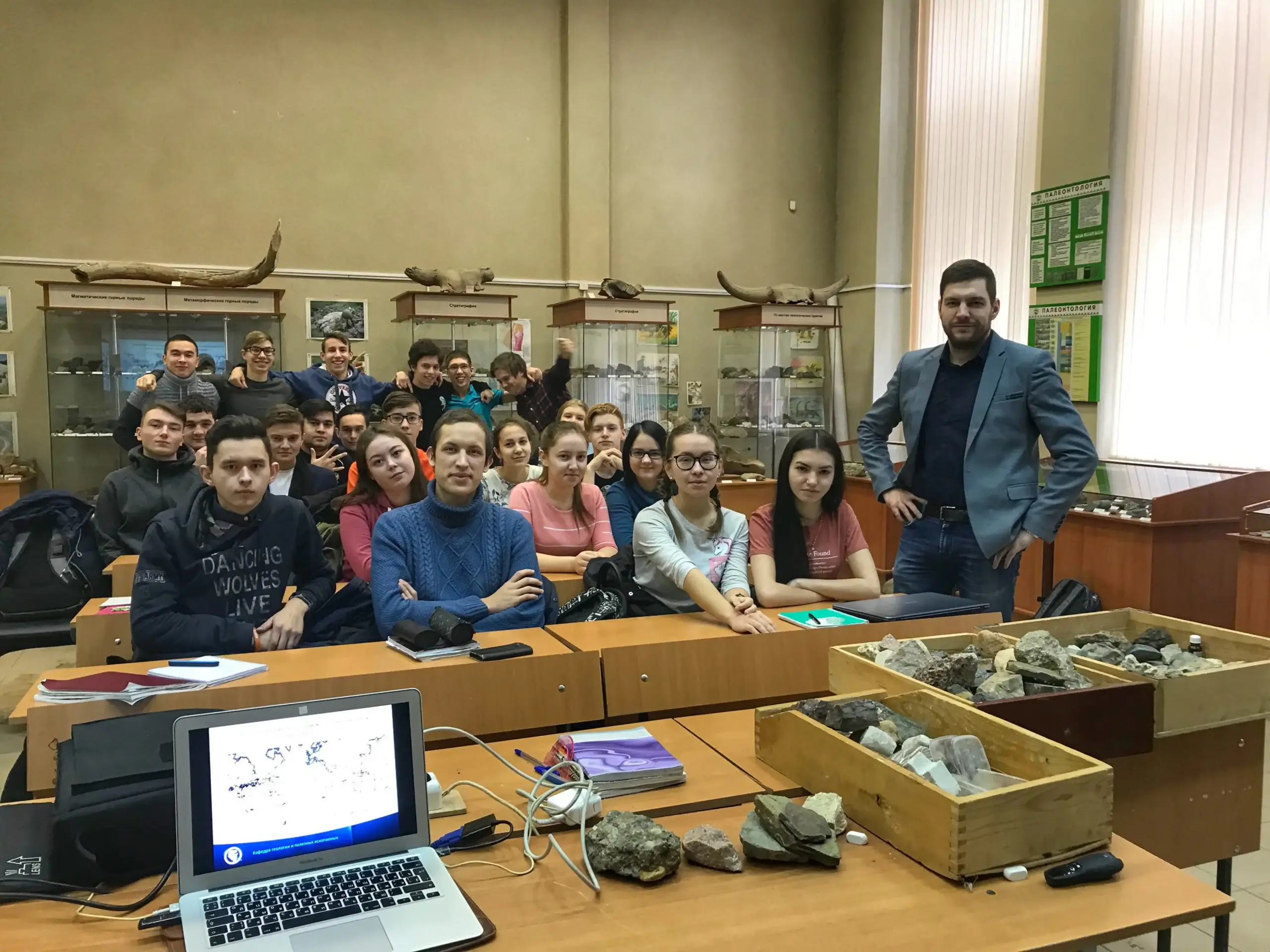
Where to study to become a geologist: table of universities by region
We have compiled a table of universities where you can get a higher geological education. It contains key parameters: areas of training, exams for admission, participation in the Priority 2030 program, places of practice, partners and interesting features. Pay attention to which Unified State Exams you need to take, and check whether the university has additional entrance tests. If a university participates in major educational and scientific programs, this is a plus. Before admission it is useful:
- go to an open day
- look at social networks and the university website,
- find out how internships are carried out and where graduates go to work.
You can download the document here: Review of Russian universities, 2025 – geology, geophysics, mining engineer
Where can you work after geological education?
Graduates of geological universities find work in a wide variety of industries. Depending on your interests and training profile, you can choose the following areas:
Geological exploration – one of the key areas where young specialists work. This is field work: sampling, mapping, application geophysical and geochemical methods for searching for deposits. Many begin their careers as technicians and then become team leaders and chief specialists. One of the graduates of the Ufa Petroleum University went from a technician to the chief geophysicist at Bashneftegeofizika.
Read more, how geologists work in the fields
Field exploitation – work in operating mines, mines or oil and gas fields. Applied knowledge, data interpretation skills, and the ability to work in a team with engineers and technologists are important here. A graduate of Moscow State University, Daria, after studying at the Department of Geophysics, works as a petrophysicist at the Irkutsk Oil Company.
Read more, how gold is mined and what technologies are used
Engineering Geology and Ecology — direction related to construction, infrastructure and environmental projects. Geologists are involved in examining soils for buildings, roads and dams, and analyze how the natural environment affects construction. For example, a graduate of St. Petersburg State University works as part of the RusHydro Institute, inspecting dams at hydroelectric power stations.
Science and education is a path for those who want to do research or teach. Many graduates stay at universities or go to research institutes. They publish articles, operate laboratories, train students and participate in grant projects.
Read more: How mineralogists work on the Kola Peninsula
Digital geology and IT direction is a growing field that requires specialists who know how to work with data. This includes the analysis of geological maps, the use of geographic information systems, working with deposit models, and the introduction of AI and machine learning. An example is specialists developing software or algorithms for field forecasts.
Read: How neural networks help find mineral deposits
Sustainability and ESG – another modern direction. Large companies hire geologists to monitor the environmental impact of mining, develop environmental measures and comply with international sustainability standards.
Geology is the way to the real deal
We figured out who geologists are, what they do, and why their work is important. We talked about where you can get a geological education, what areas and levels of training there are, what to look for when choosing a university, and what career tracks are available after graduation.
The main thing is not to be afraid, even if now you know almost nothing about the profession. Everything will come with experience. Studying at the university is not only theory, but also practice, trips on expeditions, working with mentors and a real understanding of how the world works.
And now the floor is yours!
- If you are an applicant and are just choosing a profession, tell us what is important to you? What universities are you considering?
- If you are already studying or working as a geologist, please share why you chose this profession and what your path was like. Your experience will help others.
Leave comments – we read everything carefully and perhaps your story will appear in the next article!
The material was prepared with the support of the Russian Ministry of Education and Science as part of the Decade of Science and Technology