The chief geologist can earn up to 1,000,000 rubles per month. And there are only 70,000 geological technicians in Magadan. Why is there such a spread? What does a geologist’s salary depend on, what numbers are considered the norm, and when should you start looking for a better place? We looked into profile chats, studied vacancies on websites and collected real cases from the industry.
Let’s figure out what the market is offering now and what kind of money you can earn in geology.

Geologist’s salary – what affects it
We figure out what raises wages and what, on the contrary, keeps them in place. Let’s start with geography.
Regional odds: the north pays more
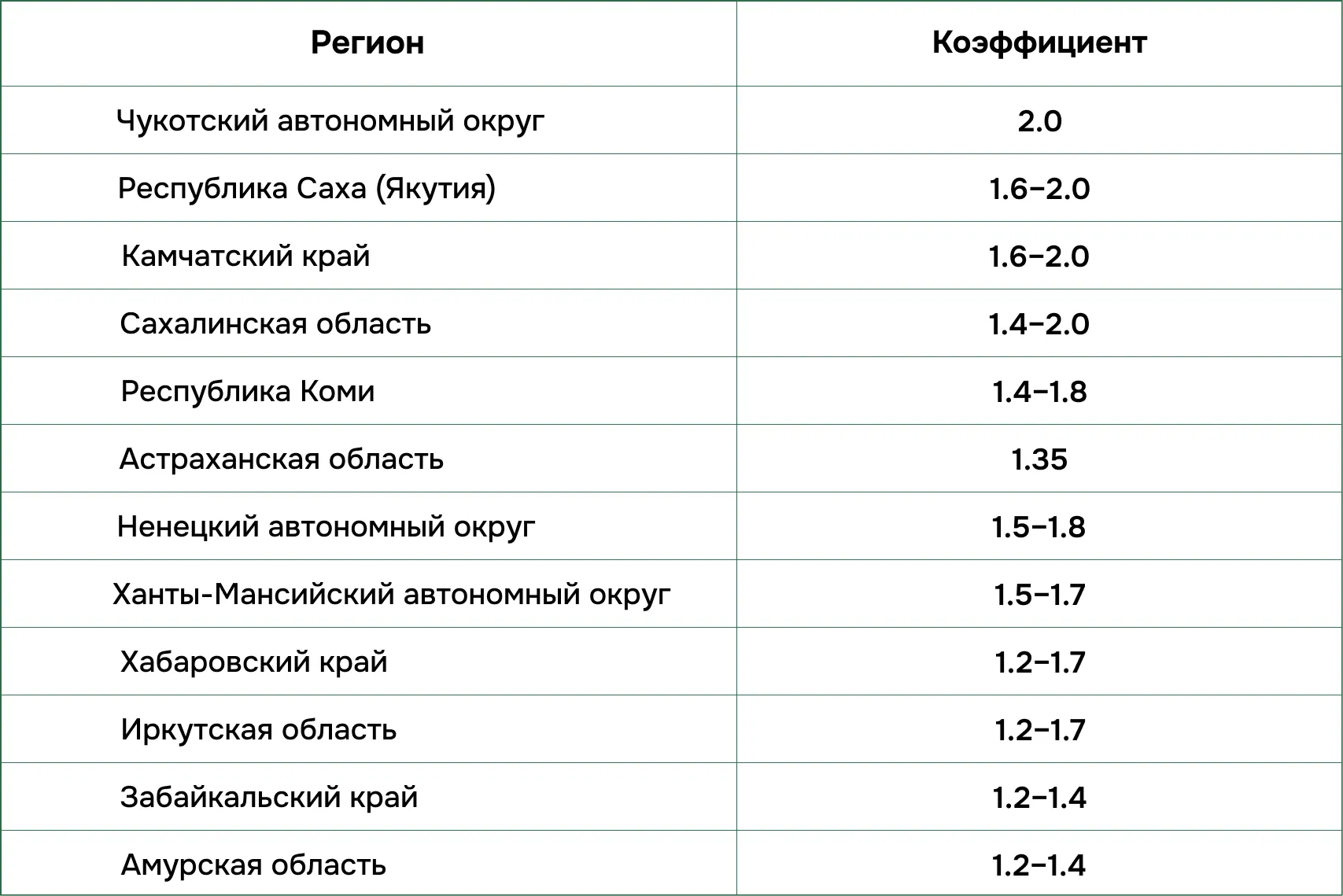
In the Far North (Yakutia, Chukotka, Magadan) there is a system of regional coefficients – a salary increase of up to 100%. For example, a base salary of 100,000 rubles can turn into 180,000 if you work at a diamond mining enterprise in Yakutia. This applies not only to geologists – all specialists receive “northern” qualifications.
But there is a nuance: private companies can lower salaries. If the salary is formally low, even taking into account the coefficient, it may end up at the metropolitan level – without a noticeable increase. So the coefficient is not a guarantee of high income, but only a formula that depends on the starting numbers.
In general, the rule is simple: the farther from civilization, the higher the salary. This is the only way to attract people to extreme conditions. For example, in Chukotka the average salary of a geologist is higher than in the Sverdlovsk region – but the conditions there are harsher: frost, isolation, shifts, minimum comfort.
Type of work: field, shift or office
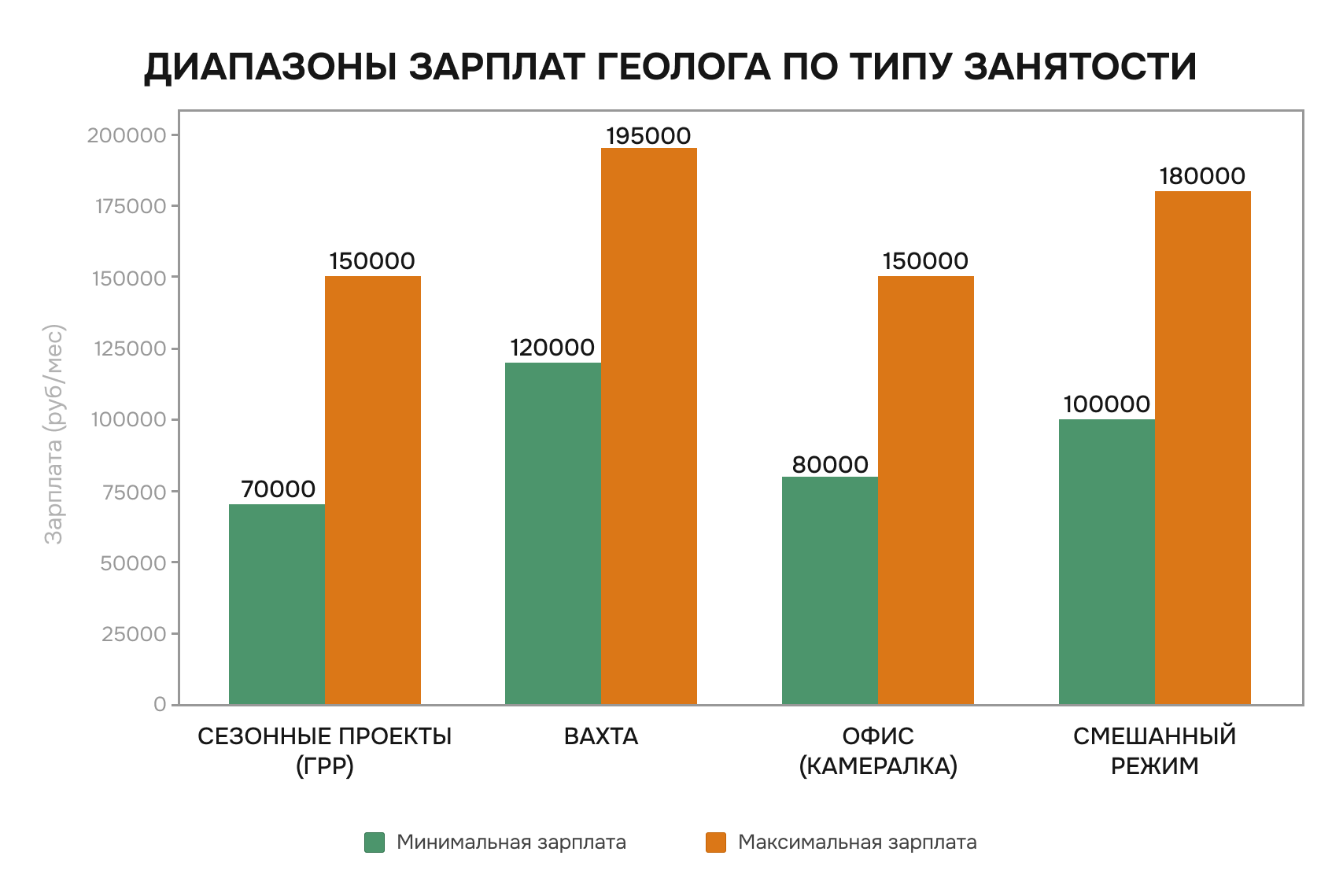
Geologists work in different ways: some spend months freezing in the taiga, while others model deposits in the office. The employment format directly affects the salary level:
- Seasonal geological exploration projects (GRR). This is a temporary job: the season is over – wait for the next one. The salary may be high, but there is no stability.
- Shift at the fields. Work on a 30/30 or 60/30 schedule. The income is higher than in the office, but the conditions are difficult: isolation, 12-hour shifts, life in a shift dormitory.
- Office. Office geologists process data, build 3D models, and write reports. The income is stable, but lower than in the fields. But – a normalized schedule and air conditioning.
- Mixed mode. Resource geologists combine office work with business trips. This is a balance between comfort and “field” money.
Experience and competencies: what affects salary growth
Graduates of universities or technical schools without experience start from 30,000–70,000 rubles per month. They are trusted with simple tasks: sampling, filling out documentation, helping senior colleagues.
As experience increases, so does your salary. Local geologists and team leaders with 3–10 years of experience already earn 100,000–200,000 rubles. Not only knowledge is important here, but also the number of “field seasons” under your belt.
The key to high salaries is skills. Project management, ownership specialized software, knowledge of English. Geologists with spoken English, 10+ years of experience and solid knowledge of GIS and 3D modeling receive 200,000–500,000 rubles per month – especially in large companies and on international projects.
Employing company: who pays geologists and how much
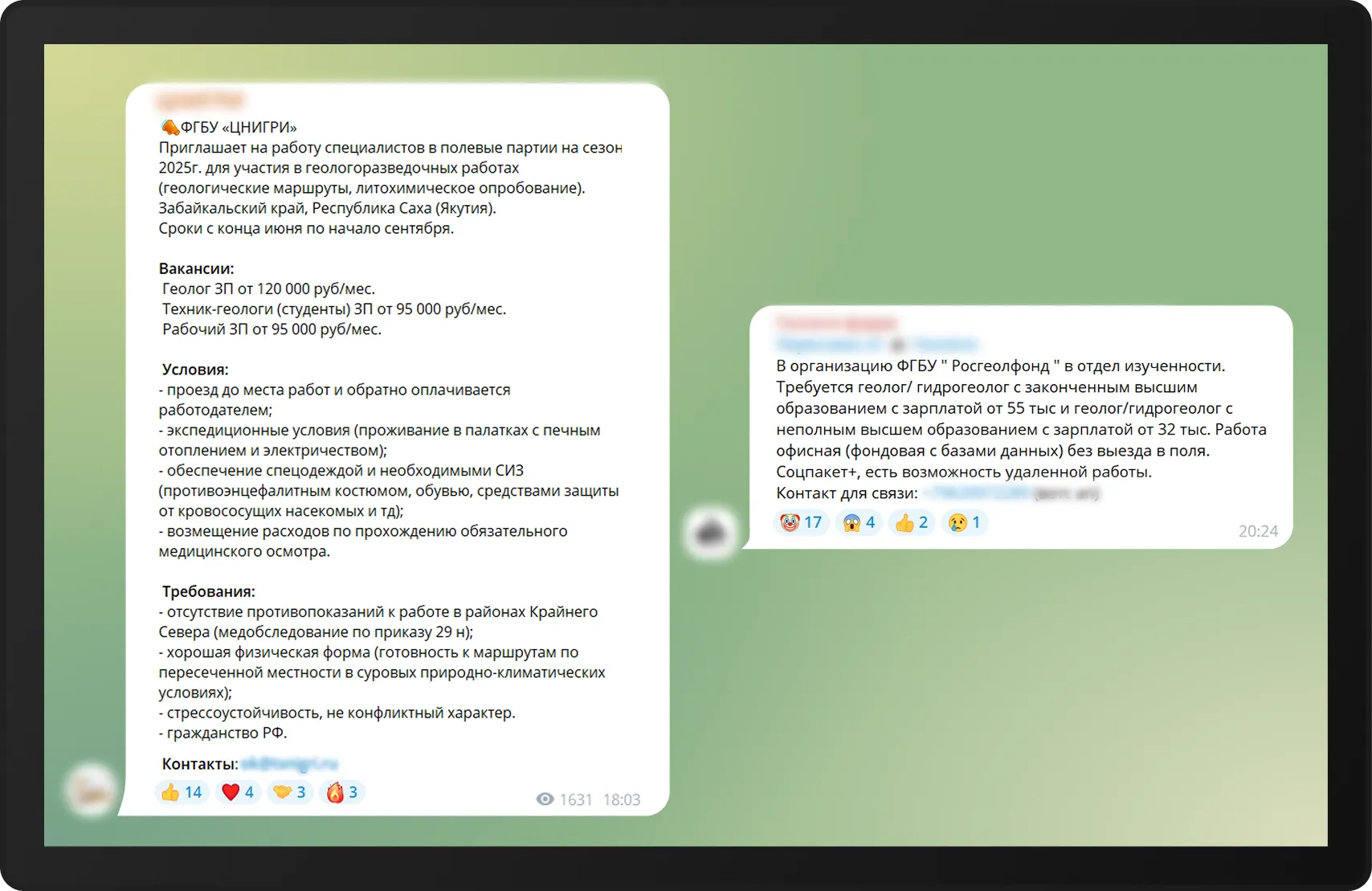
Scientific institutes (for example, VIMS, TsNIGRI) pay modestly – 30,000–50,000 rubles per month. But they offer stability, a social package and the opportunity to do science, publish, and go on expeditions. This is the path for those who want to build an academic career.
State geological exploration enterprises (like Rosgeologiya and its subsidiaries) pay a little higher – 50,000–100,000 rubles, especially for rotational or field work. Here, too, official work, business trips and a steady flow of projects are often offered – although the salary level is still lower than in the private sector.
Contractors in geological exploration (for example, Open Geology, Geotechconsulting, service companies) offer 70,000–150,000 rubles, but most often for temporary or seasonal employment. This is a convenient format for students, beginning professionals and those between projects.
Large mining companies – Polymetal, UMMC, Nordgold – pay the most: from 150,000 to 500,000 rubles, and in some cases – even higher. Chief geologists and specialists with rare skills (3D modeling, JORC, exploration planning) can earn up to 700,000–1,000,000 rubles per month. The package includes bonuses, voluntary health insurance, payment for housing, flights and meals.
Specialization also influences
The salary of a geologist also depends on the type of minerals.
- Gold and other precious metals — 150,000–300,000 rubles
- Copper and Nickel — 120,000–250,000 rubles
The higher the price of the resource and the more complex the development conditions, the more generous the offer.
⚠️ Important: In this article we consider only geologists in the field solid minerals. Oil&Gas and engineering surveys are other areas that require separate review.

Geological exploration (GRR): how much do geologists earn in the fields and in the office?
Salaries in geological exploration depend on experience, work format and region. The range is wide: from 70,000 rubles for students to 350,000 for experienced squad leaders.
Field romance: how much do field geologists and technicians get paid?
Field workers are fighters on the front line. From June to September they collect samples, describe sections, and help with drilling. They work in the taiga, in conditions where every day is an expedition. Most often, such specialists are hired by contractors for projects in Yakutia, Chukotka or the Amur region.
We described in detail how the work of geochemists in the field works: from the first trip to their rise to leadership. Read the article → “The path to a career: how to get into the fields of geochemists and what you can learn there”
Students and aspiring geologists often start with these types of jobs to get top spots on their resumes. Tents, trailers, mosquitoes, taiga and long shifts are part of geological exploration life. But how much do they pay for it? Technicians with minimal experience they can count on 110,000–125,000 rubles per month. Those who have more than two seasons in their work record – by 120,000–140,000 rubles. Average salary for an experienced field geologist can reach up to 160,000 rubles per month.

| Pros | Cons |
| Freshers with a degree in the fields earn more than their office counterparts. | Seasonal employment. After 2-3 months of work, take a break. |
| Invaluable experience: here you can learn how to take samples and work in a team. | Harsh conditions. Not everyone can live in tents or trailers with “semi-marginal people” (as one geologist put it). |
| Taiga, bonfires – romance and all that. | There are very few experienced specialists from whom you can learn something |
Many students go on practical training in the fields to get good money and invaluable experience.

Leading geologist: manages, considers, makes decisions
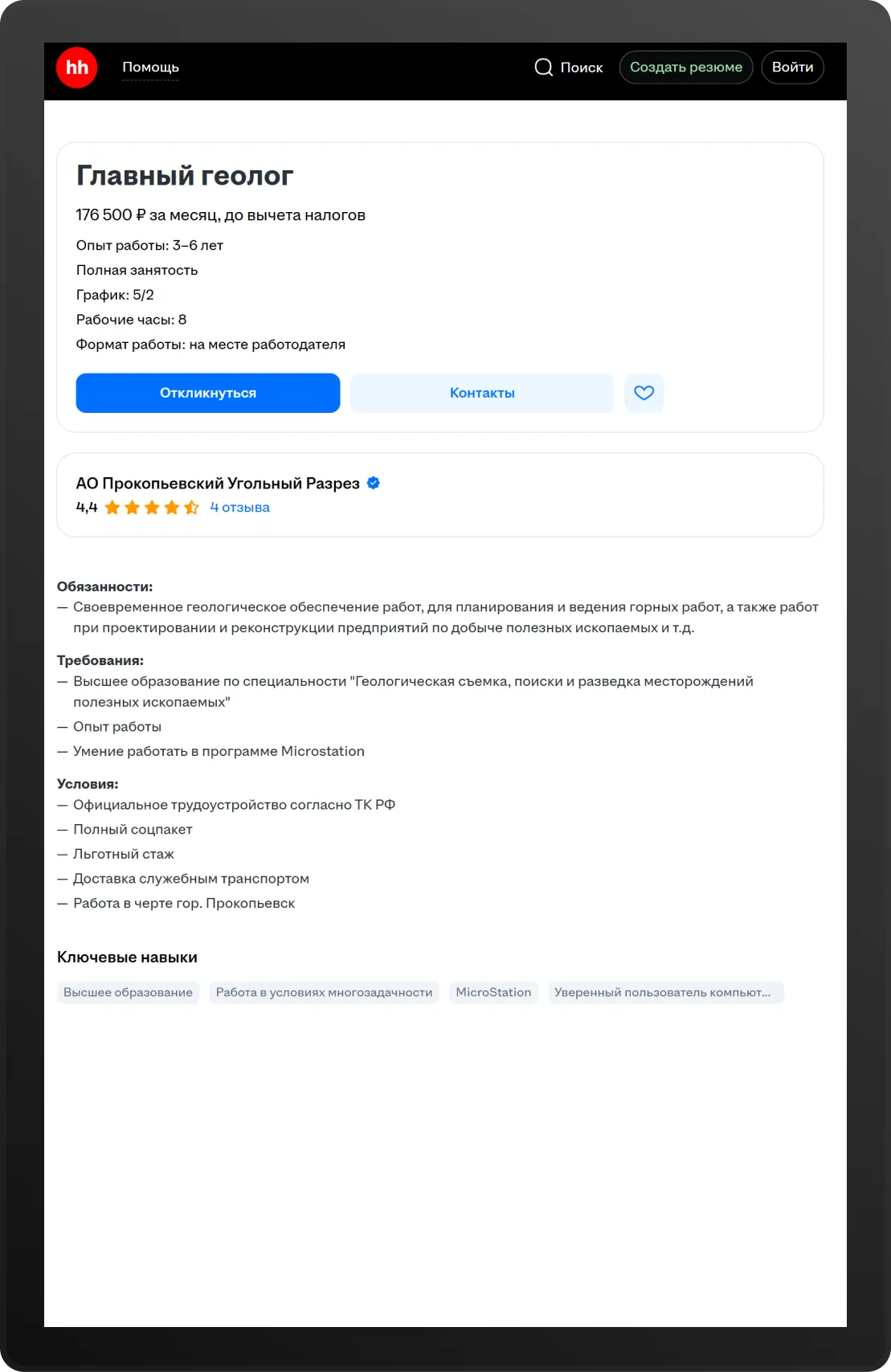
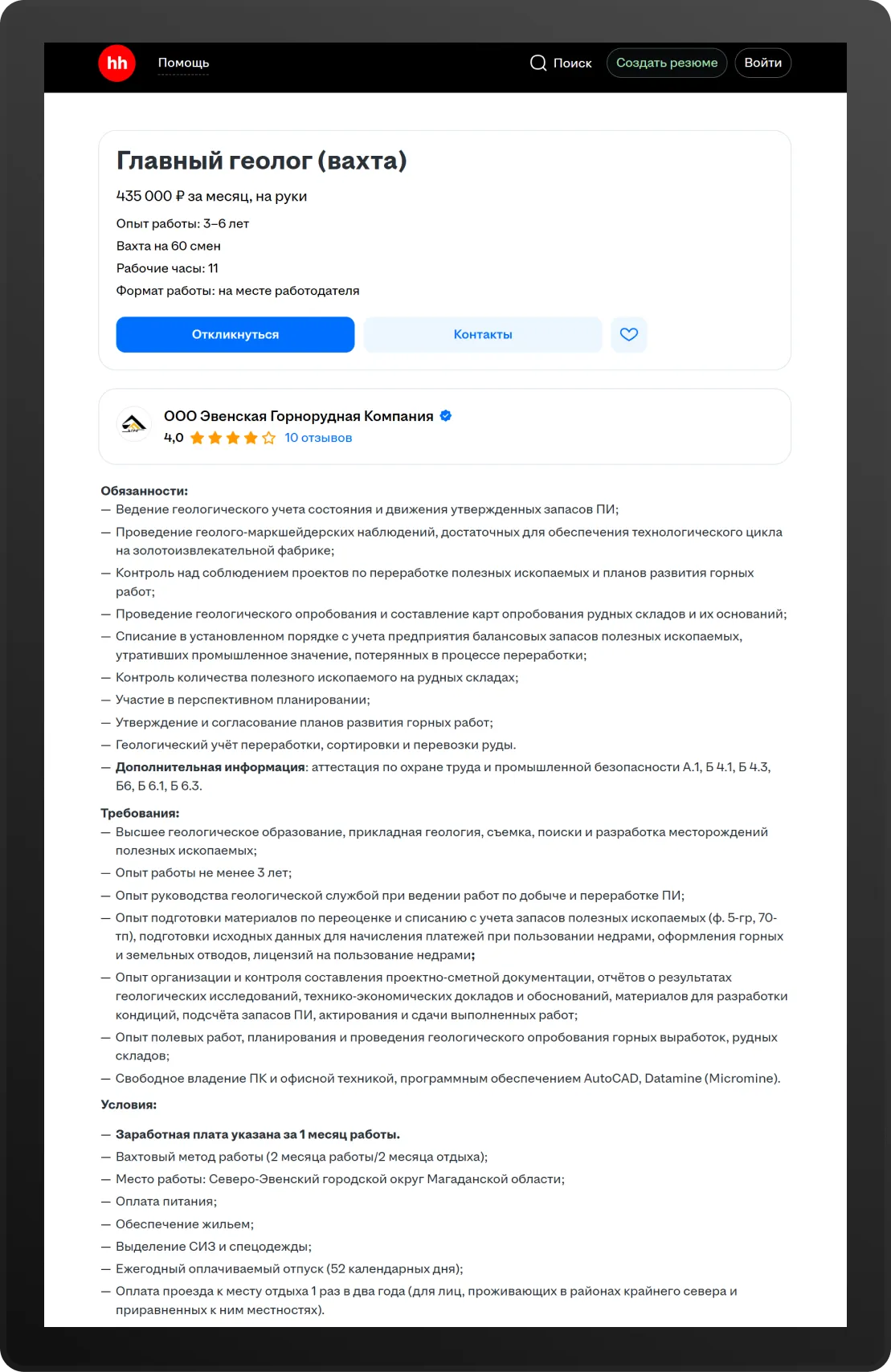
The lead geologist is a professional with a diploma and 3–6 years of experience who coordinates geological exploration at the field. He is responsible for ensuring that the company receives accurate and timely data on the progress of work and can make decisions based on them: continue exploration, change the approach or move to the next stage:
- plans exploration, compiles maps and sections;
- coordinates the work of drillers and field crews, monitors the schedule;
- distributes tasks, mentors newcomers;
- analyzes data, counts inventories, prepares reports for management.
How much does a geologist earn in this position? It all depends on the region and company. In the Khabarovsk Territory, a leading geologist is paid from 130,000 to 200,000 rubles per month. Format: watch. Accommodation, meals and flights are at the expense of the employer. But the workload is also serious: shifts in the fields are exhausting, especially if you are responsible not only for yourself, but also for the entire team..
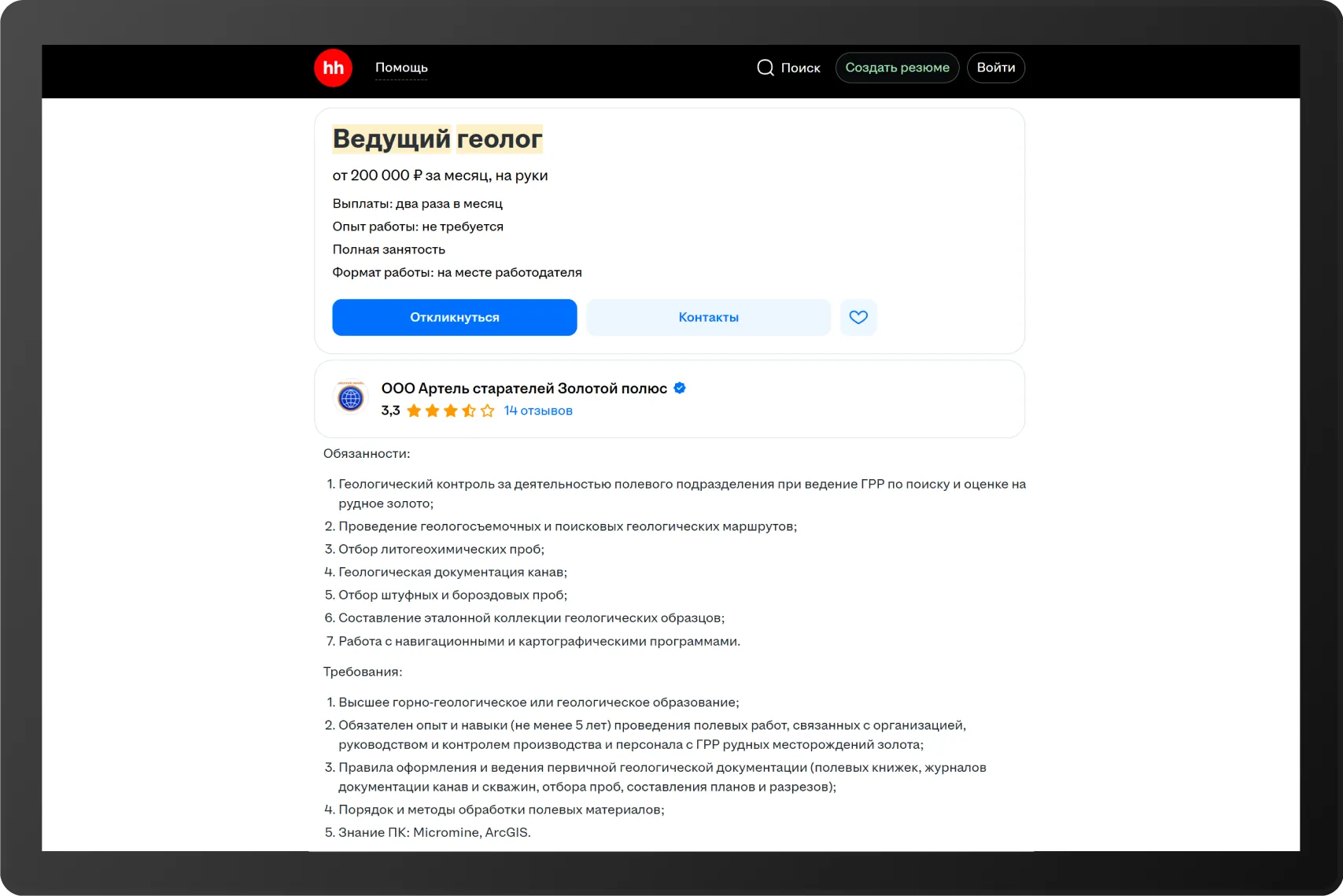
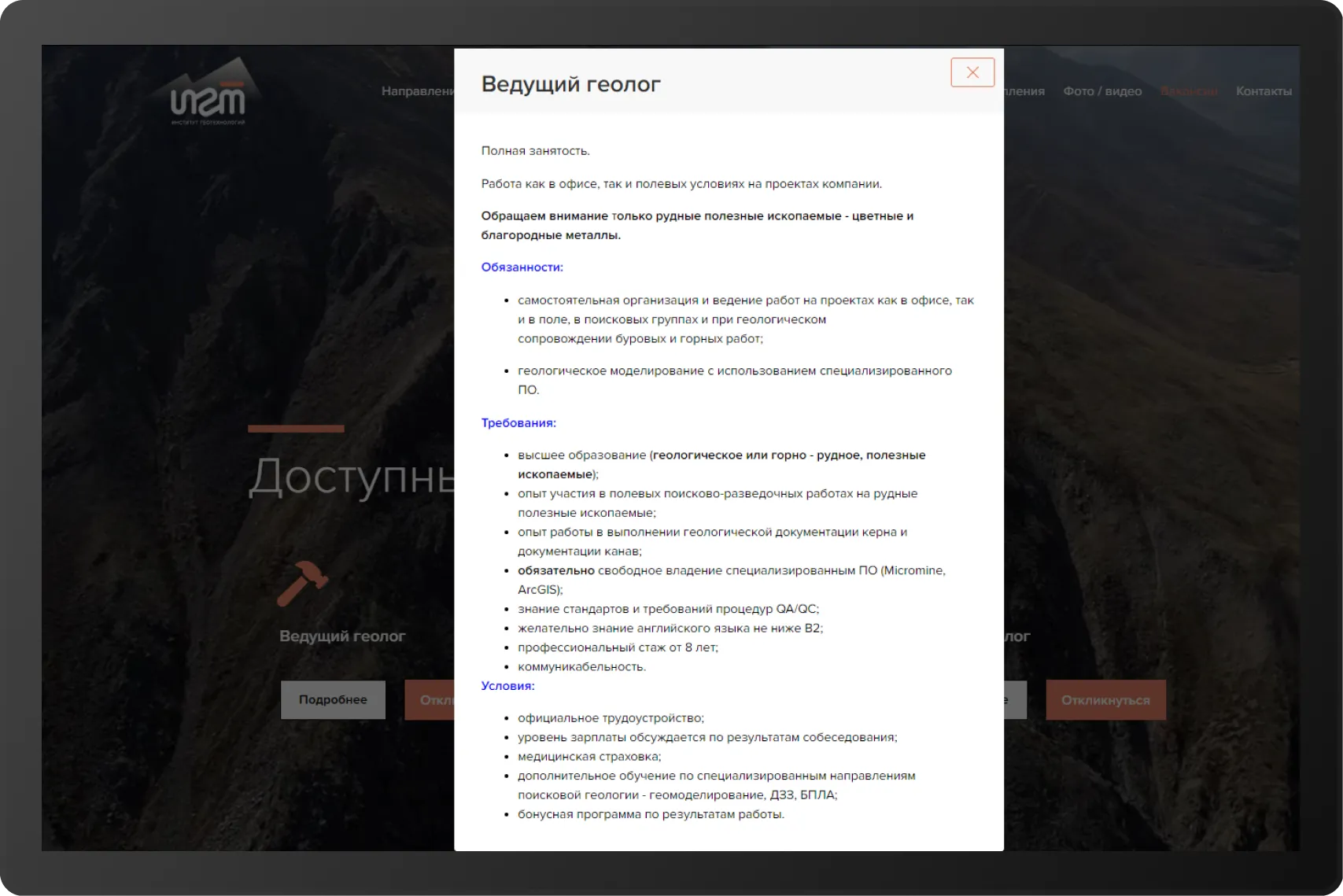
A leading geologist is not only an experienced specialist, but also a person with managerial thinking. He is responsible for organizing all geological exploration work: planning field trips, coordinating equipment and crews, distributing tasks, and monitoring compliance with deadlines.
At the same time, the emphasis is most often not on deep analytics or modeling, but on field management: so that the work goes smoothly, on schedule and without disruptions. The conditions are classic: the same tents, taiga and unpredictable logistics as the technicians. Only the level of responsibility is higher, and the pressure from management is more noticeable.

Closer to the cooler and technology: about geologists who work in the office
Desk geologists, licensing specialists, and resource geologists process and analyze data from the field. They work in the office all year round, without seasonal breaks or shifts. Their tasks are different – from technical routine to a complex 3D model of the field.
Office geologist is a specialist who is engaged in the primary processing of field data: draws up documentation, enters samples into the database, prepares reports, draws sections and assembles minibuses. This is often the starting position in a geologist’s office work. The cameraman works in a comfortable 5/2 mode, sits in the office, and sometimes goes on business trips. In metropolitan companies, such specialists receive 100,000–120,000 rubles.
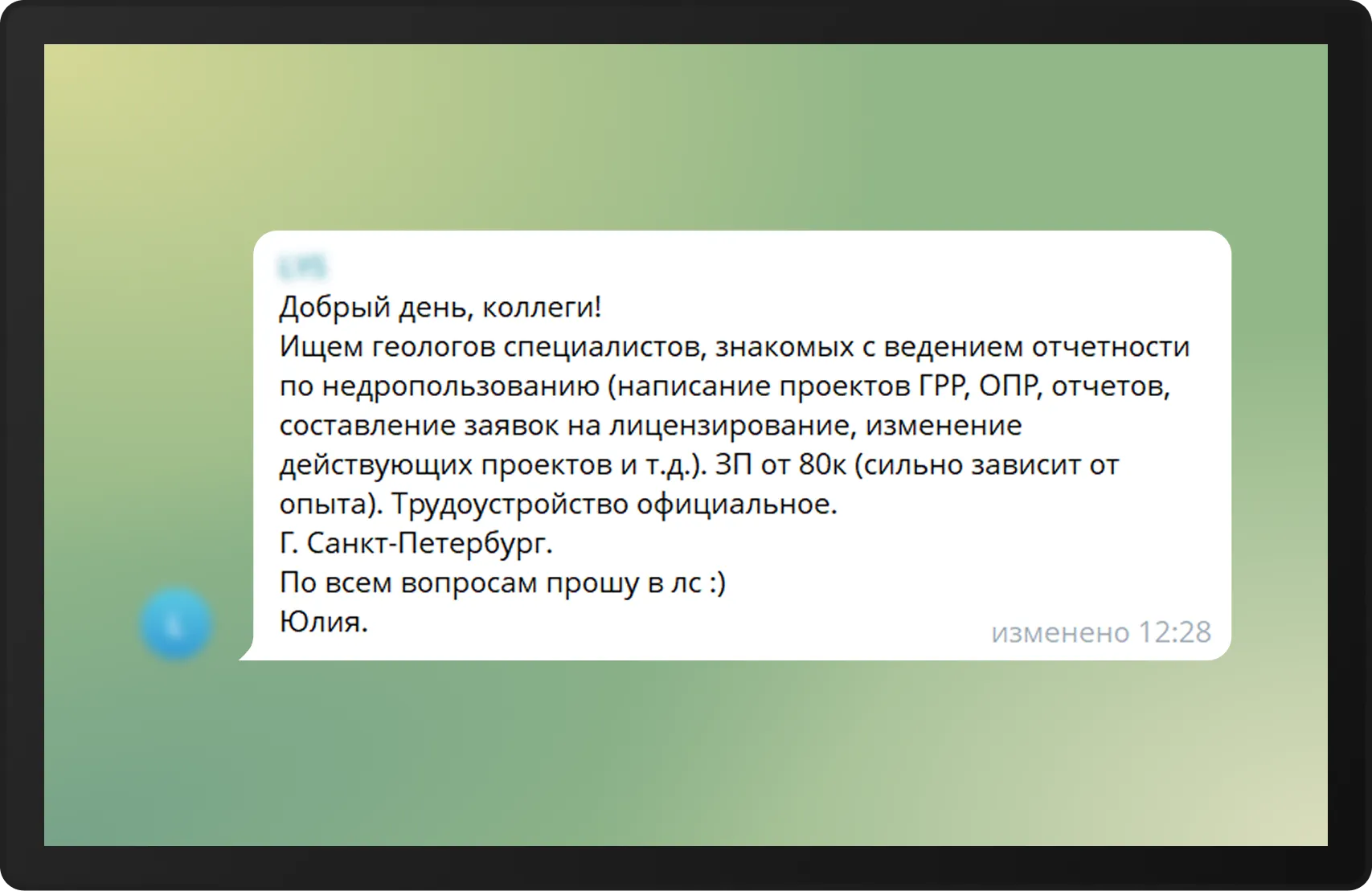
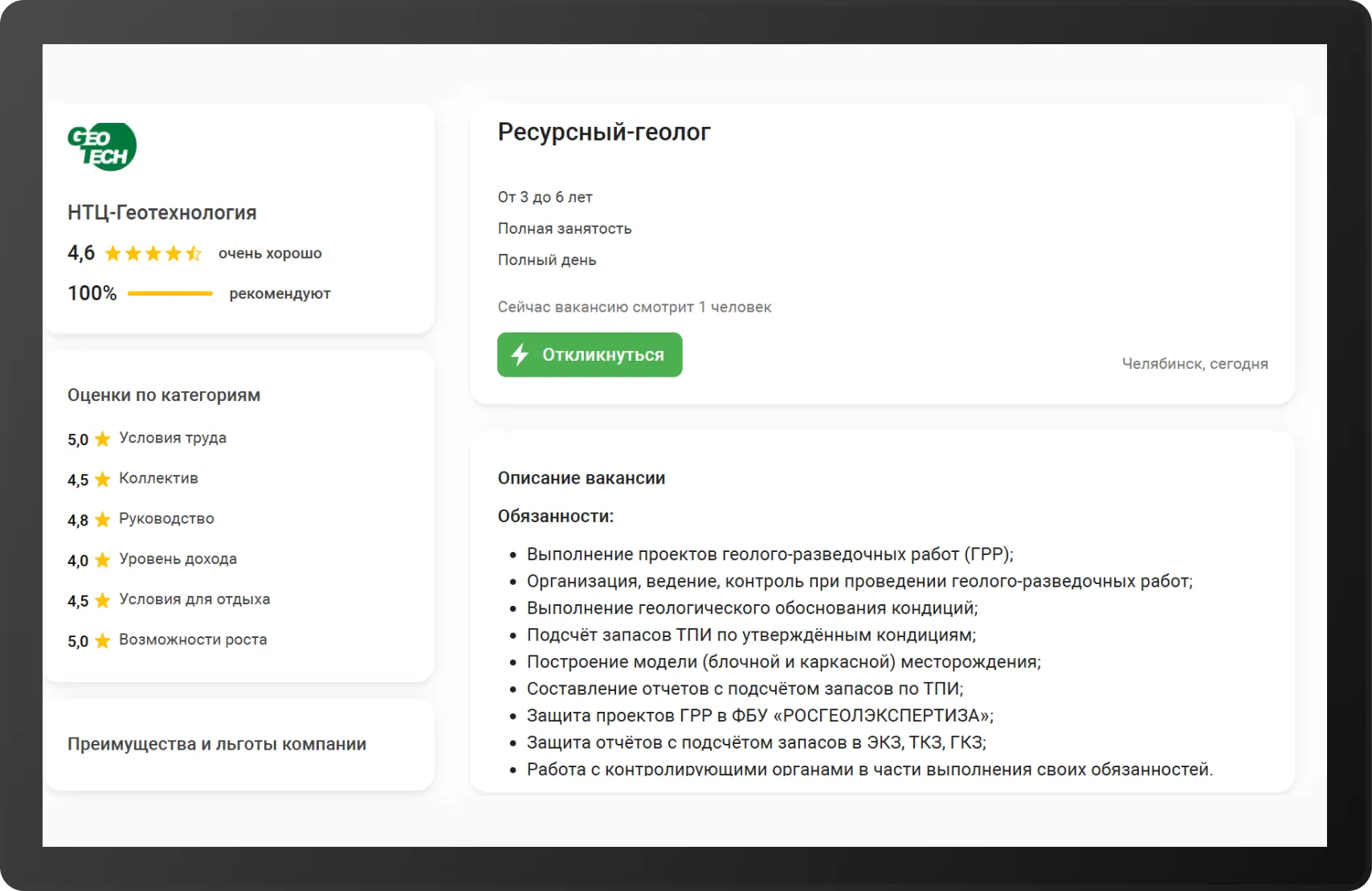
Resource Geologist – this is the next level. He develops drilling plans, maintains a geological database, builds 3D frame models of deposits, calculates losses and dilution based on data from surveyors, and participates in the certification of blocks. A resource geologist is responsible for reserves – both internal and those that need to be protected before the state commission or investors. This position requires strong knowledge of specialized software and an understanding of mining operations. Salaries of such specialists usually start from 150,000 rubles and above.
In short: office geologist collects and prepares, resourceful – analyzes and responds.


How much do geologists earn from mining?
When reserves are confirmed and the field goes into development, a new chapter in the life of a geologist begins. The romance of the field gives way to production routine – but the salaries here are often higher. The mining departments employ other specialists: local geologists who are on duty at the mine, and chief geologists who are responsible for the entire production unit – from adjusting the model to monitoring the quality of production.
Local geologists: on-site control
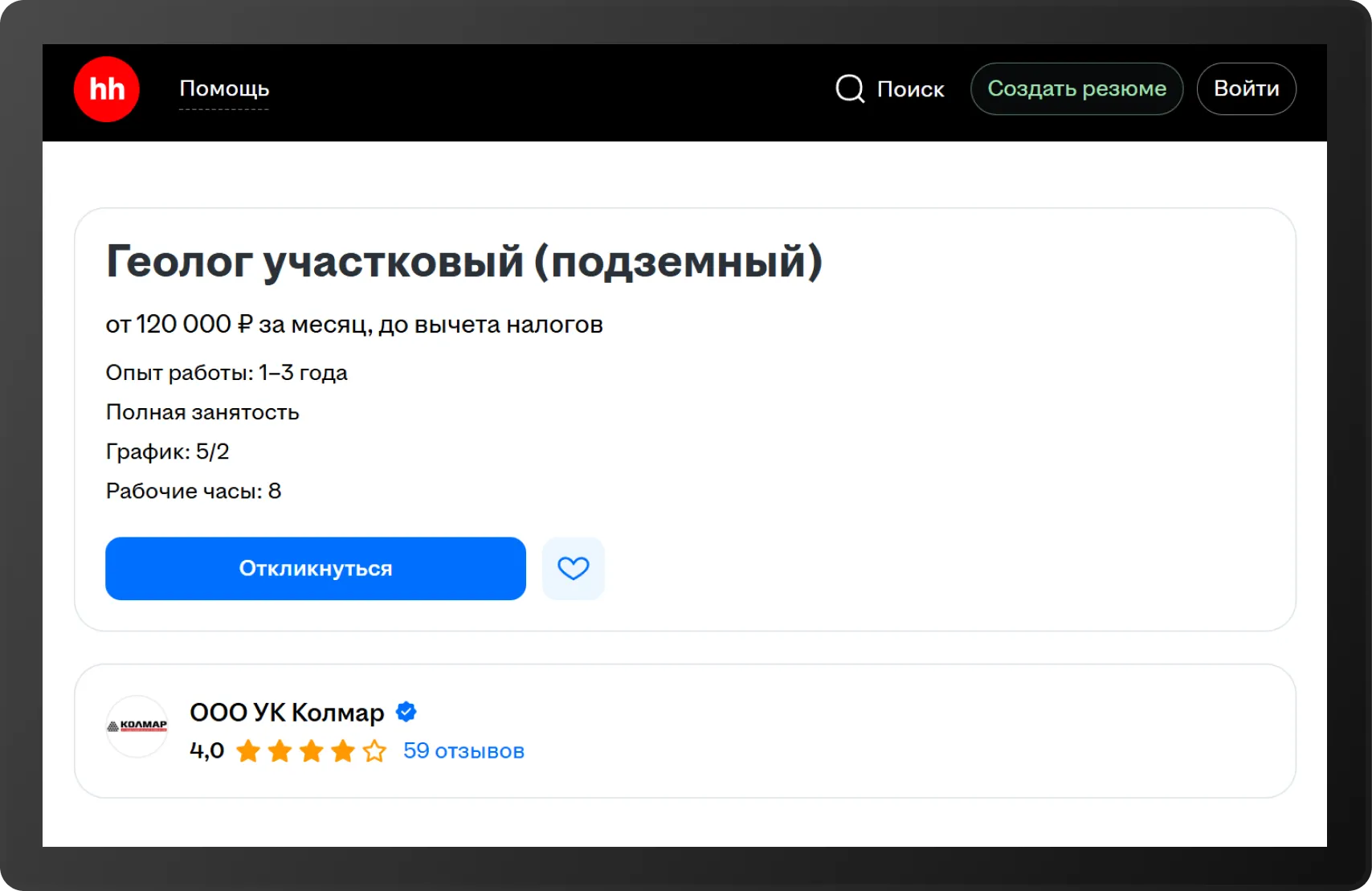
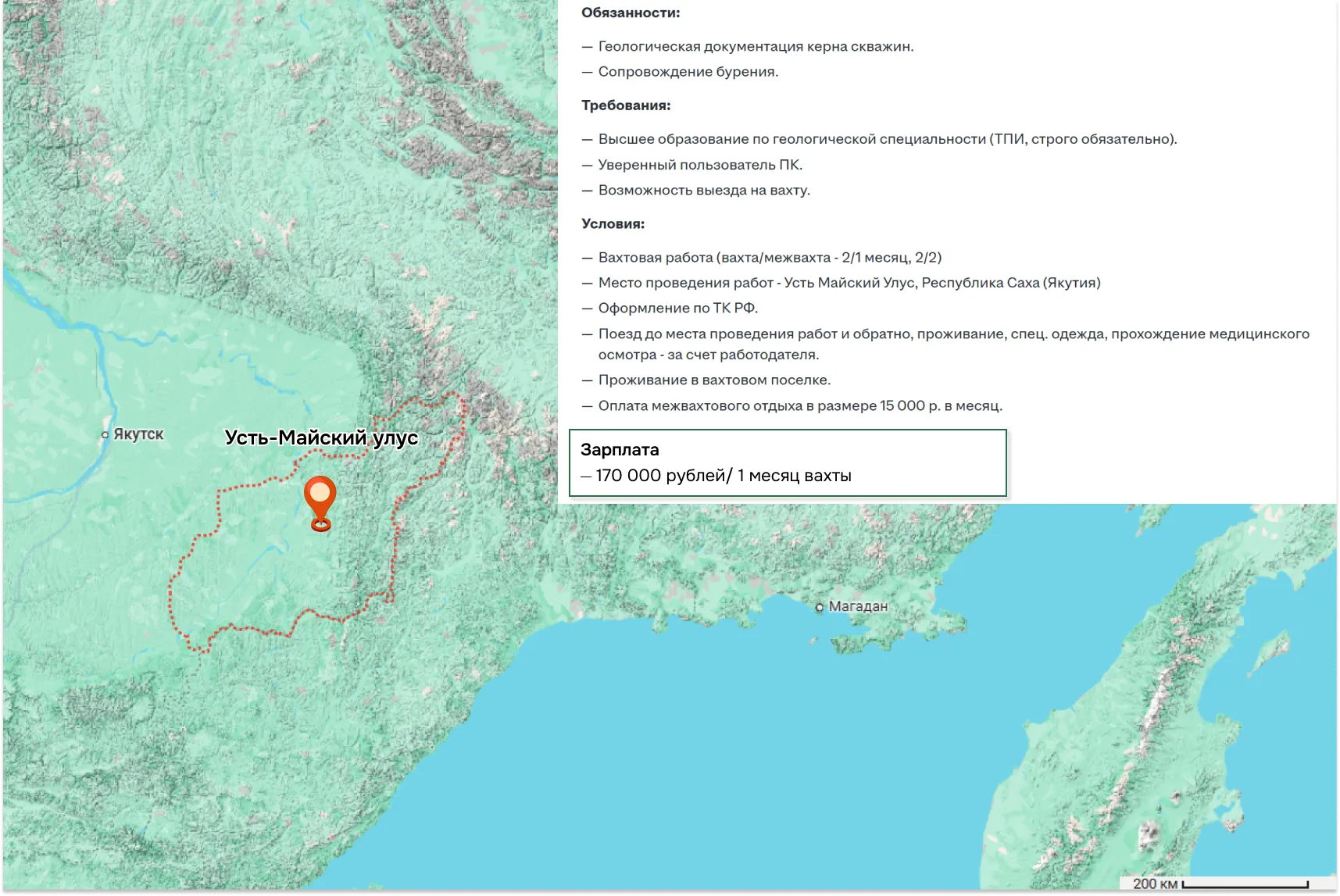
A specialist works in a mine or mine. This is usually shift work, often in the harsh conditions of Yakutia or Chukotka. In one of the vacancies, a geologist is required from a mining and geological company for a site in Yakutia – to supervise drilling and maintain documentation. Schedule: two months of shift, then 1–2 months of rest. Salary – 190,000–200,000 rubles before taxes, that is, approximately 170,000 rubles per shift plus 15,000 rubles per shift between shifts.
| Pros | Cons |
| Good living conditions: rotational camp, canteen, bathhouse. | Income must be calculated taking into account the shift between shifts – on average it is lower than what is paid for the shift itself |
| Stability. The specialist knows exactly where he will work and how long the shift lasts. | No romance. Every day you work in the same place. |
Chief geologists: steer and answer
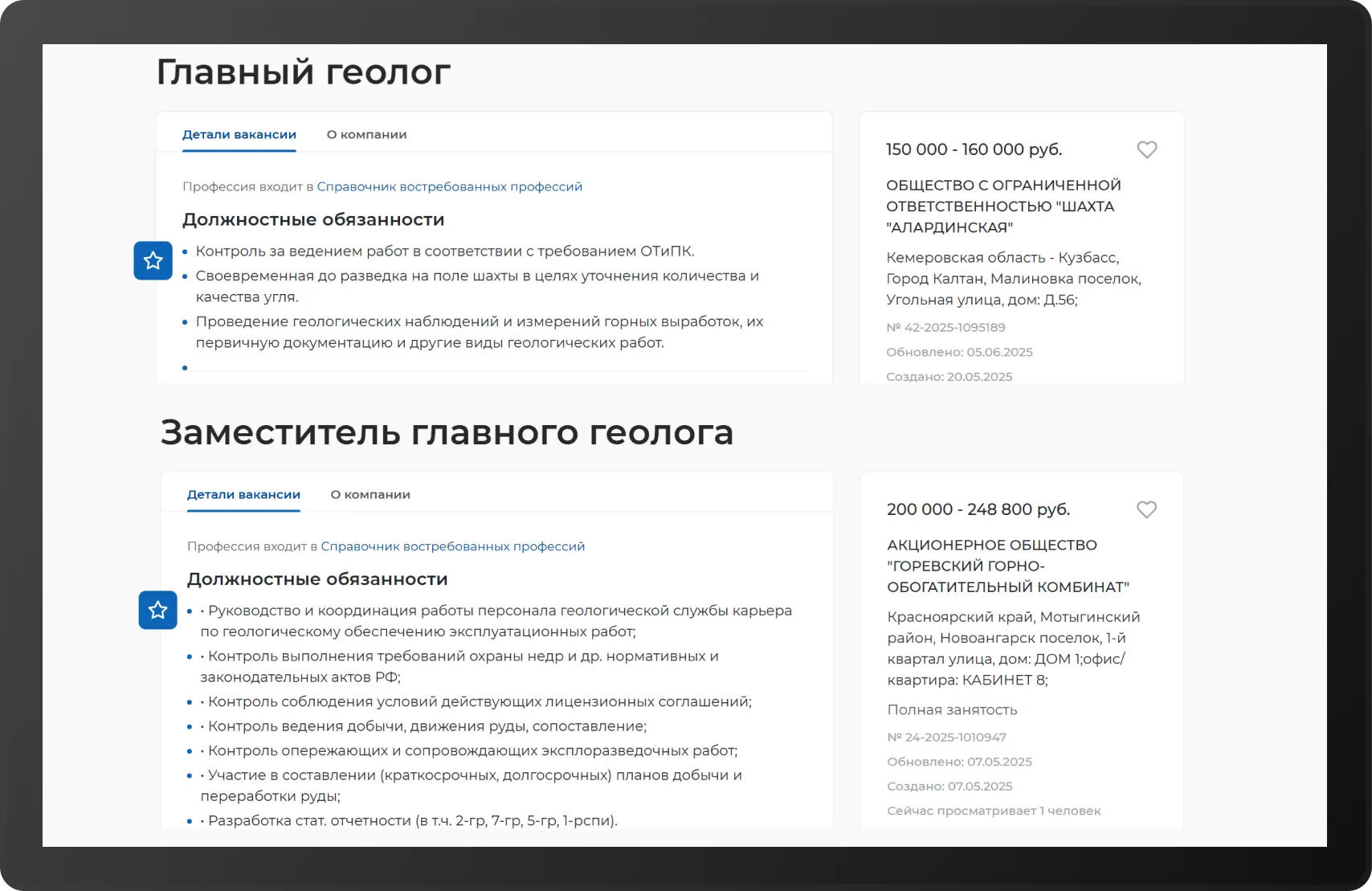
The chief geologist is a manager who is responsible for the entire cycle of geological work at the enterprise. He makes sure that production goes according to plan, adjusts the field model, manages the team and is responsible for reserves. Without experience, specialized knowledge and nerves of steel – no way. You can work either on a rotational basis or in a regional office.
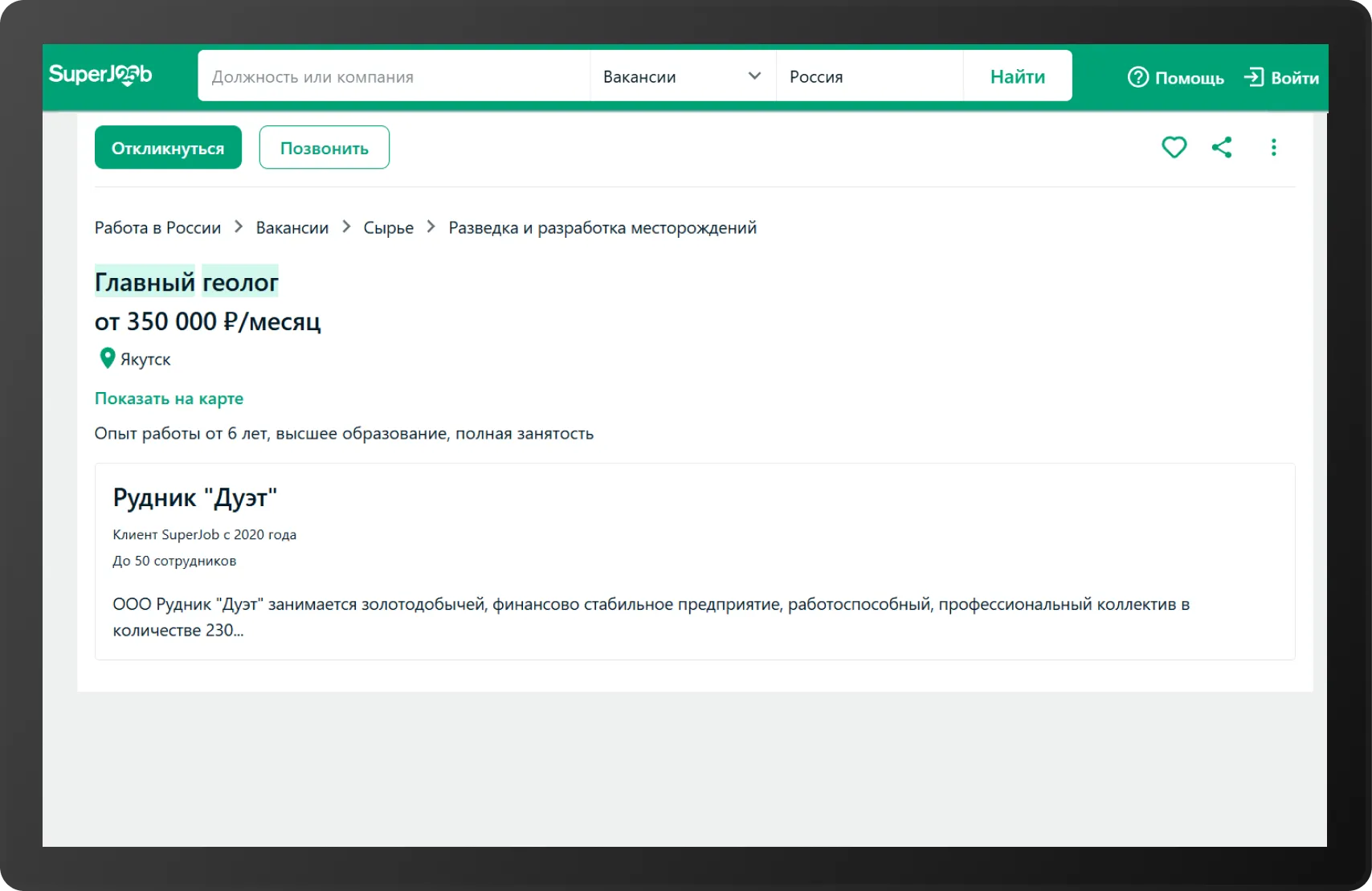
200,000–700,000+ rubles per month – this is what chief geologists receive, according to data from specialists’ chats. The salary level depends on the company, region and scale of work. For example, one of the UMMC geologists was offered 200,000 rubles – this is below the market. And at the other end of the spectrum there is a vacancy at the Mnogovershinnoe mine with a salary of 700,000 rubles per month.
| Pros | Cons |
| High income in large companies. | You need many years of experience, knowledge of standards, and leadership qualities. |
| Prestigious position at the top of the geological hierarchy = bonuses and respect. | Huge liability: a mistake in calculations or plans can cost millions. |
| You can decide how production will go and communicate with top managers | Competition. We need to wait until the chief geologist leaves, but he is in no hurry. |
Average salary of a geologist in scientific institutions
If the field is an adventure and the mine is a pursuit of profit, then scientific institutions are a quiet laboratory. Geologists at VIMS, TsNIGRI, the Karpinsky Institute and other scientific centers explore deposits, analyze rocks, draw up maps and publish articles. Sometimes they go on business trips, but more often they work in offices.
Salaries in science are much more modest than in mining companies or geological exploration. Most often, geologists work here out of an interest in science and a desire to contribute to fundamental knowledge. However, there are exceptions – in institutes with applied projects or international grants, salaries may be higher than the industry average.
“Grants are almost the basis of making money in science, especially if a scientist wants to engage in cutting-edge research. Without them, the laboratory budget is only enough for small salaries. With grants you can afford new equipment. For example, a one-time grant for a scientific article can bring 50 thousand rubles – this is like a prize for good work. And large grants, like those given by the Russian Science Foundation, reach tens of millions. They are already being sent to multi-year projects. I follow my foreign colleagues – in Europe, America, Canada, grants are generally the basis of scientific life. Everything is moving towards this for us too.”
Gleb Zagorsky,
engineer-geophysicist of the State Scientific Center of the Russian Federation AARI,
expert in ionospheric research
| Pros | Cons |
| Stability. Working in institutes means official registration, a social package and a predictable schedule. | Low salary: 30,000–50,000 rubles – this is less than field technicians (70,000 rubles) or couriers in Moscow (90,000–100,000 rubles). |
| Scientific growth. You can publish articles, participate in conferences and build an academic career. | Competition. It is difficult for beginners to get into good positions. This is a job for those who like to understand the intricacies and share knowledge with others. |
| Combination. The ability to alternate desk work with field research without losing touch with practice. | Limited income growth. To get paid a lot, you need to publish. |
“If a scientist is passionate about science and writes many significant articles, then he can earn at the level of deputies in the Duma. There are living examples. In geology, as elsewhere, the rule is simple: those who work and achieve results receive high bonuses. More publications, more money – it’s as simple as that.”
Taras Panikovsky,
Candidate of Geological and Mineralogical Sciences,
Associate Professor, Murmansk Arctic University
What’s the result?
If you want to earn big, get ready for shifts in Yakutia, Chukotka or Magadan. There, field geologists receive 130,000–350,000 rubles, district geologists – 120,000–270,000, resource geologists – 100,000–200,000, and chief geologists – from 180,000 to 1,000,000 rubles per month. High salaries compensate for the remoteness, cold weather and 12-hour shifts.
Office positions in Moscow, St. Petersburg or Yekaterinburg are about stability: 80,000–150,000 rubles, 5/2 schedule, warm office and social package. In scientific institutes it is more modest: 30,000–50,000 rubles, but with active publications you can count on grants and prizes.
Resource geologists and leading specialists often work in a mixed format: part of the time in the office, part of the time on business trips. There is less taiga mud, income is 100,000–180,000 rubles.
The Far East and Siberia are about money. Ural is about a calm rhythm. Megacities are about comfort. Where are you now? How much do you earn? Let’s discuss how the geological labor market works.
The material was prepared with the support of the Russian Ministry of Education and Science as part of the Decade of Science and Technology