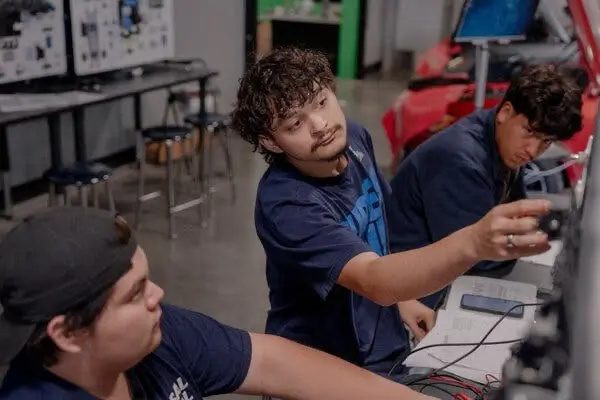
More young Americans are swapping lecture halls for workshops and construction sites. According to The New York Times, Generation Z is taking a pragmatic view of career planning, weighing the risks of student debt, AI-driven automation of office jobs, and strong demand for workers with hands-on technical skills. Careers such as electrician or welder are increasingly becoming deliberate first choices rather than fallback options.
The numbers point to a clear trend. According to the National Student Clearinghouse, enrollment at public colleges specializing in vocational education increased by nearly 20% between 2020 and 2025. At the same time, enrollment in manufacturing training programs and private trade schools has continued to rise.
The strongest interest is in occupations that remain difficult to automate. Electricians, welders, automotive technicians, HVAC specialists, and power grid maintenance workers are widely viewed by young people as being relatively resistant to disruption by artificial intelligence. Their reasoning is straightforward: these jobs remain in steady demand and cannot easily be replaced by algorithms.
The economics are equally compelling. A four-year university degree in the United States can cost as much as $200,000, while most vocational training programs cost around $25,000. Trade school graduates can begin earning immediately after receiving their certification instead of spending years searching for a job that matches a university degree.
Despite these advantages, social perceptions remain a barrier. A Jobber survey found that 71% of Gen Z respondents believe vocational education is viewed as less prestigious than a university degree. Only 7% of parents say they hope their children will pursue careers in the skilled trades. Yet labor market realities tell a different story. According to Bring Back the Trades, the United States could face a shortage of approximately 1.4 million skilled trade workers by 2030 as experienced workers retire and infrastructure projects continue to expand.
Experts argue that this shift does not represent a rejection of higher education but rather a rational reassessment of career opportunities. At a time when AI is beginning to threaten even software development jobs, the ability to repair a transformer or weld a pipeline may prove to be a more resilient investment than another humanities degree.
Generation Z is increasingly making career decisions based on financial realities and long-term job security. While many parents still envision university graduation ceremonies, their children are choosing hard hats, technical skills, and stable incomes. Ironically, the rise of artificial intelligence may be restoring the prestige of skilled trades.
Source: The New York Times
Image: The New York Times