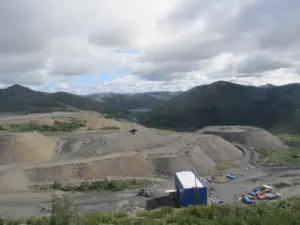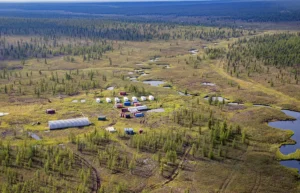
Siberian regions are tightening policy in the field of gold mining. The authorities intend to significantly reduce the volume of placer gold mining, citing serious environmental damage. The decisions will affect key gold mining areas.
The Kuzbass government plans a sharp reduction in production volumes. Already in 2026, the figure will decrease by 60% compared to the expected results in 2025. Next year the reduction will continue, and by 2028 production will be only 253.9 kg. Such measures are consistent with the position of the governor, who has consistently opposed placer mining.
In the Altai Territory the situation is developing according to a similar scenario. The Legislative Assembly is preparing an appeal to Rosnedra with an initiative to introduce a moratorium on licenses for gold miners. Six districts may be subject to restrictions, including Togulsky, Zarinsky and Soloneshensky.
As the chairman of the regional parliament, Alexander Romanenko, explained, this measure is intended to draw the attention of the federal authorities to the large-scale damage that open-pit gold mining causes to the environment. Not only the environment suffers, but also the tourism industry of the region.
The problem is that companies often ignore land reclamation obligations. As a result, agricultural land is destroyed and rivers are polluted. Prominent examples were cases where mining companies paid multimillion-dollar fines for environmental damage.
Similar processes are observed in the Far East. In the Amur region, prospecting licenses for placer gold have not been issued for several years. The region’s authorities attribute this to increased violations of environmental standards by subsoil users.
Thus, a new environmental policy in the gold mining industry is being formed in Russia. Regions are increasingly limiting the development of placer deposits in an effort to preserve natural resources for future generations. This could significantly change the country’s gold mining map in the coming years.
The material was prepared with the support of the Russian Ministry of Education and Science as part of the Decade of Science and Technology.
Source: @nedradvnews
Photo: sibirnews.ru