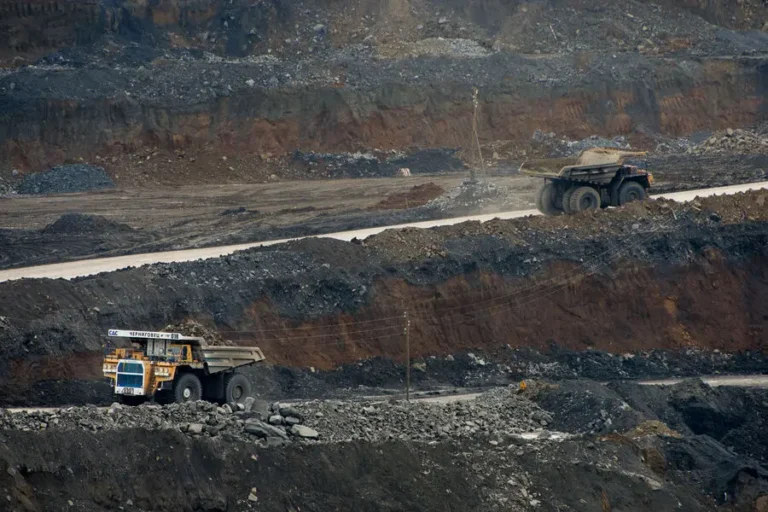
At Russian Energy Week in Moscow, Kuzbass Governor Ilya Seredyuk presented the “Data Valley” project. It envisions locating data centers and artificial intelligence laboratories in mothballed open-pit coal mines up to 300 meters deep. Coal-fired power plants would supply energy to the cluster. The target capacity is 10–15 gigawatts of IT load.
The authors of the idea are betting on the natural conditions underground. The coolness and groundwater are supposed to cool servers without energy-intensive air conditioning. Burial and camouflage would provide protection from drones: empty cells offer physical security, airtightness, thermal insulation, and seismic resistance, while a grass-covered roof rules out detection from the air. For power supply, the proposal is to build thermal plants with supercritical coal combustion. The stated efficiency is 42–45%, with dust, SOx, and NOx cleanup of 99%, 99%, and 90% respectively. The project promises up to 40,000 well-paid jobs for a region dependent on coal mining.
Kuzbass indeed remains the country’s coal core: since the start of the year, the region has accounted for about 45% of Russia’s total output. It has 36 open pits, providing 70% of the region’s production. The region supplied 48% of Russia’s coking coal and accounted for 53% of total processing volume.
However, the idea has weak points. Today, up to 85% of Russia’s commercial server capacity is concentrated in Moscow and St. Petersburg. That is also where customers, engineering talent, communication hubs, and ready infrastructure are located. Kuzbass is thousands of kilometers away from them, faces a shortage of data center specialists, and building large facilities would require additional investment in power and telecommunications. For cloud services, distance and latency are critical.
Challenges common to the industry are also added: the high cost of borrowed financing, lengthy approvals, sanctions restrictions, and security concerns. The cost of building a modern data center in Russia is estimated at RUB 1.2–1.3 billion per megawatt of IT capacity, with payback stretching to eight or nine years.
“Data Valley” looks like an attempt to solve two problems at once: give a coal region a new market for its output and find sites for digital infrastructure. But without proximity to customers, skilled staff, and well-developed connectivity, the project risks remaining a striking presentation rather than a working economy.
Source: TsDU TEK
Image: Alexander Kryazhev / RIA Novosti