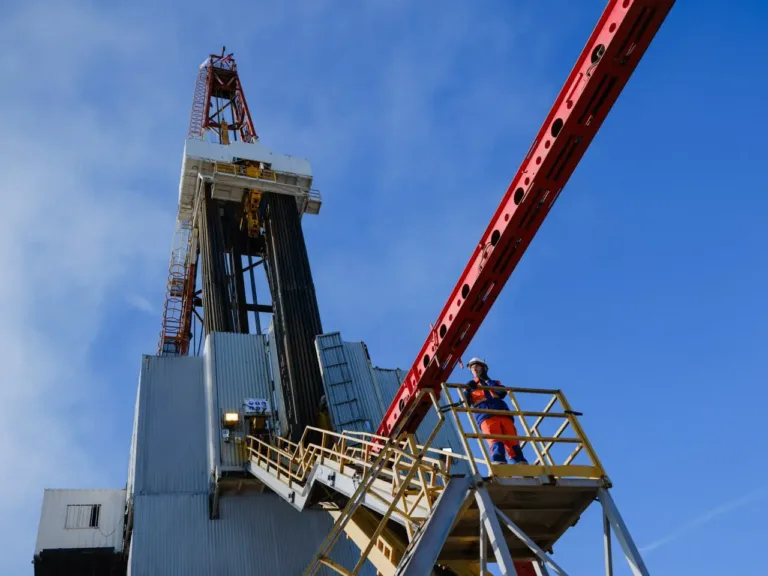
Gazprom Neft has begun commercial operation of Russia’s first robotic drilling complex designed specifically for onshore use. The system has been deployed at the Chona group of oil fields in Eastern Siberia. Until now, automation technologies of this level had been used primarily on offshore drilling projects.
The key engineering innovation of the new rig is the replacement of traditional hydraulic systems with electric drives. This approach addresses one of the most persistent challenges of drilling operations in the Far North.
At the heart of the robotic complex are two three-axis manipulators that perform tripping operations, including assembling, disassembling, and connecting drill pipes. These tasks were previously carried out manually by drilling crews. Working with heavy equipment in the rig’s high-risk zone, especially under extreme winter conditions, has always involved significant safety hazards. The robotic system completely removes personnel from the immediate vicinity of the wellhead during pipe handling operations, eliminating much of the human factor associated with workplace accidents.
One of the main challenges in developing an onshore robotic system for Siberia was the harsh climate. Conventional drilling rigs typically rely on hydraulic equipment. At temperatures of –40°C and below, hydraulic fluids become more viscous, seals lose flexibility, and hoses become brittle, increasing the likelihood of equipment failures and operational downtime.
To overcome these limitations, engineers from a consortium including Gazprom Burenie, Uralmash NGO Holding, and St. Petersburg-based Energotechnohub developed a system based on electric servo drives. Unlike hydraulic systems, electromechanical components are far less susceptible to extreme cold, require no complex heating infrastructure, and provide more stable performance—an essential advantage for continuous drilling operations.
The introduction of robotic drilling systems for Arctic and sub-Arctic onshore environments also represents an important step in Russia’s import-substitution strategy. Project developers describe the new complex as a fully domestic alternative to foreign drilling automation technologies.
Plans are already in place to scale up the technology. In 2026, Gazprom Neft intends to equip six additional drilling rigs in Western and Eastern Siberia with robotic manipulators. The expansion is expected to reduce reliance on manual heavy labor, improve operational safety, and enhance the economics of oil and gas production in challenging climatic regions.
Source: @neftegazchannel
Image: Gazprom Neft