Scientists from the Institute of Geology and Mineralogy named after. V.S. Sobolev SB RAS found that organic compounds play a key role in the formation of gold and silver deposits in Kamchatka. This discovery will help predict new deposits and expand the production of precious metals.
Researchers from the Institute of Geology and Mineralogy named after. V.S. Sobolev of the Siberian Branch of the Russian Academy of Sciences was the first to prove that organic compounds are involved in the formation of gold and silver deposits in Kamchatka. Previously it was believed that water and carbon dioxide play the main role in this process. New data will allow us to develop models for finding new deposits and expanding the production of gold and silver.
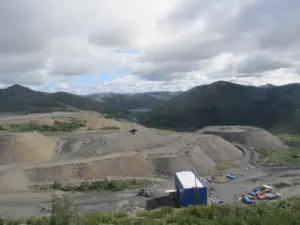
Scientists studied five epithermal deposits: Baranyevskoye, Rodnikovoe, Lazurnoe, Kumroch and Maletoyama. These deposits were formed at shallow depths due to hot aqueous solutions that penetrated through cracks in the rocks. Epithermal deposits play an important role in global gold production, providing up to 8% of its volume.
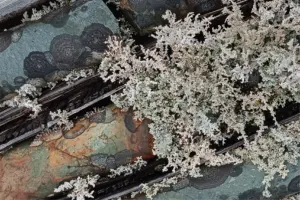
During the study, scientists analyzed about 50 samples of quartz veins containing microscopic cavities with liquids. Analysis showed that these liquids contain from 155 to 210 organic compounds. In addition to water and carbon dioxide, hydrocarbons, nitrogenous and organosulfur compounds were found in them.
“Organic compounds actively participated in the transfer of gold and other ore components in the form of organometallic compounds. Hydrocarbons are capable of accumulating and transporting significant amounts of silver, gold and other elements,” the scientists explained.
The data obtained will help create a genetic model of deposits, which will simplify the search for new deposits of precious metals. This discovery is of great importance for expanding the mineral resource base of Kamchatka and other regions.
Source: zolteh.ru