The planned gas export route to China has officially received a new name. Russia’s Energy Minister Sergei Tsivilev said the pipeline will now be called “Power of Baikal.” According to the minister, the new name was proposed by the president. Whether the rebranding will help move negotiations with Beijing forward remains unclear.
The announcement came during a discussion on the development of the Far Eastern gas transmission network. Tsivilev also spoke about plans to build a link between the Power of Siberia pipeline and the Sakhalin–Khabarovsk–Vladivostok gas pipeline. The interconnection is intended to unite Russia’s eastern gas routes into a single network.
Gas demand in the region is growing rapidly. Current requirements are estimated at 9–10 billion cubic meters per year, but could reach 34 billion cubic meters by 2035. The planned gas transmission configuration is intended to meet both domestic and export demand.
As for the renaming itself, there have been no public statements from Vladimir Putin on the matter. In official statements, the president has consistently referred to the project as Power of Siberia 2. The minister’s announcement therefore represents the first public appearance of the Power of Baikal name.
The project formally dates back to 2020. Its total length is estimated at approximately 6,700 kilometers, including around 2,700 kilometers on Russian territory. The original plans called for construction to begin in 2024 and be completed by 2029. In September last year, Gazprom signed a legally binding memorandum with its Chinese counterparts, but the project has not yet progressed beyond that stage.
The name change is more symbolic than transformational. For now, Power of Baikal exists largely on paper, while the key commercial agreement with China remains unsigned. The new name may refresh Russia’s negotiating position, but it cannot replace the most important element: a commercially viable agreement with Beijing.
Source: @nefte_baza
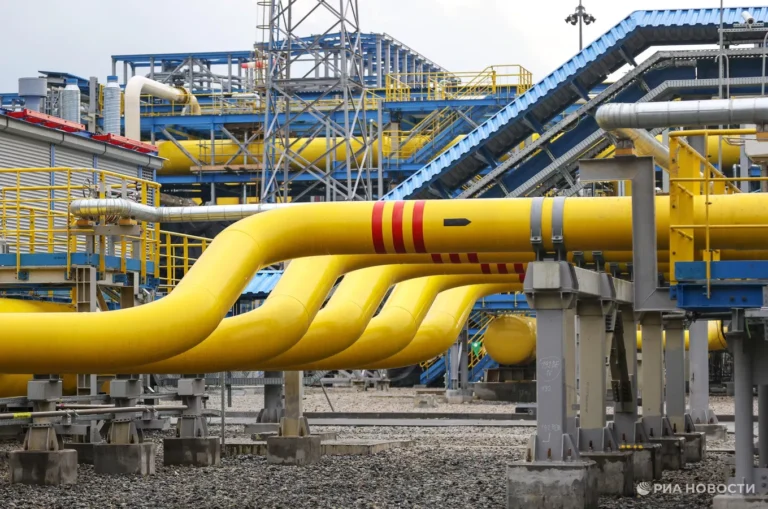
Image: RIA Novosti / Pavel Lvov