Have you ever wondered how gas from Western Siberia manages to quickly reach the boiler house in Volgograd, overcoming more than 3000 kilometers? There are industrial gas tanks – above-ground tanks made of steel – but their capacity is not enough to supply everyone.
Scientists have come up with the idea of pumping strategic reserves underground. Using the experience of Russian energy companies, we understand how underground natural gas storage works, what kinds of storage facilities there are and how they differ.
Gas storage in underground storage facilities: what is it and why is it needed?
An underground gas storage (UGS) is a natural or artificially created reservoir in the rock mass. Unlike gas holders, the role of the walls perform the breeds themselves. Tightness is created by the geological structure of the formation.
In any underground gas storage facility, gas is conditionally divide into two parts:
- buffer (or cushion) – remains in the storage constantly and maintains operating pressure in the formation;
- active – pumped in summer and then withdrawn in winter for delivery to consumers.
Key characteristics of gas storage in underground storage facilities:
- total capacity – the maximum volume of gas that the tank can hold;
- the volume of active gas is the real reserve to cover demand;
- maximum daily output – how much gas can be released on the coldest day.
In Russia, these indicators grew gradually. At the end of the 2000s, the volume of active gas in underground gas storage facilities was estimated at 60 billion m³, and the daily productivity was 600 million m³. At the start of the 2023–2024 season, stock increased up to 72.8 billion m³, and the maximum daily withdrawal – up to 860 million m³.
Read also, how to get into oil and gas without specialized education
How is underground natural gas storage organized?
At the heart of UGS located a natural or artificially created reservoir at a depth of several hundred meters to 1–3 kilometers. Most often it is created in porous sedimentary rocks, such as sandstones. Between their particles there is a microscopic space that can accommodate gas.
The top of the reservoir is covered by an impenetrable “lid” – clays, dense carbonates or salt-bearing strata. On the sides and bottom, underground natural gas storage is provided by either water or rock.
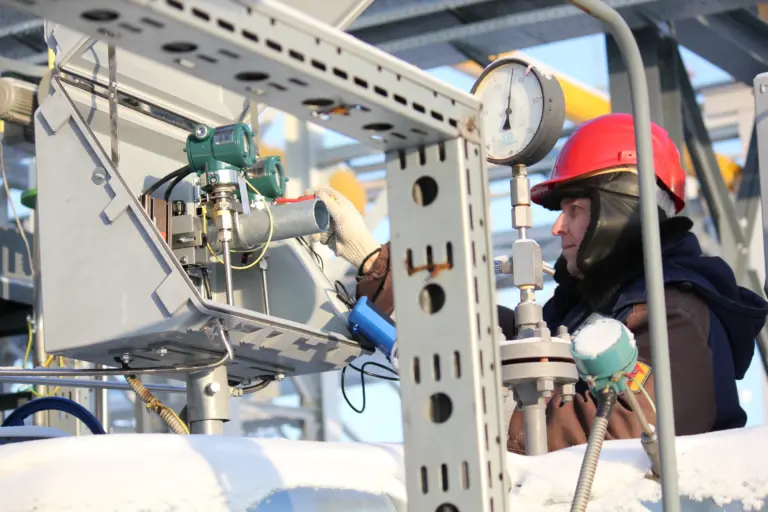
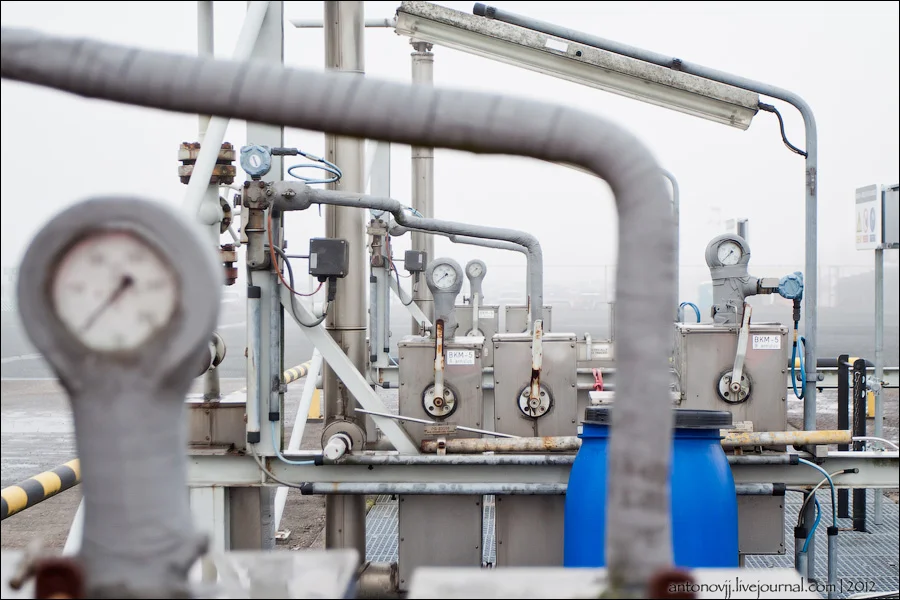
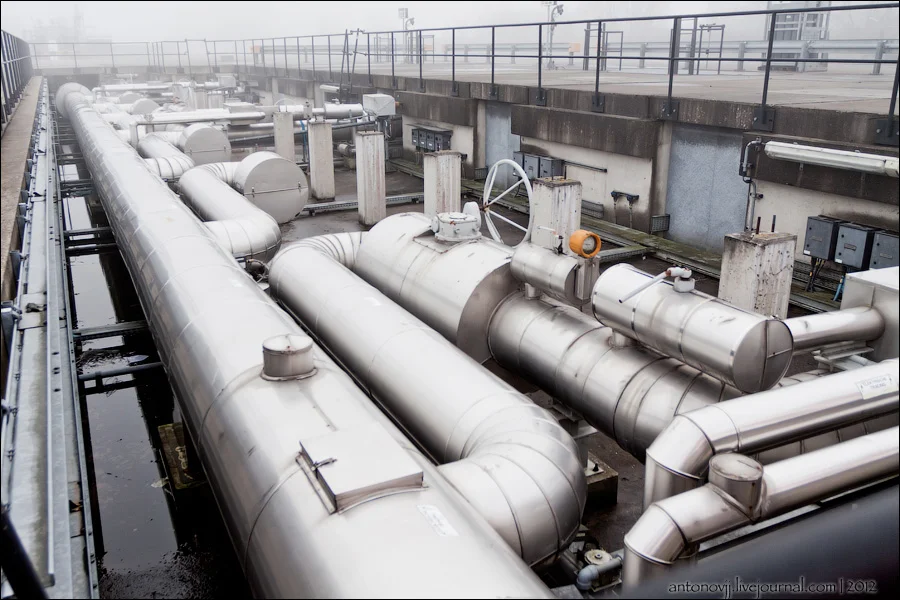
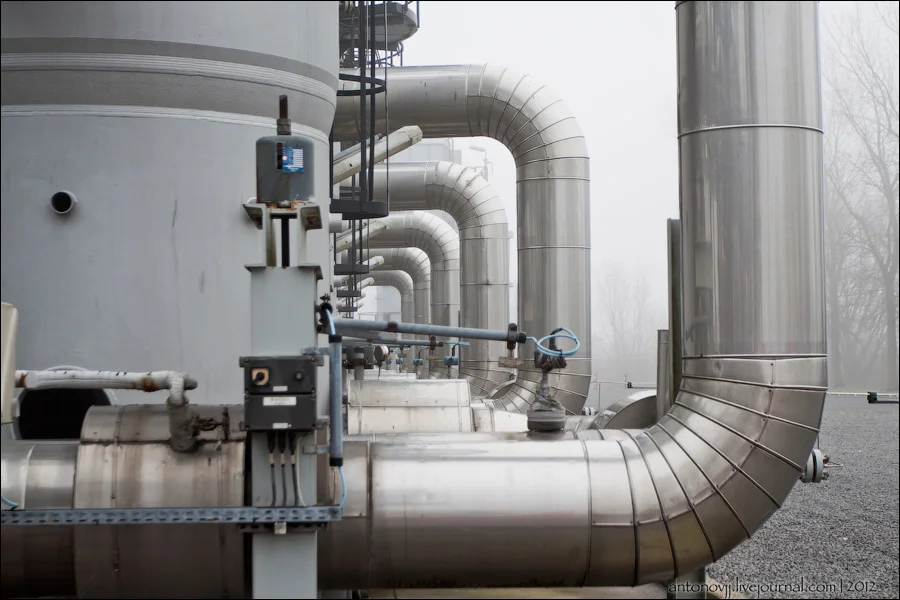
On the surface of a UGS facility looks as an industrial complex: compressor stations, well outlets, gas distribution points. In injection mode, compressors increase pressure and direct gas to an underground reservoir. In the extraction mode, the process goes in the opposite direction – the gas rises to the surface, undergoes cleaning, parameter control and enters the gas transportation system.
The same infrastructure works for both injection and extraction. This makes underground gas storage part of a continuous process.

Underground gas storage: main types of storage facilities
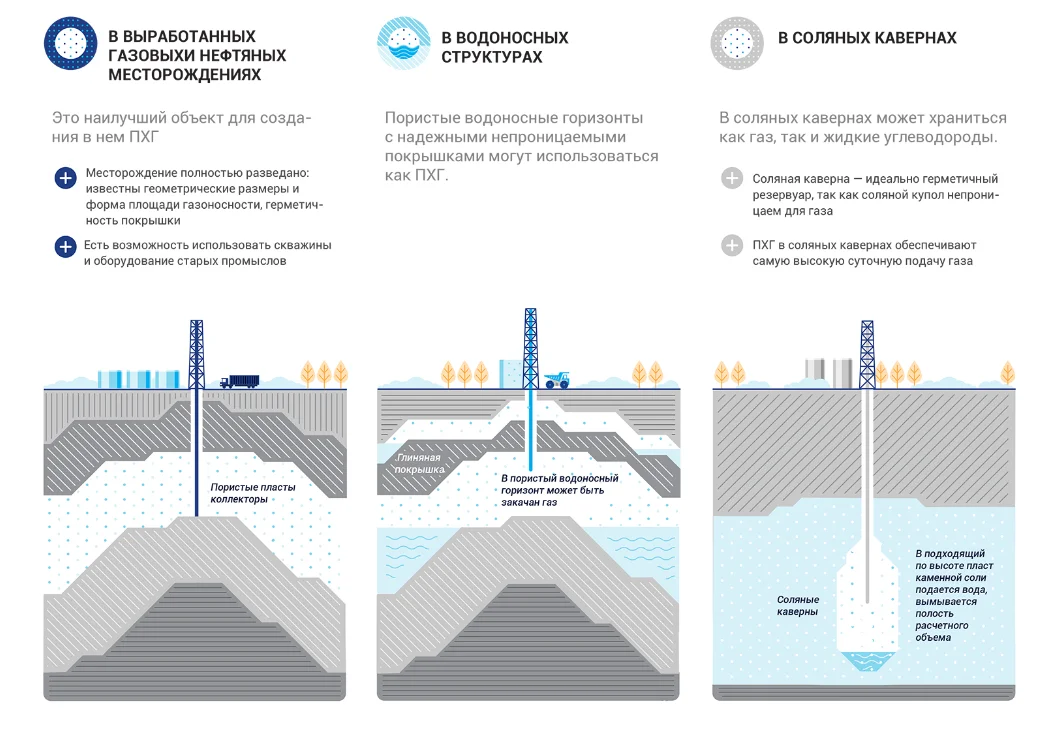
Most UGS built on the site of depleted deposits. This is the most common type in Russia, the USA and other countries. The main advantage is the studied geology and ready-made infrastructure. There is already drilling and geophysics data, often some of the wells and piping have been preserved. Thus, 17 underground storage facilities of Gazprom were created in depleted fields, including in the Volga region and the North Caucasus.
Sometimes underground storage facilities are arranged in aquifers, covered with an impermeable tire. When injected, gas displaces water and forms a gas cap inside the structure. Such storage facilities are more difficult and expensive to prepare. They require a large volume of buffer gas, and hydrodynamic processes must be carefully modeled and controlled. But aquifers make it possible to place storage facilities closer to consumers, even if there are no depleted fields nearby.
In salt caverns conditions for gas storage in underground storage facilities create artificially. Water is pumped into the formation, the rock is dissolved and a cavity is formed into which gas is pumped under pressure. Salt is practically impenetrable and can eliminate microcracks. Gas can be easily pumped into and removed from caverns, which is why such underground gas storage facilities are installed where speed is important. In Russia, an example of such an object is an underground gas storage facility in rock salt deposits in the Kaliningrad region.
Underground mines are used less frequently— mines, tunnels and natural cavities. This is a niche solution that is used in individual countries. in the world exploited only two UGS facilities in exhausted mines: Burggraf-Bernsdorf in Germany and Leiden in the USA.
How underground gas storage is established throughout the year
UGS undergoes three key modes:
- Upload. In summer, when consumption is minimal, gas is pumped into tanks. The volume of active gas increases, the pressure increases.
- Storage. UGS facilities ensure the country’s energy security in the off-season.
- Selection. At the beginning of the cold season, when pressure is at its maximum, daily production is highest. As pressure decreases, the rate of selection decreases.
In Russia, underground storage facilities provide up to 40% of the daily gas supply in the system, relieving the load on main gas pipelines and producing regions. Without underground gas storage facilities, the gas transmission system would have to be designed with a huge reserve of capacity.
How natural gas is used to make the basis for plastic, medicines, fertilizers and microelectronics – read in our material
Why is underground gas storage necessary?
For consumers, underground gas storage facilities are almost invisible. But they are what allow the system to withstand sudden surges in demand, prevent shortages and reduce the risk of emergency shutdowns. For the UGS industry perform important functions:
- Reduces the need to build redundant infrastructure that would sit idle for most of the year.
- Increase the predictability of supplies and prices, especially during periods of abnormally cold weather.
As energy systems become more complex, the role of underground gas storage is only growing. UGS are being considered not only as a reserve of natural gas, but also as an element of future infrastructure – including for storage of hydrogen and other gases.
Cover photo taken from the official website of PJSC Gazprom