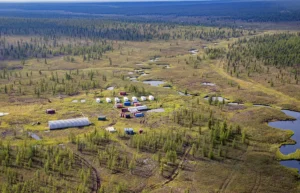
Rio Tinto has launched two lithium projects in Argentina’s Catamarca province with combined investment of $1.4 billion. The Fénix 1B expansion and the Sal de Vida operation delivered first production in the second quarter of 2026, ahead of schedule. Once at full capacity, they will add 25,000 tonnes of lithium carbonate equivalent per year.
The $530 million Fénix 1B expansion will add 10,000 tonnes of annual capacity, bringing the operation’s total target to roughly 40,000 tonnes. Sal de Vida, located 20 kilometers to the northeast, is designed for 15,000 tonnes per year, with the first phase costing $374 million.
At the opening ceremony, attended by President Javier Milei and Catamarca Governor Raúl Jalil, Rio Tinto CEO Simon Trott recalled nearly thirty years of experience in lithium mining in the province. According to him, these projects demonstrate the company’s ability to deliver on time on the path to its global goal of 200,000 tonnes of lithium carbonate equivalent per year by 2028.
The company is also considering further expansion of Fénix. The Fénix II project at the Salar del Hombre Muerto will require roughly $1 billion in additional investment. A final investment decision is expected closer to the end of the decade, and an application to Argentina’s RIGI regime is planned for 2027 in order to secure long-term tax and regulatory benefits.
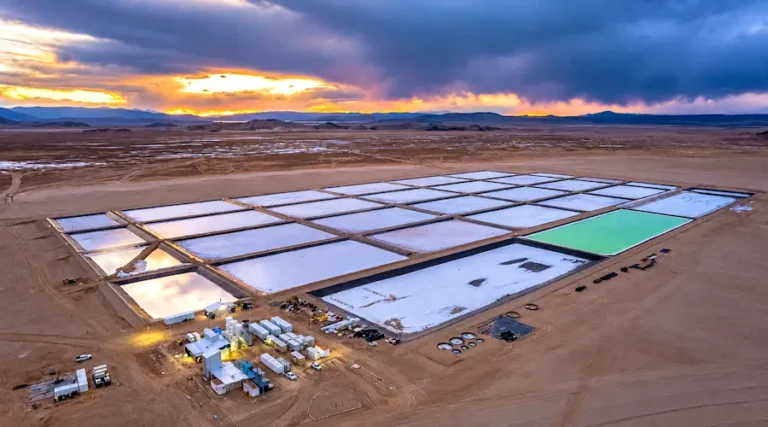
Fénix has been operating since 1997 and was Argentina’s first commercial lithium operation. It uses direct lithium extraction technology, whereas Sal de Vida relies on conventional evaporation ponds. Direct extraction significantly shortens processing time, but questions about its cost, scalability, and long-term effectiveness remain.
Including Fénix, Sal de Vida, and Olaroz, Rio Tinto’s nameplate capacity in Argentina reaches about 100,000 tonnes of lithium carbonate equivalent per year. The company also owns the Rincón project and is considering copper initiatives, but Trott named the safe ramp-up of lithium output and reliable supply to customers as the priority.
Background
Rio Tinto plans to direct nearly 70% of its $4 billion in lithium investment in Argentina to local suppliers. This aligns with President Milei’s course of attracting foreign capital through reforms and the RIGI regime, which gives tax, legal, and currency advantages for 30 years to projects costing more than $200 million. From January to August 2026, lithium exports from Argentina brought in $1.467 billion, 190.5% more than a year earlier.
Argentina is strengthening its position in South America’s “lithium triangle,” which holds about 60% of the world’s reserves. If investment and project launches continue at the same pace, the country could overtake Chile in production by 2029 and reach 573,000 tonnes of lithium carbonate equivalent by 2035.
Source: MINING.COM
Image: Rio Tinto