Researchers in Spain have developed a smart algorithm that can predict meteorological droughts up to six months in advance. For regions where every drop of water counts, such a tool becomes a vital aid in water resource management.
Scientists from the Polytechnic University of Valencia combined data from four global climate modeling centers, added historical weather information over the past decades, and ran it all through artificial intelligence algorithms. The result is a system that calculates standard drought indices – SPI and SPEI – with unprecedented accuracy.
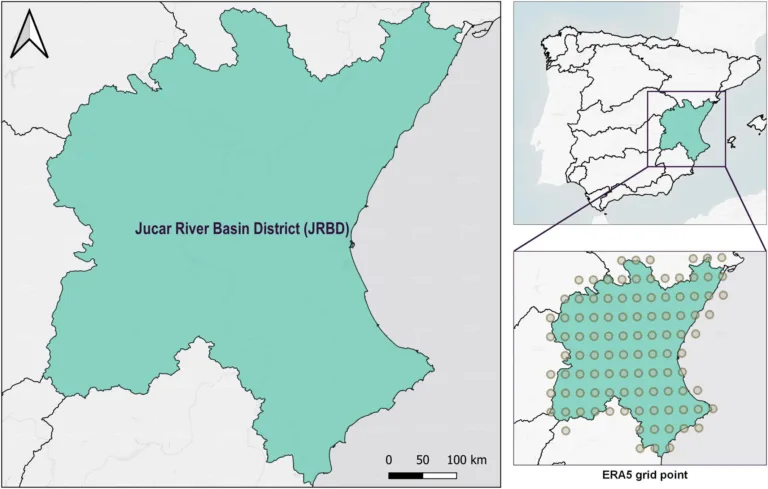
Testing took place in the Jucar River basin, a typical semi-arid Mediterranean region where droughts occur frequently and water is needed for agriculture, cities, and the environment. For six-month indices, forecast reliability reaches almost 90% in the first month and remains above 60% for three months ahead. Even a year or two ahead, the system retains useful predictive ability.
Previously, seasonal forecasts were unreliable. Now, thanks machine learning, you can correct errors in climate models and adapt them to a specific region. Moreover, all data used in the system is open and accessible throughout the world, and the algorithm itself already works in the web interface, ready for practical use.
Now water utilities and farmers will have time to prepare for drought – accumulate supplies, change irrigation schedules, and redistribute resources. This will reduce economic losses and increase resilience to climate change. In a world where droughts are becoming more frequent and severe, such a tool moves water management from a mode of passive reaction to a mode of active management.
Source: phys.org
Image: Quarterly Journal of the Royal Meteorological Society