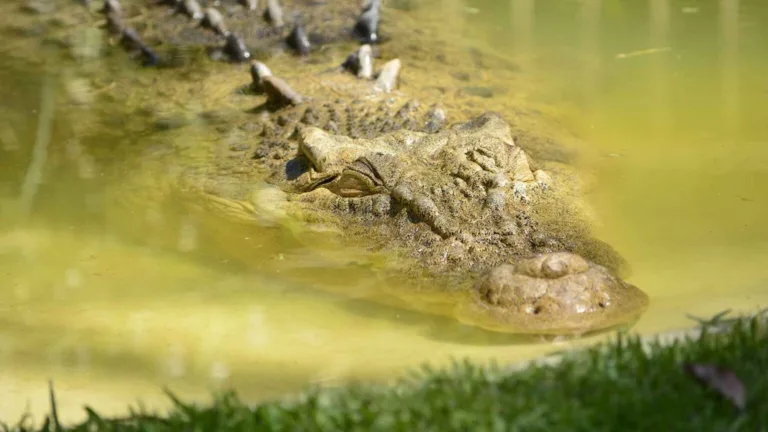
Paleontologists have discovered the remains of a previously unknown species of predatory reptiles that lived on Earth about 240 million years ago. The fossil was called the “warlike crocodile” (from the Latin bellator). The discovery, made in the Amazon, upends scientists’ understanding of when and how crocodile-like reptiles became dominant predators.
Modern crocodiles are living fossils, but their evolutionary lineage stems from two ancient lineages: Pseudosuchia and Avemetatarsalia. The division occurred approximately 200 million years ago, already during the era of dinosaurs. However, a new species of pseudosuchian found in Brazil proves that the ancestors of crocodiles reached the top of the food chain long before the rise of dinosaurs – some 240 million years ago, during the Triassic period.
Scientists emphasize that the “warlike crocodile” was an active predator, and its discovery changes the chronology of evolution: crocodile-like reptiles dominated the planet for much longer than previously thought.
This find is not the only recent discovery that is forcing us to reconsider history of life on Earth. As with whales, which evolved from wolf-sized four-legged land mammals, evolution often brings surprises. However, unlike many species, crocodiles have changed little over millions of years, and it is now clear that this success lasted much longer than expected.
The discovery of the Brazilian “warrior” once again confirms: life on the planet developed more complexly and dramatically than we can imagine, and each new fossilized skeleton is capable of rewriting entire chapters of history.
Source: The Pulse
Image: The Pulse