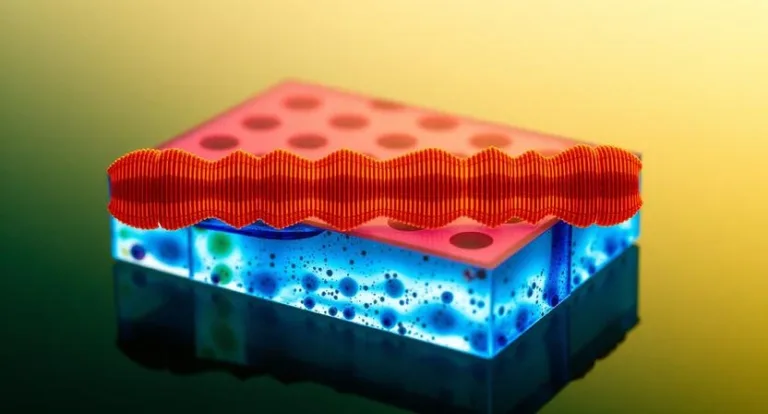
Researchers from Portugal and Spain have found a way to make lithium-ion batteries safer and more durable. Instead of a toxic liquid electrolyte that could ignite, they created a solid polymer material using 3D printing. The main secret is to replace the harmful solvent with regular acetone.
Modern batteries in phones, laptops and electric vehicles run on liquid electrolyte. It is effective, but toxic and flammable. Scientists have long been looking for a replacement – solid polymers that are both strong and conduct current well. But the problem is that their production often requires harsh chemicals.
Portuguese and Spanish chemists have used 3D printing using the direct extrusion method. This allows the electrolyte to be precisely shaped, improving contact between battery components. They added a fluorinated polymer to the printing mixture, an ionic liquid to increase conductivity, and zeolite for structural stability. But most importantly, they replaced the toxic dimethylformamide with three safer substances: acetone, dimethyl sulfoxide and N-methyl-2-pyrrolidone.
It turned out that the choice of solvent has a decisive influence on the properties of the finished material. Acetone performed best. It evaporates quickly during printing due to its low boiling point, and the polymer structure is more ordered. As a result, the electrolyte printed with acetone showed the highest ionic conductivity – lithium ions moved faster and more efficiently inside it.
To test the material in action, scientists assembled experimental batteries. Batteries with acetone electrolyte retained about 90% of their capacity after 60 charge-discharge cycles. Their specific capacity reached 135 milliamp-hours per gram. Samples with other solvents performed worse due to a less stable structure and poor contact inside the battery.
The practical benefit is obvious: 3D printing allows you to create batteries of any shape, with high safety and long service life. This is an important step towards creating solid-state batteries that are not afraid of overheating and shock, and the use of acetone instead of toxic substances makes production more environmentally friendly.
Source: Global Energy
Image: Global Energy