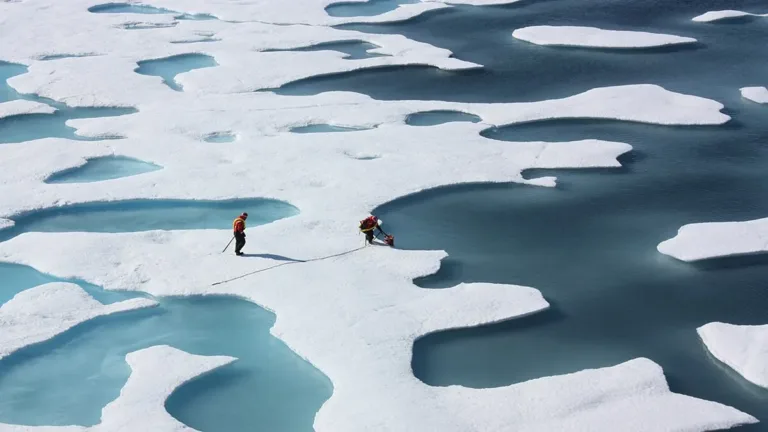
By 2300, an area comparable in size to Pennsylvania could be freed from the Antarctic ice sheet. The new study is the first to take into account not only the retreat of the ice, but also the rise of the land itself after being freed from many kilometers of cargo. The scientists concluded: climate change will not only change the geography of the continent, but also make large mineral deposits accessible. This could push countries to reconsider international agreements that currently prohibit commercial mining in Antarctica.
Geophysicist Erica Lucas of the University of California, Santa Cruz, and her colleagues modeled three melting scenarios. With the most intense melting, by 2300 the area of ice-free land will reach 120 thousand square kilometers. With moderate – 36 thousand. Even at low melt levels, about 150 square kilometers will be exposed.
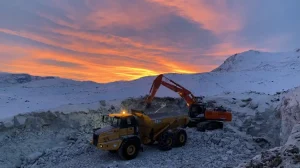
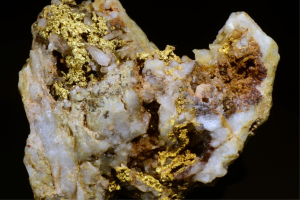
In these regions, according to geological data, there are known or proposed deposits copper, gold, silver, iron and platinum. Key point: The largest land releases are expected in areas claimed by Argentina, Chile and the UK. It is there that rich ore reserves are concentrated.
Currently, the Antarctic Treaty and its Environmental Protocol prohibit all commercial mining. However, in 2048, participating countries may require a review of these rules. The study’s authors suggest that the availability of available resources will create a powerful incentive for such negotiations.
Tim Stevens, a professor of international law at the University of Sydney, said exposure of the land itself is unlikely to lead to an immediate breakdown of the legal regime. However, he acknowledges that this will create additional pressure. At the same time, even with the melting of the ice, Antarctica will remain an extremely difficult place for mining – the climate, remoteness and logistics will not go away. But interest in resources will increase, and with it discussions about the balance between economic interests and protecting the unique nature of the continent.
Global warming is not only raising sea levels, but also changing the geopolitical landscape. Antarctica, the planet’s last untouched frontier, could become the scene of a new resource race.
Source: Live Science
Image: NASA Goddard Space Flight Center