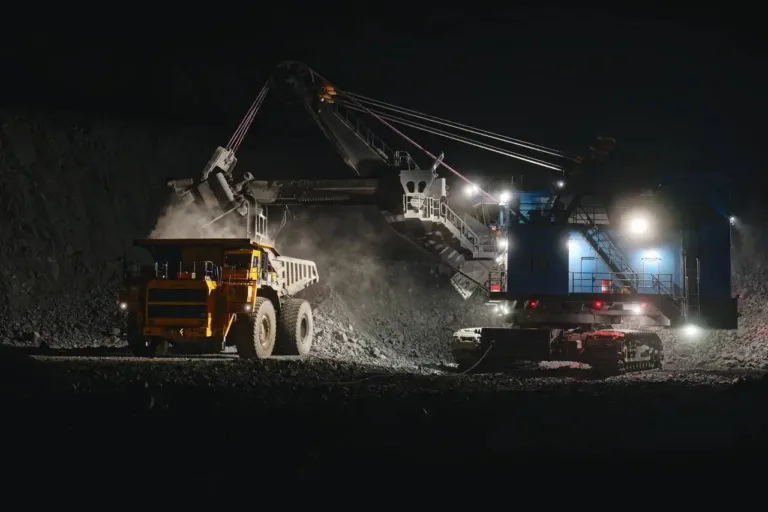
Metalloinvest specialists noticed a disturbing pattern: during night shifts at Lebedinsky Mining and Processing Plant, dump trucks were leaving the open pit with underloads. The lag from the daytime figures reached 4%. The reason was not in the equipment, but in the human factor – at night the control over loading is weaker.
Instead of increasing human supervision, the mill decided to entrust the control to artificial intelligence. Video cameras connected to the AI system were installed on the four crusher ramps of the transshipment center. Now, as soon as a dump truck pulls in for unloading, the neural network scans its body and instantly checks the volume of rock against the standards.
If the AI detects underloading, it determines which excavator loaded the machine and automatically sends a notification to the excavator driver, shift foreman and site manager. Recognition accuracy has reached 98%. Thanks to this, violations are corrected right during the shift, without waiting for morning reports.
The result of the implementation exceeded expectations. Starting from December 2025, the transshipment point complex has been consistently shipping about 3 million tons of ore per month to the concentrator. Previously, this figure fluctuated between 2.6 and 2.8 million tons. It was video analytics that provided the increase – without purchasing new dump trucks or excavators.
Lebedinsky GOK, a member of the Russian Mining Industry Association, has once again demonstrated: digital technologies are capable of delivering rapid measurable productivity growth. Artificial intelligence does not replace people, but helps them work more efficiently – especially where attention is inevitably scattered.
Source: @gorprom
Image: Metalloinvest