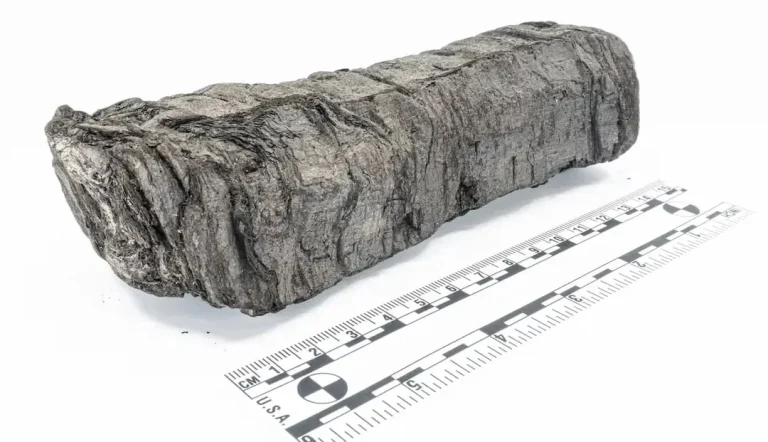
An international team of scientists has begun deciphering the scrolls that survived the catastrophic eruption of Vesuvius in 79 AD. Ancient documents found more than two hundred years ago have begun to reveal their secrets with the help of modern technology and artificial intelligence.
In the 1750s, among the ruins of the ancient Roman city of Herculaneum, archaeologists discovered hundreds of papyrus scrolls that were almost completely burned due to the devastating eruption of Mount Vesuvius. The papyri were so fragile that it was impossible to open them, and for centuries they remained closed, with almost no chance of deciphering.
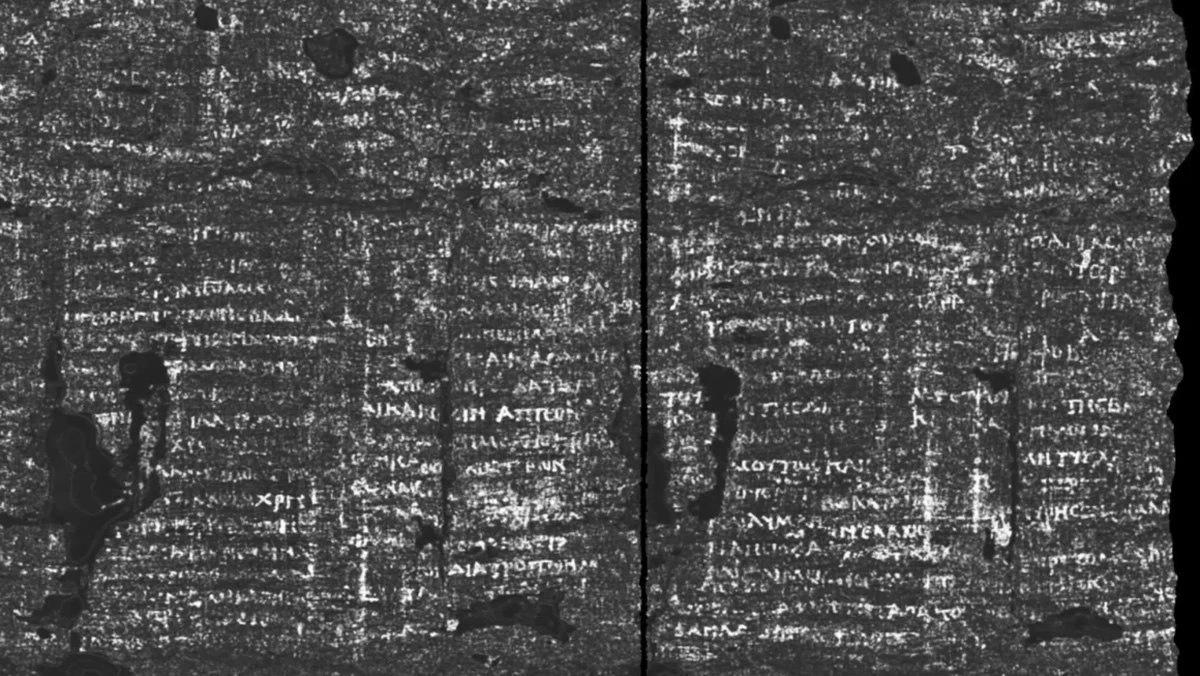
Today, thanks to advances in science, scientists are finally beginning to uncover the secrets of these ancient texts. Researchers from different countries have been able to obtain the first image of the inside of one of three scrolls stored in the Bodleian Library at Oxford University. This scroll, known as PHerc. 172, turned out to be a valuable document with text written in ancient Greek.
Modern technology has become a key tool in the transcription process. Experts used machine learning, computer vision and 3D geometry to reconstruct the scroll’s structure. The work involved using a synchrotron, a particle accelerator that generates high-intensity X-rays, allowing the papyrus to be examined without destroying it.
The resulting images were processed using artificial intelligence, which helped detect traces of ancient Greek ink and virtually “unfold” the scroll. This approach made it possible to create a three-dimensional model of the document, which brought scientists closer to unraveling its contents.
At the moment, only a small part of the text has been deciphered. Among the analyzed words there are such words as “disgust”, which is repeated several dozen times, as well as the words “fear” and “life”. The researchers hope that further work will reveal the full contents of the scrolls, which will help scientists better understand the culture and philosophy of the time.
Deciphering ancient scrolls using artificial intelligence opens new horizons for archeology and historical research. Although the process will continue for many years, each new word from the scrolls that survived the eruption of Vesuvius brings important knowledge about the ancient Roman civilization.
Source: Telegram channel @kontext_channel