In Russia, ash dumps are viewed not just as waste, but as valuable man-made resources deposits. This initiative was discussed at a meeting of the Scientific and Technical Council of the Russian Environmental Operator. The new approach will allow applying to ash and slag waste geological exploration methods and technological analysis, which will open up opportunities for their effective processing.
Every year, the country generates 25–30 million tons of ash and slag waste, and the total volume accumulated exceeds 1.5 billion tons. According to forecasts, by 2030 this figure could reach 2 billion. At the same time, only about 10% of such waste is recycled in Russia, while in Europe and China this figure is 80–98%.
The transfer of ash dumps to the category of technogenic deposits will help develop a circular economy at the regional level. This will not only reduce the burden on natural resources, but will also create local markets for secondary raw materials.
Among the possible uses of ash and slag waste:
- Production of building materials;
- Creation of inert mixtures to eliminate industrial accidents;
- Extraction of rare metals such as platinum group metals and germanium.
This approach is not only economically profitable, but also environmentally friendly, since recycling waste at the point of generation reduces transport costs and harmful emissions.
Recommendations for working with ash dumps are planned to be included in methodological materials for the regions. This will help update approaches to sustainable environmental management and reduce environmental risks. In the future, it is proposed to establish standards for the mandatory use of ash and slag waste in various industries.
The new strategy could be an important step towards a circular economy, where waste is turned into resources and industry operates with minimal damage to the environment.
The material was prepared with the support of the Russian Ministry of Education and Science as part of the Decade of Science and Technology.
Source: geonews.ru
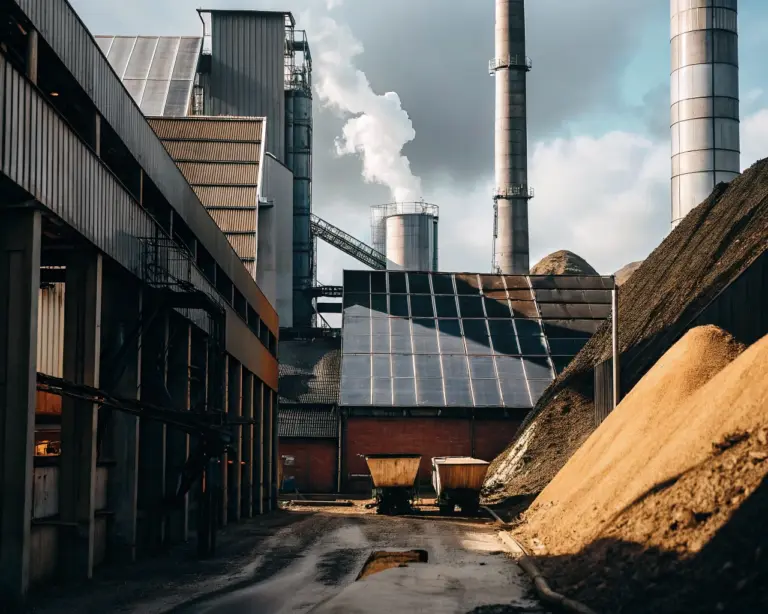
Image generated by a neural network