British Columbia and the federal government have reached an agreement that preserves the ban on oil tanker traffic along Canada’s northwestern coast. At the same time, the deal unexpectedly opens the door for Alberta’s ambitious proposal to build a new oil pipeline capable of transporting up to one million barrels per day to export markets in Asia.
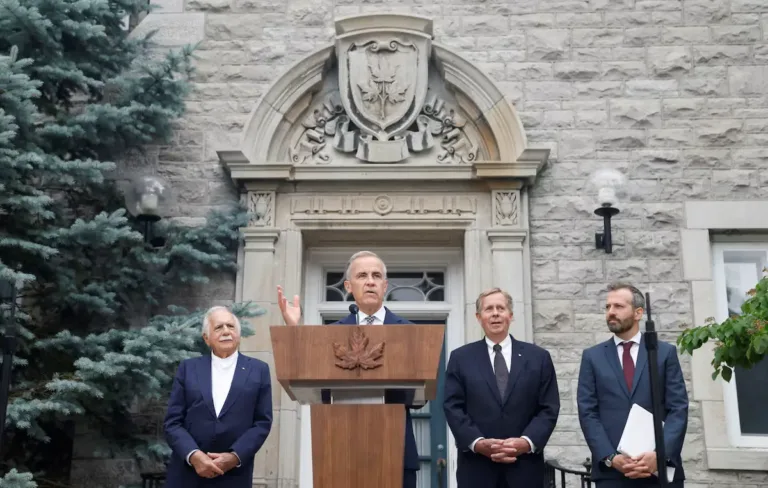
The agreement was signed just hours before Prime Minister Mark Carney traveled to Alberta, where Premier Danielle Smith was expected to present plans for a new export pipeline connecting Alberta’s oil fields to the British Columbia coast.
Carney is attempting to balance two competing priorities: expanding Canada’s oil production and exports to reduce dependence on the U.S. market while maintaining key environmental protections. At present, Canada has only one pipeline connecting its oil-producing regions to the Pacific coast, providing access to Asian customers.
Ottawa’s environmental policies—particularly under the previous Liberal government led by Justin Trudeau—have long frustrated Alberta’s oil industry and have even fueled separatist sentiment within the province. On October 19, Alberta will hold a non-binding referendum on whether to begin the process of seeking independence from Canada.
Alberta favors a pipeline route to the northwestern coast of British Columbia, which offers the shortest shipping route to Asian markets. However, provincial authorities in British Columbia have historically opposed such projects because of concerns that an oil spill could severely damage the region’s fragile coastal ecosystems.
British Columbia Premier David Eby indicated that he would not oppose the pipeline if the tanker moratorium remains in place and the coastline continues to be protected. He also acknowledged the constitutional limits of provincial authority, noting that British Columbia cannot block a federally approved pipeline project and does not intend to challenge it in court.
The proposed pipeline currently has no private-sector developer. At the same time, the federal government has pledged to accelerate the construction of new liquefied natural gas (LNG) export facilities in British Columbia, with the goal of tripling Canada’s LNG production over the next decade.
Canada is seeking a compromise between its energy ambitions and its environmental commitments. The agreement with British Columbia gives Alberta greater flexibility to pursue a new export pipeline while leaving the country’s most significant coastal environmental safeguard—the oil tanker moratorium—fully intact.
Source: Reuters
Image: Patrick Doyle