Canada is betting on its North in the race for critical raw materials. At an investment summit in September, 167 projects were presented to investors, 63 of them in mining. Ottawa is launching new mechanisms to speed up approvals and laying the groundwork for developing underexplored territories, primarily the Northwest Territories.
The key tool is the Major Projects Office, established last year. Its task is to coordinate and accelerate initiatives of strategic importance to the country. Since September 2025, 27 projects have been referred to it, including mines, ports, and energy corridors. Potential private investment in these projects is estimated at roughly CAD 500 billion.
Among the mining projects referred to the office are McIlvenna Bay in Saskatchewan, the expansion of the Red Chris mine in British Columbia, and the Matawinie graphite project in Quebec.
In parallel, Ottawa has proposed a significant overhaul of how major projects are assessed. Shortly after the summit, the government introduced Bill C-39. If passed, federal reviews and decisions would fit within one year from the submission of a complete application package. A “one-window” principle is also envisioned, with greater coordination between assessments and permitting.
The industry is taking note of these changes. Agnico Eagle CEO Ammar Al-Joundi noted that the current government supports economic development across the full range of opportunities, including resources. According to him, the contrast with the previous decade is stark.
Canada has long been one of the world’s mining hubs: roughly half of the world’s publicly listed mining and exploration companies are registered there. However, British Columbia, Ontario, Quebec, and Saskatchewan account for about three-quarters of domestic exploration spending and 85% of capital expenditures. The remaining territories remain underutilized.
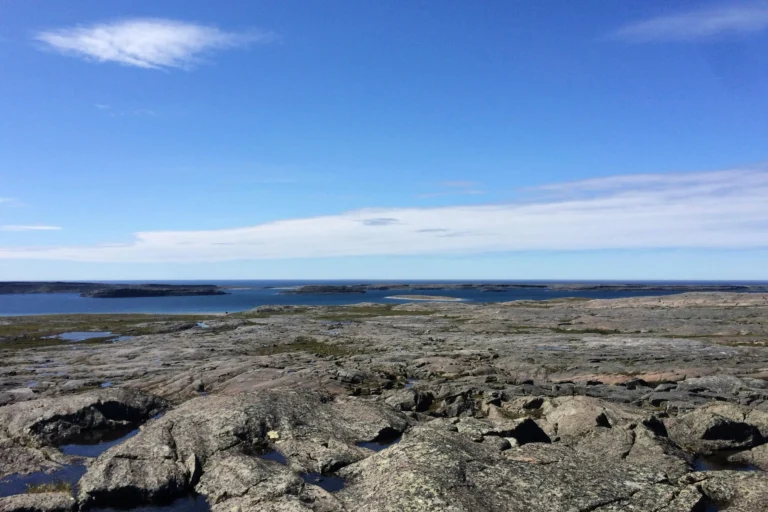
Particular hopes rest on the Northwest Territories. This year, the territorial government released an updated mineral potential study covering 1,721 mineral occurrences across 19 types of critical minerals. It identified 116 sites not included in previous assessments and confirmed prospects for lithium, cobalt, copper, and zinc in addition to the traditional gold and diamonds.
The region already has advanced projects. Prairie Creek is described as the richest undeveloped zinc deposit, while Pine Point, being developed by the Osisko Metals–Appian joint venture, produced 10.8 million tonnes of lead-zinc concentrates in the last century. The project is being revived on the back of existing infrastructure: hydropower, a highway, a substation, and roughly a hundred kilometers of roads are already in place.
Another example is Taltson Critical Minerals’ O’Connor Lake. The deposit was actively developed after World War II but shut down due to falling zinc and lead prices. Today, the company is applying airborne magnetic surveys, 3D modeling, and precise geochemistry there. A mineralized corridor covering about 40 square kilometers has already been outlined, and lab analyses from late 2025 showed high element concentrations in new structures kilometers away from the historic Shaft zone. Company head Ritch Wigham compares the geological potential to Australia’s Olympic Dam system and emphasizes the importance of geophysics for finding hidden mineralization.
Geology in Canada’s North has already been explored enough to point to serious potential. The main task now is to turn that potential into mines, infrastructure, and supply. Accelerated approvals and an inflow of capital could be the mechanism that sets this process in motion.
Source: Mining.com.au
Image: Jonathan O’Neil