Critical Metals has announced it has found a way to process eudialyte concentrate from the Tanbreez project in Greenland without generating gel-like waste. The company’s patented method dissolves more than 99% of the raw material and extracts 19 types of ultra-high-purity rare earth and critical metals. Processing will take place at a new plant in Romania, which could generate roughly $2.2 billion in annual revenue.
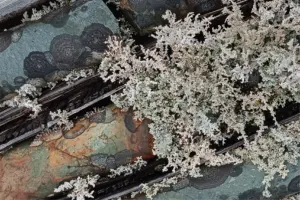
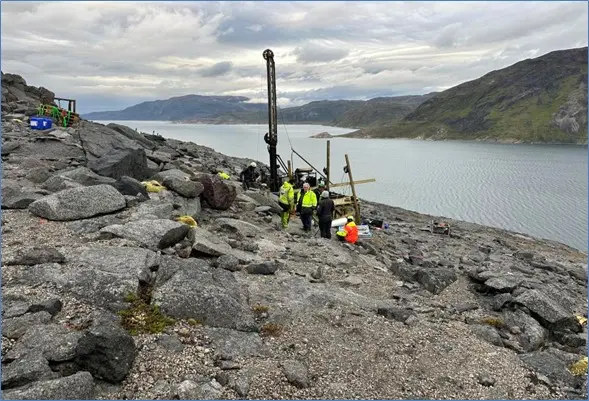
Eudialyte is a rare red or pink mineral that serves as an important industrial source of zirconium, hafnium, and heavy rare earth elements. The Tanbreez deposit in southern Greenland is considered one of the largest undeveloped heavy rare earth sites outside China. The main challenge with eudialyte ores has always been that processing turns them into a thick silica gel that cannot be filtered. The company says it has overcome exactly this obstacle.
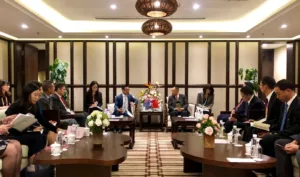
A preliminary study of the plant describes a joint venture designed to process up to 100,000 tonnes of eudialyte concentrate per year. Expected output is nearly 28,000 tonnes of rare earth and critical products in the form of chloride salts and other ultra-pure materials. The project also envisions producing 25,670 tonnes of high-purity silicon dioxide powder, which could generate up to $600 million in annual revenue.
The financial parameters look substantial. Preliminary capital costs are estimated at $1.85 billion. The model shows annual revenue of about $2.2 billion before operating expenses, taxes, and capital recovery. Net present value is estimated at roughly $4.5 billion, with an internal rate of return of about 55% and a payback period of around two years.
The technology uses multi-stage acid leaching at elevated temperatures with a cascading recovery system. A key feature is the effort to recover materials that typically end up as waste — silicon, and potentially aluminum, iron, and copper. The target tailings volume is about one percent of the raw material mass.
A separate line of production involves high-purity hafnium. In its first five years of operation, the plant could produce 50–70 tonnes of hafnium metal per year, along with 20–30 tonnes of hafnium chloride.
CEO Tony Sage called this a significant evolution in Tanbreez’s value and confirmation of the company’s commitment to a “mine-to-metal” strategy. According to him, combining the Greenland resource with advanced processing in Romania allows the company to extract more value from every tonne and supply Western markets with materials they urgently need.
Locating the plant in Romania — an EU and NATO member — is intended to strengthen a secure Western supply chain. If the project is carried out as planned, it could become a notable supplier of rare earth and critical metals to Europe and the US.
Critical Metals is attempting to turn a difficult mineral into economically viable feedstock while also addressing an environmental waste problem. Engineering work, testing, and permitting still lie ahead, but the bid to create a new Western rare earth processing hub has been made.
Source: MINING.COM
Image: Critical Metals