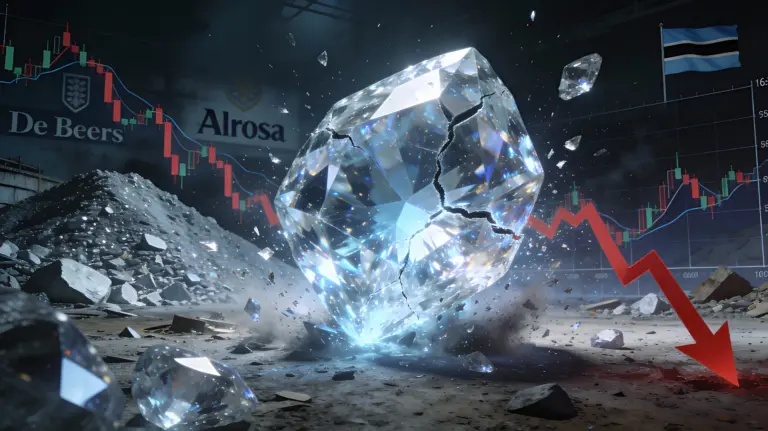
The diamond market collapsed in 2025 due to weak demand, cheap synthetic stones and the geopolitics of the situation. Major producer De Beers has lost billions, filled its warehouses and laid off part of its workforce. Similar ALROSA has problems and Botswana mines.
De Beers reported a sharp drop in revenue and natural diamond inventories of $2 billion. Anglo American sells assets and merges with Teck Resources. ALROSA’s profits fell by almost 80%, and the company suspended production at key fields. Small producers are closing mines.
Synthetic diamonds, indistinguishable from natural ones, have captured the market. They undermined the prices of mined stones. De Beers has abandoned its Lightbox lab-grown jewelry brand and returned to promoting natural diamonds.
Governments and industry organizations have responded to the situation by making concerted efforts to support the natural diamond sector. Manufacturers, including companies from Angola and Botswana, allocate 1% of revenues to global advertising as part of the Luanda Agreement.
Botswana, a leading exporter, was hit the hardest. Sales fell, Debswana cut production by 40%. The country’s economy is in crisis: unemployment is growing, the budget deficit is rising.
Analysts see the reasons in changing consumer tastes, an oversupply of synthetics and a decline in demand in China. Prices for laboratory stones are falling, but recovery of the natural diamond market requires new strategies and branding.
Source: MINING.COM